Irrevocable Trust Benefit Trustors Withholding
Description
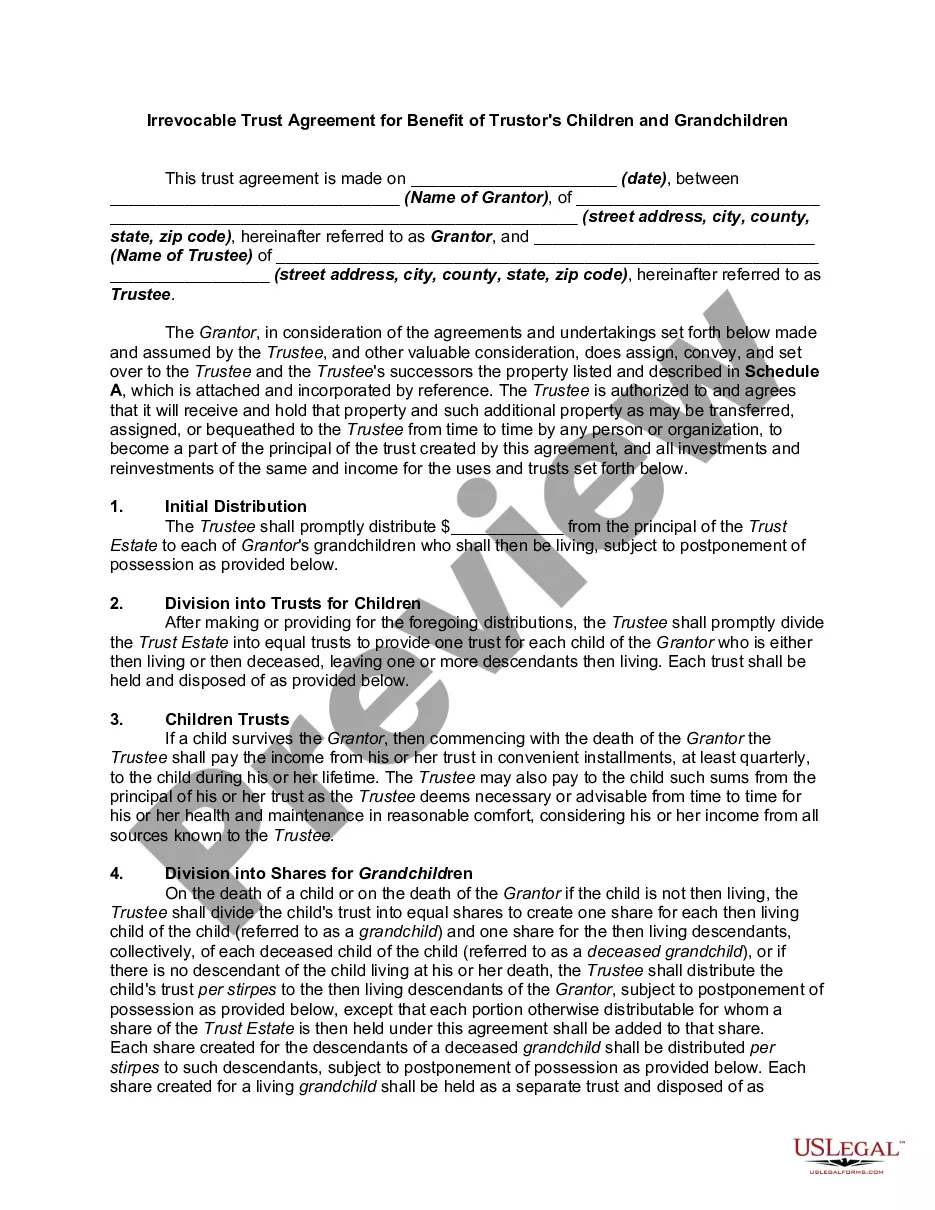
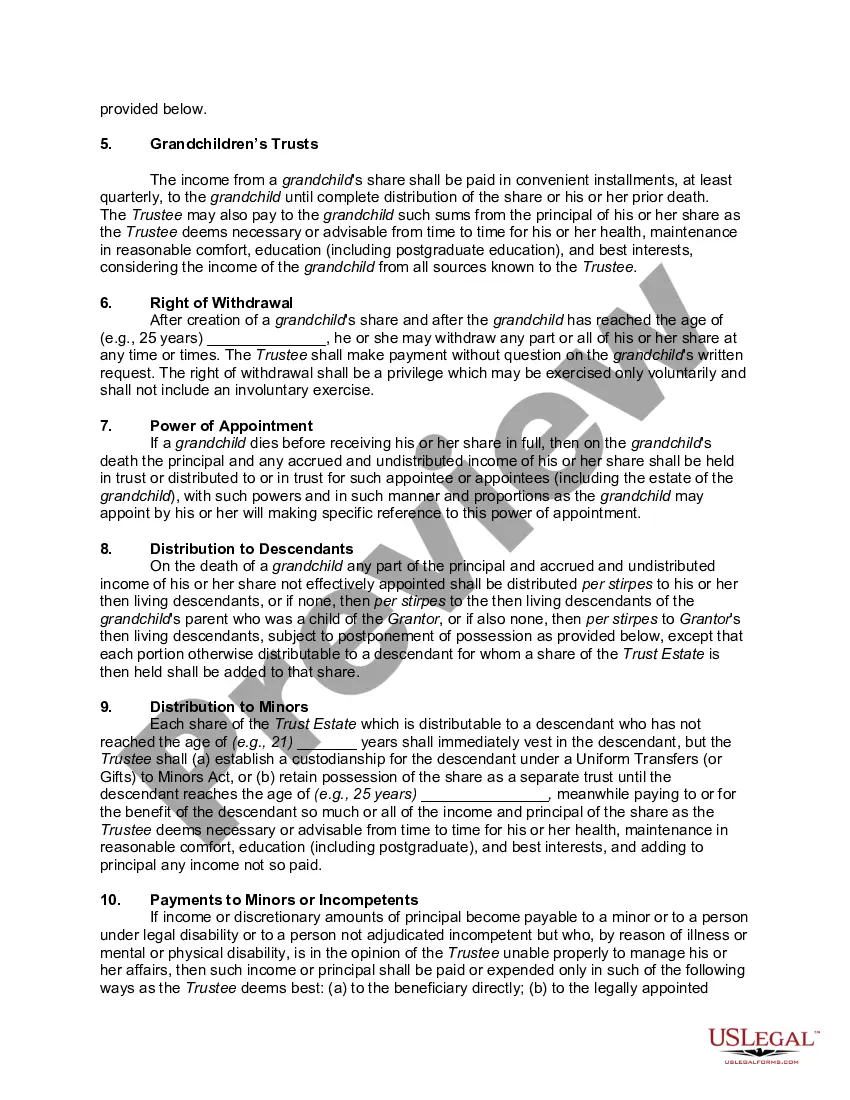
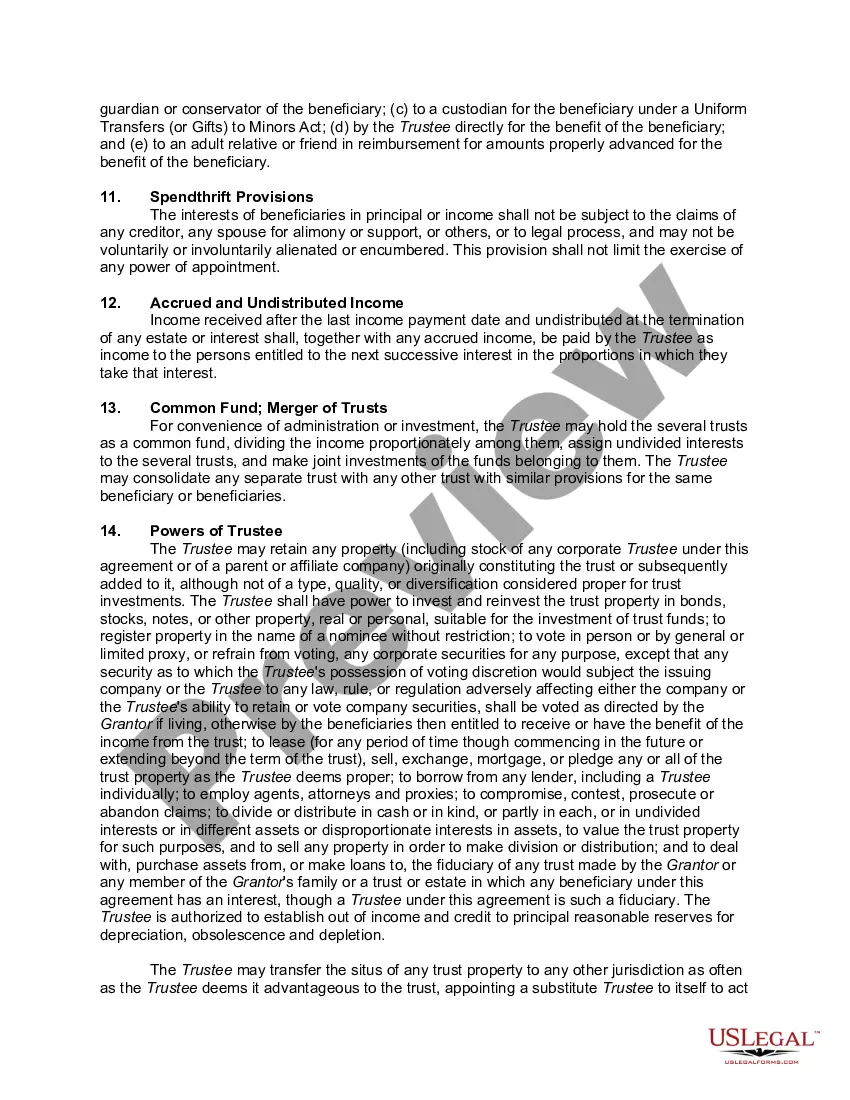
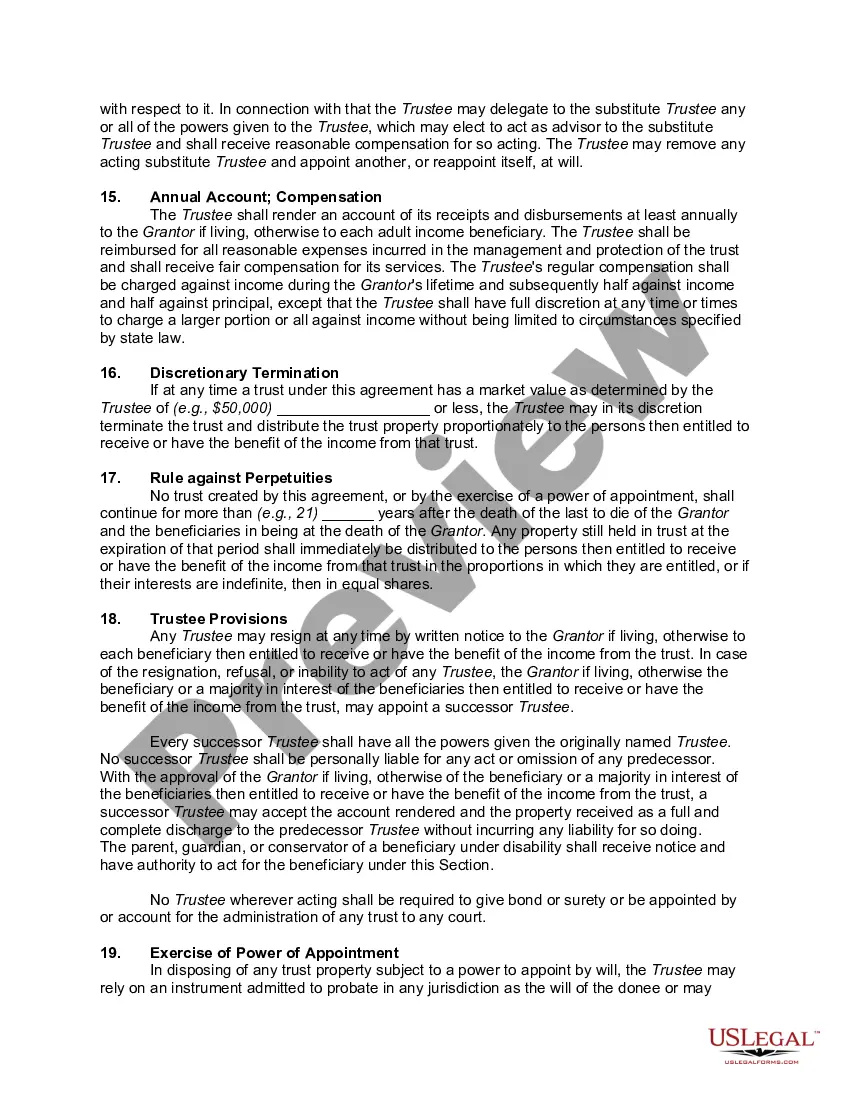




Get your form ready online
Our built-in tools help you complete, sign, share, and store your documents in one place.
Make edits, fill in missing information, and update formatting in US Legal Forms—just like you would in MS Word.
Download a copy, print it, send it by email, or mail it via USPS—whatever works best for your next step.
Sign and collect signatures with our SignNow integration. Send to multiple recipients, set reminders, and more. Go Premium to unlock E-Sign.
If this form requires notarization, complete it online through a secure video call—no need to meet a notary in person or wait for an appointment.
We protect your documents and personal data by following strict security and privacy standards.

Make edits, fill in missing information, and update formatting in US Legal Forms—just like you would in MS Word.

Download a copy, print it, send it by email, or mail it via USPS—whatever works best for your next step.

Sign and collect signatures with our SignNow integration. Send to multiple recipients, set reminders, and more. Go Premium to unlock E-Sign.

If this form requires notarization, complete it online through a secure video call—no need to meet a notary in person or wait for an appointment.

We protect your documents and personal data by following strict security and privacy standards.
Looking for another form?


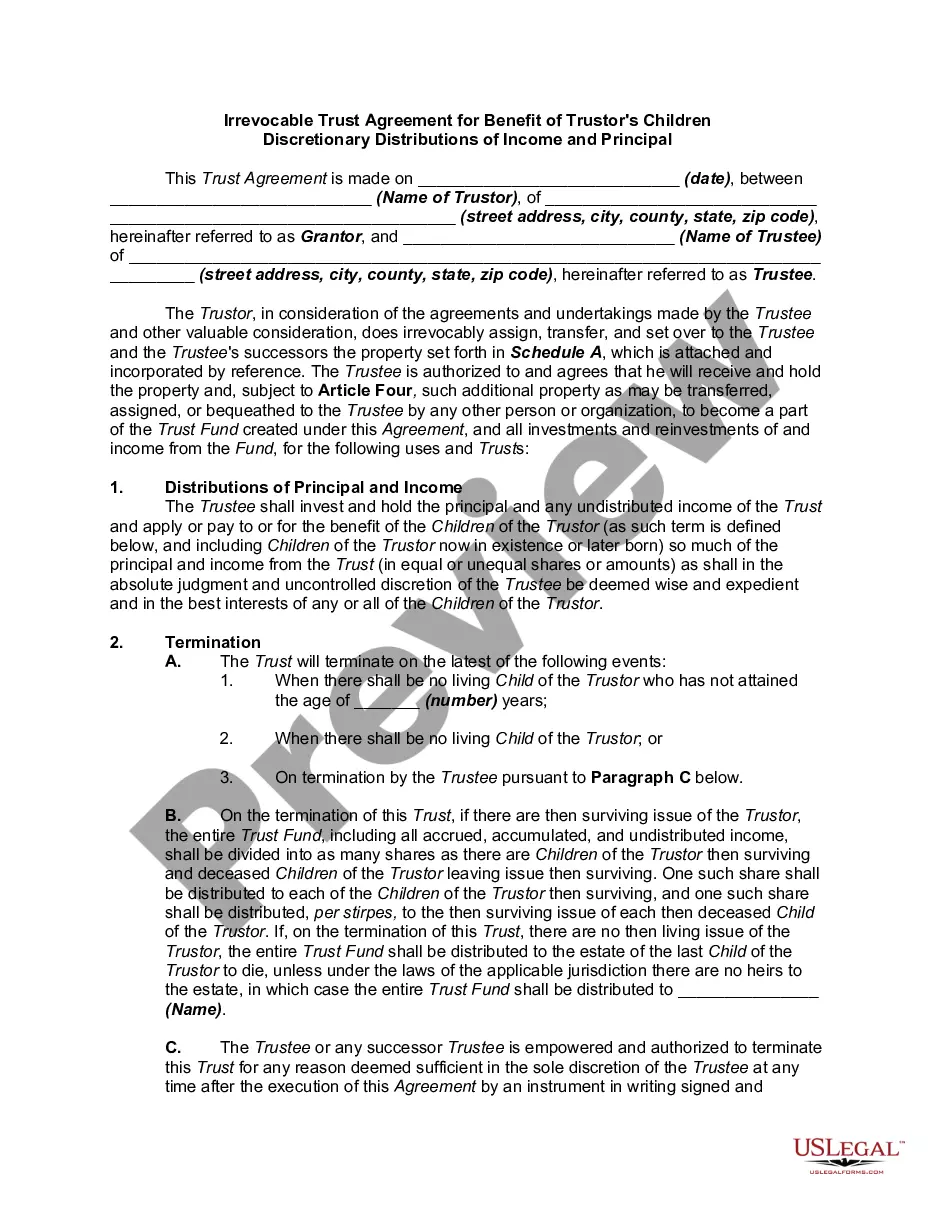
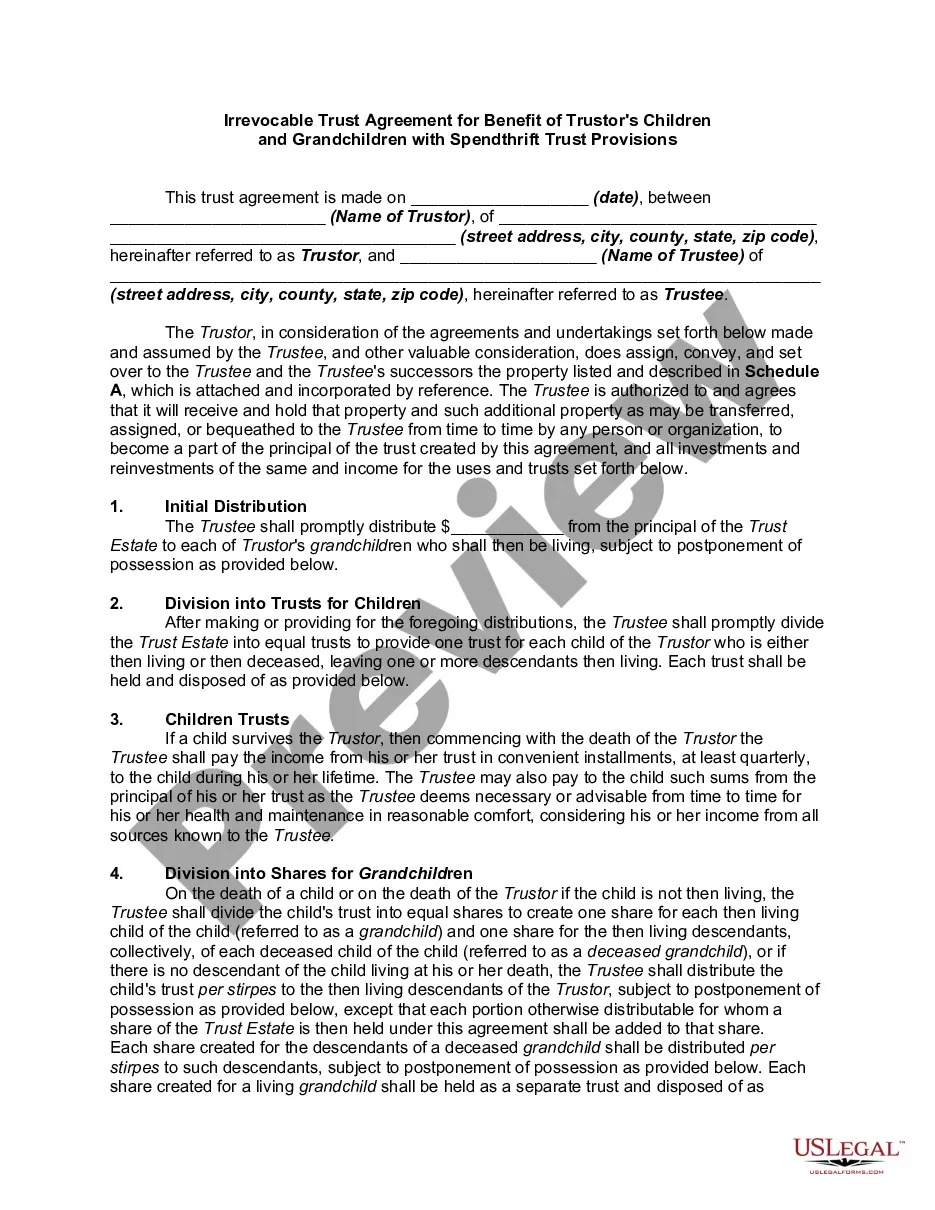
How to fill out Irrevocable Trust Agreement For Benefit Of Trustor's Children And Grandchildren?
It’s widely known that you cannot transform into a legal expert in a day, nor can you swiftly understand how to efficiently compile Irrevocable Trust Benefit Trustors Withholding without possessing a particular level of expertise.
Creating legal paperwork is an extensive process that necessitates specific training and capability.
So why not entrust the development of the Irrevocable Trust Benefit Trustors Withholding to the experts.
You can access your documents again from the My documents section anytime.
If you’re a returning customer, you can simply Log In and locate and download the template from the same section.
- Utilize the search bar at the upper section of the website to find the document you require.
- If a preview option is available, review it and consult the accompanying description to determine if Irrevocable Trust Benefit Trustors Withholding is what you are looking for.
- If you require a different form, restart your search.
- Sign up for a complimentary account and select a subscription plan to purchase the form.
- Click Buy now. After the payment is processed, you can download the Irrevocable Trust Benefit Trustors Withholding, fill it out, print it, and send or mail it to the relevant individuals or organizations.
Form popularity
FAQ
Distributions from an irrevocable trust are generally taxable to the beneficiaries receiving those payments. In most cases, income generated by the trust is passed through to beneficiaries, who must report it on their tax returns. This process emphasizes the importance of understanding the structure and tax implications of trusts, particularly in relation to irrevocable trust benefit trustors withholding strategies.
Beneficiaries of irrevocable trusts enjoy the right to access information about the trust’s assets and its management. They may receive distributions according to the trust’s provisions, but they cannot alter the terms once the trust is established. Understanding these rights helps beneficiaries navigate their financial interests effectively, especially considering how irrevocable trust benefit trustors withholding impacts taxation.
Irrevocable trust: If a trust is not a grantor trust, it is considered a separate taxpayer. Taxable income retained by the trust is taxed to the trust. Distributed income is taxed to the beneficiary who receives it.
Whether or not the trustee can withhold funds from you depends on the terms of the trust itself. If the trust requires withholding distributions under certain circumstances, such as the beneficiary reaching a specific age, the trustee must follow those stipulations.
Beneficiaries of a trust typically pay taxes on the distributions they receive from a trust's income rather than the trust paying the tax. However, beneficiaries aren't subject to taxes on distributions from the trust's principal, the original sum of money put into the trust.
Since an irrevocable trust is under the trustee's care, they will be responsible for filing Form 1041 and reporting the income stream. This differs from a revocable trust, where the grantor controls the trust and reports income on their personal Form 1040.
Since an irrevocable trust is under the trustee's care, they will be responsible for filing Form 1041 and reporting the income stream. This differs from a revocable trust, where the grantor controls the trust and reports income on their personal Form 1040.