Irrevocable Trust Benefit Trustors For Trust
Description


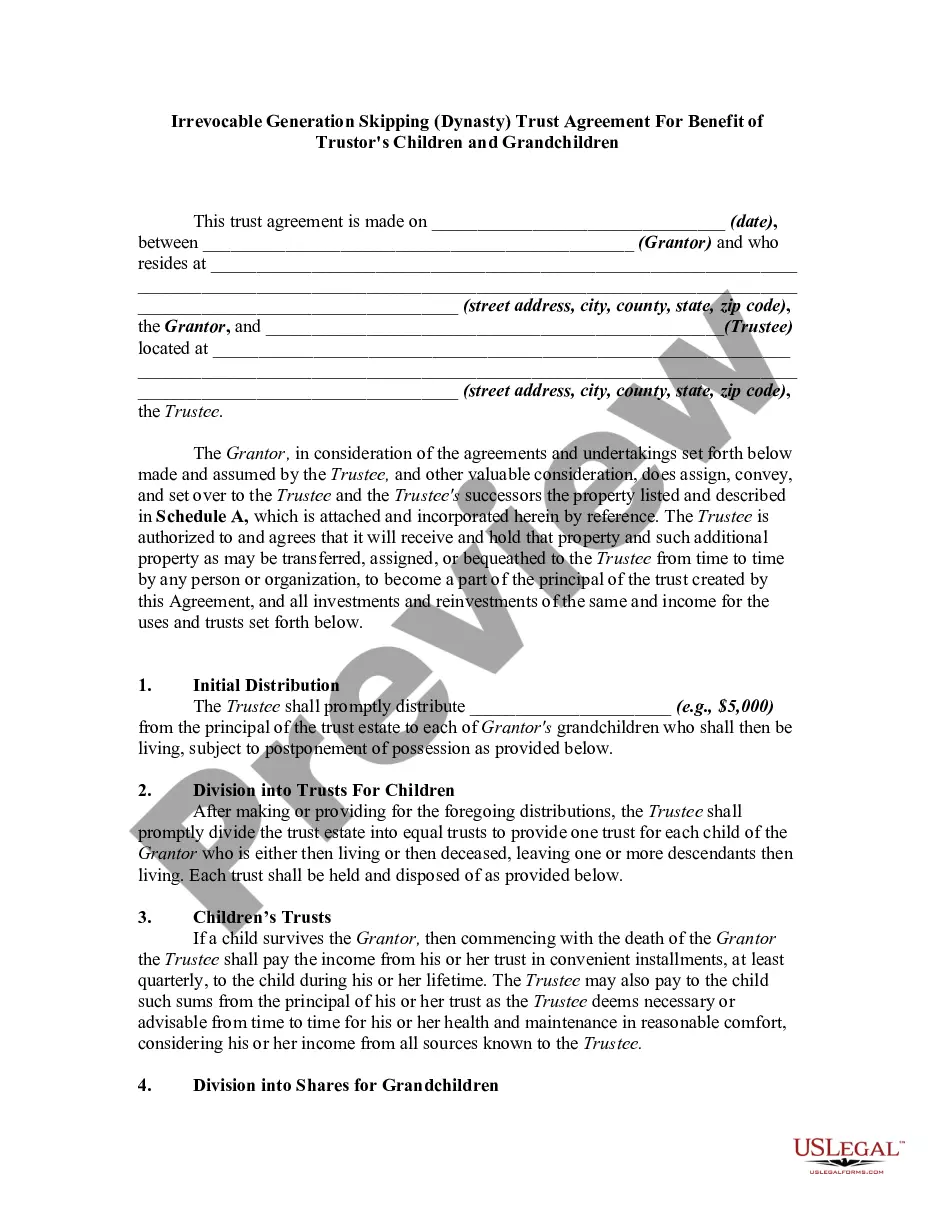
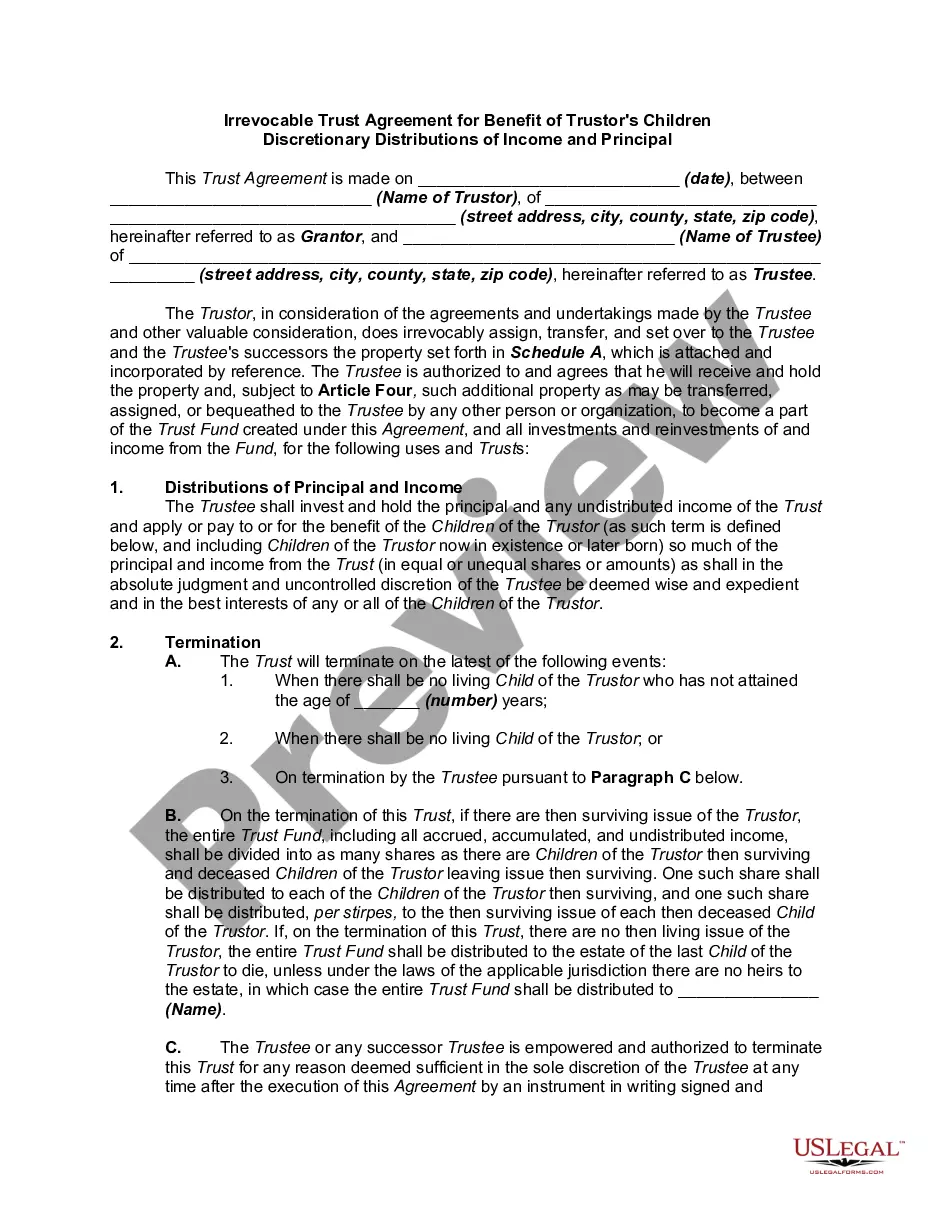


Get your form ready online
Our built-in tools help you complete, sign, share, and store your documents in one place.
Make edits, fill in missing information, and update formatting in US Legal Forms—just like you would in MS Word.
Download a copy, print it, send it by email, or mail it via USPS—whatever works best for your next step.
Sign and collect signatures with our SignNow integration. Send to multiple recipients, set reminders, and more. Go Premium to unlock E-Sign.
If this form requires notarization, complete it online through a secure video call—no need to meet a notary in person or wait for an appointment.
We protect your documents and personal data by following strict security and privacy standards.

Make edits, fill in missing information, and update formatting in US Legal Forms—just like you would in MS Word.

Download a copy, print it, send it by email, or mail it via USPS—whatever works best for your next step.

Sign and collect signatures with our SignNow integration. Send to multiple recipients, set reminders, and more. Go Premium to unlock E-Sign.

If this form requires notarization, complete it online through a secure video call—no need to meet a notary in person or wait for an appointment.

We protect your documents and personal data by following strict security and privacy standards.
Looking for another form?
How to fill out Irrevocable Trust Agreement For Benefit Of Trustor's Children And Grandchildren?
Legal documentation handling can be perplexing, even for seasoned professionals.
When seeking an Irrevocable Trust Benefit Trustors For Trust and lacking the time to dedicate to locating the accurate and current version, the procedures may be stressful.
US Legal Forms addresses all your needs, from personal to corporate documentation, all in one convenient location.
Utilize sophisticated tools to complete and manage your Irrevocable Trust Benefit Trustors For Trust.
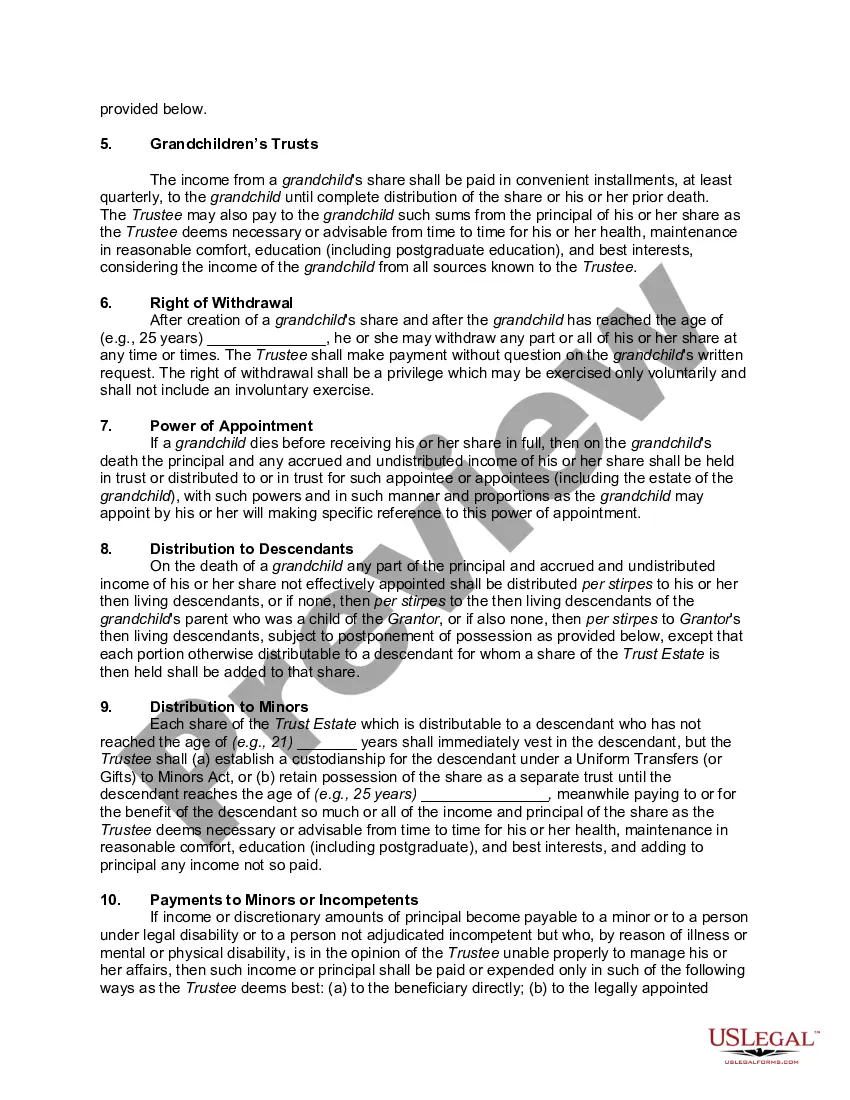
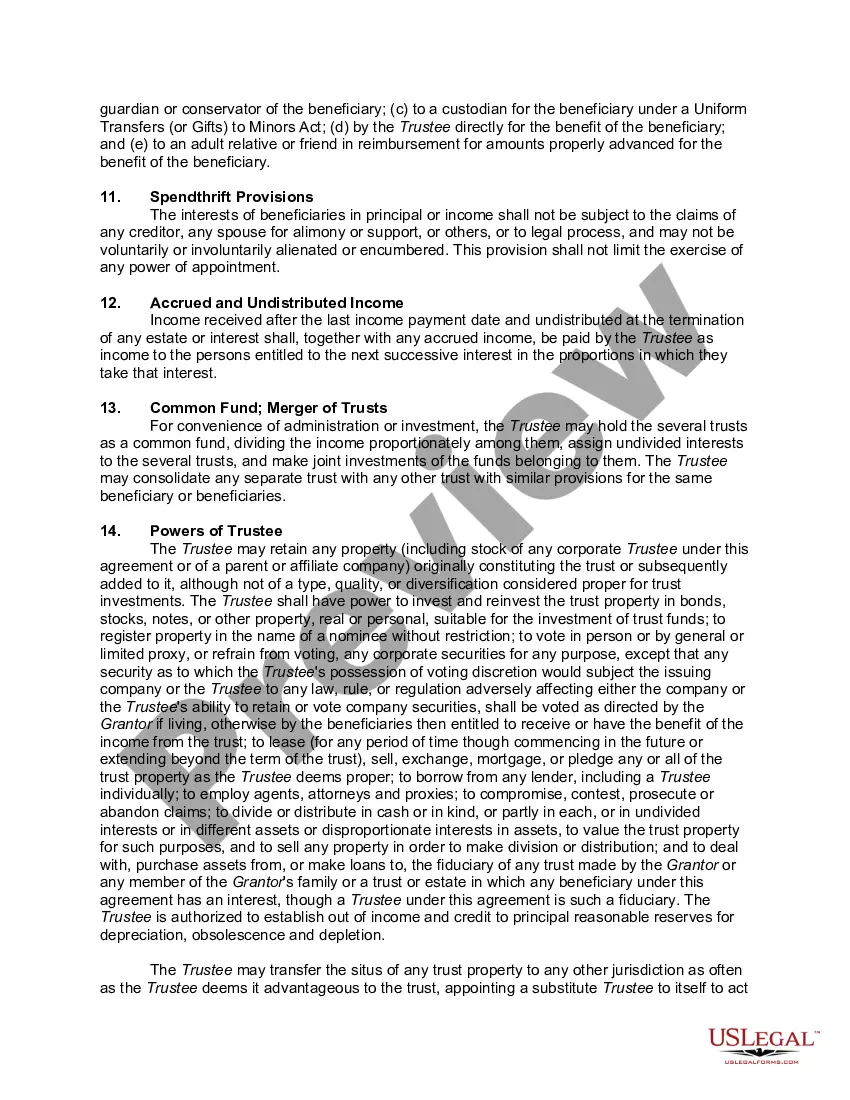
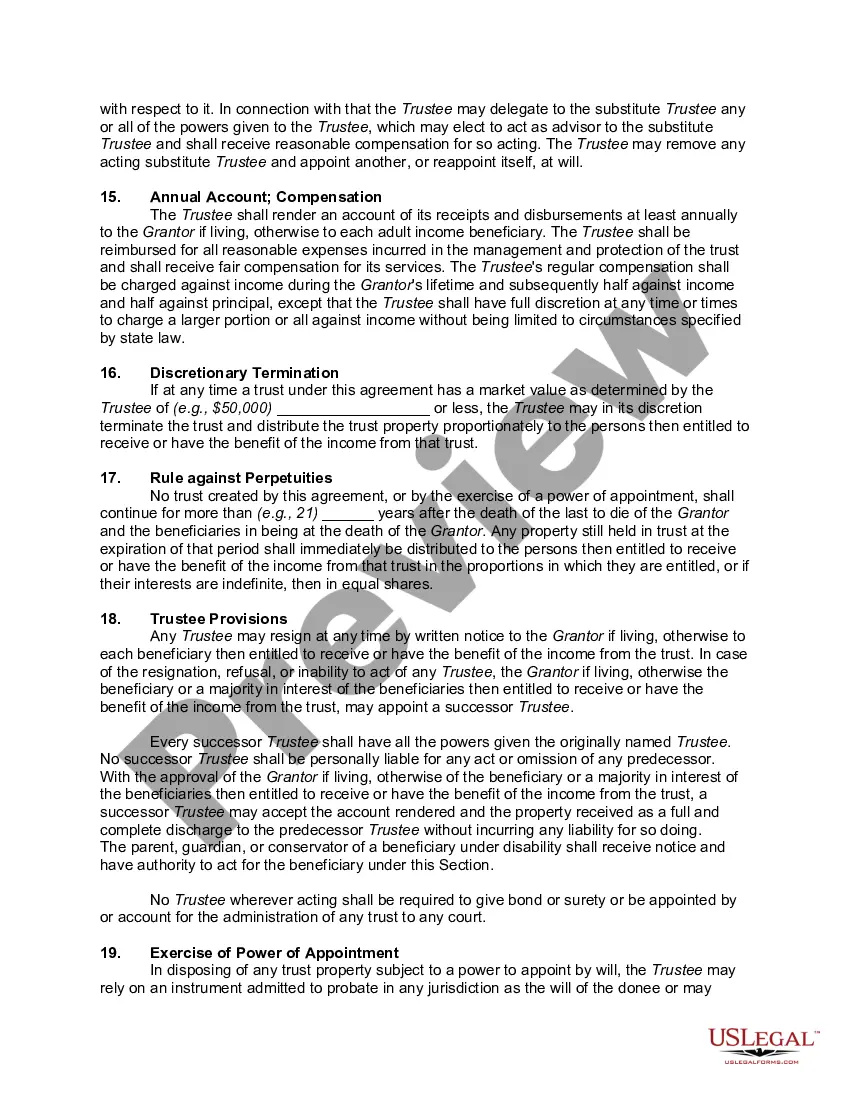
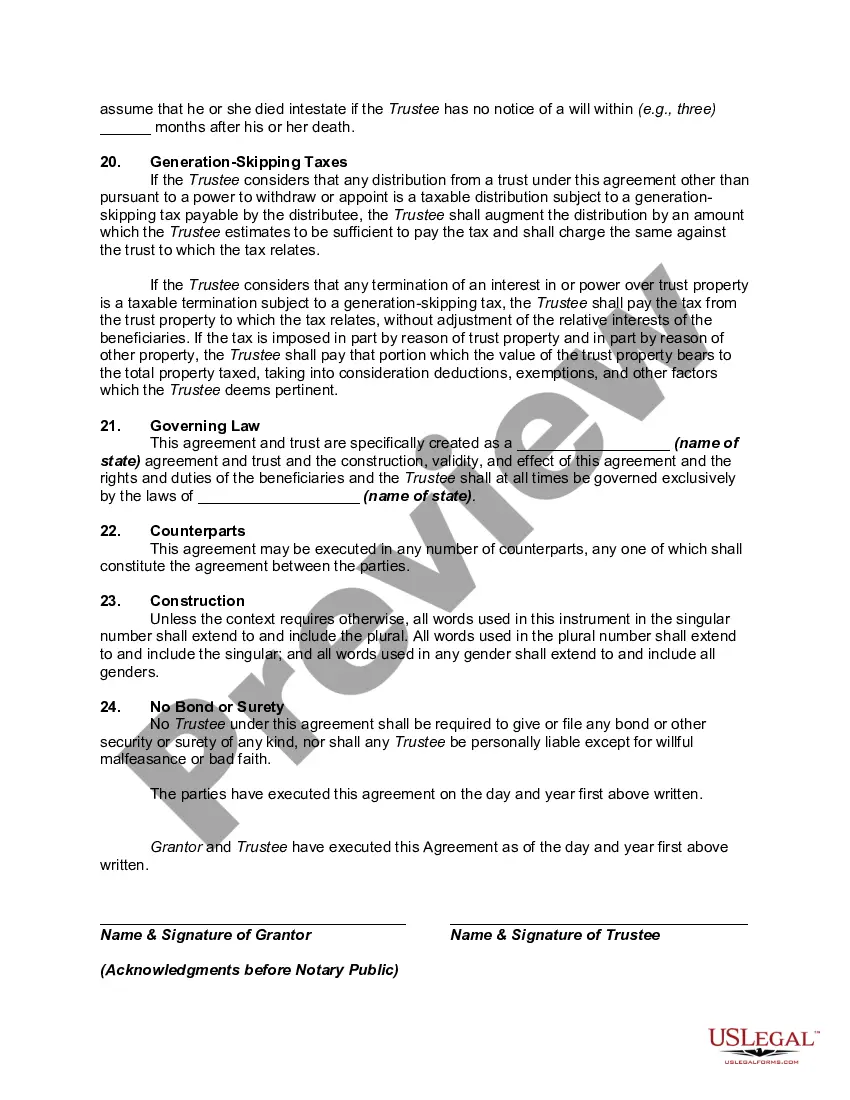
Here are the steps to follow after acquiring the form you need: Confirm this is the correct form by previewing it and reviewing its description.
- Access a helpful resource library of articles, guides, and manuals related to your circumstances and needs.
- Conserve time and energy searching for the necessary documents by using US Legal Forms' advanced search and Preview functions to locate Irrevocable Trust Benefit Trustors For Trust and obtain it.
- If you have a monthly subscription, Log In to your US Legal Forms account, find the form, and obtain it.
- Visit the My documents tab to review the documents you have saved and manage your folders as per your needs.
- If you're a first-time user of US Legal Forms, create a free account to gain unlimited access to all the platform's benefits.
- A robust online form directory can be a game changer for anyone aiming to handle these situations efficiently.
- US Legal Forms stands as a frontrunner in digital legal documents, boasting over 85,000 state-specific forms available on demand.
- With US Legal Forms, you can access a vast array of state or county-specific legal and business documents.
Form popularity
FAQ
Can A Trustee Be A Beneficiary? Yes ? although in the interests of the trust, it's good practice to ensure: There's no conflict of interest between someone's role as a trustee and their position as beneficiary.
With that said, at the passing of the settlor/grantor, all trusts straightaway convert to an irrevocable status. So, a Trustee can be the beneficiary and an heir of the estate.
The trustee is the person (or people) who holds legal title to the property that is in the trust. The trustee's job is to manage the property in the trust for the benefit of the beneficiaries in the way the settlor has asked.
What Should I Avoid with My Irrevocable Trust? Use trust funds to pay for personal expenses. Use trust funds to pay for monthly bills, such as phone bills or utilities. Use trust assets to purchase vehicles. Gift assets from the trust to beneficiaries. Transfer assets into the trust without consulting your lawyer.
Under the law a trust is considered its "own person", and may own assets. While the irrevocable trust owns the assets, it's the trustee who exercises control over them, e.g. their investment, distribution or other - while the designated beneficiaries benefit.