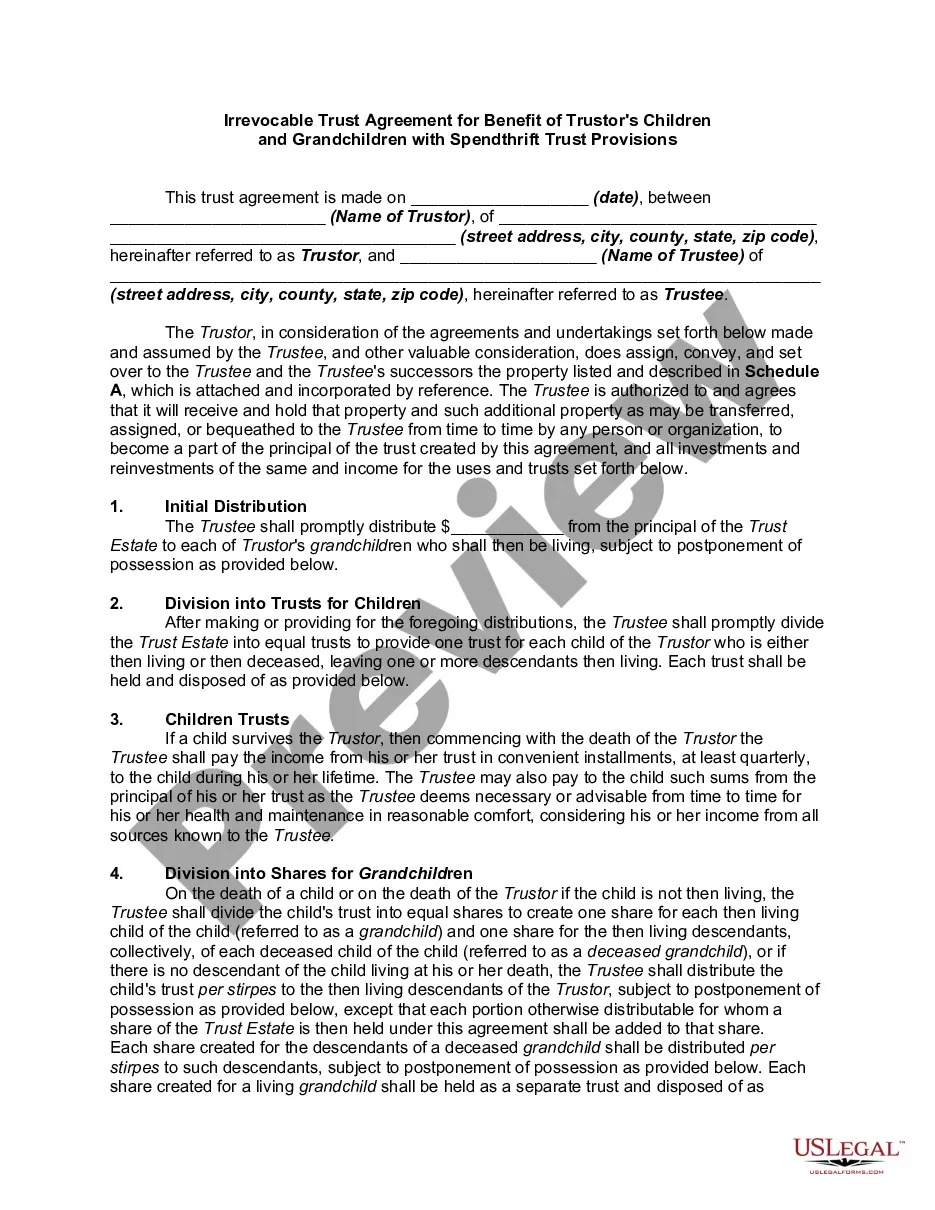
Irrevocable Form Trust With Mortgage
Description
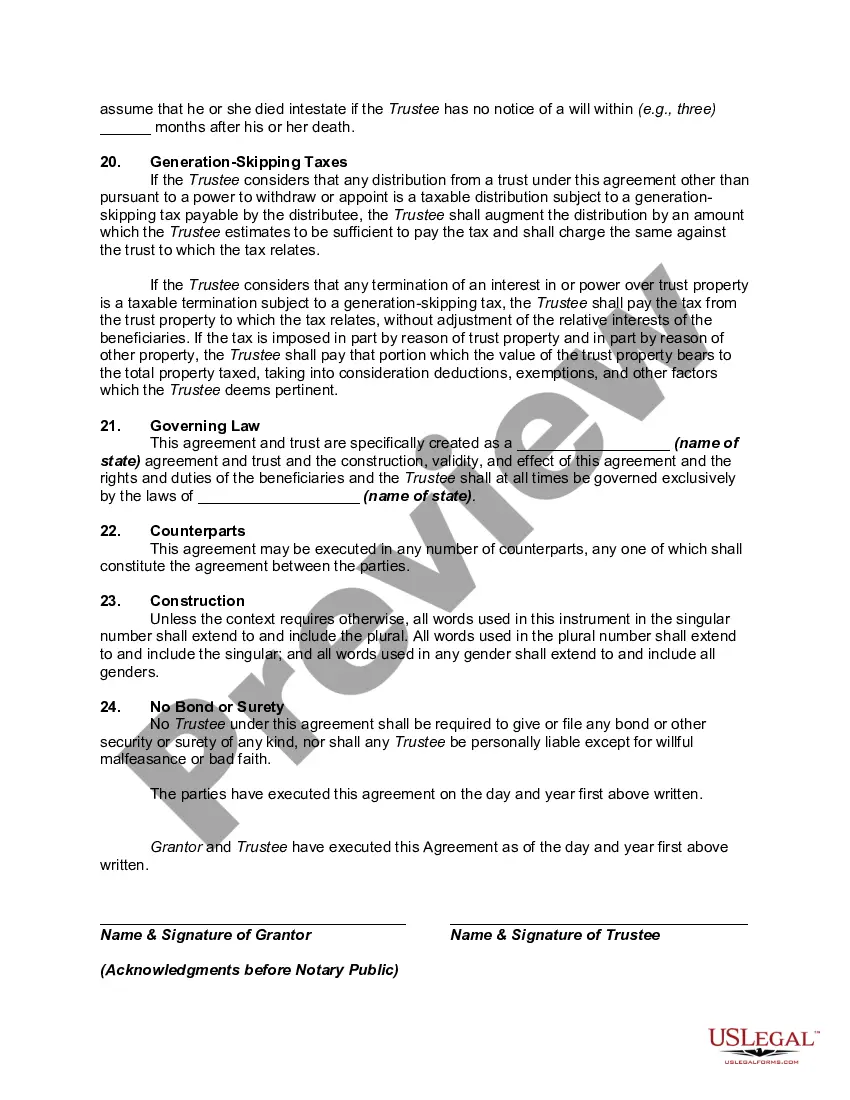
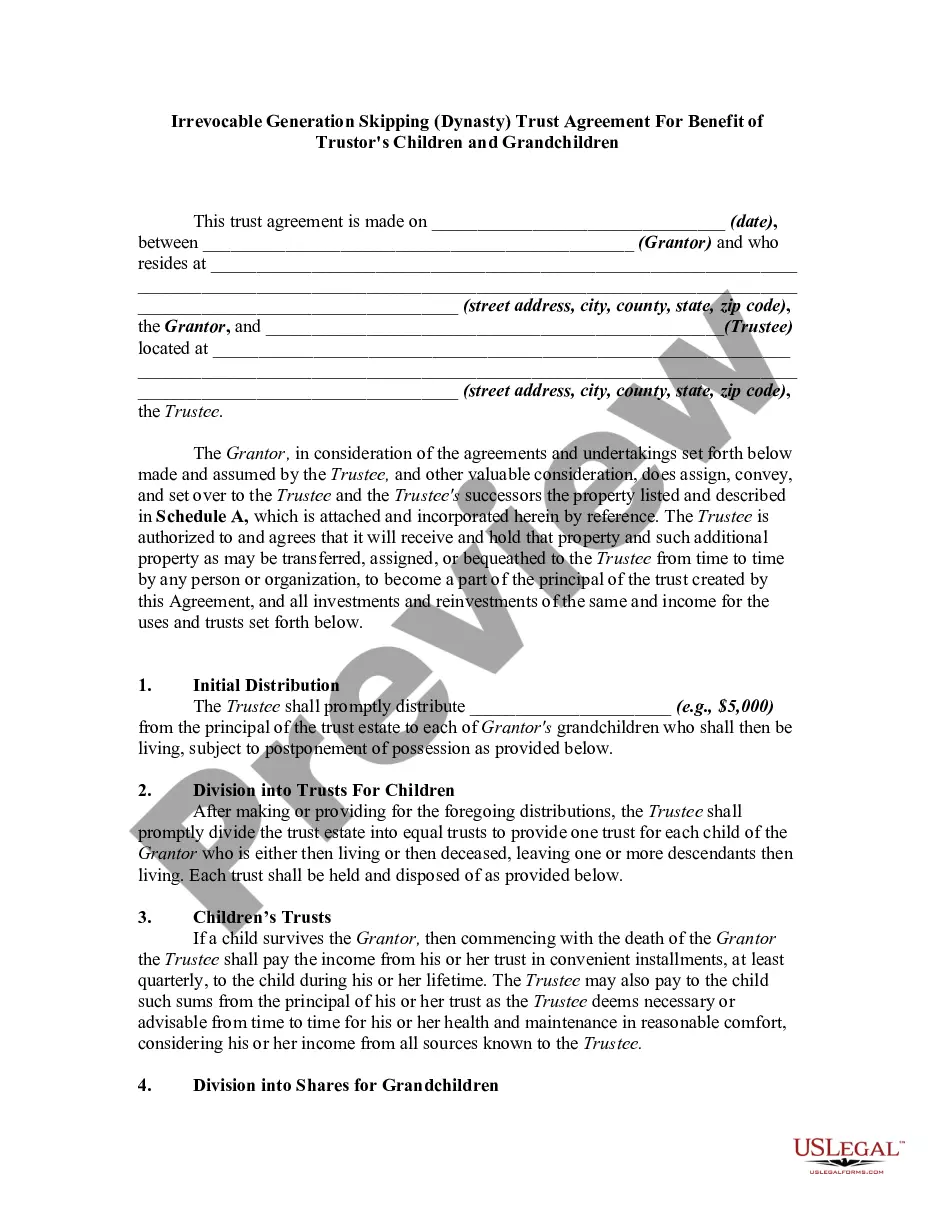
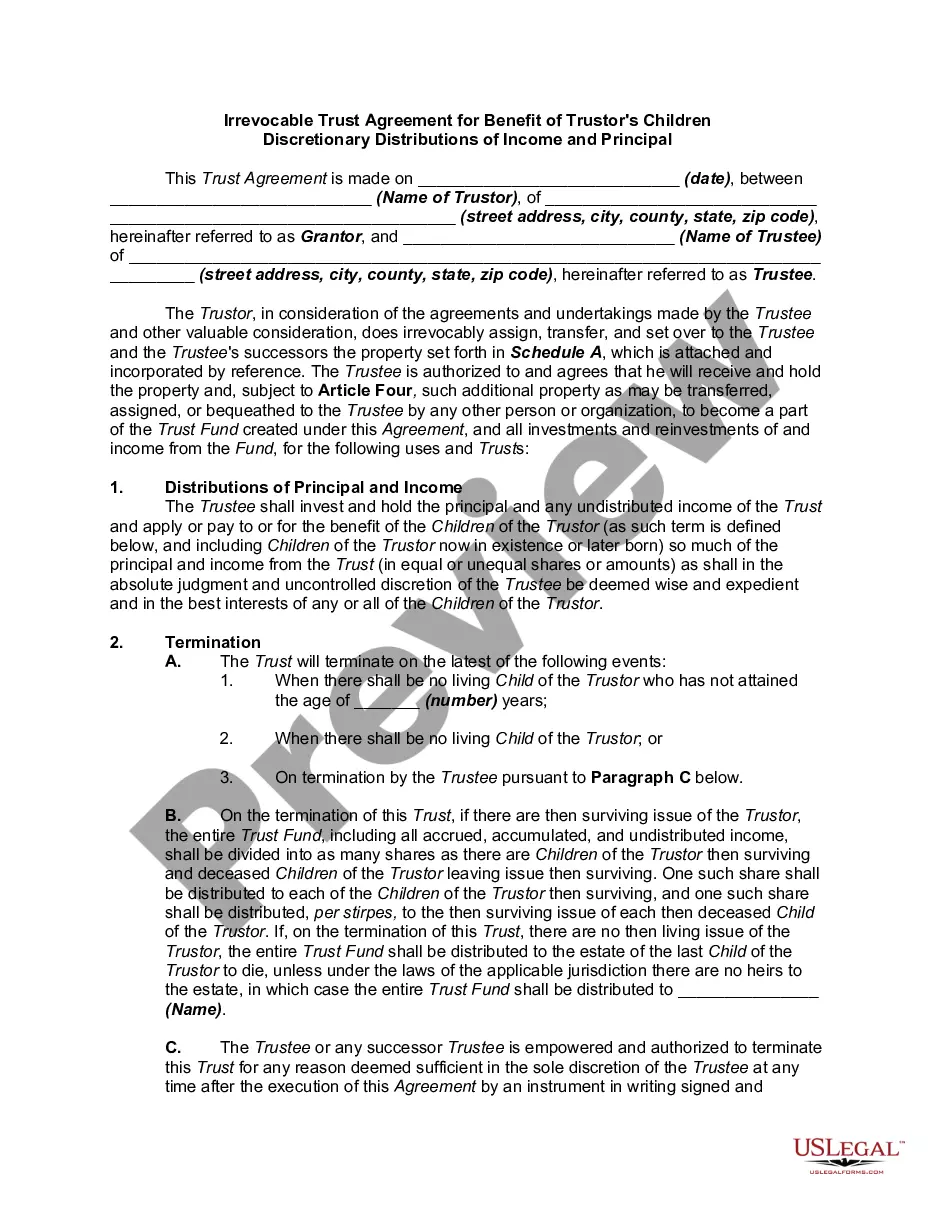
Get your form ready online
Our built-in tools help you complete, sign, share, and store your documents in one place.
Make edits, fill in missing information, and update formatting in US Legal Forms—just like you would in MS Word.
Download a copy, print it, send it by email, or mail it via USPS—whatever works best for your next step.
Sign and collect signatures with our SignNow integration. Send to multiple recipients, set reminders, and more. Go Premium to unlock E-Sign.
If this form requires notarization, complete it online through a secure video call—no need to meet a notary in person or wait for an appointment.
We protect your documents and personal data by following strict security and privacy standards.

Make edits, fill in missing information, and update formatting in US Legal Forms—just like you would in MS Word.

Download a copy, print it, send it by email, or mail it via USPS—whatever works best for your next step.

Sign and collect signatures with our SignNow integration. Send to multiple recipients, set reminders, and more. Go Premium to unlock E-Sign.

If this form requires notarization, complete it online through a secure video call—no need to meet a notary in person or wait for an appointment.

We protect your documents and personal data by following strict security and privacy standards.
Looking for another form?




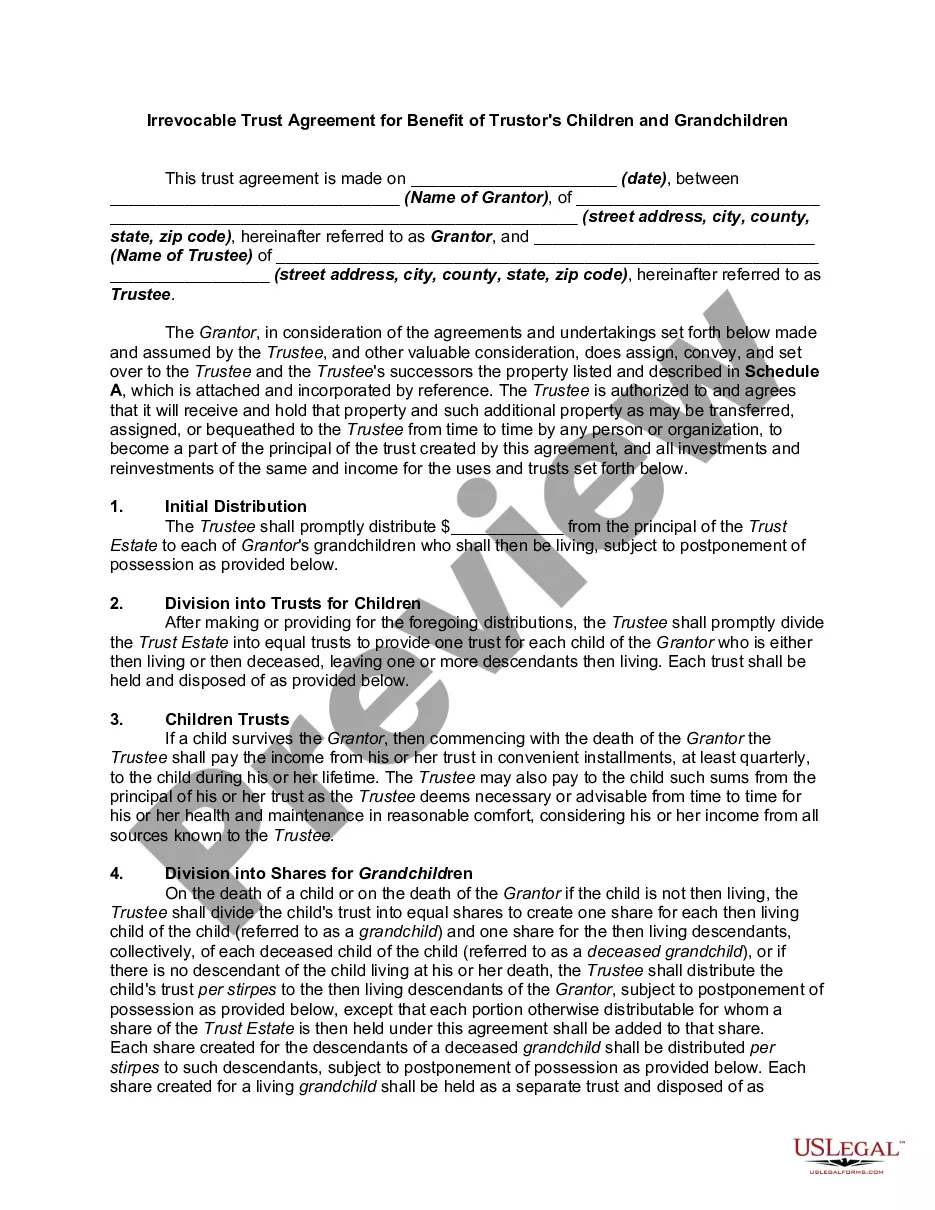
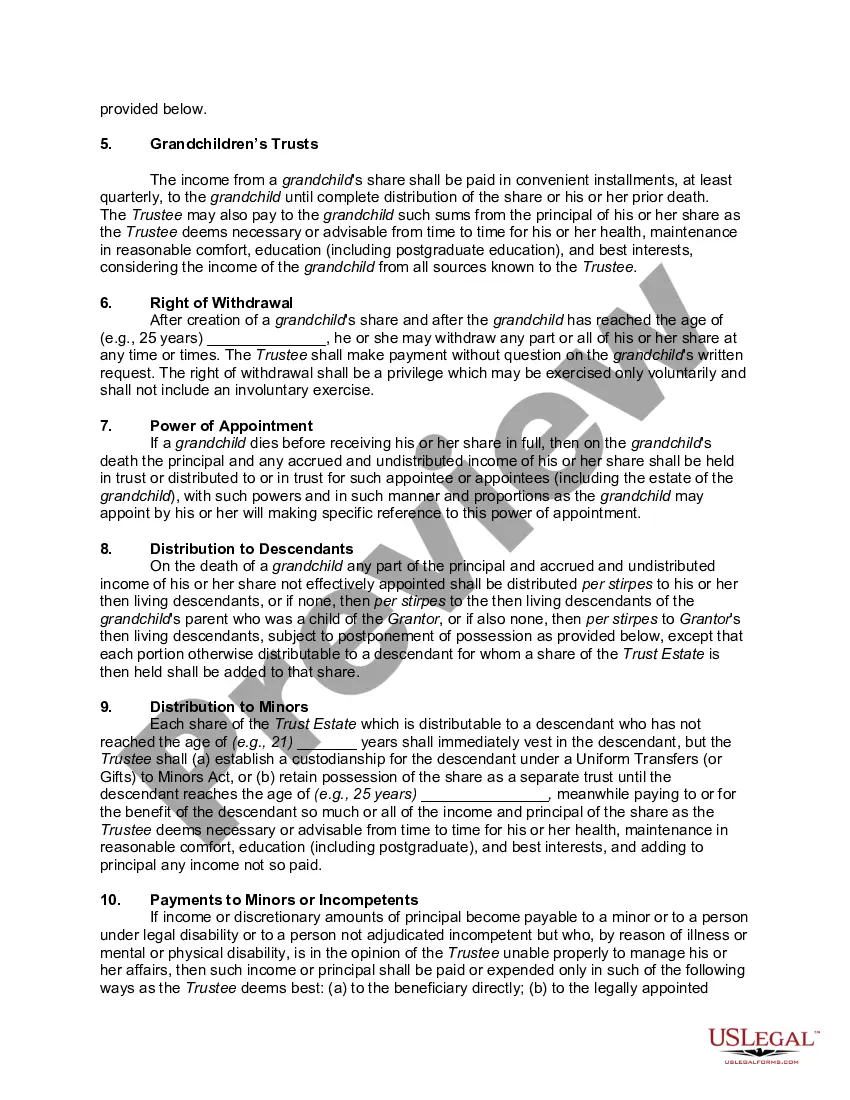
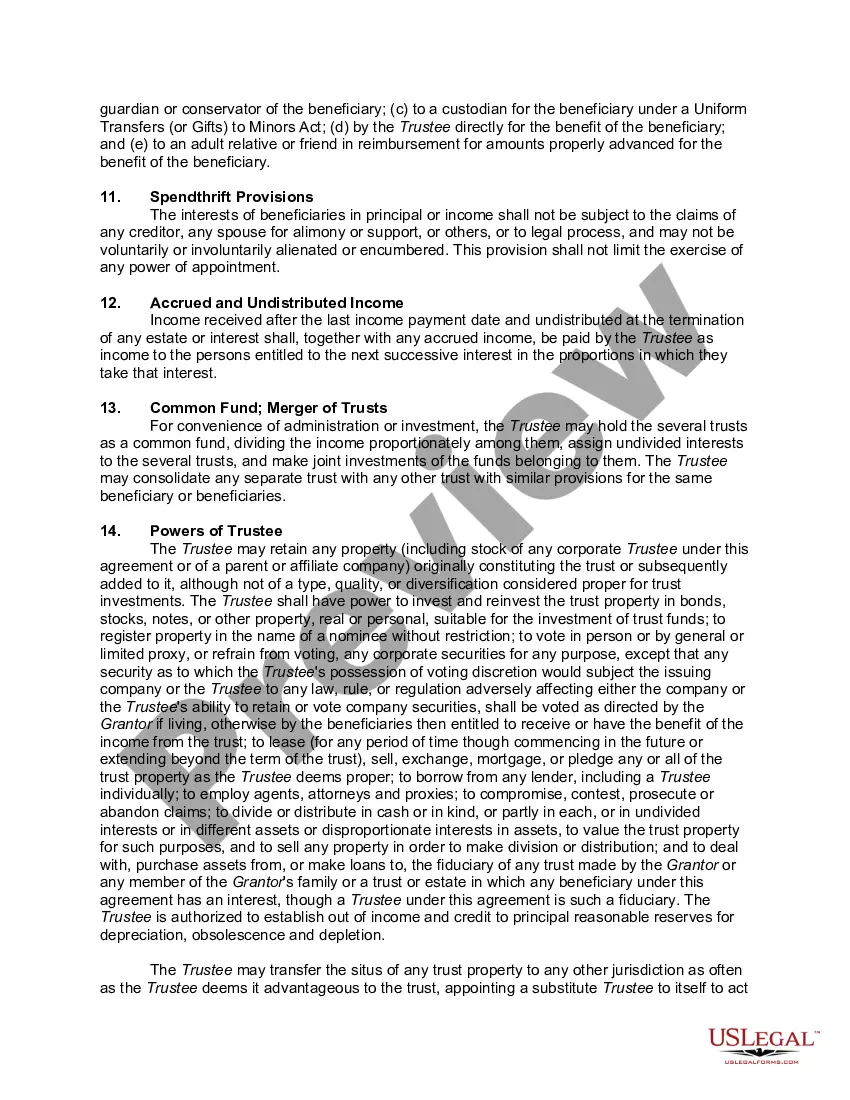
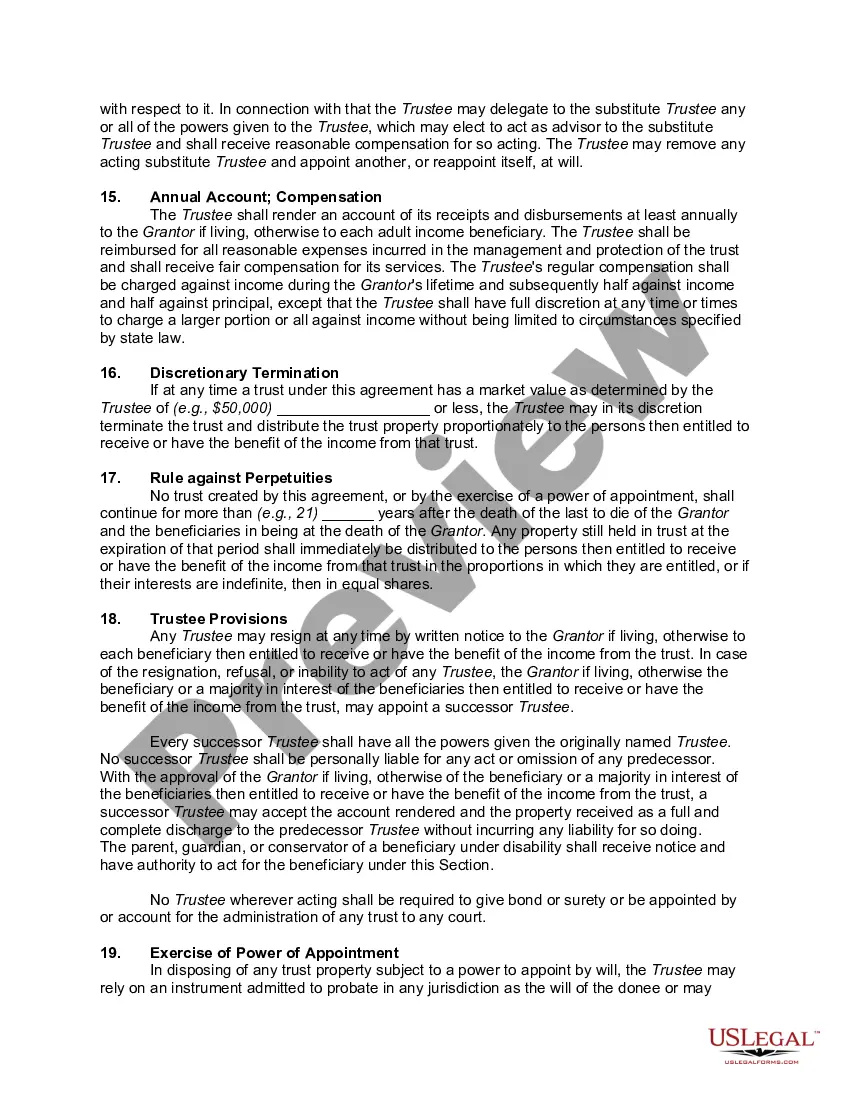
How to fill out Irrevocable Trust Agreement For Benefit Of Trustor's Children And Grandchildren?
The Unalterable Form Trust With Mortgage you observe on this site is a reusable legal blueprint crafted by expert attorneys in accordance with federal and local guidelines.
For over 25 years, US Legal Forms has supplied individuals, companies, and legal practitioners with more than 85,000 authenticated, state-specific documents for any business and personal circumstance. It’s the quickest, easiest, and most reliable method to acquire the documentation you require, as the service assures the utmost level of data security and anti-malware safeguards.
Register for US Legal Forms to have authentic legal templates for all of life’s situations readily available.
- Search for the document you require and assess it.
- Examine the file you looked for and preview it or review the form description to confirm it meets your needs. If it doesn’t, use the search function to find the correct one. Click Buy Now when you have identified the template you require.
- Sign up and Log In.
- Choose the pricing plan that fits you and create an account. Use PayPal or a credit card for a quick payment. If you already have an account, Log In and review your subscription to continue.
- Obtain the editable template.
- Choose the format you desire for your Unalterable Form Trust With Mortgage (PDF, Word, RTF) and download the sample to your device.
- Fill out and sign the document.
- Print out the template to complete it by hand. Alternatively, employ an online multi-functional PDF editor to swiftly and accurately fill out and sign your form with a legally binding electronic signature.
- Download your documents once again.
- Use the same document again whenever necessary. Access the My documents tab in your profile to redownload any previously acquired forms.
Form popularity
FAQ
It depends. If you or your firm are holding the mortgage or other charge in trust, either directly or indirectly through a related person or corporation, then you are required to record the mortgage or other charge in these bookkeeping records.
A mortgage in trust may be something that you have never previously considered, but it may be appropriate. Anyone who owns property can put their mortgage in a revocable living trust so as to not deal with the probate process after death and utilize other estate planning benefits.
Conventional lenders, such as banks and credit unions, are reluctant (or in most cases unable) to offer loans to irrevocable trusts in California. This reluctance is partly due to the complexity, lack of personal guarantee, as well as the hassle to set up this loan.
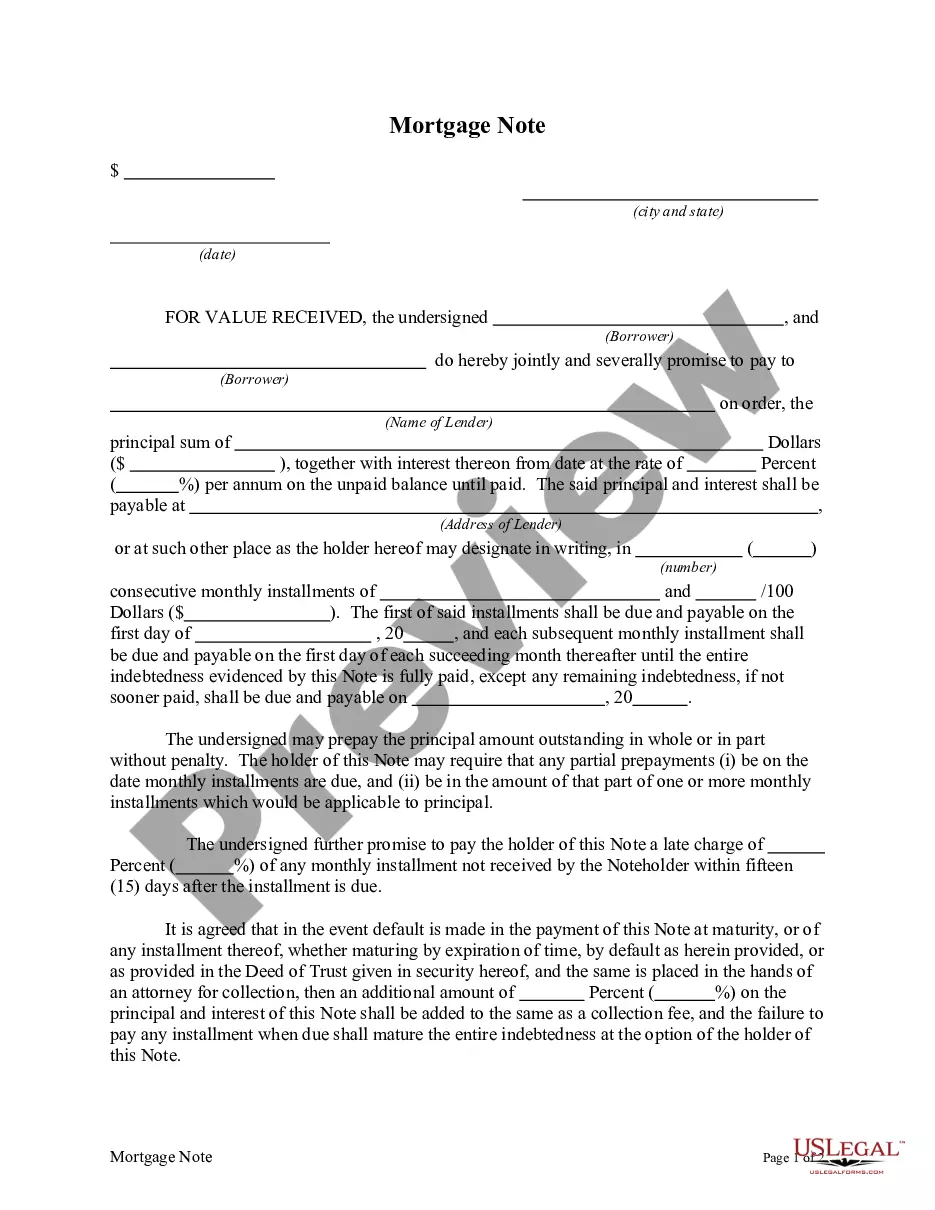
Can a house with a mortgage be put in an irrevocable trust? Yes. If you're setting up an irrevocable trust, you can certainly transfer your mortgaged house to the trust. You are not required to pay off the mortgage before you transfer the property to the trust.
An irrevocable trust can get a mortgage secured by trust-owned real estate. The trust documents must allow for taking out a mortgage against the real estate by the successor trustee(s). The real estate owned by the irrevocable trust must also have sufficient equity in order to obtain a mortgage.