Form Irrevocable Trust With The Beneficiary
Description

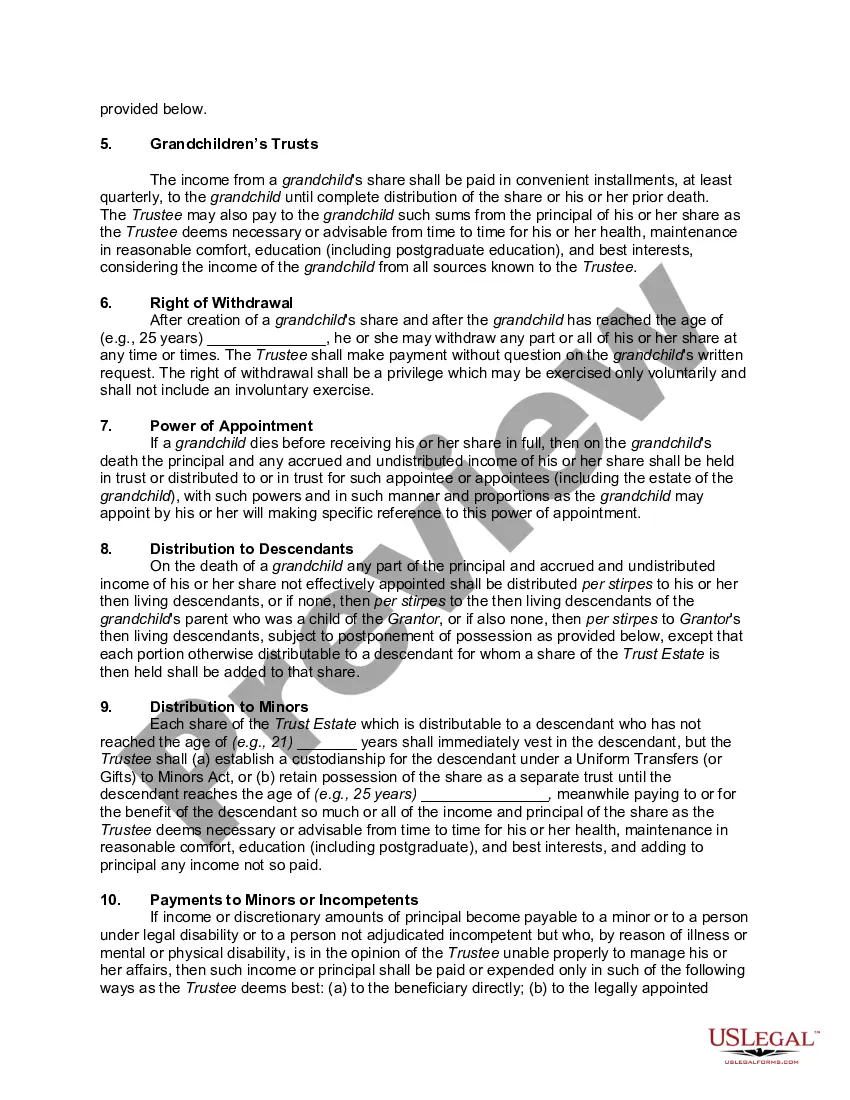
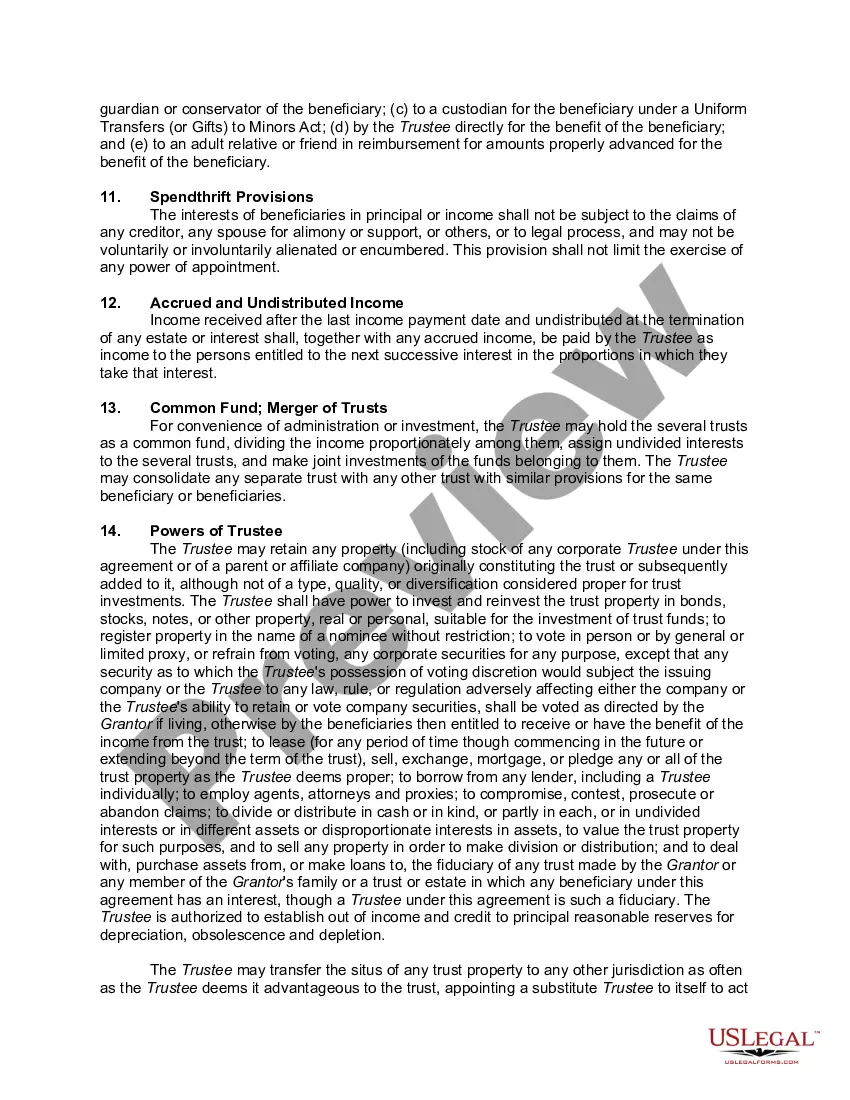
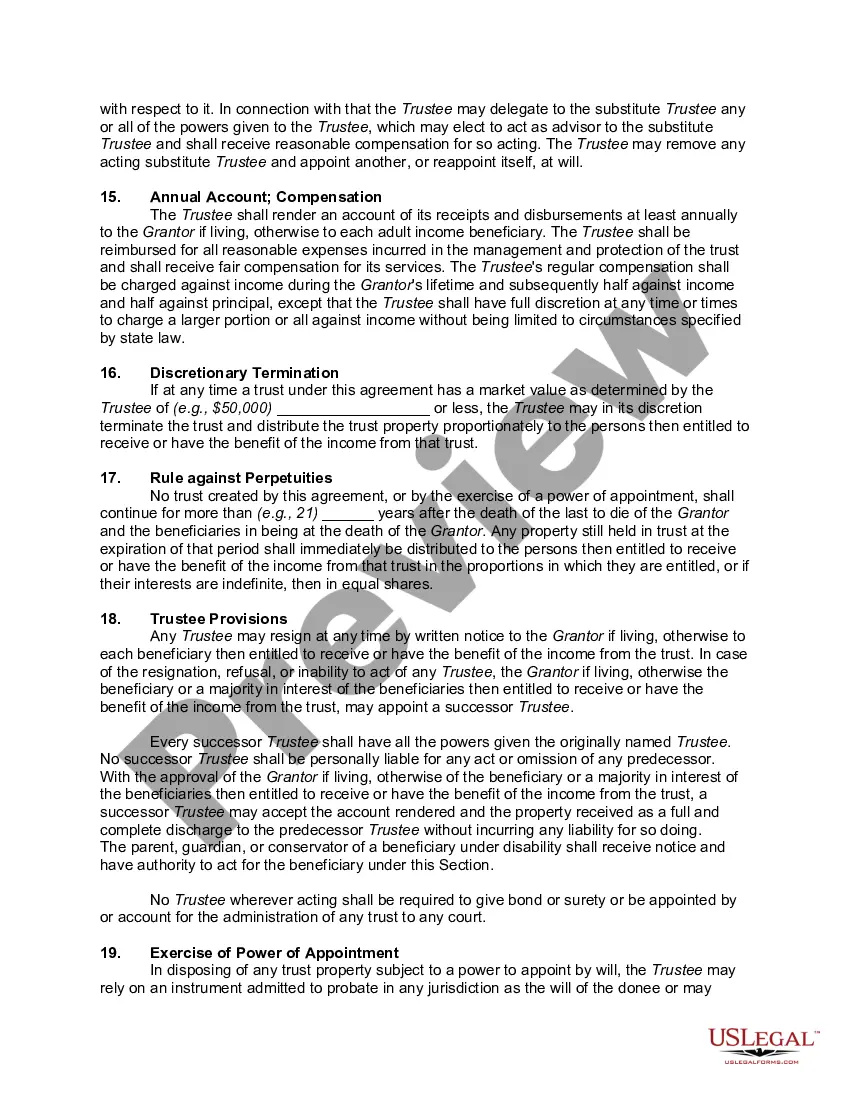
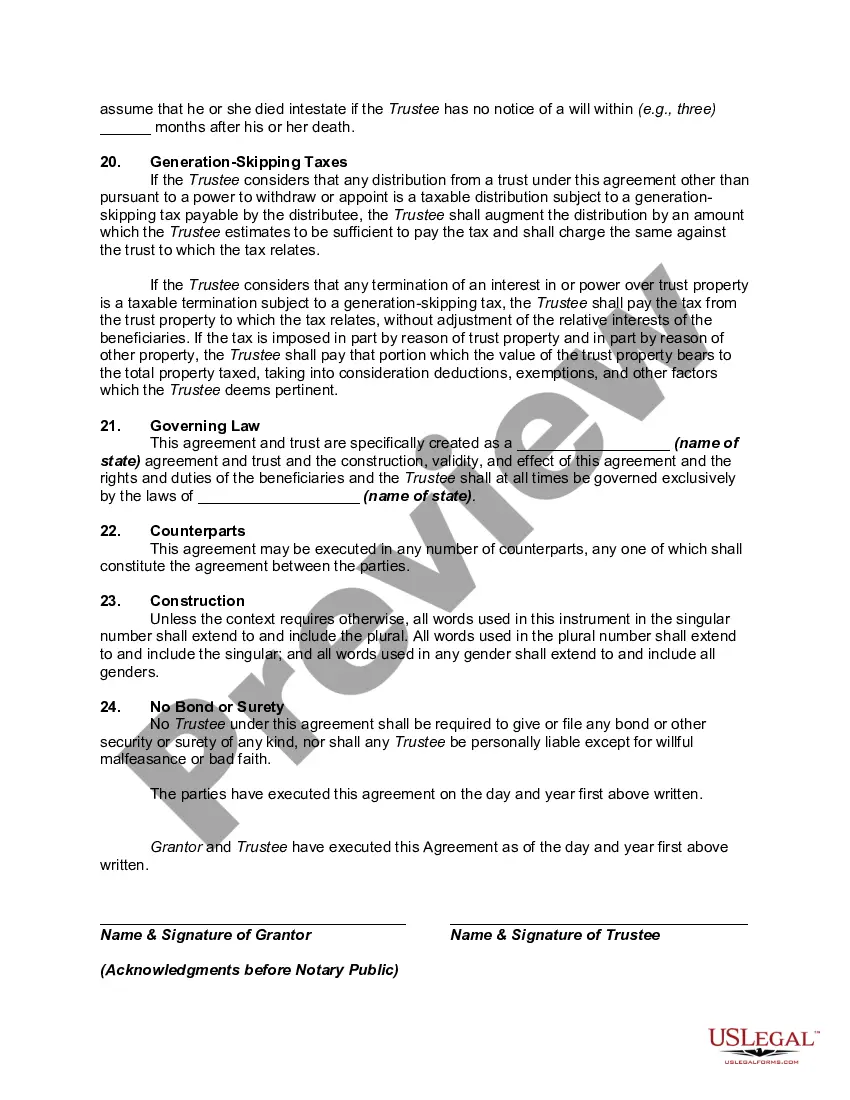

Get your form ready online
Our built-in tools help you complete, sign, share, and store your documents in one place.
Make edits, fill in missing information, and update formatting in US Legal Forms—just like you would in MS Word.
Download a copy, print it, send it by email, or mail it via USPS—whatever works best for your next step.
Sign and collect signatures with our SignNow integration. Send to multiple recipients, set reminders, and more. Go Premium to unlock E-Sign.
If this form requires notarization, complete it online through a secure video call—no need to meet a notary in person or wait for an appointment.
We protect your documents and personal data by following strict security and privacy standards.

Make edits, fill in missing information, and update formatting in US Legal Forms—just like you would in MS Word.

Download a copy, print it, send it by email, or mail it via USPS—whatever works best for your next step.

Sign and collect signatures with our SignNow integration. Send to multiple recipients, set reminders, and more. Go Premium to unlock E-Sign.

If this form requires notarization, complete it online through a secure video call—no need to meet a notary in person or wait for an appointment.

We protect your documents and personal data by following strict security and privacy standards.
Looking for another form?






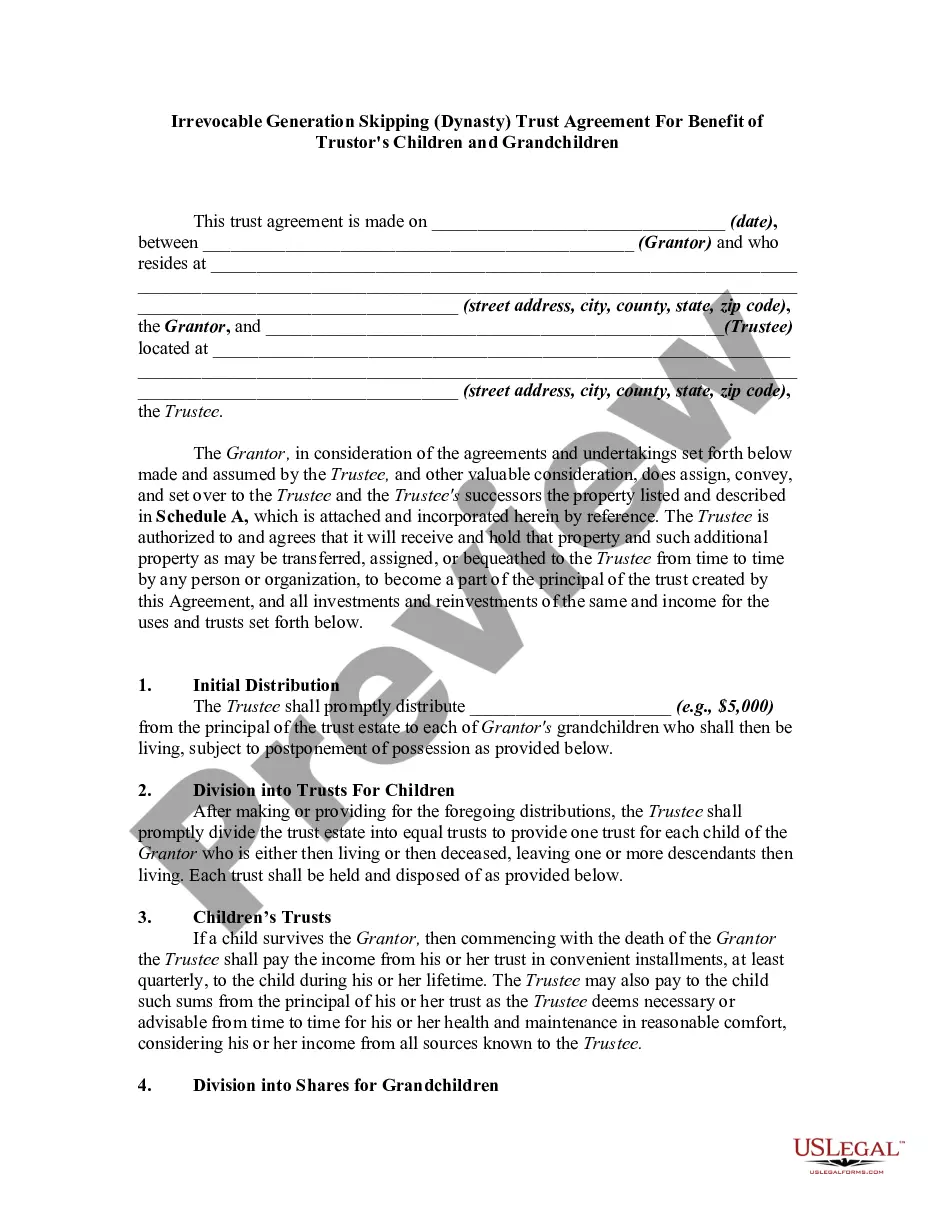
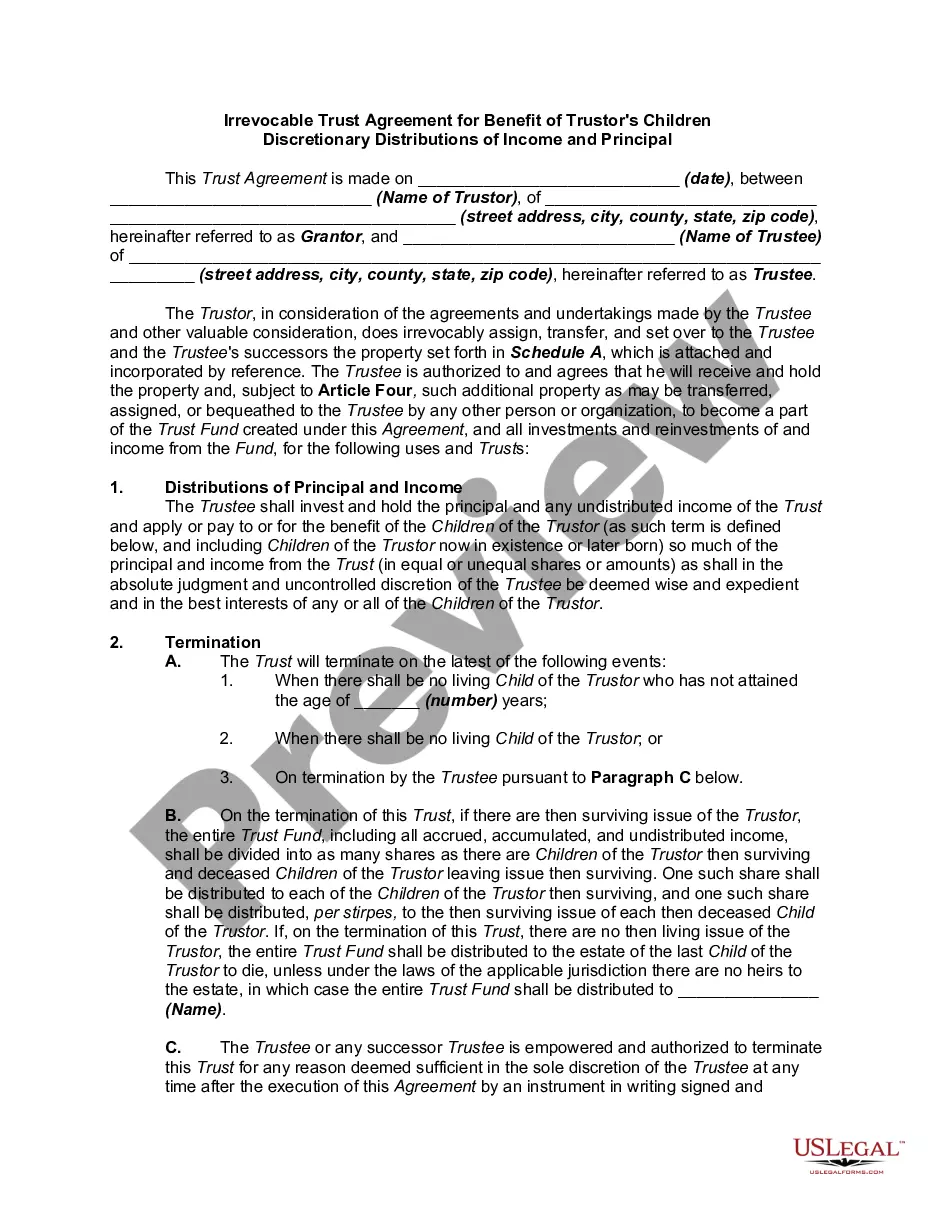
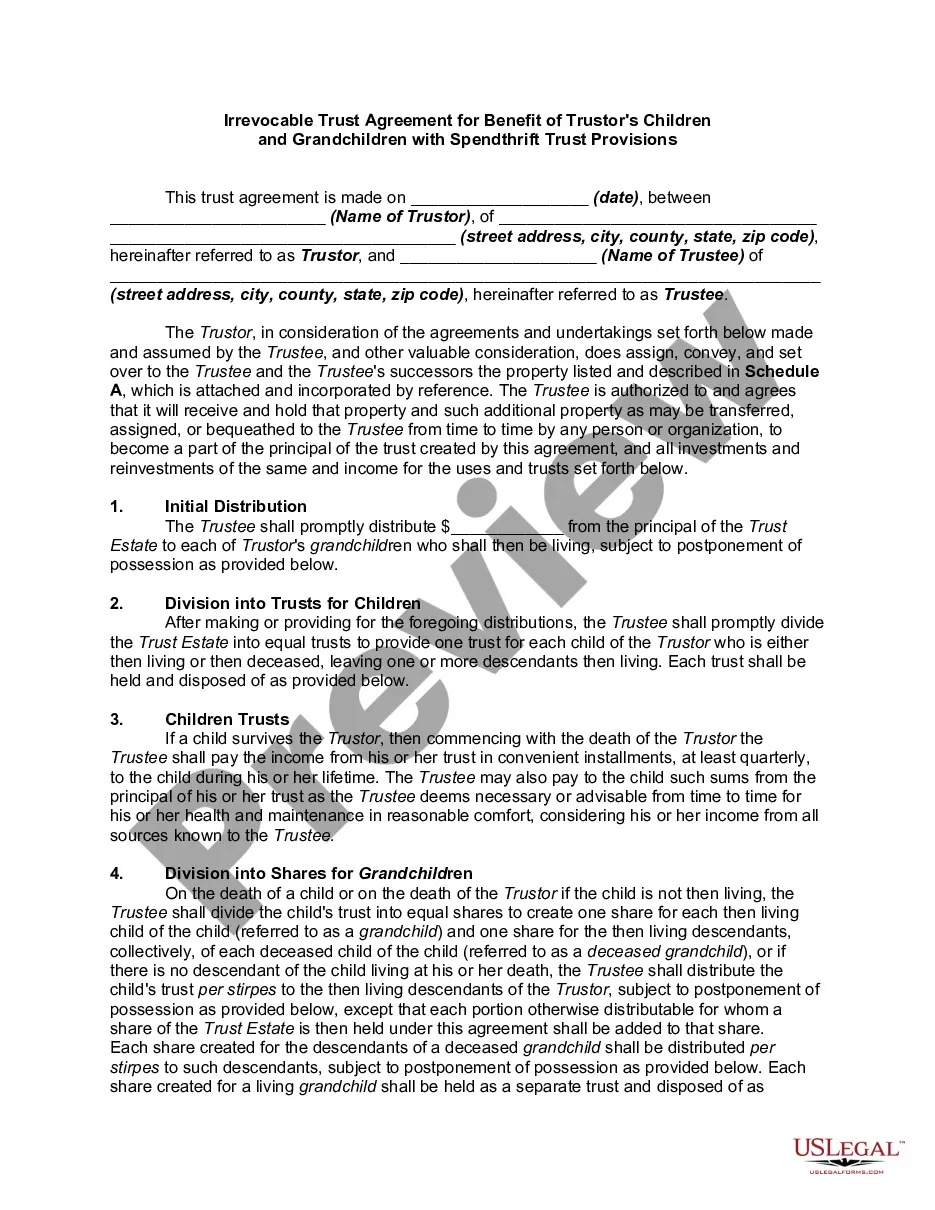
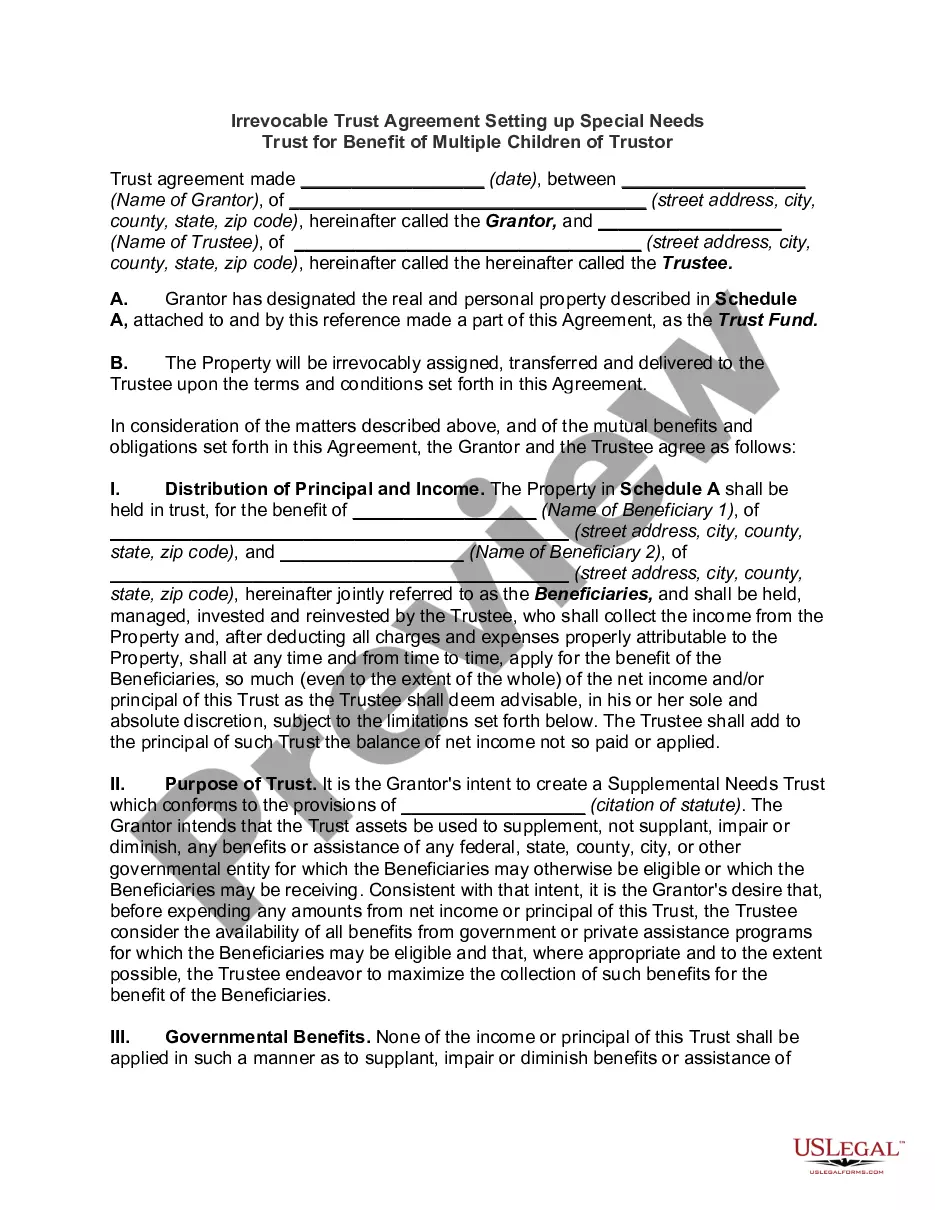
How to fill out Irrevocable Trust Agreement For Benefit Of Trustor's Children And Grandchildren?
- Log in to your US Legal Forms account if you're a returning user, and click the Download button for the required trust template. Ensure your subscription is active.
- If you're new, start by exploring the Preview mode and form description to confirm the trust meets your legal requirements.
- Utilize the Search feature to find alternative templates if necessary, ensuring you select one that aligns with your needs.
- Select the Buy Now option and choose a subscription plan that fits your needs; registering for an account is required for access.
- Complete your purchase using your credit card or PayPal to finalize your subscription.
- Download the trust form to your device. You can find it later in the My Forms section of your account.
US Legal Forms empowers you to navigate the legal documentation process effortlessly, allowing for quick access to a comprehensive library of forms.
Begin your journey to securing your assets today. Visit US Legal Forms and take the first step in establishing your irrevocable trust!
Form popularity
FAQ
After the death of the grantor, the responsibility for managing an irrevocable trust typically falls to the trustee. When you form an irrevocable trust with the beneficiary, the trustee is tasked with ensuring the trust's terms are honored. This includes distributing assets to beneficiaries and managing ongoing trust obligations. It's crucial to appoint a trustworthy and capable individual or institution as your trustee to handle these responsibilities effectively.
Filling out an irrevocable trust involves careful consideration and planning. To form an irrevocable trust with the beneficiary, you need to complete the trust document by providing relevant details, such as appointing a trustee and specifying the beneficiaries. Platforms like uslegalforms offer easy-to-follow templates and guidance to assist you in this process. By using such resources, you can ensure that your trust is structured correctly and meets legal requirements.
In the context of an irrevocable trust, the beneficiary refers to the individual or organization that receives assets held in the trust. When you decide to form an irrevocable trust with the beneficiary, it binds the assets according to your instructions. The beneficiary's rights and the distribution of assets are defined in the trust document. This clarity helps avoid disputes and ensures that your intentions are honored.
The beneficiary of an irrevocable trust is the person or entity designated to receive the benefits from the trust. When you form an irrevocable trust with the beneficiary, you create a legal agreement that specifies who will benefit from the trust's assets. This arrangement ensures that the assets are protected and managed according to your wishes. It's important to choose your beneficiary carefully, as they will have rights to the trust's benefits after its creation.
To add a beneficiary to an irrevocable trust, you will generally need to follow the trust's specific guidelines as outlined in its agreement. If your trust permits amendments, you can create an amendment that lists the new beneficiary. However, keep in mind that once an irrevocable trust is established, your options may be limited. For a clear and effective process, you might find using USLegalForms beneficial to navigate these changes.
An irrevocable trust does not always need to be filed with the court unless it involves assets that will go through probate. In many cases, individuals opt to form an irrevocable trust with the beneficiary while keeping the terms private. However, every state has different regulations regarding trusts, and it is crucial to consult legal guidance. This ensures your trust remains valid and recognized.
To file your irrevocable trust, you typically need to submit the trust document to the probate court in the jurisdiction where the trust was created. However, you don’t always need to file the trust document when forming an irrevocable trust with the beneficiary, as many individuals keep the document private. Nevertheless, check local laws to ensure compliance. Using a legal platform like USLegalForms can also simplify this process.
One effective way to minimize taxes on an irrevocable trust is by strategically allocating income generated by the trust. Additionally, consider forming an irrevocable trust with the beneficiary, which may help in shifting some tax burdens away from individuals to the trust itself. You should consult with a tax professional to ensure that your trust is structured optimally. This way, you can benefit from potential tax efficiencies.
One of the most significant mistakes parents make when setting up a trust fund is failing to communicate their intentions with their beneficiaries. Clear communication can prevent misunderstandings and conflicts in the future. When you form an irrevocable trust with the beneficiary, think about how you will explain your decisions and the trust’s purpose to avoid potential issues.
Once an irrevocable beneficiary is named, changing that beneficiary is generally not allowed without their consent. This is one of the defining characteristics of irrevocable trusts, ensuring that the benefits are secure. If you need guidance on how this impacts your trust, consider reaching out to US Legal Forms to assist you in forming an irrevocable trust with the beneficiary.