Deposit Box Refuse With Insurance
Description
Get your form ready online
Our built-in tools help you complete, sign, share, and store your documents in one place.
Make edits, fill in missing information, and update formatting in US Legal Forms—just like you would in MS Word.
Download a copy, print it, send it by email, or mail it via USPS—whatever works best for your next step.
Sign and collect signatures with our SignNow integration. Send to multiple recipients, set reminders, and more. Go Premium to unlock E-Sign.
If this form requires notarization, complete it online through a secure video call—no need to meet a notary in person or wait for an appointment.
We protect your documents and personal data by following strict security and privacy standards.

Make edits, fill in missing information, and update formatting in US Legal Forms—just like you would in MS Word.

Download a copy, print it, send it by email, or mail it via USPS—whatever works best for your next step.

Sign and collect signatures with our SignNow integration. Send to multiple recipients, set reminders, and more. Go Premium to unlock E-Sign.

If this form requires notarization, complete it online through a secure video call—no need to meet a notary in person or wait for an appointment.

We protect your documents and personal data by following strict security and privacy standards.
Looking for another form?
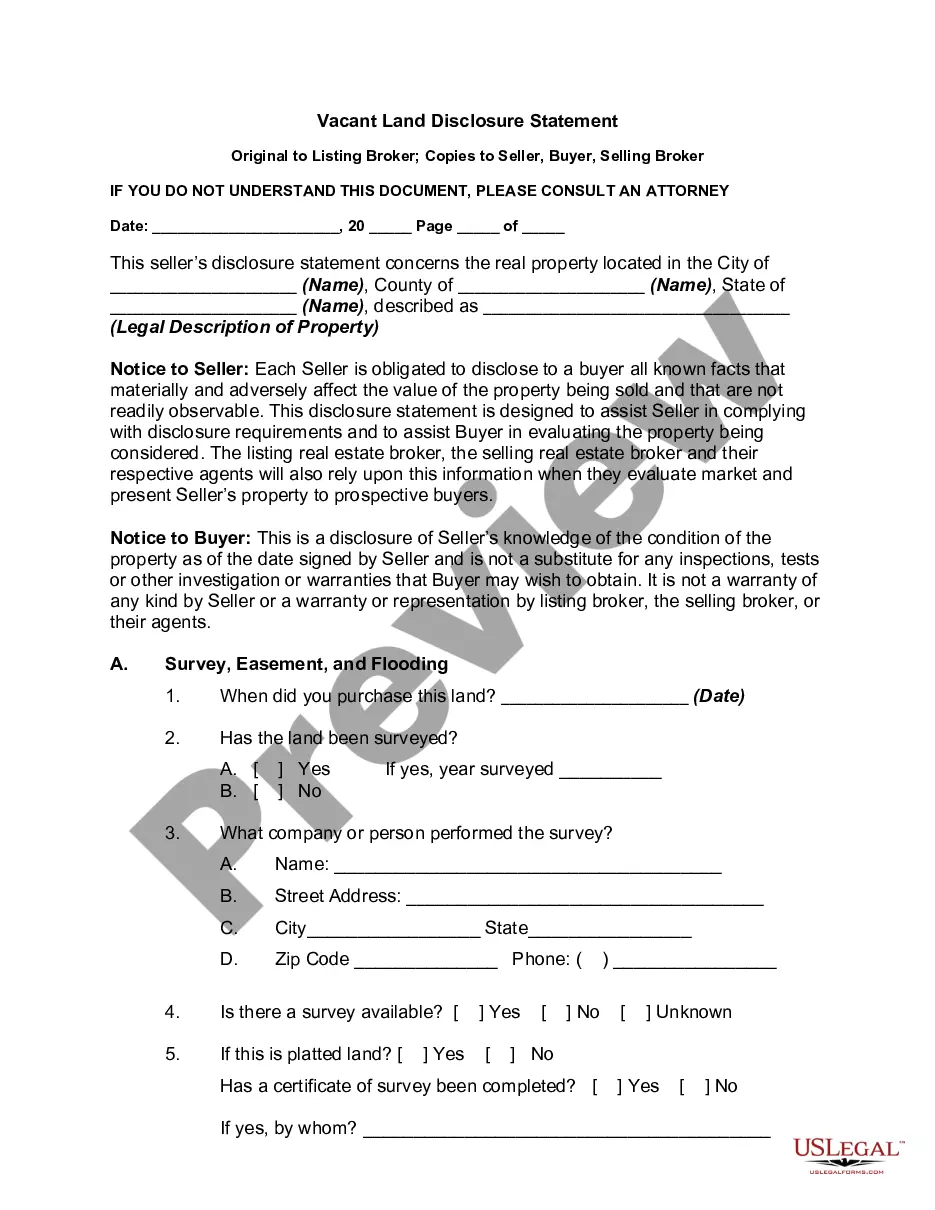
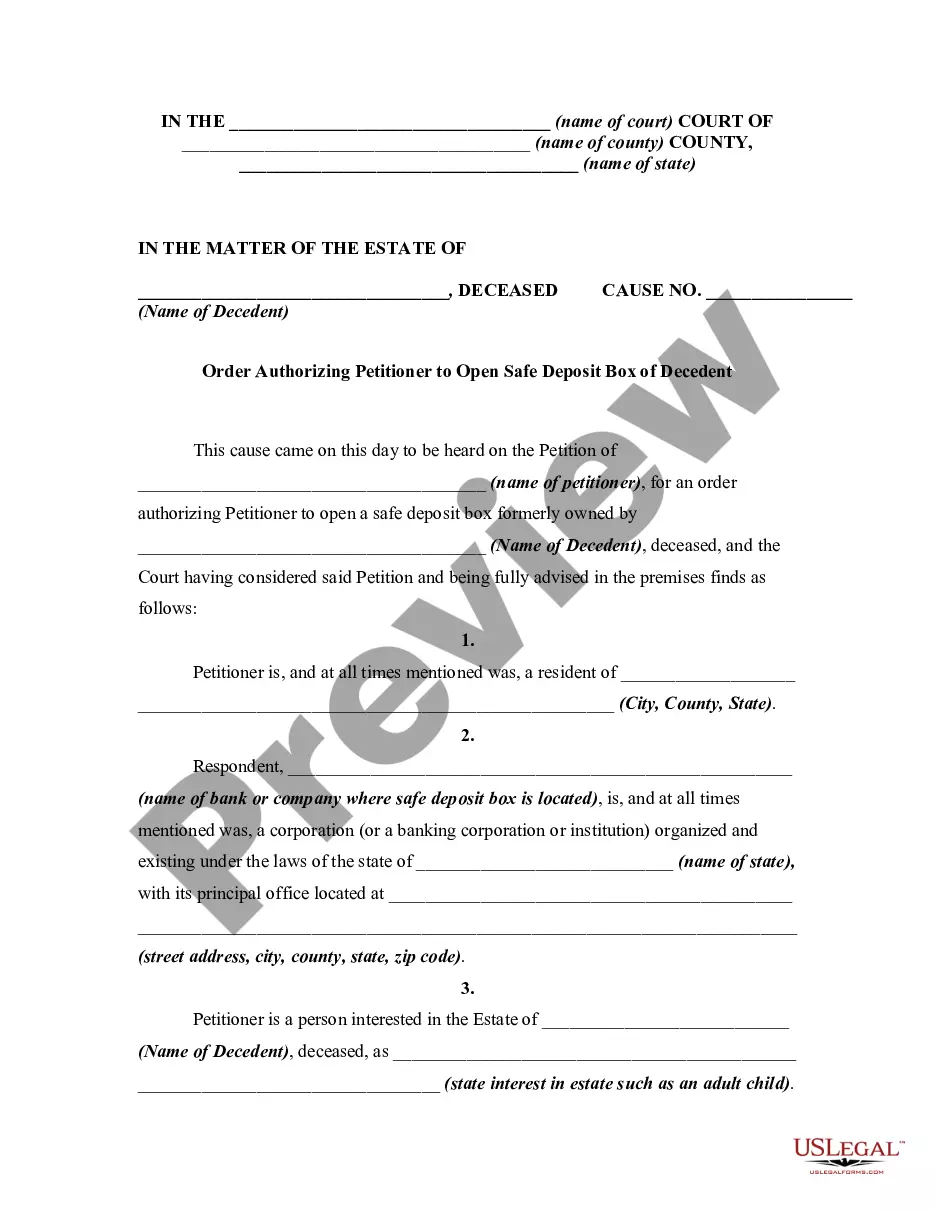
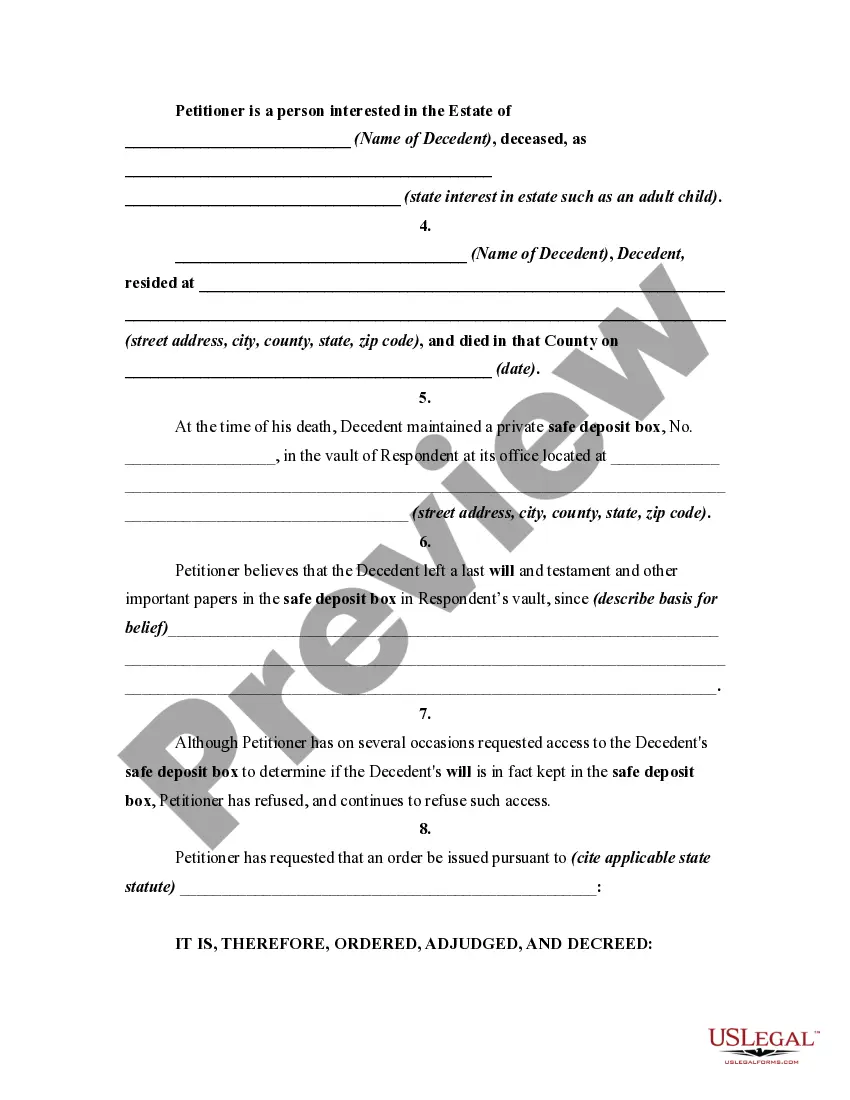
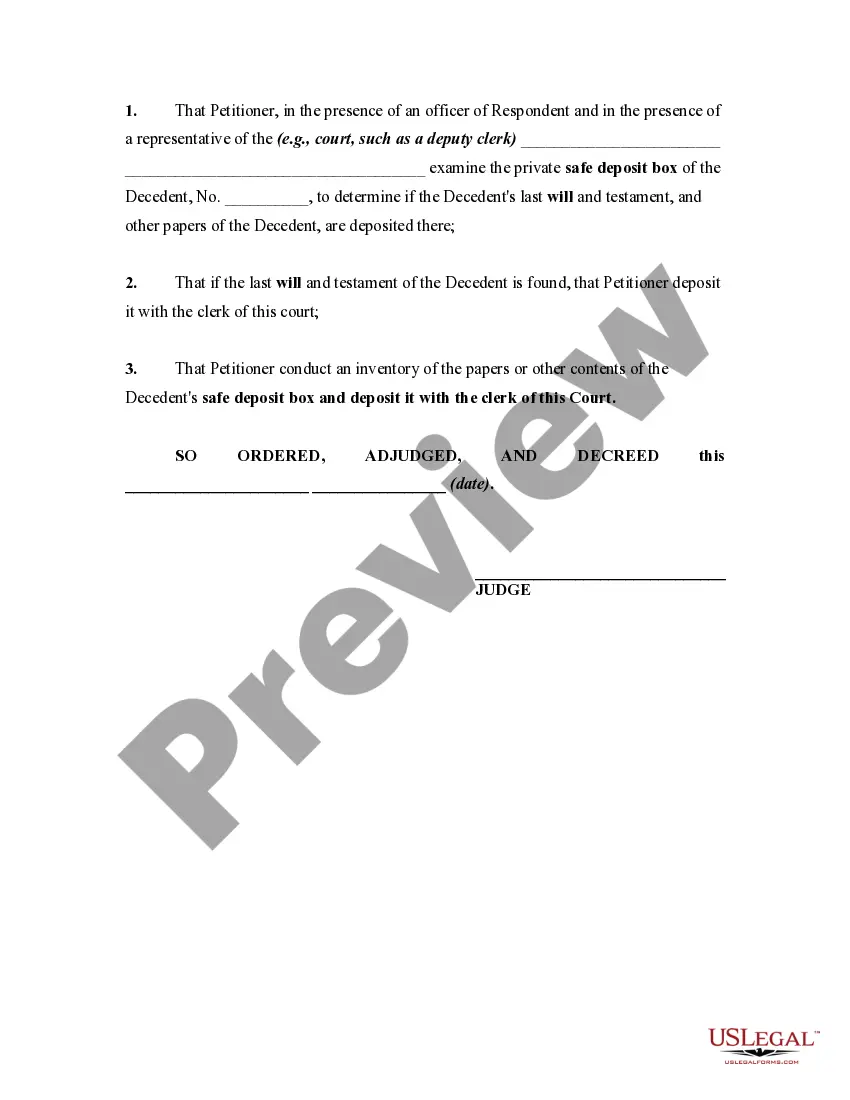
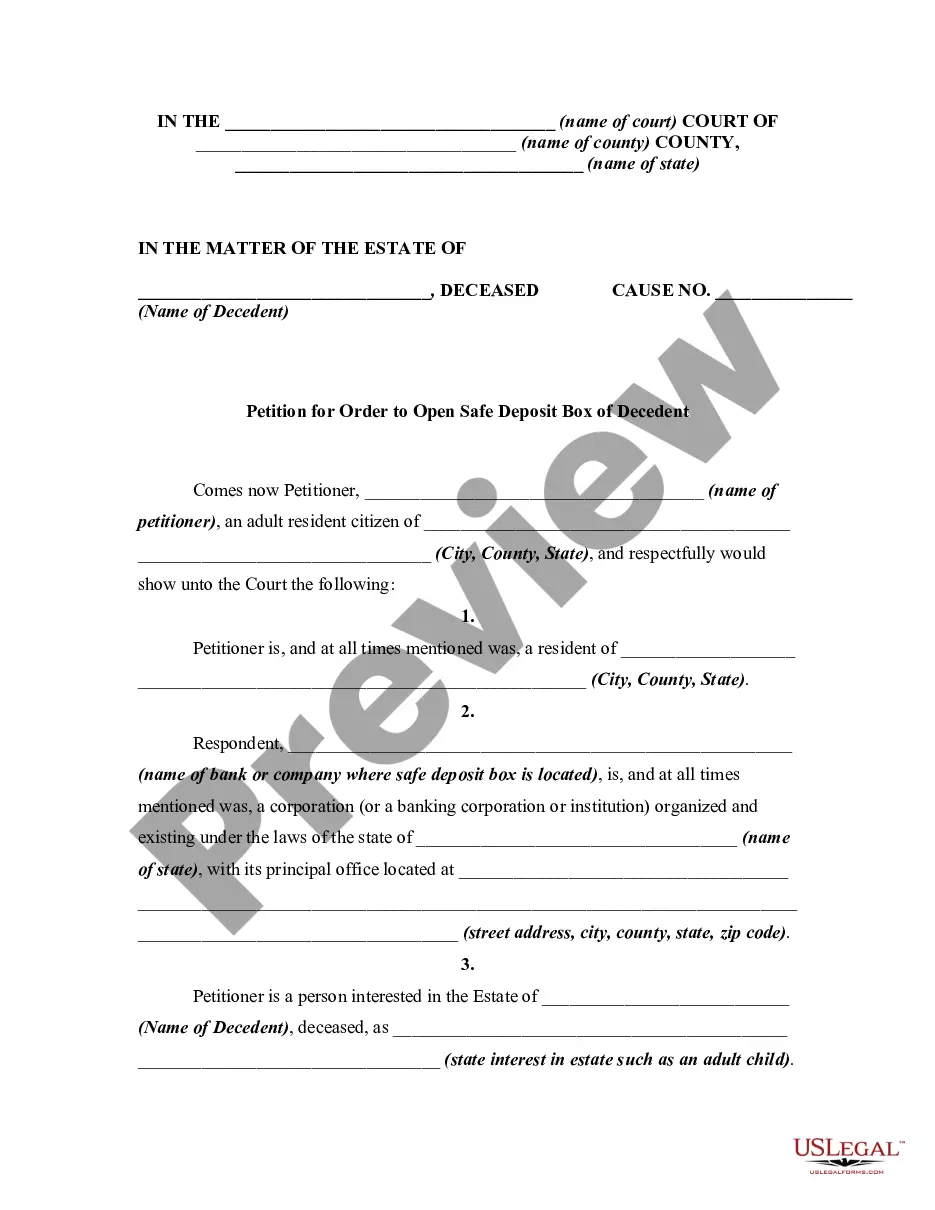
How to fill out Order Authorizing Petitioner To Open Safe Deposit Box Of Decedent?
The Deposit Box Refusal With Insurance displayed on this page is an editable standard format crafted by expert attorneys in accordance with national and local regulations.
For over 25 years, US Legal Forms has offered individuals, organizations, and legal practitioners more than 85,000 authenticated, state-specific documents for any professional and personal situation. It is the quickest, simplest, and most dependable method to acquire the necessary paperwork, as the service assures the utmost level of data protection and anti-malware security.
Register for US Legal Forms to access verified legal documents for all of life’s situations as needed.
- Search for the document you require and examine it.
- Sign up and Log In.
- Obtain the fillable template.
- Complete and sign the documents.
- Redownload your files again.
Form popularity
FAQ
However, McGuinn warns, banks do not provide insurance for the contents of your safe deposit box, so you may want to add a scheduled personal property endorsement to your homeowners or renters insurance to make sure you're covered.
A safe deposit box is not a deposit account. It is storage space provided by the bank, so the contents, including cash, checks or other valuables, are not insured by FDIC deposit insurance if damaged or stolen. Also, financial institutions generally do not insure the contents of safe deposit boxes.
What if the bank has failed? If the bank recently failed, the FDIC or the bank that assumed the failed bank's business may have the account or safe deposit box contents. After a period of time, the FDIC or the bank must transfer unclaimed property to the state.
Pros and Cons Unlike bank accounts, the contents are not ensured. Safes can only be accessed during the bank's business hours. Contents can still be lost due to fire, flood, or other disasters.
Cons. Limited access: You can only access your safe deposit box during the institution's business hours. Fees: There's a yearly fee associated with maintaining a box. Other options, such as home safes, have only a one-time cost.