Surrogacy Artificial Foreskin
Description
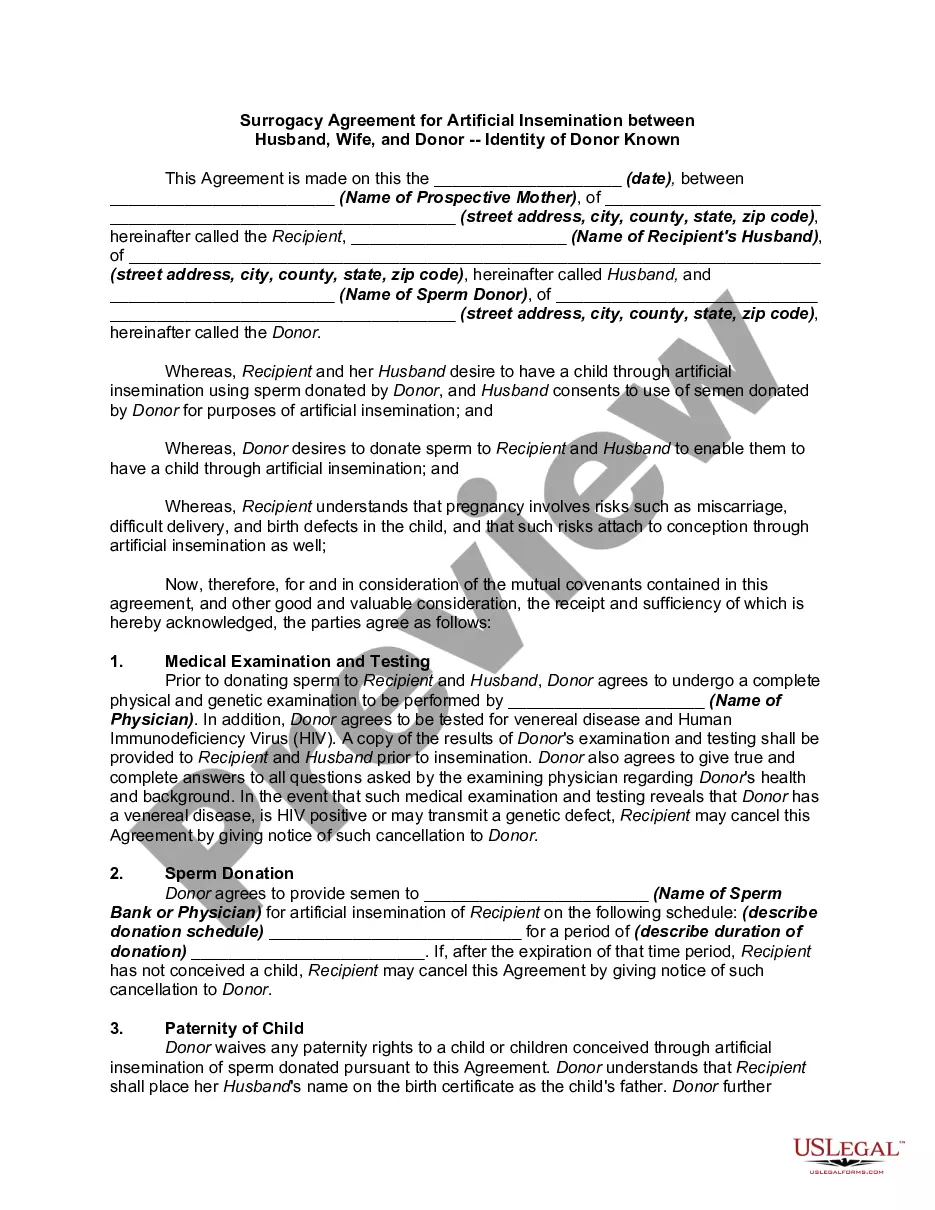


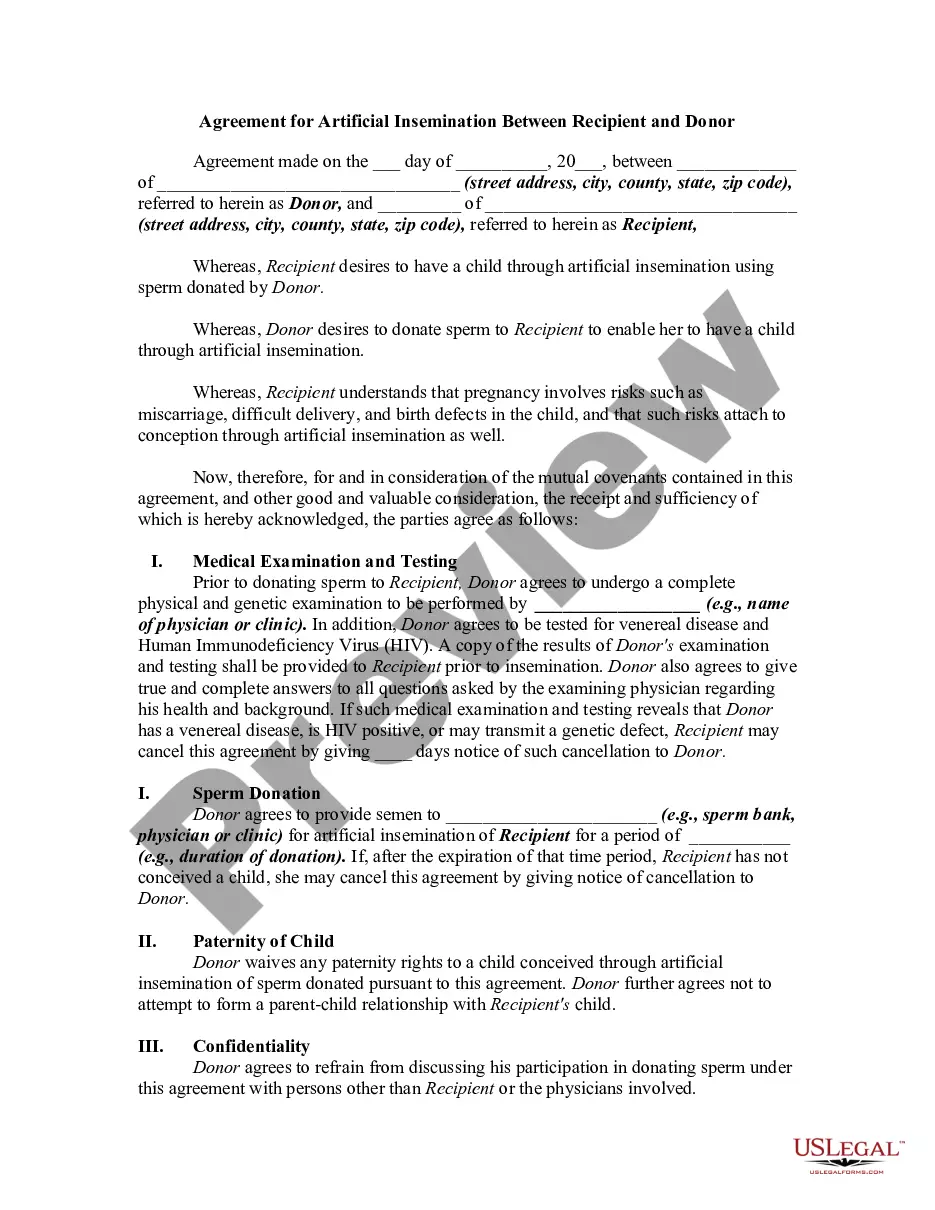

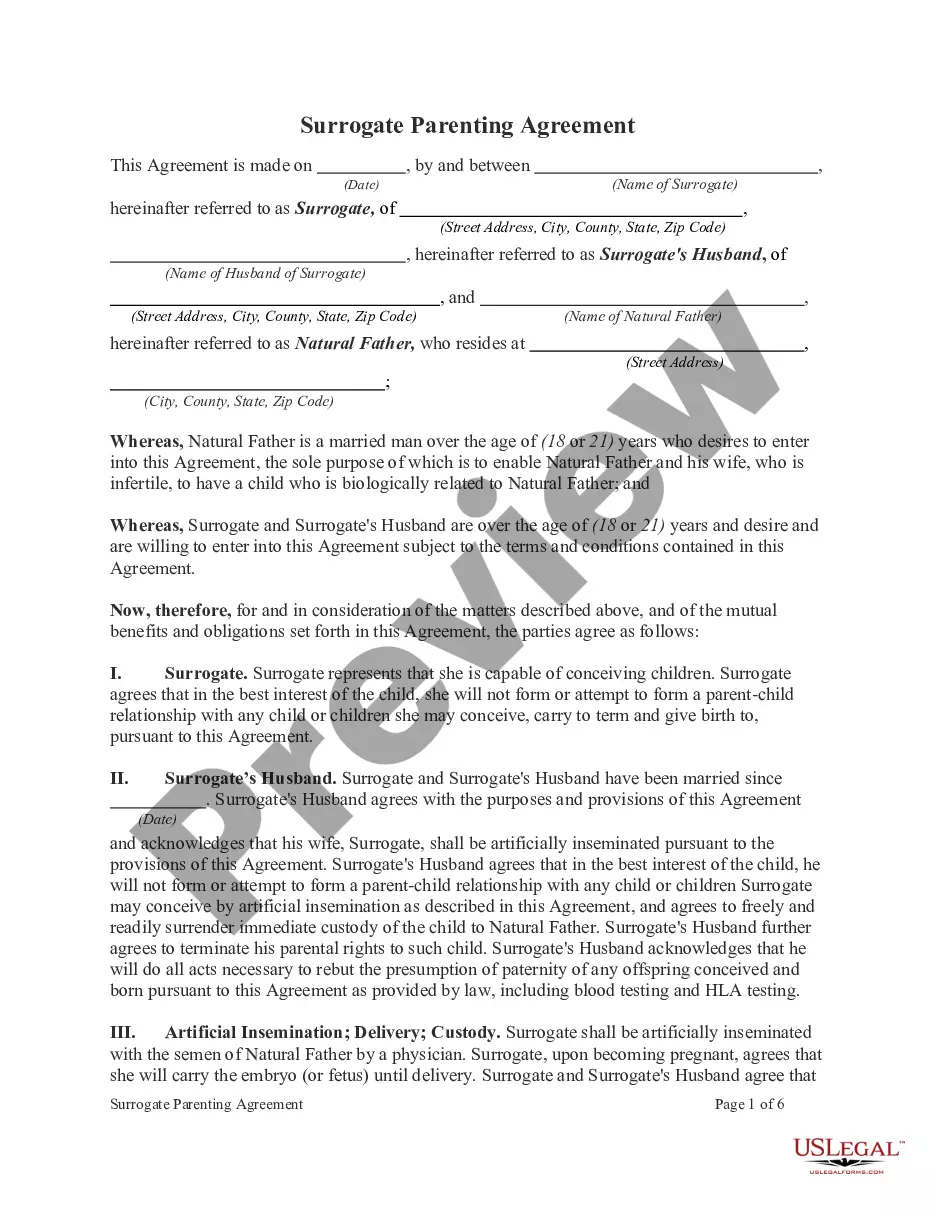
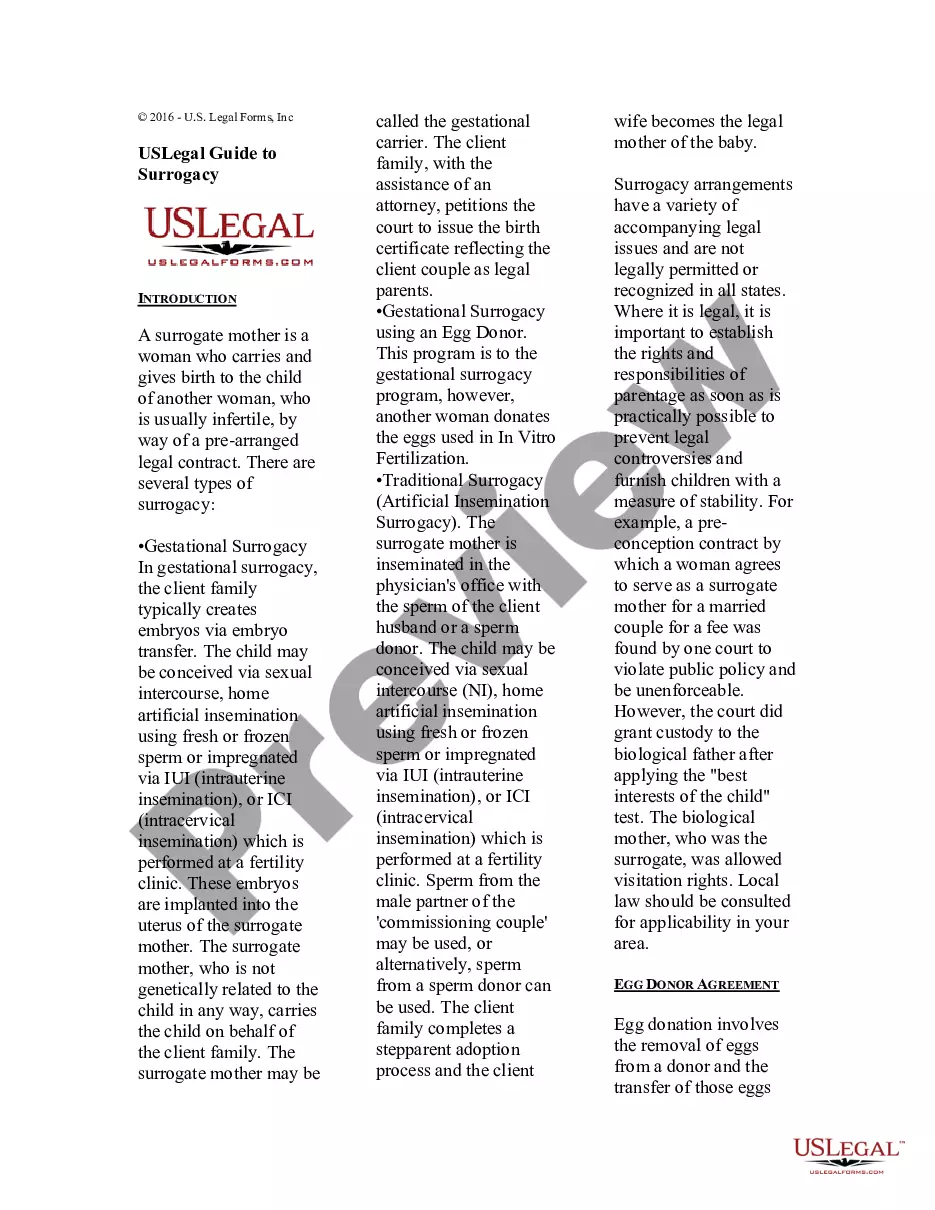
How to fill out Surrogate Or Surrogacy Agreement For Artificial Insemination Between Husband, Wife, And Donor - Identity Of Donor Known?
The Surrogacy Artificial Foreskin presented on this site is a reusable legal document created by experienced attorneys in accordance with federal and state regulations.
For over 25 years, US Legal Forms has supplied individuals, organizations, and lawyers with more than 85,000 validated, state-specific documents for every business and personal situation. It is the fastest, simplest, and most trustworthy method to acquire the paperwork you require, as the service ensures bank-level data security and anti-malware safeguards.
Choose the file format you desire for your Surrogacy Artificial Foreskin (PDF, DOCX, RTF) and download the sample to your device.
- Search for the document you require and examine it.
- Browse through the file you sought and preview it or review the document description to confirm it meets your needs. If it does not, utilize the search function to locate the correct one. Click Buy Now when you have found the template you need.
- Sign up and Log In.
- Select the pricing tier that fits your needs and set up an account. Use PayPal or a credit card to complete a swift payment. If you already possess an account, Log In and verify your subscription to proceed.
- Acquire the fillable template.
Form popularity
FAQ
Some manufacturers have explored the use of surrogacy artificial foreskin in cosmetic formulations, including mascara. However, it's essential to verify the ingredients and their sourcing. Awareness and transparency around product contents are vital for informed consumer choices. Consulting resources like US Legal Forms can help you understand labeling and ingredient disclosure requirements.
Korean baby facial treatment often involves using regenerative ingredients sourced from surrogacy artificial foreskin. This procedure utilizes the skin's natural healing properties to rejuvenate and refresh the face. It emphasizes achieving youthful, healthy skin by leveraging innovative beauty practices. Understanding these trends can help you explore new skincare solutions.
Yes, surrogacy artificial foreskin can be an effective solution for skin grafts. The foreskin contains regenerative properties that promote healing, making it suitable for reconstructive surgeries. Surgeons may opt for this method to restore damaged or defected areas of skin. This application demonstrates the foreskin's medical benefits beyond its initial context.
Typically, a baby's foreskin may not fully retract at birth. This natural condition usually resolves itself as the child grows. However, it's essential to consult a pediatrician if there are concerns about retraction or hygiene. Understanding these developmental milestones can ease worries for parents.
Some beauty products do use surrogacy artificial foreskin and its derivatives. They often contain growth factors and proteins derived from the foreskin to improve skin texture and elasticity. This trend reflects a growing willingness to explore unique ingredients that can promote healthy skin. Awareness of these ingredients can help consumers make more informed choices.
Doctors often use baby foreskins in medical procedures and skin grafts. Once medically supervised circumcision occurs, the foreskin can be processed for various uses. Notably, surrogacy artificial foreskin has important applications in regenerative medicine. This tissue can help in healing wounds and burns, making it valuable in dermatology.
It is indeed possible to acquire a new foreskin, thanks to advancements in medical technology. Surrogacy artificial foreskin represents a promising approach for individuals looking for restoration options. By discussing this with a knowledgeable healthcare professional, one can determine the most appropriate method tailored to personal needs. This option fosters positive outcomes for many individuals seeking foreskin restoration.
Yes, men can receive a new foreskin through various medical techniques. These procedures may involve surgical methods or innovative options like surrogacy artificial foreskin. Consulting with a qualified medical professional is crucial for understanding the possibilities and benefits of receiving a new foreskin. This option provides hope for those seeking restoration.
Doctors typically dispose of leftover foreskin in a safe and ethical manner. In some cases, leftover tissue may be used for research purposes, which can help advance medical techniques. However, any disposal takes place under strict regulations to ensure privacy and dignity. Surrogacy artificial foreskin can eliminate concerns about leftover materials, making the process smoother for everyone involved.