Surrogacy And Artificial Insemination Difference
Description
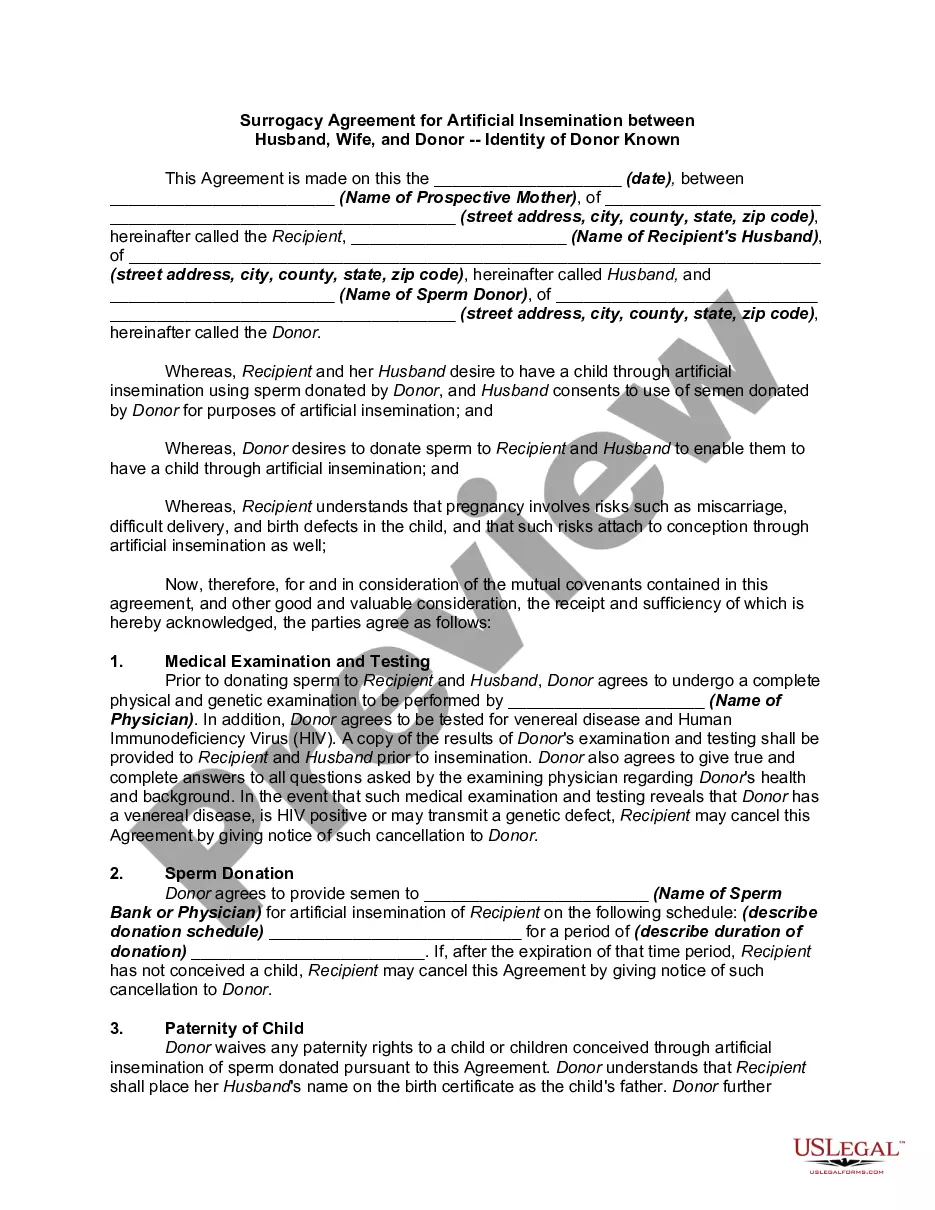


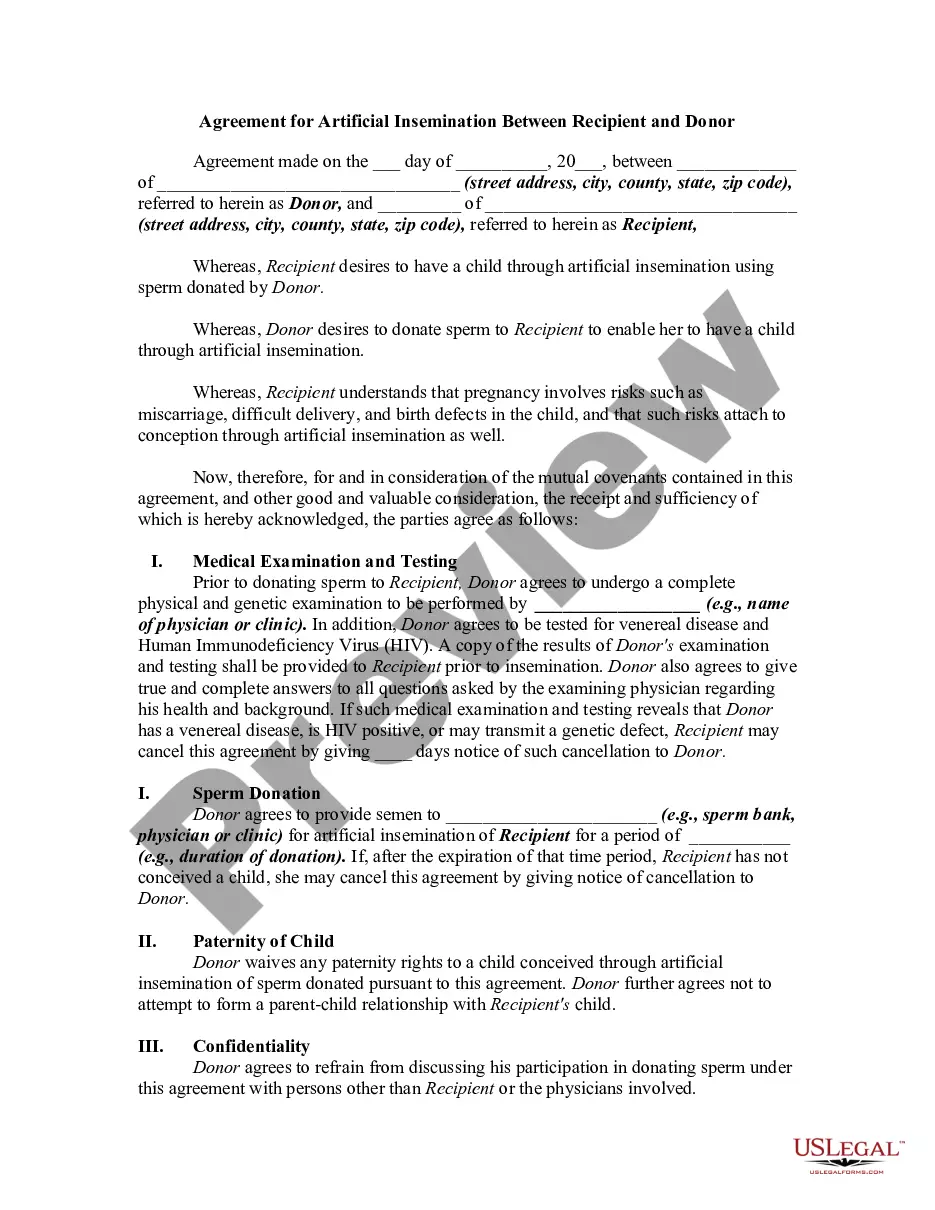









How to fill out Surrogate Or Surrogacy Agreement For Artificial Insemination Between Husband, Wife, And Donor - Identity Of Donor Known?
The distinction between Surrogacy and Artificial Insemination that you encounter on this website is a reusable legal framework created by qualified attorneys in accordance with federal and state regulations.
For over 25 years, US Legal Forms has supplied individuals, organizations, and legal experts with more than 85,000 validated, state-specific documents for any business and personal circumstance. It represents the fastest, easiest, and most dependable method to acquire the documentation you require, as the service assures the utmost level of data protection and anti-virus safeguards.
Join US Legal Forms to have authenticated legal templates available for all of your life’s circumstances.
- Search for the document you require and examine it.
- Navigate through the sample you sought and preview it or review the form description to confirm it meets your needs. If it doesn’t, utilize the search bar to find the appropriate one. Click ‘Buy Now’ once you’ve found the template you require.
- Register and Log In.
- Select the payment plan that fits you and create an account. Utilize PayPal or a credit card for quick payment. If you already possess an account, Log In and verify your subscription to continue.
- Obtain the editable template.
- Select the format you prefer for your Surrogacy and Artificial Insemination Difference (PDF, DOCX, RTF) and save the document on your device.
- Complete and sign the document.
- Print the template to fill it out manually. Alternatively, use an online multi-functional PDF editor to quickly and precisely fill out and sign your form digitally.
- Re-download your documents as necessary.
- Reuse the same document whenever needed. Access the ‘My documents’ section in your profile to re-download any forms you have previously acquired.
Form popularity
FAQ
IVF and surrogacy's primary difference is: In IVF, we fertilize the egg outside the body and transfer the embryo to the mother's uterus. However, in surrogacy, we transfer the fertilized egg (embryo) in the surrogate's womb who carry the baby, deliver it and give it to real parents.
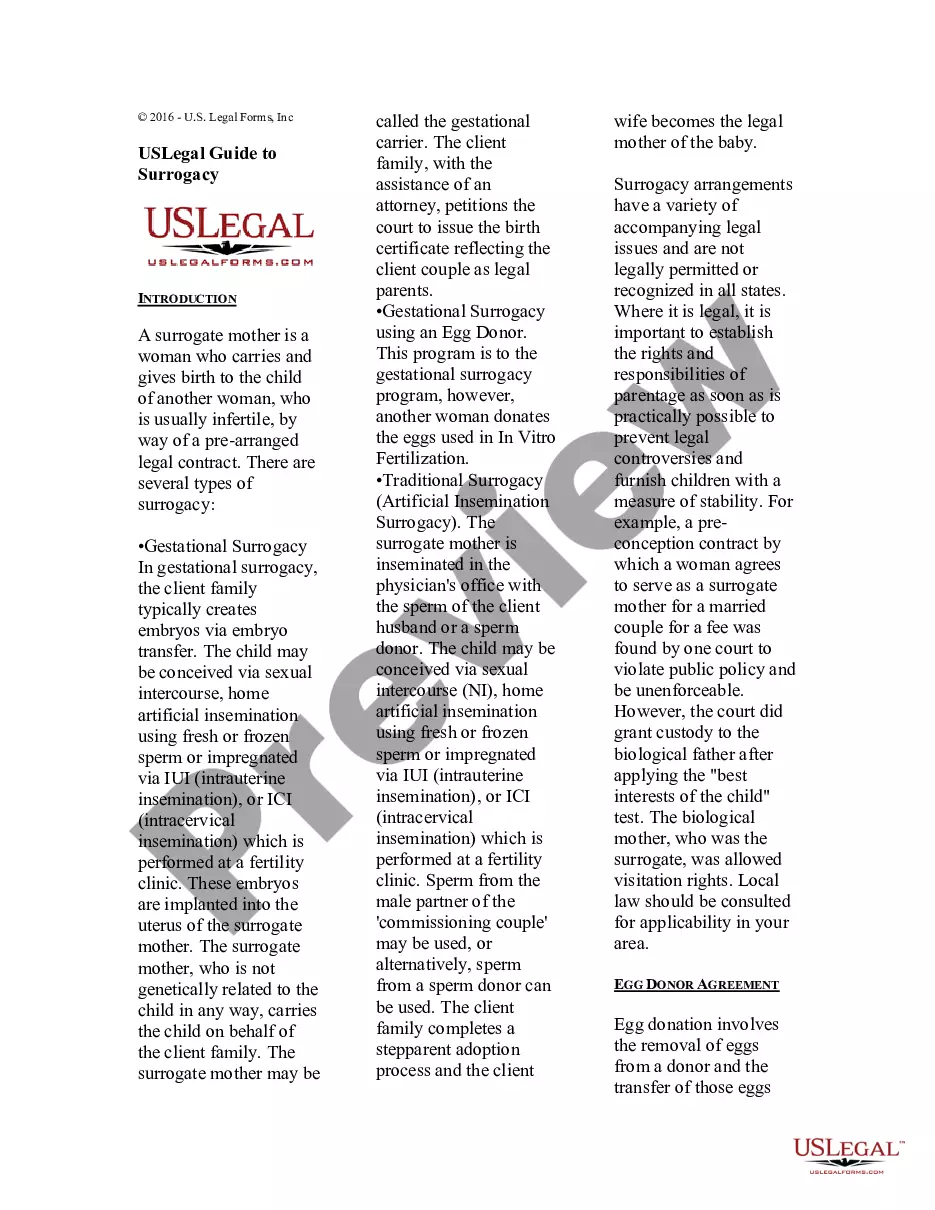
Surrogacy is of two types: traditional and gestational. Traditional (genetic/partial/straight) surrogacy is the result of artificial insemination of the surrogate mother with the intended father's sperm, making her a genetic parent along with the intended father.
Understanding some common terms can help you make informed decisions about ART: Artificial insemination is introducing semen into the uterus of a female without sexual contact. A surrogate is the female receiving the artificial insemination.
Full surrogacy (also known as host or gestational surrogacy) is when the eggs of the intended mother or a donor are used and there is therefore no genetic connection between the baby and the surrogate.
Traditional surrogate. It's a woman who gets artificially inseminated with the father's sperm. They then carry the baby and deliver it for you and your partner to raise. A traditional surrogate is the baby's biological mother. That's because it was their egg that was fertilized by the father's sperm.