Write With A Prisoner
Description




Get your form ready online
Our built-in tools help you complete, sign, share, and store your documents in one place.
Make edits, fill in missing information, and update formatting in US Legal Forms—just like you would in MS Word.
Download a copy, print it, send it by email, or mail it via USPS—whatever works best for your next step.
Sign and collect signatures with our SignNow integration. Send to multiple recipients, set reminders, and more. Go Premium to unlock E-Sign.
If this form requires notarization, complete it online through a secure video call—no need to meet a notary in person or wait for an appointment.
We protect your documents and personal data by following strict security and privacy standards.

Make edits, fill in missing information, and update formatting in US Legal Forms—just like you would in MS Word.

Download a copy, print it, send it by email, or mail it via USPS—whatever works best for your next step.

Sign and collect signatures with our SignNow integration. Send to multiple recipients, set reminders, and more. Go Premium to unlock E-Sign.

If this form requires notarization, complete it online through a secure video call—no need to meet a notary in person or wait for an appointment.

We protect your documents and personal data by following strict security and privacy standards.
Looking for another form?
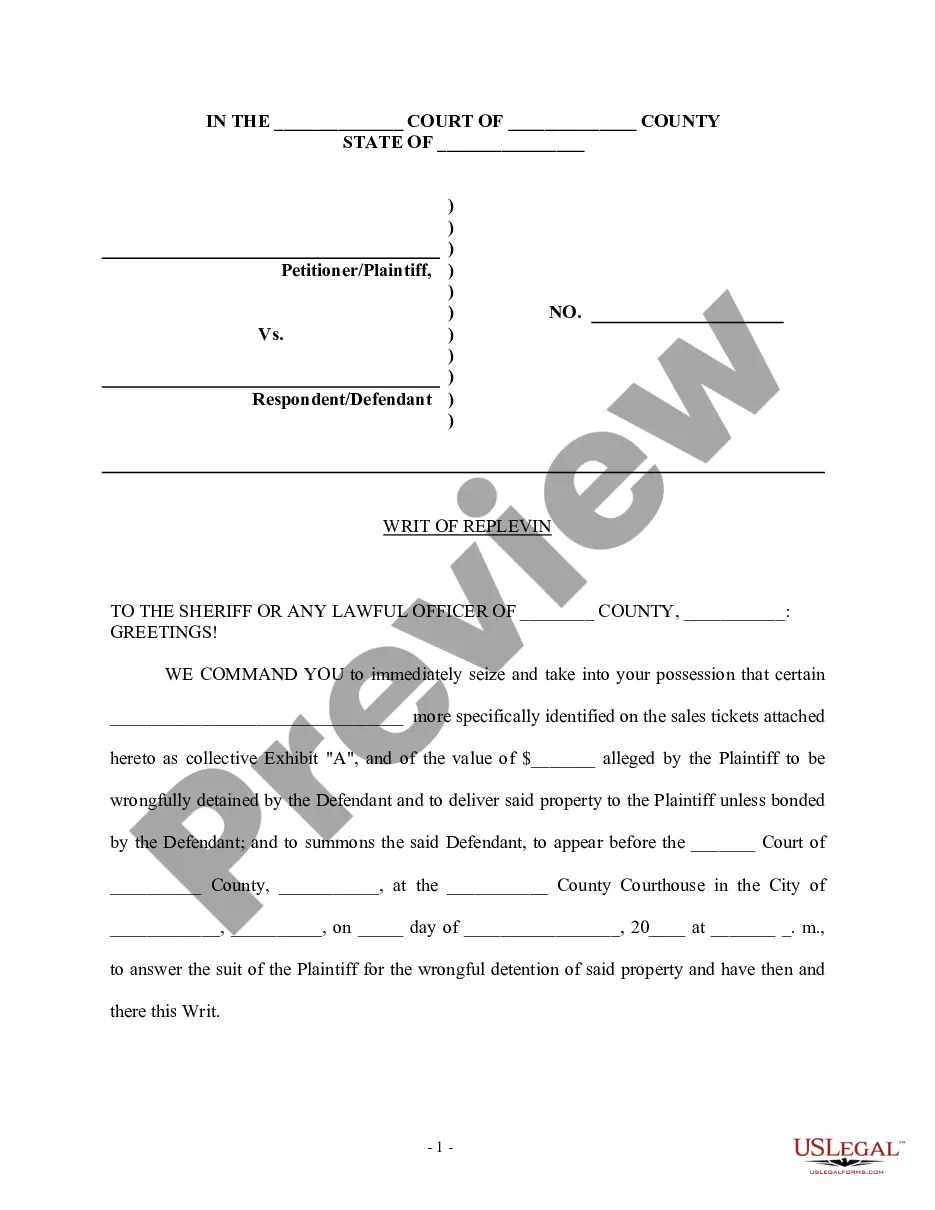
How to fill out Writ Of Replevin Or Repossession?
- Log in to your US Legal Forms account if you're a returning user and download the necessary templates by clicking the Download button. Ensure your subscription is active; if it has expired, renew it according to your selected payment option.
- If you're new to the service, start by browsing the extensive form collection available. Utilize the Preview mode to ensure the chosen document aligns with your needs and local legal regulations.
- Should you need another template, use the Search function to look for the specific form that fits your requirements.
- Select the form when you find the right one and proceed to purchase it by clicking on the Buy Now button. Choose a subscription plan that suits your needs and register for an account to access the resources.
- Complete your purchase by entering your payment information, either via a credit card or PayPal, to finalize the subscription.
- Download the template to your device, making it easily accessible for future correspondence with the prisoner in the My Forms section of your account.
In conclusion, US Legal Forms assists you in efficiently managing your legal document needs, making it easier to connect with a prisoner. By following these steps, you ensure your letters are both meaningful and compliant with legal standards.
Start your journey today by exploring US Legal Forms and enhance your experience of writing with a prisoner.
Form popularity
FAQ
Yes, a prisoner can write another prisoner, depending on the facility’s rules and regulations. It's important to check the specific guidelines of the correctional institution. Writing with a prisoner not only helps maintain friendships but also provides emotional support during their time apart.
Prisoners can get on Write a Prisoner by participating in the program offered by various correctional facilities. They can submit their information, allowing others to reach out and write with a prisoner. This platform helps inmates connect with individuals outside, fostering meaningful correspondence.
When writing a letter to an inmate for the first time, begin by briefly introducing yourself and how you found them. Use a warm, friendly tone to encourage openness; your sincerity will make a significant impact. Writing with a prisoner can be fulfilling, so ensure you express positivity and interest in their life.
Adding an inmate on Write a Prisoner is a straightforward process. You simply visit the site and look for the option to create a new profile for the inmate. Ensure you provide accurate details, including their name and location, to connect effectively with those wanting to write with a prisoner.
To write a letter on behalf of someone in jail, start by obtaining their correct mailing address and inmate number. Clearly identify yourself at the beginning of the letter to avoid any confusion. When you write with a prisoner, ensure you express support and positive messages, making them feel valued and connected.
When you write with a prisoner, consider sharing updates about your life, expressing support, and asking open-ended questions to encourage dialogue. It is important to convey positivity and understanding, as this can uplift their spirits. Avoid discussing sensitive topics that may cause stress. Focus on building a rapport and offering friendship to make your letters truly valuable.
To effectively write with a prisoner, start by addressing the envelope correctly, including the inmate's full name, ID number, and the facility's address. In the letter, clearly state your name and return address at the top. Use simple, clear language and maintain a positive tone as you share your thoughts and support. This approach can foster a meaningful connection with the inmate.
When writing a letter on behalf of someone in jail, begin by clearly stating who you are representing. Use a respectful tone and include pertinent information that can help convey the message effectively. Keep the content focused on their needs or concerns, as this will resonate better with the recipient. Additionally, utilizing US Legal Forms can help guide you in creating professional correspondence.
Writing to an inmate involves following specific guidelines set by the prison. Start by addressing the envelope correctly, including their inmate number and the facility’s address. Keep your letter respectful and ensure it complies with the prison's policies on content. Writing with a prisoner can be a meaningful way to provide support and maintain a connection.
Obtaining a signature from someone in jail can be tricky but not impossible. You often need to visit the inmate in person to have them sign the required documents. Alternatively, check with the facility for any specific procedures they have in place for signing documents. Again, US Legal Forms can provide templates to help you organize the needed paperwork.