Writ Of Execution In Tagalog
Description




Get your form ready online
Our built-in tools help you complete, sign, share, and store your documents in one place.
Make edits, fill in missing information, and update formatting in US Legal Forms—just like you would in MS Word.
Download a copy, print it, send it by email, or mail it via USPS—whatever works best for your next step.
Sign and collect signatures with our SignNow integration. Send to multiple recipients, set reminders, and more. Go Premium to unlock E-Sign.
If this form requires notarization, complete it online through a secure video call—no need to meet a notary in person or wait for an appointment.
We protect your documents and personal data by following strict security and privacy standards.

Make edits, fill in missing information, and update formatting in US Legal Forms—just like you would in MS Word.

Download a copy, print it, send it by email, or mail it via USPS—whatever works best for your next step.

Sign and collect signatures with our SignNow integration. Send to multiple recipients, set reminders, and more. Go Premium to unlock E-Sign.

If this form requires notarization, complete it online through a secure video call—no need to meet a notary in person or wait for an appointment.

We protect your documents and personal data by following strict security and privacy standards.
Looking for another form?

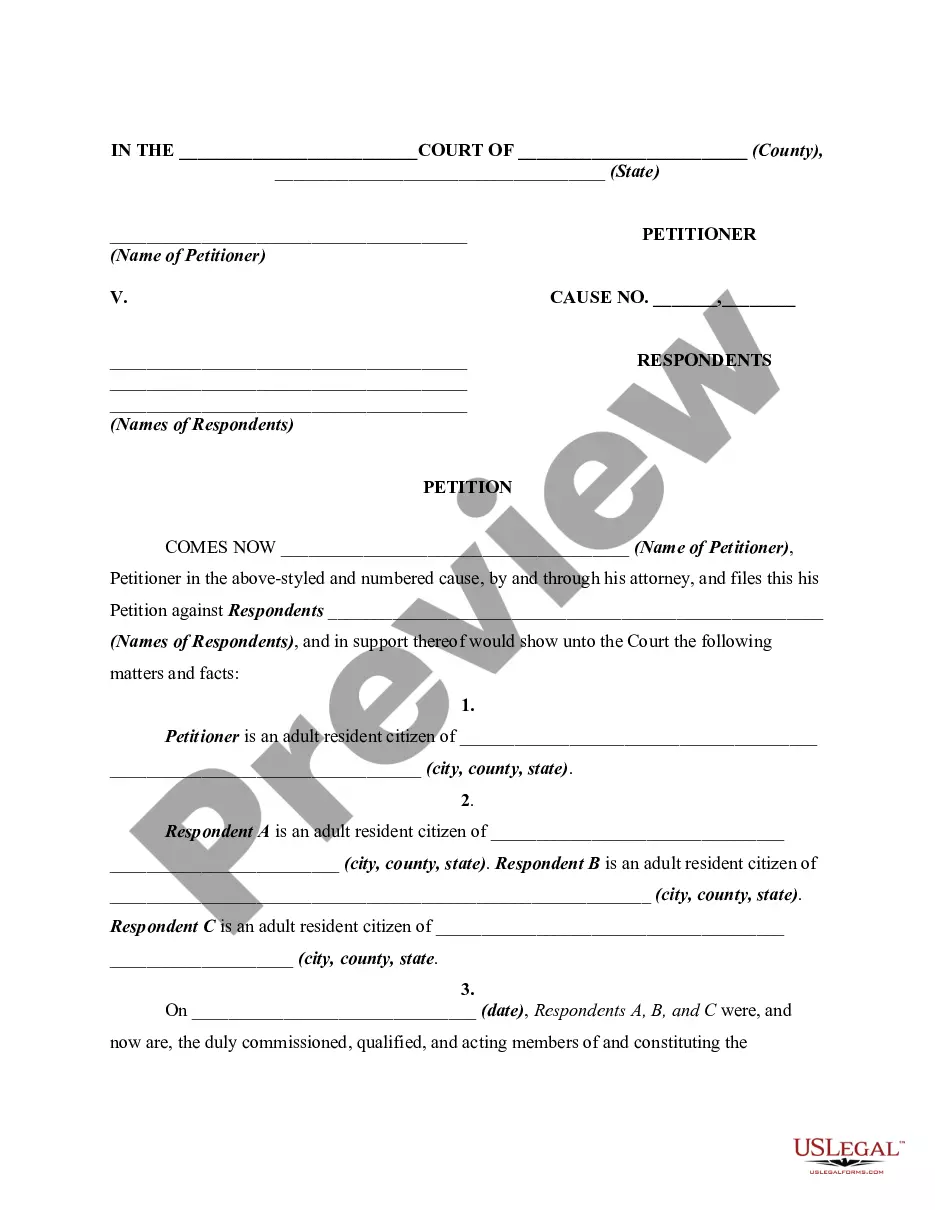

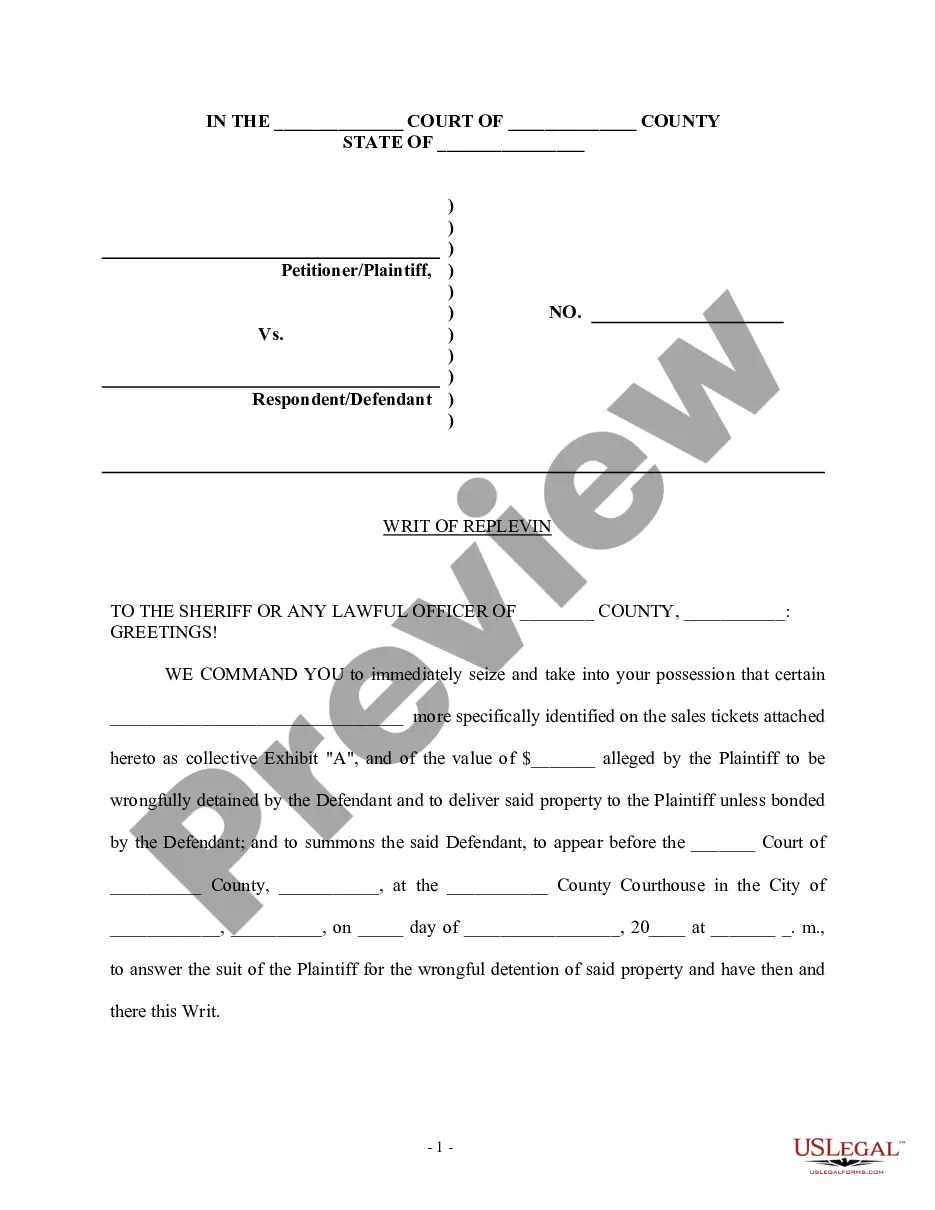
How to fill out Writ Of Replevin Or Repossession?
Whether for commercial objectives or for private issues, everyone has to confront legal circumstances at some point in their lives.
Filling out legal paperwork requires meticulous focus, starting with selecting the appropriate form template.
With an extensive US Legal Forms collection available, you never need to waste time searching for the correct template across the internet. Utilize the library’s user-friendly navigation to discover the suitable template for any scenario.
- Identify the template you require by using the search box or catalog navigation.
- Review the form’s description to confirm it suits your circumstance, state, and area.
- Click on the form’s preview to examine it.
- If it is the incorrect document, return to the search feature to locate the Writ Of Execution In Tagalog example you require.
- Download the document once it satisfies your needs.
- If you have a US Legal Forms account, simply click Log in to access previously saved files in My documents.
- If you do not yet have an account, you can obtain the form by clicking Buy now.
- Choose the appropriate pricing plan.
- Complete the profile registration form.
- Select your payment method: you can use a credit card or PayPal account.
- Choose the document format you prefer and download the Writ Of Execution In Tagalog.
- After it is saved, you can fill out the form using editing software or print it and complete it manually.
Form popularity
FAQ
The purpose of a writ, specifically a writ of execution in Tagalog, is to enforce a court's judgment. It allows the successful party in a lawsuit to recover the awarded amount through legal means. Essentially, it acts as a directive to law enforcement to seize property or assets to satisfy a debt. If you need assistance with the process, consider using US Legal Forms, which provides comprehensive resources and templates for obtaining a writ.
A writ of execution is a legal document issued by a court that allows for the enforcement of a judgment. Essentially, it enables a creditor to take action to collect what is owed to them. This action can include seizing property, wages, or bank accounts. If you need to understand this process better, learning about the writ of execution in Tagalog can help clarify how this legal procedure works.
A writ of execution can lead to the sale of your property if it becomes necessary to satisfy a judgment. In simple terms, once a court issues this writ, it allows a sheriff or marshal to take possession of your property, potentially including your house. However, there are certain legal protections in place that may help you retain your home. It’s wise to seek a legal professional’s advice to understand your rights and options regarding a writ of execution in Tagalog.
The primary purpose of a writ of execution in Tagalog is to enforce a court judgment. This legal document grants the authority to seize property or funds to satisfy a monetary award granted in a court case. By doing so, it provides a mechanism for creditors to collect what is owed to them while ensuring a fair process. Understanding this function can help you navigate the legal landscape effectively.
A writ of execution in Tagalog allows for the seizure of various types of property to satisfy a court judgment. This includes tangible assets like real estate, vehicles, and bank accounts. However, certain exemptions may apply, which can protect essential items, such as personal goods necessary for living. Always consult with a legal expert to understand what can be legally seized in your particular situation.
Writs of execution in Tagalog generally remain valid for a specific period, often determined by state law. This duration can vary but typically lasts from 60 to 90 days after issuance. After this period, if the writ has not been executed, it may need to be renewed or reissued. It's vital to stay informed about these timeframes to ensure the enforcement of your judgment.
A writ of execution empowers law enforcement to take action on a court judgment. Specifically, it allows the seizure of property or assets to satisfy debts or fulfill other legal obligations dictated by the court. Grasping the meaning of 'writ of execution in Tagalog' allows individuals to navigate their rights and responsibilities in legal scenarios confidently.
A writ serves as a formal command from a court to enforce legal rights and decisions. The primary reason for issuing a writ is to execute a judgment in a way that ensures the recipient fulfills their legal obligations. Understanding the phrase 'writ of execution in Tagalog' can help demystify why this document is necessary in legal proceedings.
Ignoring a writ of execution can lead to serious legal consequences. If you do not comply with this court order, law enforcement may take action by seizing your property or assets without your consent. It is crucial to understand the implications of a writ of execution in Tagalog to avoid complications and manage your legal obligations effectively.
A writ of possession and a writ of execution serve different purposes in the legal process. A writ of possession is aimed at transferring physical control of property to a person, while a writ of execution is a court order that directs law enforcement to enforce a judgment by seizing a debtor's property. In both cases, understanding the meanings of these terms in Tagalog can help clarify their implications in legal matters.