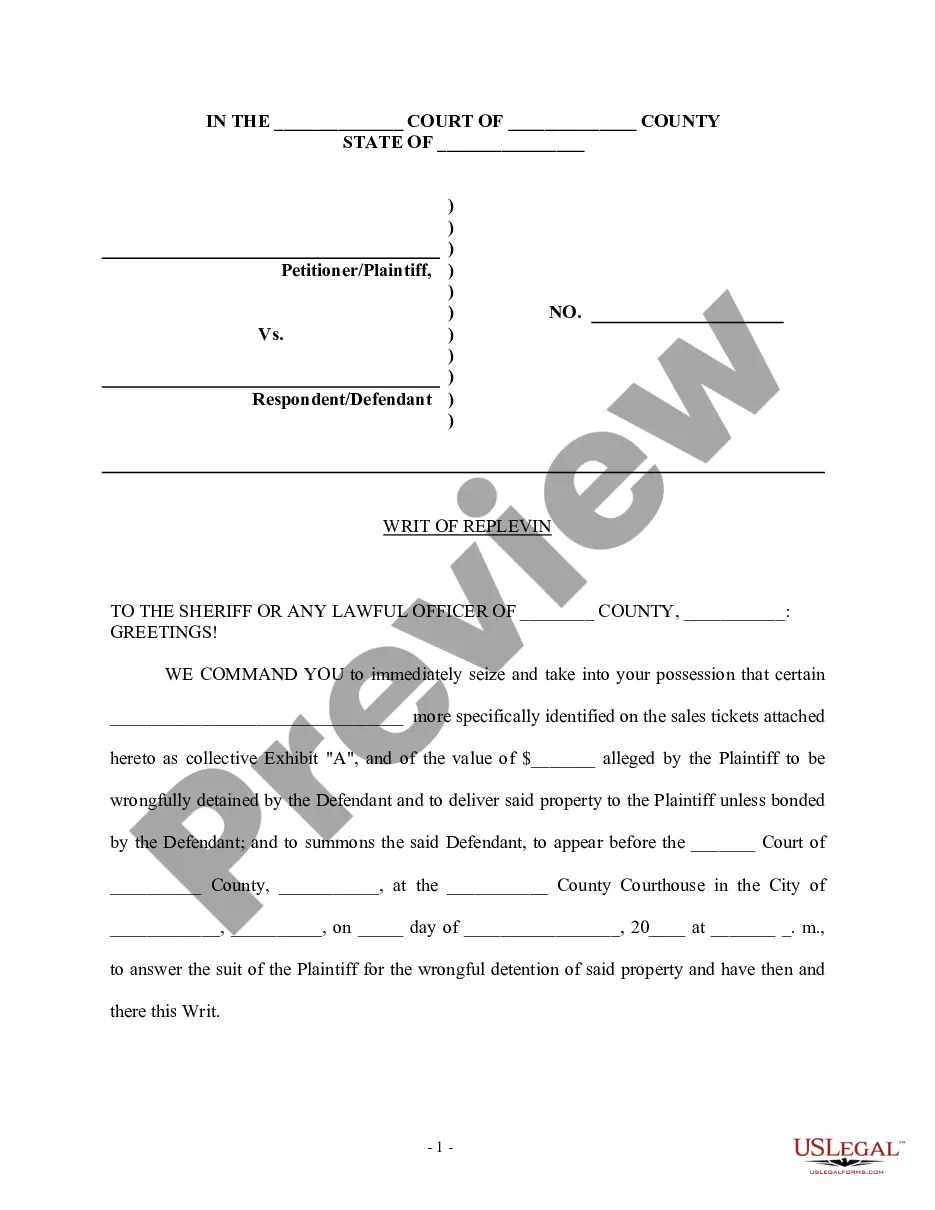
Writ For Possession
Description




Get your form ready online
Our built-in tools help you complete, sign, share, and store your documents in one place.
Make edits, fill in missing information, and update formatting in US Legal Forms—just like you would in MS Word.
Download a copy, print it, send it by email, or mail it via USPS—whatever works best for your next step.
Sign and collect signatures with our SignNow integration. Send to multiple recipients, set reminders, and more. Go Premium to unlock E-Sign.
If this form requires notarization, complete it online through a secure video call—no need to meet a notary in person or wait for an appointment.
We protect your documents and personal data by following strict security and privacy standards.

Make edits, fill in missing information, and update formatting in US Legal Forms—just like you would in MS Word.

Download a copy, print it, send it by email, or mail it via USPS—whatever works best for your next step.

Sign and collect signatures with our SignNow integration. Send to multiple recipients, set reminders, and more. Go Premium to unlock E-Sign.

If this form requires notarization, complete it online through a secure video call—no need to meet a notary in person or wait for an appointment.

We protect your documents and personal data by following strict security and privacy standards.
Looking for another form?
How to fill out Writ Of Replevin Or Repossession?
- Begin by logging into your US Legal Forms account. If you are a new user, create an account and explore the extensive library of over 85,000 legal forms.
- Search for 'writ for possession' in the preview mode to ensure you select the correct form that complies with local jurisdiction requirements.
- If necessary, use the search feature to locate any other templates that may better suit your circumstances.
- Once you find the appropriate form, click the 'Buy Now' button and select a subscription plan that fits your needs. You will need to register to access the resources effectively.
- Complete your purchase by providing your payment details, either through credit card or PayPal, to activate your subscription.
- Download your completed form directly to your device. You can also find it in your account's 'My Forms' section for future access.
With US Legal Forms, you not only have access to a robust collection of documents but also assistance from premium experts to ensure your forms are filled out correctly and comply with legal standards.
Start your journey toward reclaiming property with ease. Visit US Legal Forms today and get your writ for possession!
Form popularity
FAQ
The primary difference between a writ of possession and eviction lies in their legal roles. A writ of possession is a court order that allows a landlord to regain control of a property after a tenant has been evicted. In contrast, eviction is the process that leads to the issuance of that writ. Understanding this difference can help you prepare for each stage effectively, and seeking assistance from platforms like US Legal Forms can simplify the process.
Typically, a writ of possession itself does not directly affect your credit score. However, if it results in an eviction, that eviction can appear on your credit report and potentially impact your credit history. It’s wise to be proactive in addressing any writ for possession or eviction to minimize future complications. Keeping your financial obligations in check is key to preserving a healthy credit score.
A writ of restitution is not the same as an eviction, although they are closely related. A writ of restitution is a court order that allows a landlord to reclaim possession of a property after an eviction process has been completed. This legal action follows a writ for possession, which initiates the eviction. It’s essential to understand these distinctions to better prepare yourself when dealing with these legal matters.
To fight a writ of possession, you should first understand the grounds on which it was issued. You can challenge it by proving that the eviction process was improper or that you have a legal right to remain in the property. It's crucial to act quickly, as there are time limits for filing your objections. Consulting with a legal expert can help you navigate the complexities involved in contesting a writ for possession.
The time it takes to get a Writ of possession in California varies based on the court's schedule, but it generally occurs within a few days to a couple of weeks after a judgment is made. This process begins after the completion of the unlawful detainer suit. Ensuring all your paperwork is accurate and filed correctly can speed things up. Uslegalforms provides helpful resources to navigate this timeframe effectively.
Once you receive a Writ of possession in California, you typically have five days to vacate the property. After this period, law enforcement may proceed with the eviction. It’s crucial to be aware of these timelines to avoid unexpected complications. If you need assistance understanding these details, consider checking out uslegalforms.
To obtain a Writ of possession in California, you must first complete the eviction process, which typically involves filing an unlawful detainer lawsuit. After winning the case, you can request the Writ of possession from the court. This document allows law enforcement to remove the tenant if they do not vacate the property. Understanding this process can be streamlined by using resources like uslegalforms.
A writ of execution is typically used to enforce a monetary judgment, allowing a creditor to seize assets, while a writ for possession specifically deals with reclaiming physical property. In rental situations, the writ for possession addresses eviction circumstances. Understanding these differences is crucial when navigating legal matters related to property and debts. Knowledge empowers you to make informed decisions.
When a writ for possession is issued, the landlord can begin the process of regaining possession of their property. This often involves coordinating with law enforcement to ensure the eviction is carried out legally. You should also be aware that any belongings left on the property may be subject to removal. Knowing your rights and potential next steps is essential during this pivotal moment.
Being served with a writ for possession means that you have received official notice regarding the court's decision about your eviction. This document outlines your obligations, including timelines for vacating the property. It's vital to read this document carefully and understand its implications. Seeking legal advice can help you respond appropriately and explore your alternatives.