Sample Letter For Employee Benefits
Description
Get your form ready online
Our built-in tools help you complete, sign, share, and store your documents in one place.
Make edits, fill in missing information, and update formatting in US Legal Forms—just like you would in MS Word.
Download a copy, print it, send it by email, or mail it via USPS—whatever works best for your next step.
Sign and collect signatures with our SignNow integration. Send to multiple recipients, set reminders, and more. Go Premium to unlock E-Sign.
If this form requires notarization, complete it online through a secure video call—no need to meet a notary in person or wait for an appointment.
We protect your documents and personal data by following strict security and privacy standards.

Make edits, fill in missing information, and update formatting in US Legal Forms—just like you would in MS Word.

Download a copy, print it, send it by email, or mail it via USPS—whatever works best for your next step.

Sign and collect signatures with our SignNow integration. Send to multiple recipients, set reminders, and more. Go Premium to unlock E-Sign.

If this form requires notarization, complete it online through a secure video call—no need to meet a notary in person or wait for an appointment.

We protect your documents and personal data by following strict security and privacy standards.
Looking for another form?
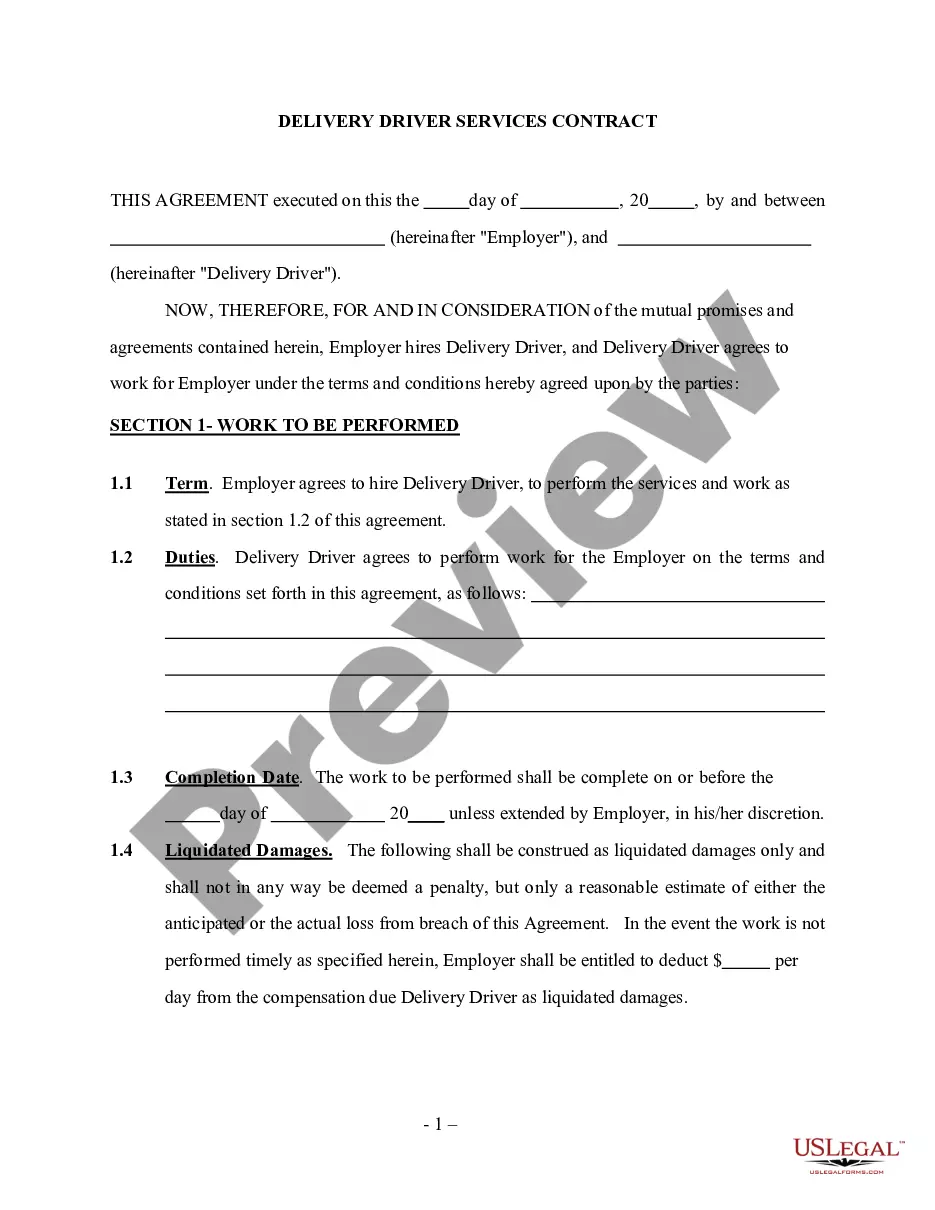
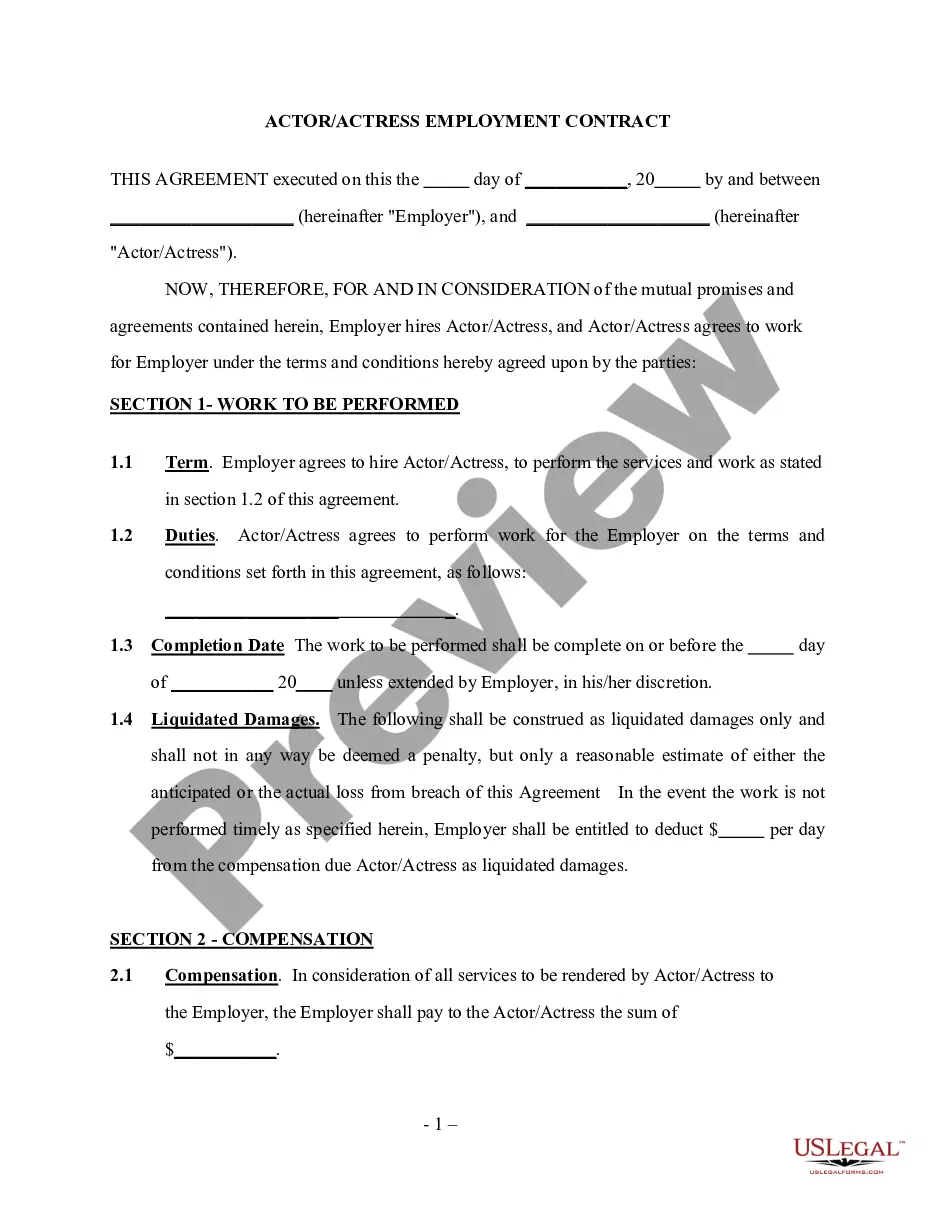
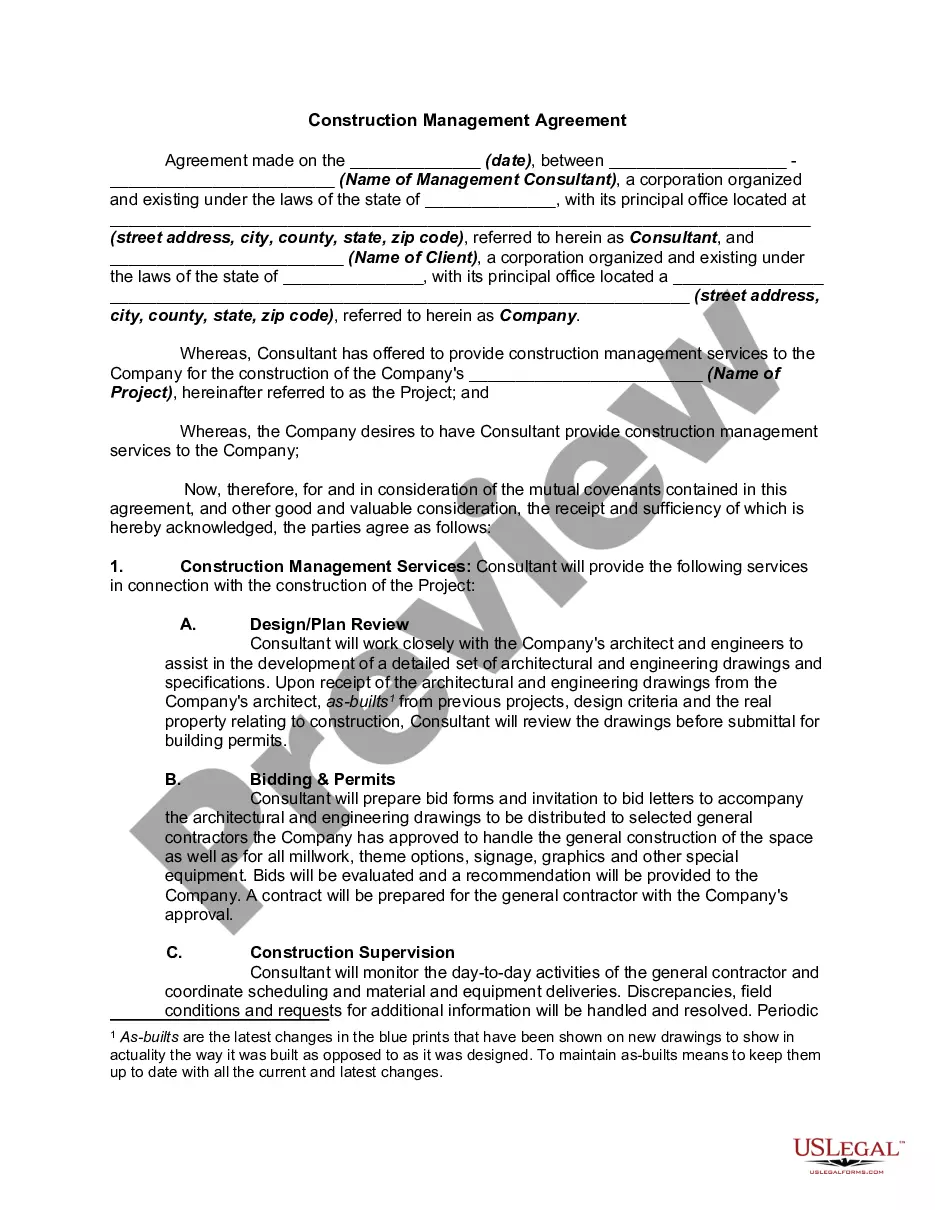
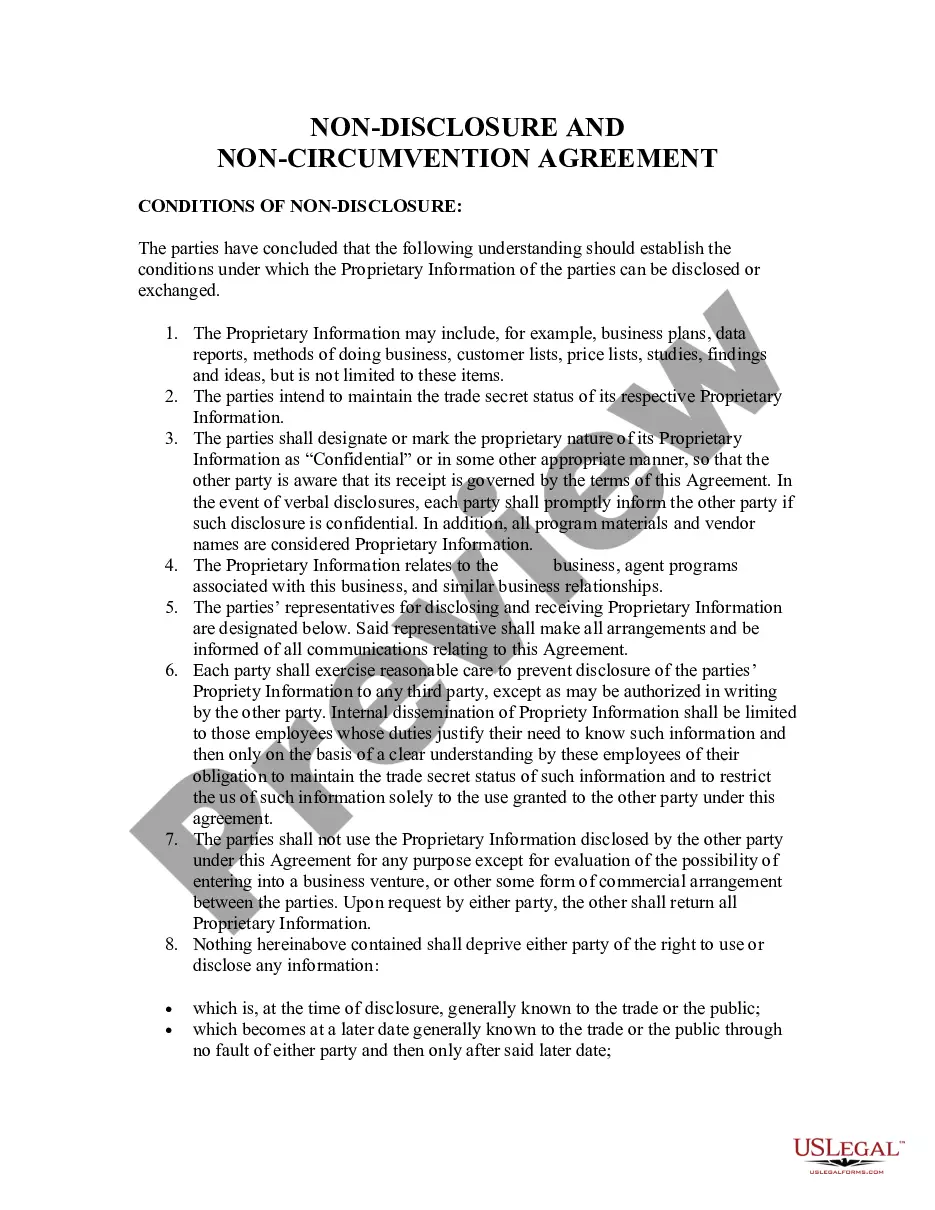
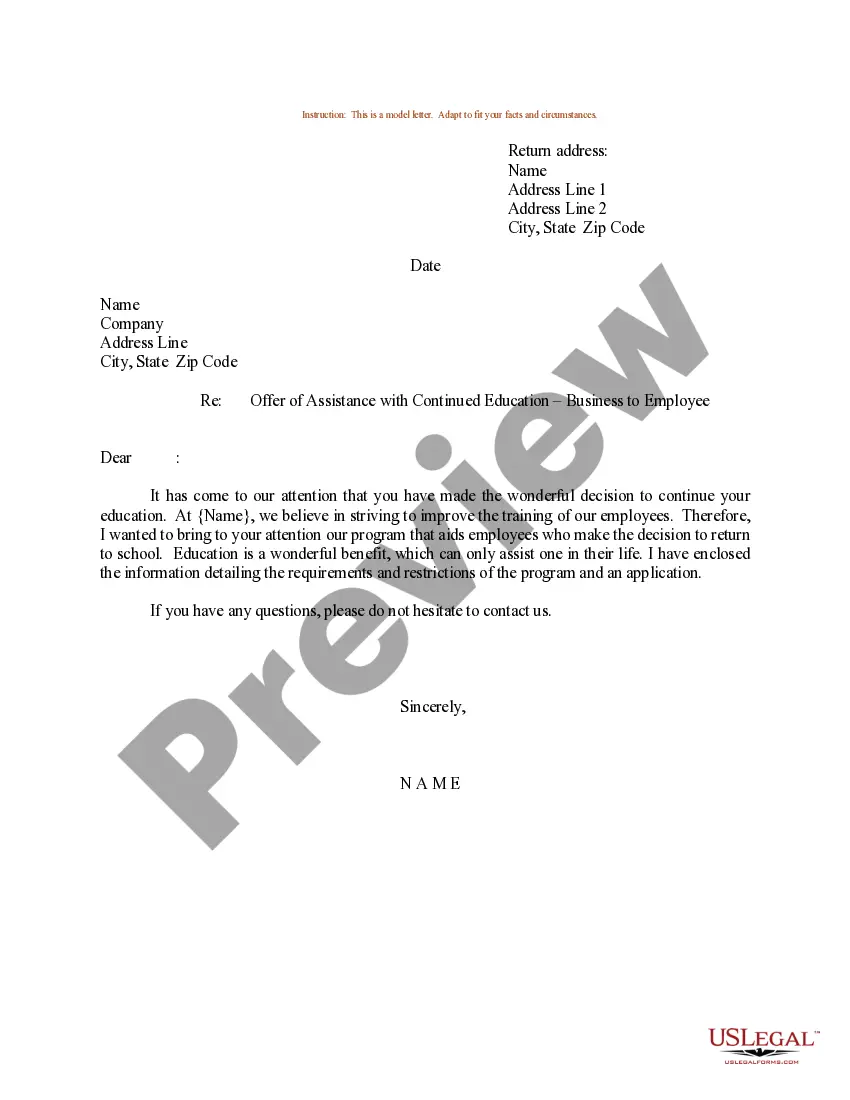
How to fill out Sample Letter For Offer Of Assistance With Continued Education - Business To Employee?
Regardless of whether it’s for corporate objectives or personal matters, individuals inevitably encounter legal issues at some point in their lives.
Completing legal documents demands meticulous care, starting with choosing the appropriate form template. For example, if you choose an incorrect version of the Sample Letter For Employee Benefits, it will be rejected upon submission.
With an extensive catalog of US Legal Forms available, you won’t need to waste time searching online for the right template. Take advantage of the library’s straightforward navigation to find the suitable template for any scenario.
- Acquire the template you need by using the search bar or browsing the catalog.
- Review the form’s details to confirm it fits your circumstances, state, and county.
- Click on the form’s preview to inspect it.
- If it’s the incorrect form, return to the search function to locate the Sample Letter For Employee Benefits template you require.
- Obtain the template once it satisfies your criteria.
- If you already possess a US Legal Forms account, click Log in to access previously stored files in My documents.
- If you don’t yet have an account, you can purchase the form by clicking Buy now.
- Select the appropriate pricing choice.
- Fill out the account registration form.
- Choose your payment method: either a credit card or PayPal account.
- Select the document format you desire and download the Sample Letter For Employee Benefits.
- After it is saved, you can complete the form using editing software or print it out and finish it manually.
Form popularity
FAQ
How to Design an Employee Benefits Program Step 1: Identify the organization's benefits objectives and budget. ... Step 2: Conduct a needs assessment. ... Step 3: Formulate a benefits plan program. ... Step 4: Communicate the benefits plan to employees.
Employee benefits are an indirect form of compensation that organizations provide to their workers through programs, policies, or services. Typical examples include health insurance, paid time off, and life insurance.
4 Major Types Of Employee Benefits Health Insurance. Life Insurance. Short-Term and Long-Term Disability. Retirement Plans.
Offer information in a variety of formats: Written materials employees can read and bring home to their families. Interactive online materials that help them learn, model and compare benefit scenarios. In-person presentations and focus group sessions. Q&A sessions staffed by your benefit provider.
Employee benefits are any form of indirect compensation paid to employees over and above regular salaries or wages. This can include health insurance, retirement benefits, and paid time off, for example.