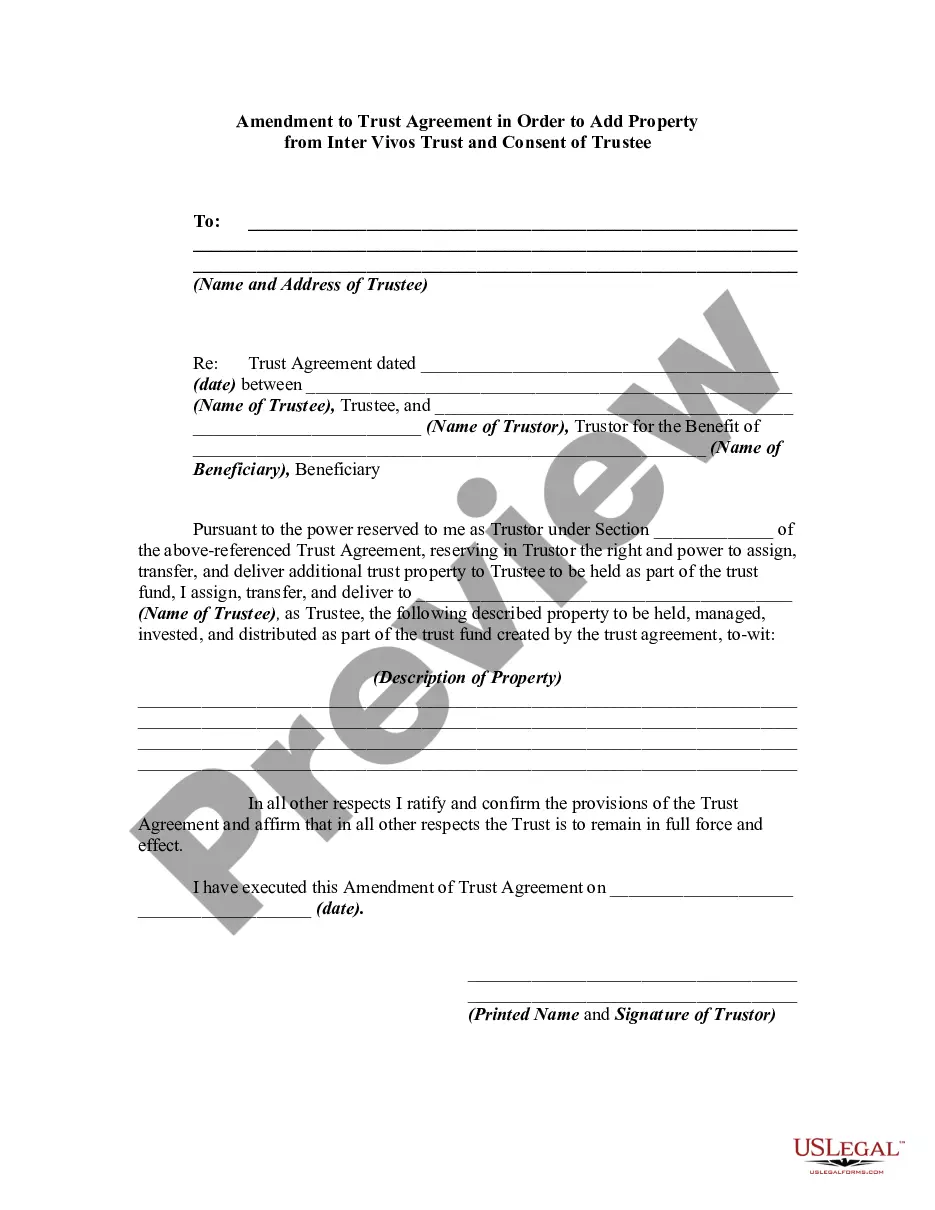
Trust Change Beneficiary Without Consent
Description
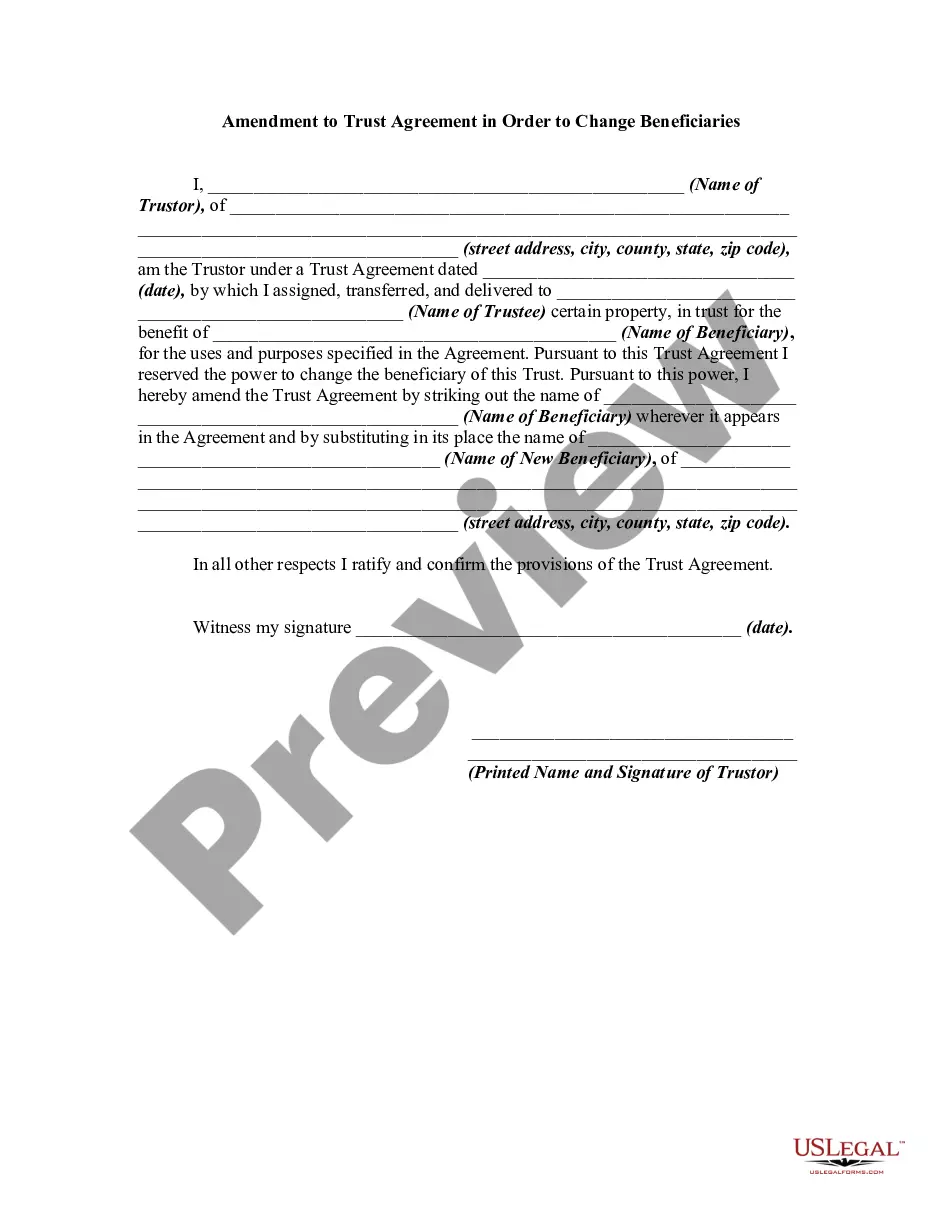
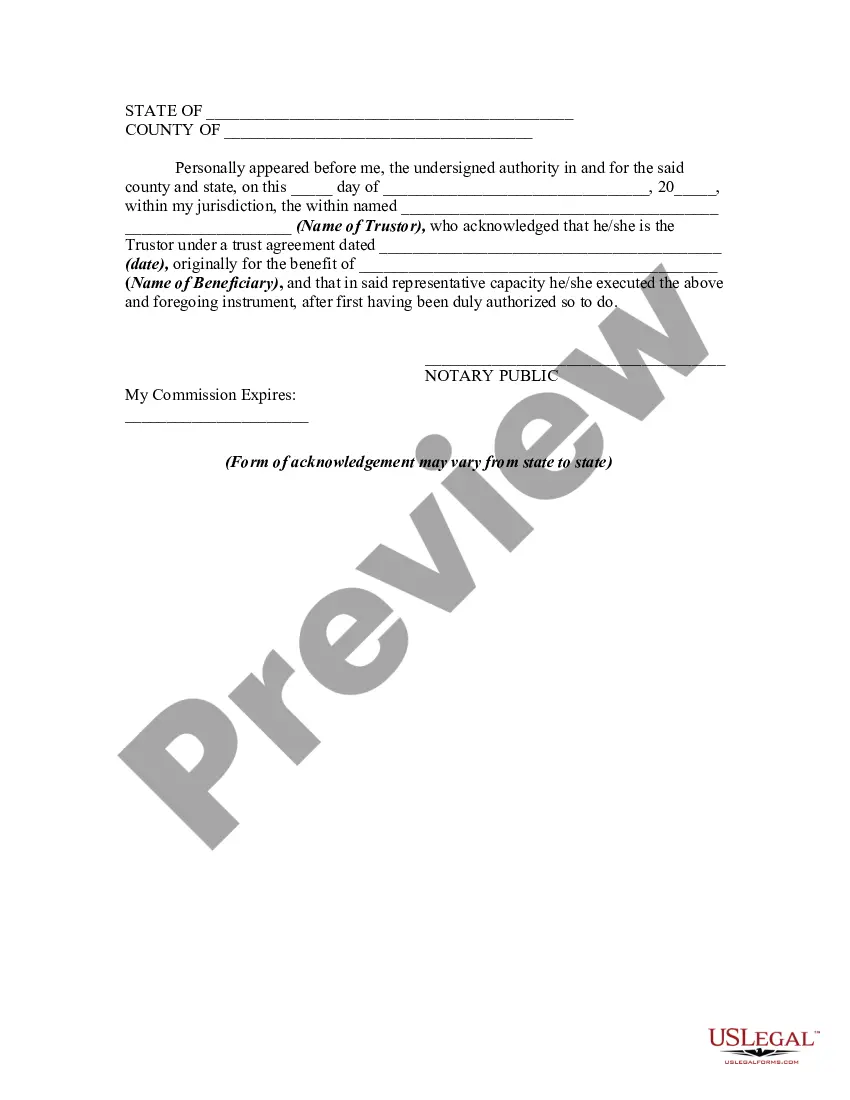
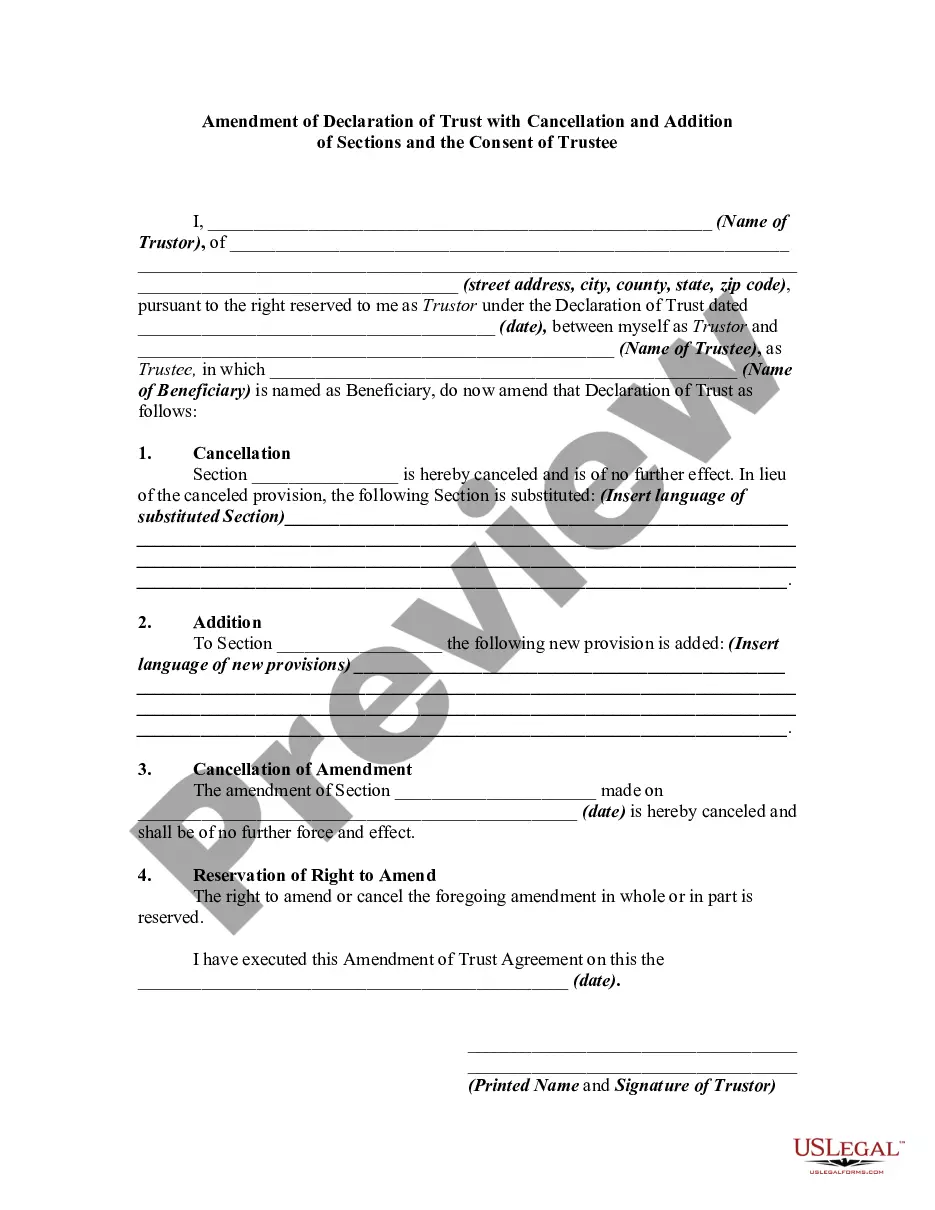
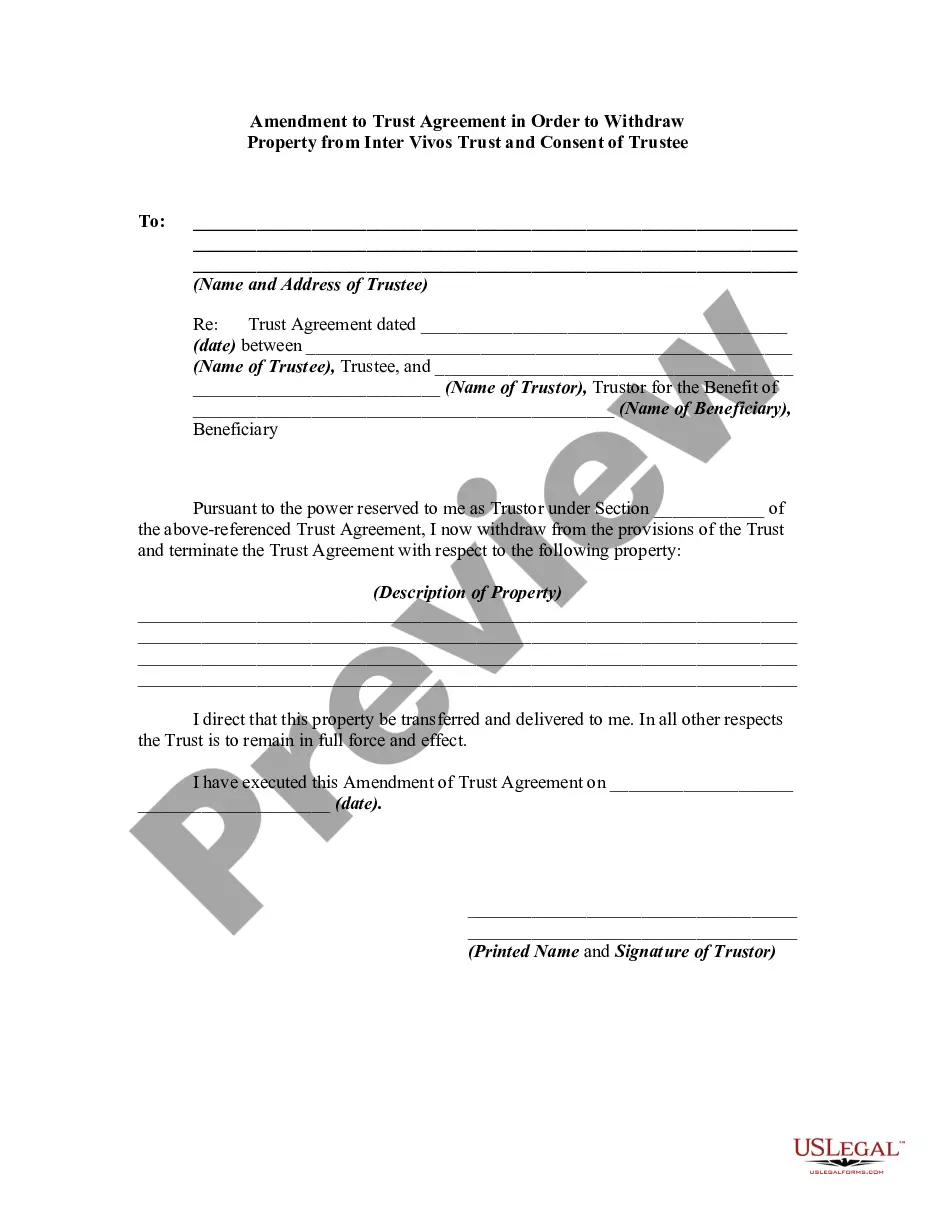
Get your form ready online
Our built-in tools help you complete, sign, share, and store your documents in one place.
Make edits, fill in missing information, and update formatting in US Legal Forms—just like you would in MS Word.
Download a copy, print it, send it by email, or mail it via USPS—whatever works best for your next step.
Sign and collect signatures with our SignNow integration. Send to multiple recipients, set reminders, and more. Go Premium to unlock E-Sign.
If this form requires notarization, complete it online through a secure video call—no need to meet a notary in person or wait for an appointment.
We protect your documents and personal data by following strict security and privacy standards.

Make edits, fill in missing information, and update formatting in US Legal Forms—just like you would in MS Word.

Download a copy, print it, send it by email, or mail it via USPS—whatever works best for your next step.

Sign and collect signatures with our SignNow integration. Send to multiple recipients, set reminders, and more. Go Premium to unlock E-Sign.

If this form requires notarization, complete it online through a secure video call—no need to meet a notary in person or wait for an appointment.

We protect your documents and personal data by following strict security and privacy standards.
Looking for another form?







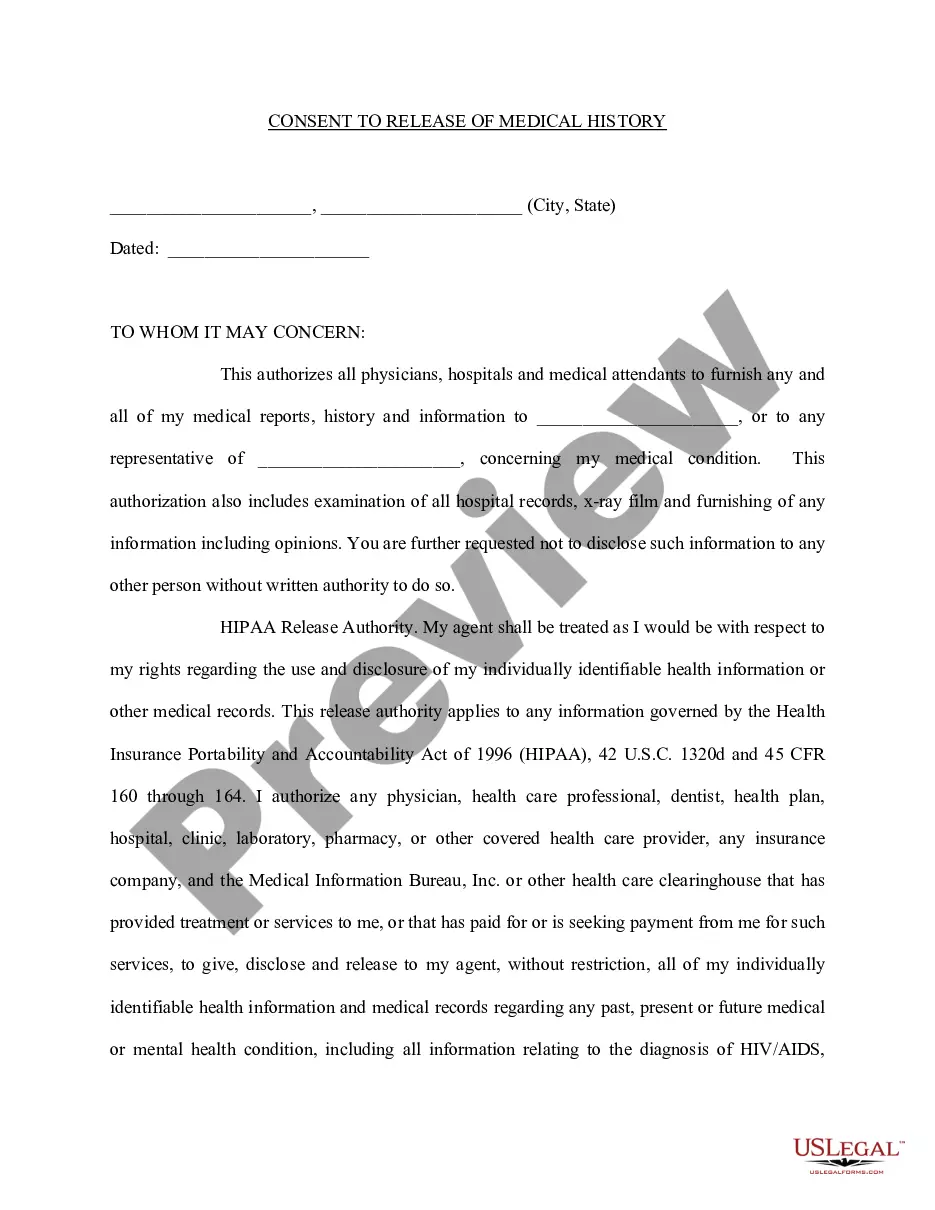
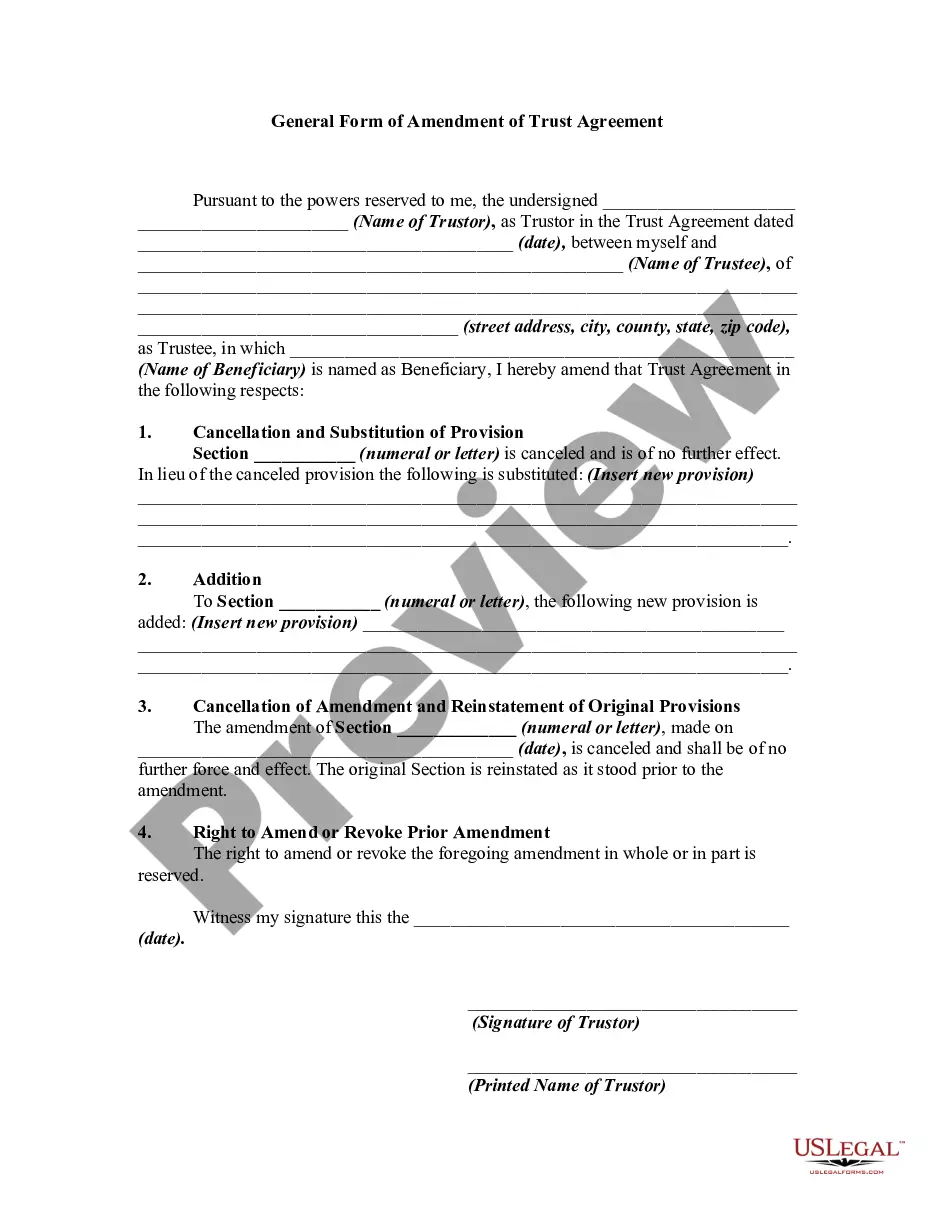
How to fill out Amendment To Trust Agreement In Order To Change Beneficiaries?
Legal management can be overwhelming, even for the most proficient professionals.
When seeking a Trust Change Beneficiary Without Consent and lacking the time to invest in finding the proper and current version, the procedures can be anxiety-inducing.
Access state- or county-specific legal and business forms. US Legal Forms addresses any requirements you may have, from personal to business documents, in one location.
Utilize advanced tools to complete and manage your Trust Change Beneficiary Without Consent.
Here are the steps to follow after obtaining the form you desire: Validate that it is the correct form by previewing it and reviewing its description. Ensure that the sample is accepted in your state or county. Click Buy Now once you are ready. Choose a subscription plan. Select the file format you prefer, and Download, complete, eSign, print, and send your document. Take advantage of the US Legal Forms online catalog, supported by 25 years of experience and reliability. Revolutionize your daily document management into a simple and user-friendly process today.
- Access a repository of articles, guides, and handbooks as well as resources related to your situation and needs.
- Save time and effort searching for the documents you require, and use US Legal Forms’ advanced search and Review tool to find Trust Change Beneficiary Without Consent and obtain it.
- If you hold a monthly subscription, Log In to your US Legal Forms account, search for the document, and acquire it.
- Check your My documents tab to view the documents you have previously downloaded and to manage your folders as you wish.
- If this is your first time with US Legal Forms, create an account and gain unlimited access to all the benefits of the library.
- A comprehensive online form database could be transformative for anyone wanting to handle these matters effectively.
- US Legal Forms is a frontrunner in online legal documentation, offering over 85,000 state-specific legal forms available to you at any time.
- With US Legal Forms, you can.
Form popularity
FAQ
In most cases, a trust deed generally offers two processes for the removal of a beneficiary. Most commonly, the beneficiary can sign a document to renunciate all interests as a beneficiary. Otherwise, the trustee may have discretionary power to revoke the beneficiary.
Simply put, an executor cannot override a beneficiary. The executor's role is to administer the estate and ensure the will's directives are carried out, not alter them.
By stealing from a trust or otherwise breaching fiduciary duty, a trustee keeps beneficiaries from obtaining the assets or funds that they're entitled to. In such cases, a trustee could face civil and criminal charges.
They have rights to have the trust properly managed, to compel the trustee act in good faith, to be considered for trust distributions and to inspect the books of the trust. This means that beneficiaries can take legal action for breach of trust and can seek a court order to remove a trustee.
Amending a Living Trust in California These amendments do not need to be notarized to count, but they do need to be witnessed and signed, or at least created holographically (in the grantor's handwriting, with the grantor's signature).