Trust Change Beneficiary With Irrevocable
Description

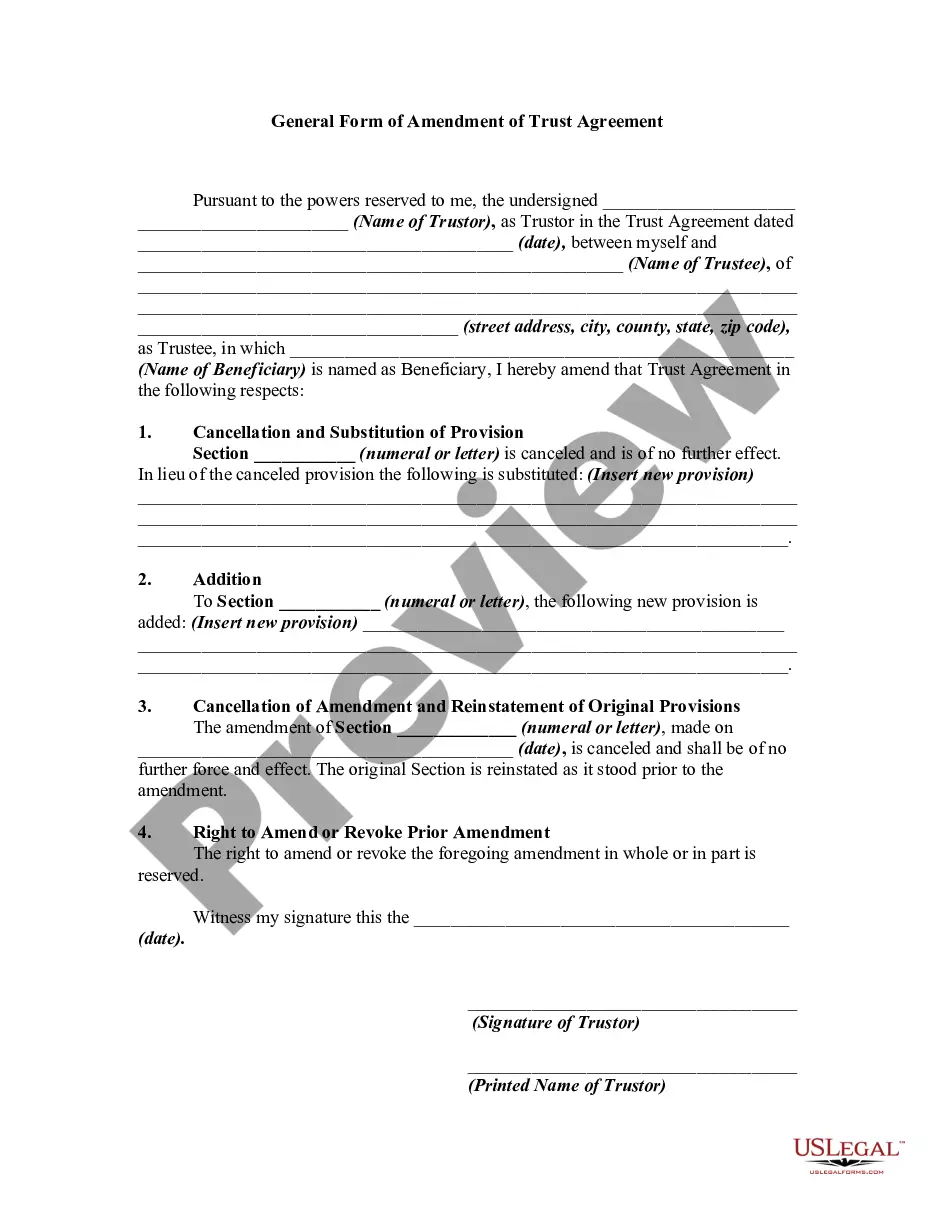
Get your form ready online
Our built-in tools help you complete, sign, share, and store your documents in one place.
Make edits, fill in missing information, and update formatting in US Legal Forms—just like you would in MS Word.
Download a copy, print it, send it by email, or mail it via USPS—whatever works best for your next step.
Sign and collect signatures with our SignNow integration. Send to multiple recipients, set reminders, and more. Go Premium to unlock E-Sign.
If this form requires notarization, complete it online through a secure video call—no need to meet a notary in person or wait for an appointment.
We protect your documents and personal data by following strict security and privacy standards.

Make edits, fill in missing information, and update formatting in US Legal Forms—just like you would in MS Word.

Download a copy, print it, send it by email, or mail it via USPS—whatever works best for your next step.

Sign and collect signatures with our SignNow integration. Send to multiple recipients, set reminders, and more. Go Premium to unlock E-Sign.

If this form requires notarization, complete it online through a secure video call—no need to meet a notary in person or wait for an appointment.

We protect your documents and personal data by following strict security and privacy standards.
Looking for another form?





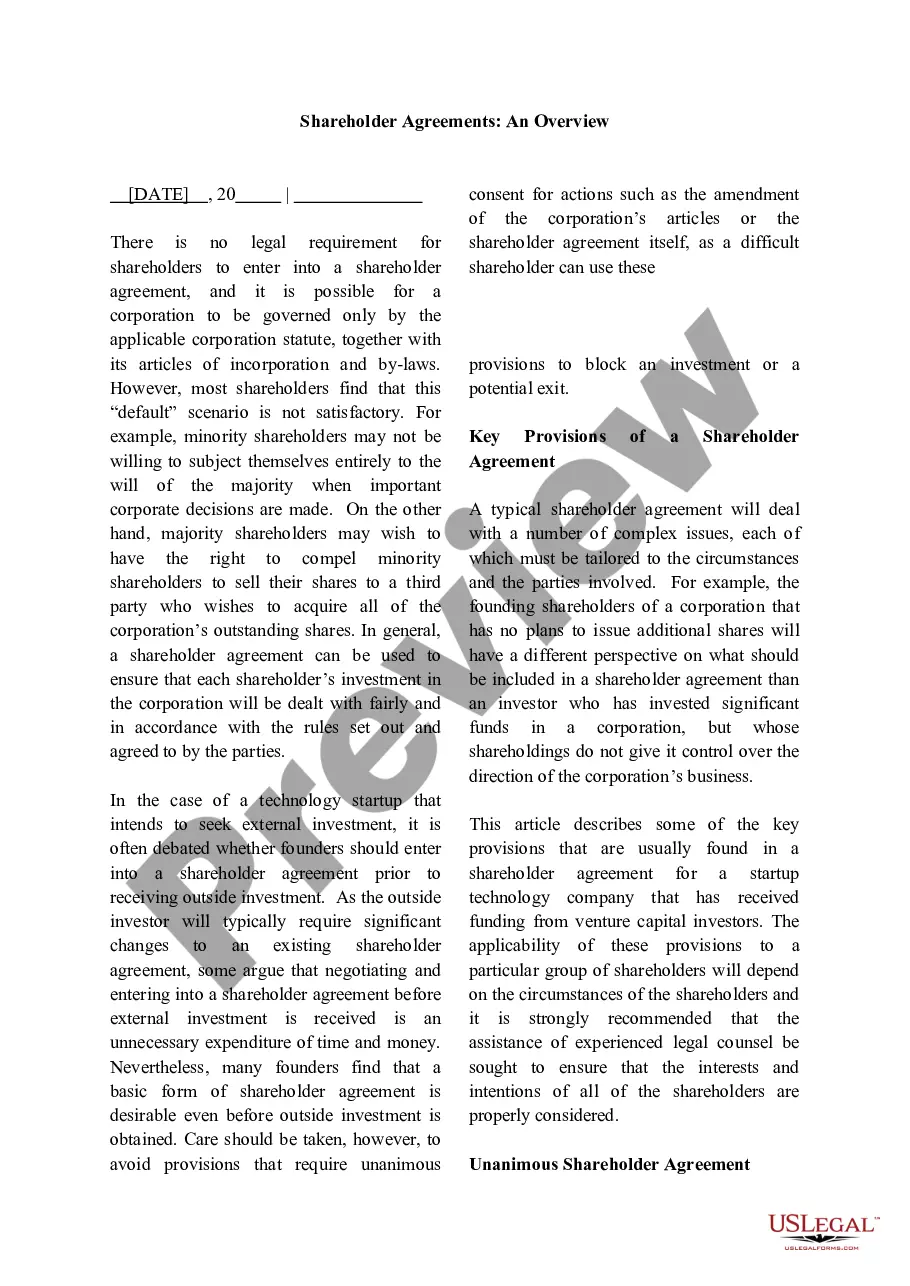




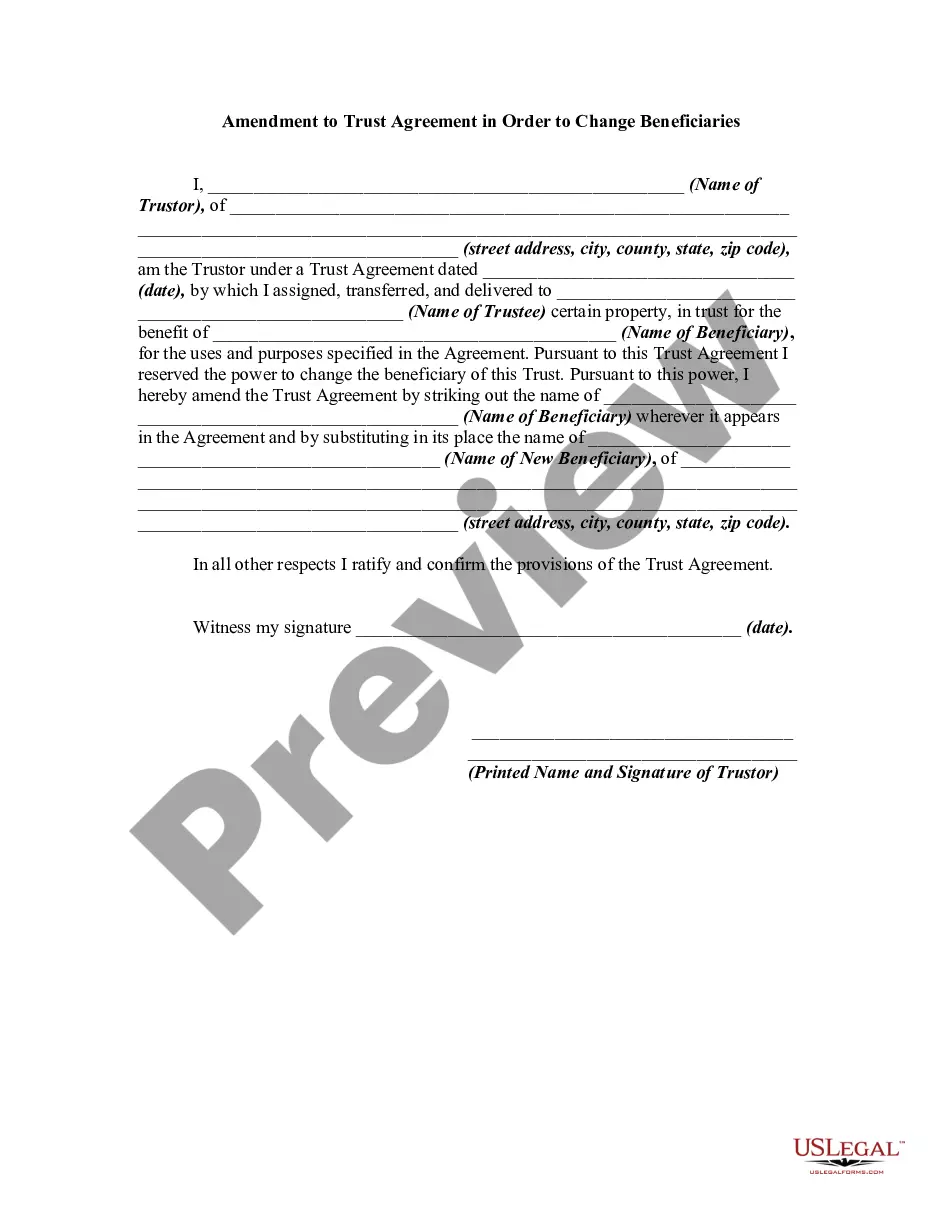
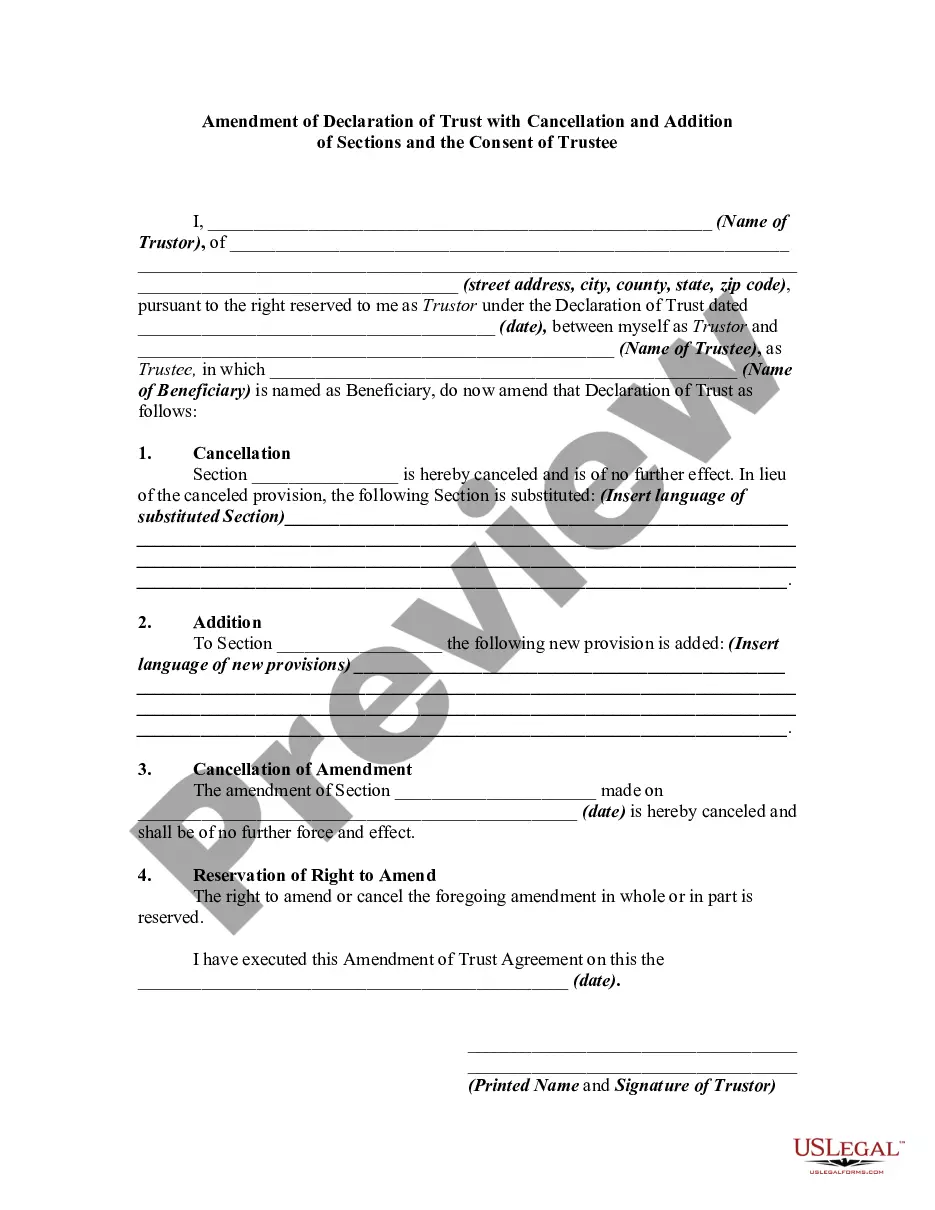
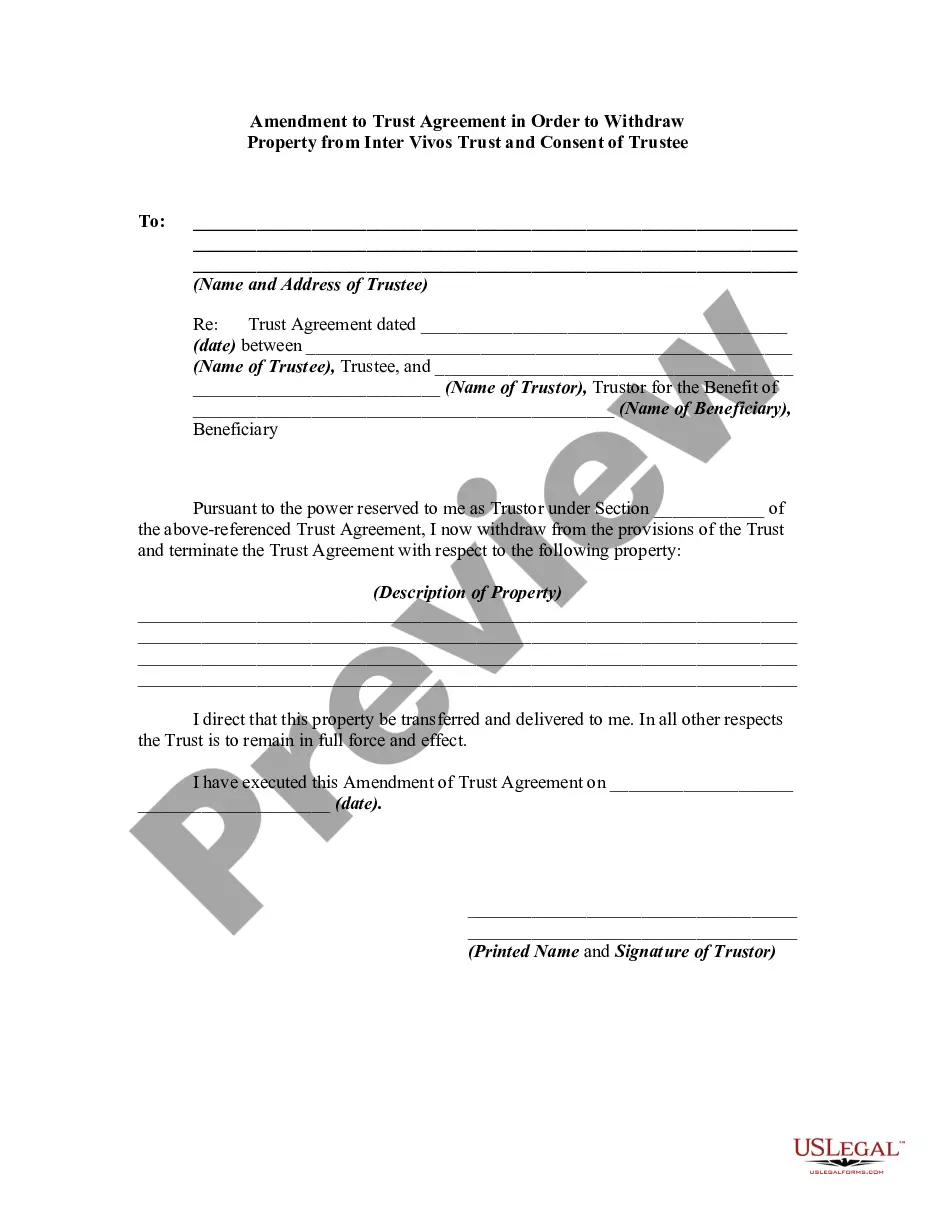
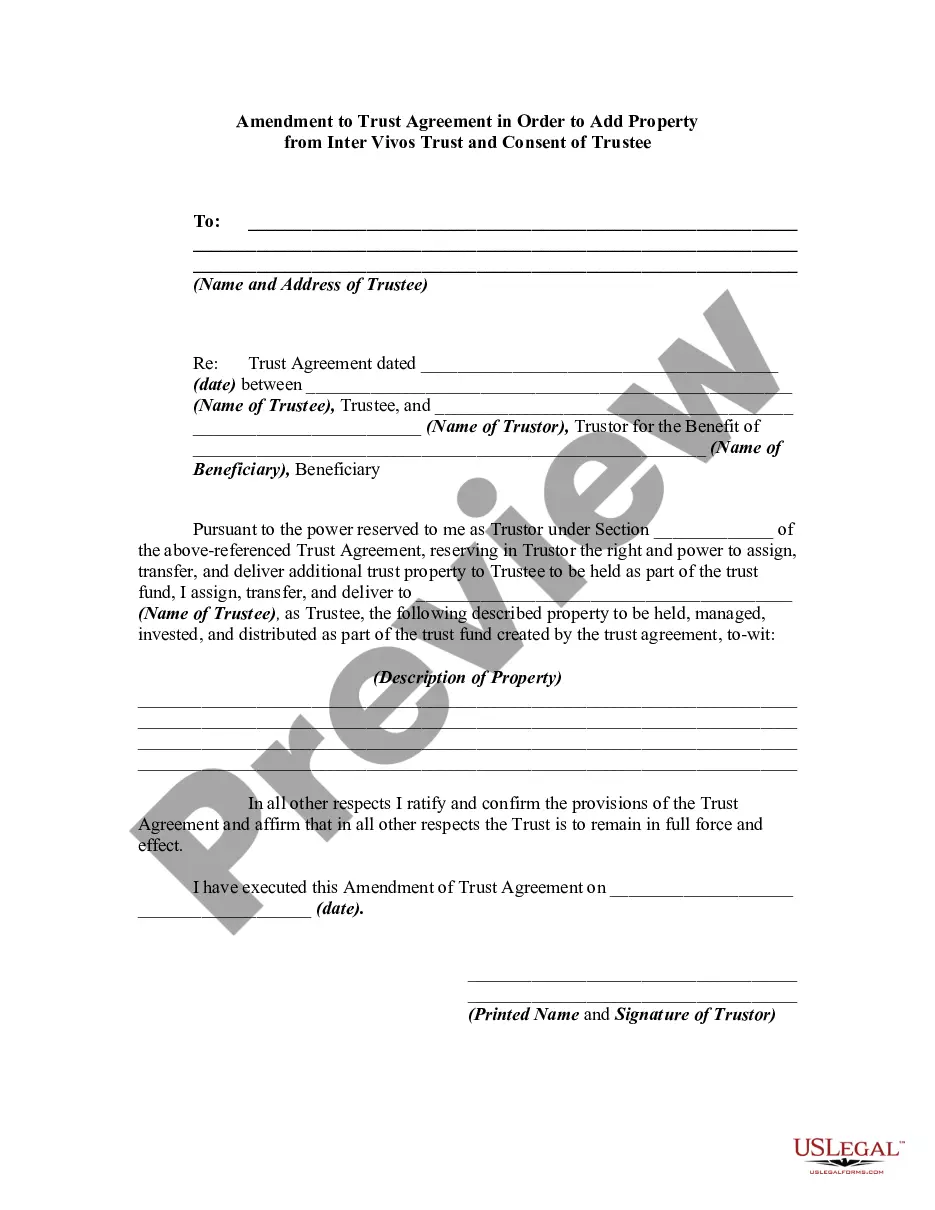
How to fill out Amendment To Trust Agreement In Order To Change Beneficiaries?
Creating legal documents from the ground up can occasionally be daunting.
Certain situations may require extensive research and considerable financial investment.
If you're in search of a simpler and more economical method of generating Trust Change Beneficiary With Irrevocable or any other documents without unnecessary complications, US Legal Forms is readily available to you.
Our online collection of over 85,000 current legal documents covers nearly every aspect of your financial, legal, and personal matters.
However, before proceeding to download Trust Change Beneficiary With Irrevocable, keep in mind these recommendations: Check the form preview and descriptions to ensure you have found the document you are looking for. Ensure the form you select meets the standards of your state and county. Choose the most appropriate subscription plan to obtain the Trust Change Beneficiary With Irrevocable. Download the document, then complete, validate, and print it. US Legal Forms boasts an excellent reputation and over 25 years of experience. Join us now and make form execution a simple and efficient process!
- With just a few clicks, you can quickly access state- and county-specific forms meticulously crafted for you by our legal professionals.
- Utilize our website whenever you need trustworthy and dependable services through which you can effortlessly locate and download the Trust Change Beneficiary With Irrevocable.
- If you're familiar with our services and have already established an account with us, simply Log In to your account, find the template, and download it or re-download it anytime in the My documents section.
- Not an account holder? No issue. It requires minimal time to create one and browse the catalog.
Form popularity
FAQ
Once a California Trust becomes irrevocable, the Trust beneficiaries generally cannot be changed. That's the good news. The bad news is that there are a few exceptions. The most common exception is called a ?power of appointment.? A power of appointment grants a person the right to change the Trust beneficiaries.
Yes,it us quite possible to change any trustee of a charitable trust. The procedure for bringing this change is to pass a resolution in the meeting of the board of trustees related to the issue.
How to Remove and/or Appoint Beneficiaries. Typically, the beneficiaries in a discretionary trust can be changed by preparing a Deed of Amendment. However, many older discretionary trust deeds fail to make it clear whether a specific person can be removed and/or appointed as a beneficiary.
The name of the trust is the name of the trust and will continue to include ?revocable? in its title and on investment accounts held by the trust.
This is especially true in the case of an ILIT, because they are irrevocable in nature. Once you set up and fund your ILIT, you can no longer make any changes. This means that you cannot change your beneficiary or beneficiaries, even if you experience divorce in the family or a falling out.