Complaint For Declaratory Judgment
Description
Get your form ready online
Our built-in tools help you complete, sign, share, and store your documents in one place.
Make edits, fill in missing information, and update formatting in US Legal Forms—just like you would in MS Word.
Download a copy, print it, send it by email, or mail it via USPS—whatever works best for your next step.
Sign and collect signatures with our SignNow integration. Send to multiple recipients, set reminders, and more. Go Premium to unlock E-Sign.
If this form requires notarization, complete it online through a secure video call—no need to meet a notary in person or wait for an appointment.
We protect your documents and personal data by following strict security and privacy standards.

Make edits, fill in missing information, and update formatting in US Legal Forms—just like you would in MS Word.

Download a copy, print it, send it by email, or mail it via USPS—whatever works best for your next step.

Sign and collect signatures with our SignNow integration. Send to multiple recipients, set reminders, and more. Go Premium to unlock E-Sign.

If this form requires notarization, complete it online through a secure video call—no need to meet a notary in person or wait for an appointment.

We protect your documents and personal data by following strict security and privacy standards.
Looking for another form?
How to fill out Complaint Based On Open Account, Breach Of Contract, Unjust Enrichment?
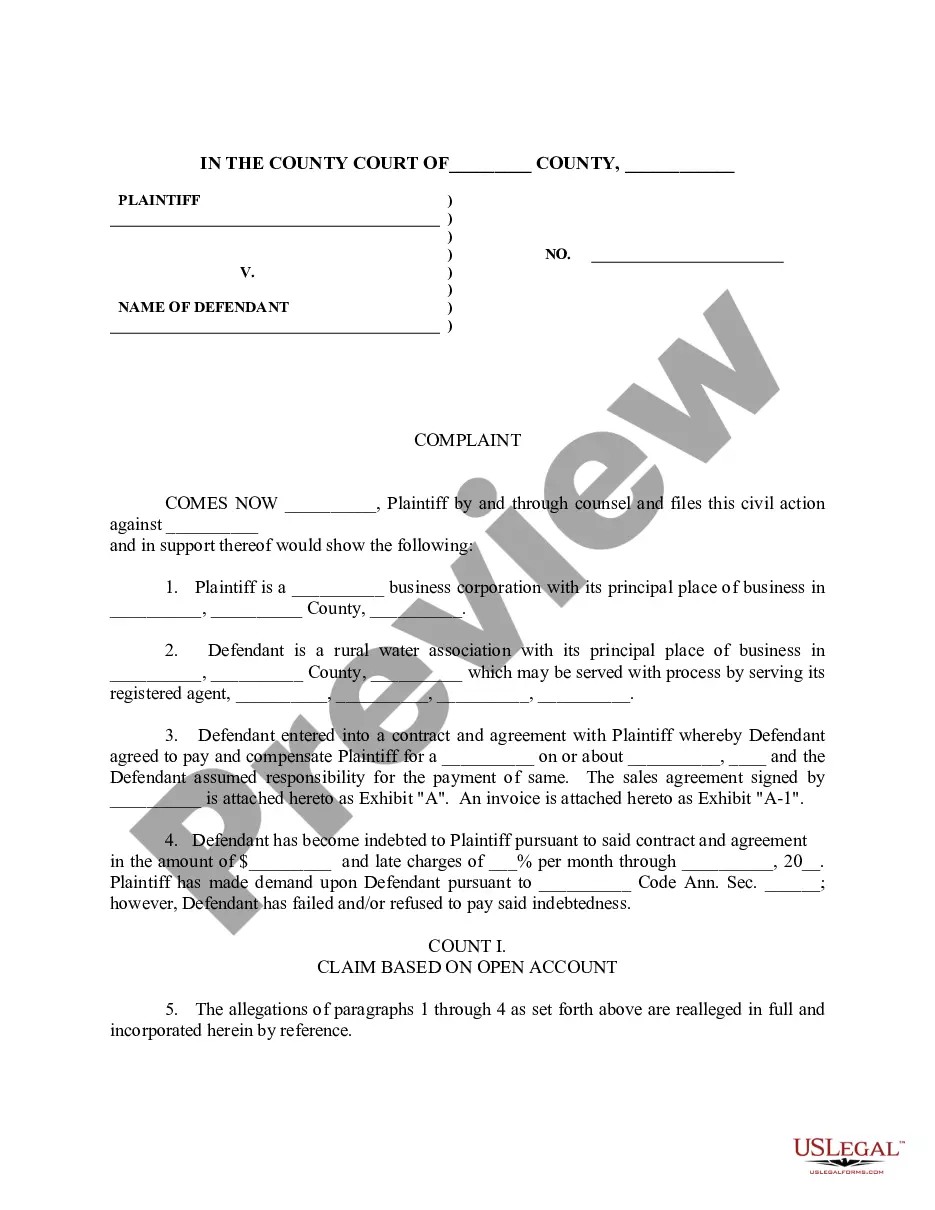
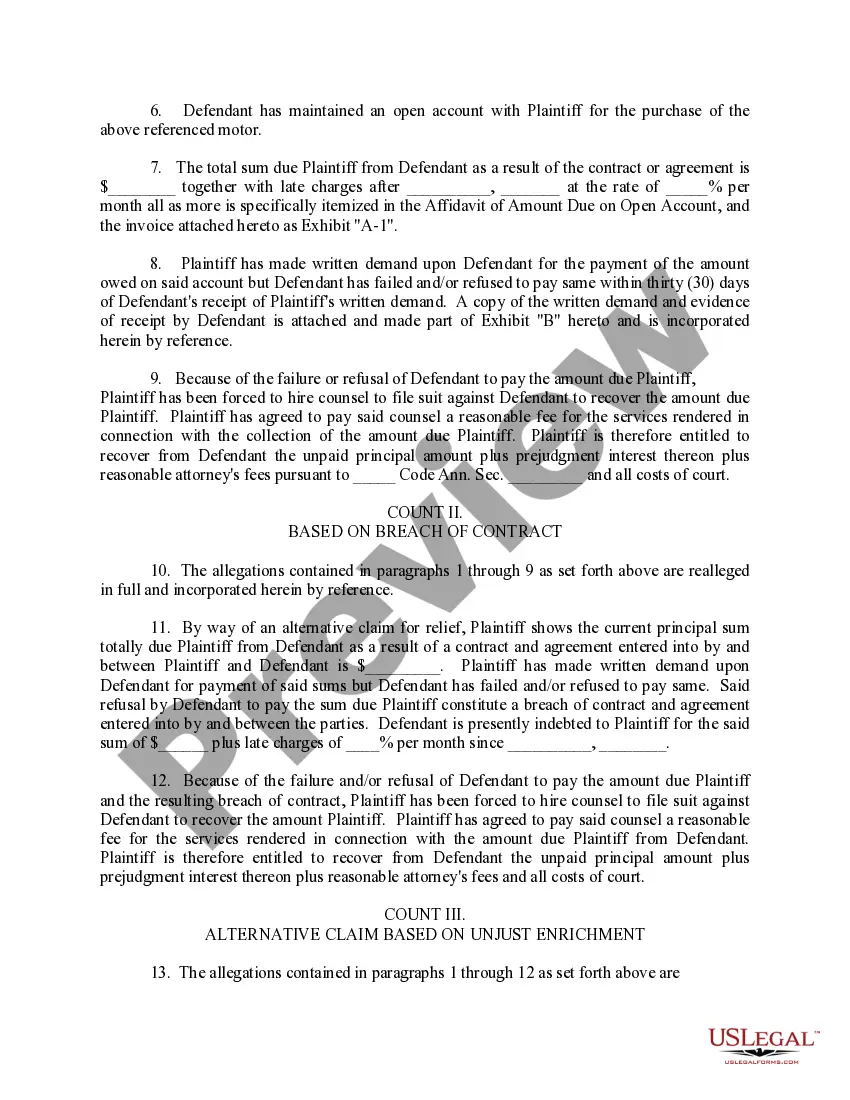
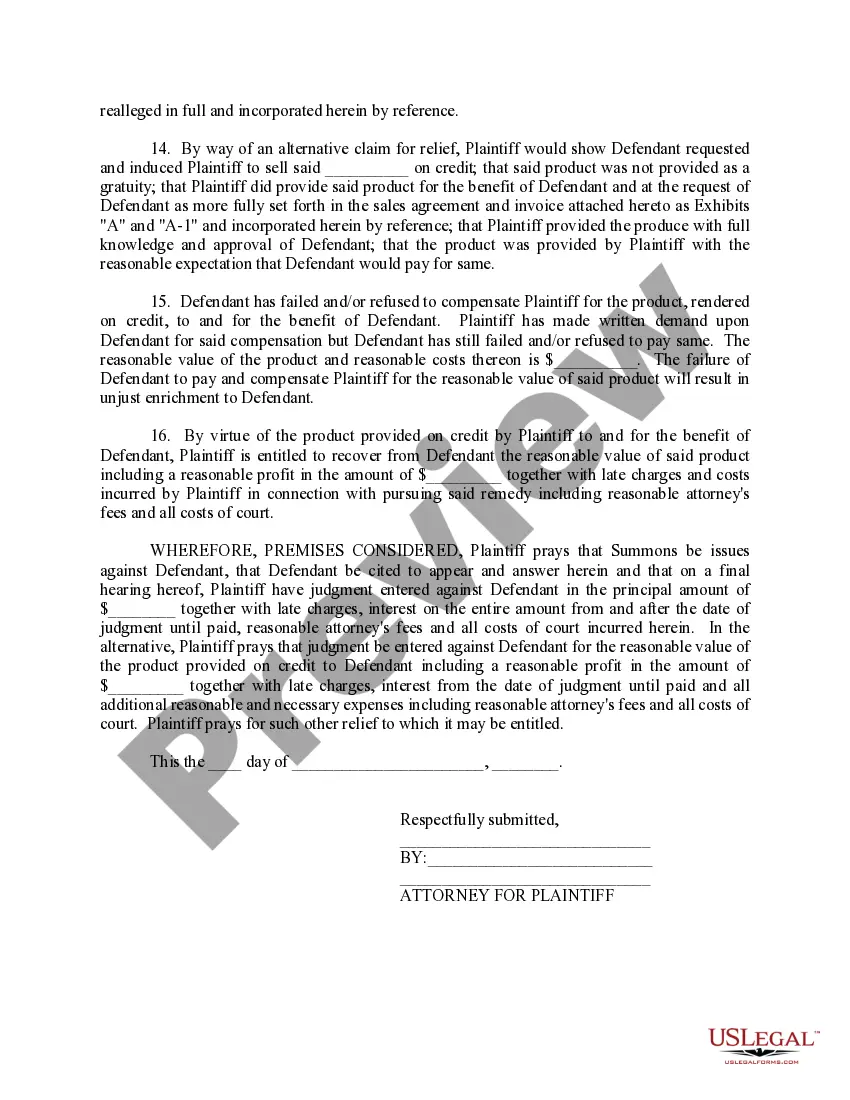
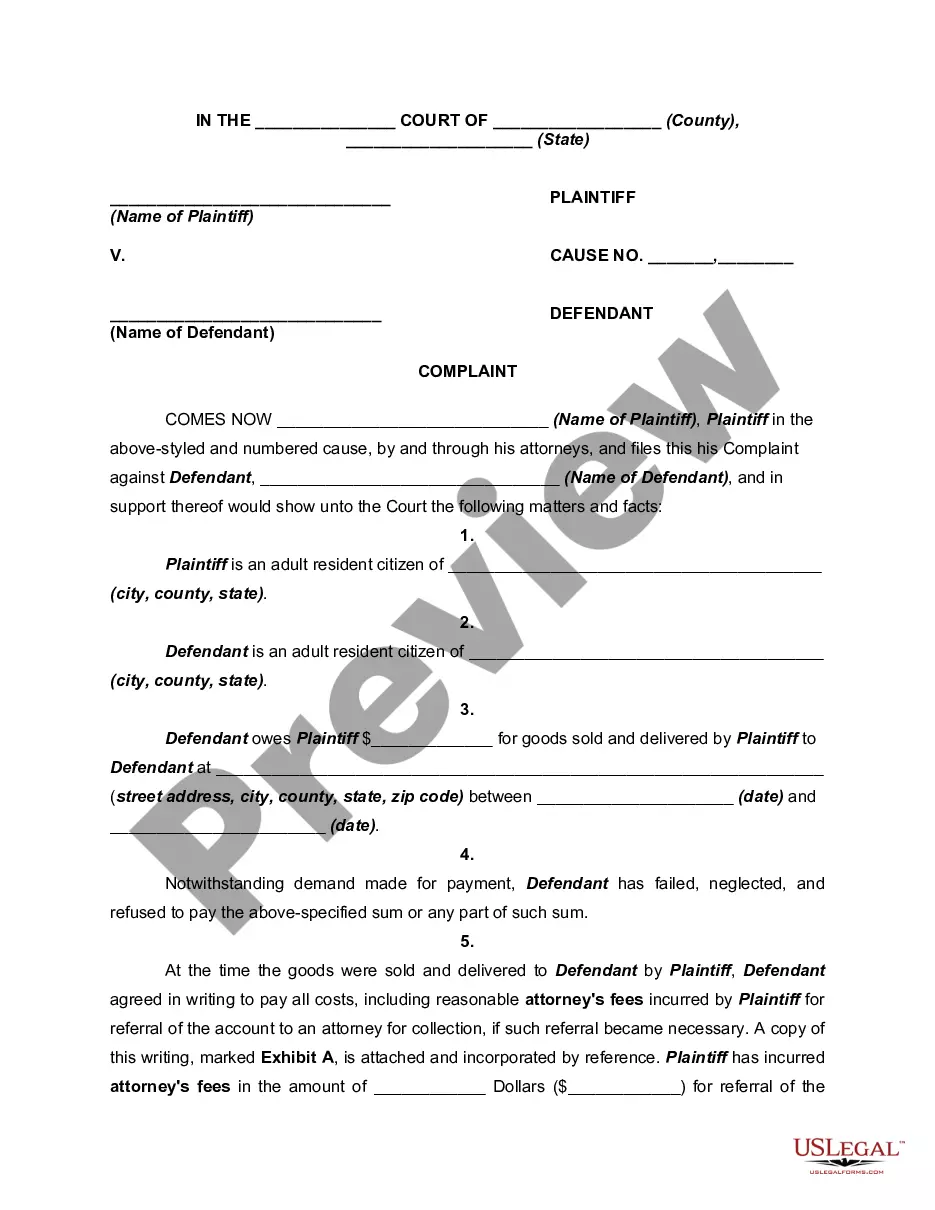
The Petition For Declaratory Judgment you see on this page is a reusable legal template created by experienced attorneys in accordance with federal and local statutes and regulations.
For over 25 years, US Legal Forms has supplied individuals, businesses, and legal experts with over 85,000 validated, state-specific forms for any corporate and personal situation.
Choose the format you prefer for your Petition For Declaratory Judgment (PDF, DOCX, RTF) and download the example onto your device.
- Search for the document you require and examine it.
- Browse through the file you looked for and preview it or review the form description to ensure it meets your needs. If it doesn’t, utilize the search feature to find the appropriate one. Click Buy Now once you locate the template you want.
- Sign up and Log In.
- Select the pricing plan that fits you and create an account. Use PayPal or a credit card for a swift payment. If you already possess an account, Log In and verify your subscription to proceed.
- Acquire the editable template.
Form popularity
FAQ
To succeed with a complaint for declaratory judgment, certain requirements must be met. The party must demonstrate an actual controversy that requires resolution and must show their interest in the matter. Additionally, the court must have jurisdiction over the issue, and the request should not be based on hypothetical scenarios. Ensuring compliance with these criteria helps facilitate the court's ability to issue a definitive ruling.
A complaint for declaratory judgment is a legal document filed in court to resolve uncertainties regarding rights and obligations. It requests a court ruling to clarify legal issues without necessarily seeking damages. This type of action allows parties to attain legal certainty and make informed decisions moving forward. Overall, it provides a proactive way to address potential disputes before they escalate.
An insurance company may request a declaratory judgment when there is uncertainty about coverage for a specific claim. For example, if multiple parties make conflicting claims, the insurer might seek a complaint for declaratory judgment to determine its liabilities. This approach helps the insurer avoid potential issues down the line, ensuring they comply with their legal obligations. It fosters better relationships with policyholders by clarifying coverage issues promptly.
The primary reasons for filing a complaint for declaratory judgment include seeking clarification of legal rights and preventing future disputes. This legal action promotes efficiency by addressing potential conflicts before they escalate into litigation. Furthermore, it aids in establishing a clear framework for parties involved, enabling them to operate with a better understanding of their responsibilities. Ultimately, it serves as a valuable tool for conflict resolution.
A motion for declaratory judgment can occur in a scenario where a party questions the validity of a contract. For instance, an individual may seek a complaint for declaratory judgment to confirm whether a lease agreement is enforceable. The court then evaluates the facts and issues a ruling that provides legal guidance. Such motions help prevent misunderstandings and facilitate smoother transactions.
Insurers often file a complaint for declaratory judgment to clarify coverage issues before they arise in a claim. This process allows them to ascertain their obligations and potentially avoid costly litigation later. By resolving coverage doubts early, insurers can maintain better control over risk management. It also fosters transparency and helps policyholders understand their rights.
A complaint for declaratory judgment may be suitable when there is uncertainty about legal rights or obligations. For instance, if parties disagree about a contract's terms, seeking a declaratory judgment can provide clarity. This action helps avoid future disputes by establishing the legal standing of each party. Hence, it serves as a proactive approach to resolving conflicts.
The purpose of the Declaratory Judgment Act is to provide a legal framework for resolving disputes before they escalate into full-blown litigation. This act allows parties to seek a judicial declaration on their rights and obligations, helping to avoid potential conflicts. By filing a Complaint for declaratory judgment, individuals and organizations can clarify their positions without the need for a trial, saving time and resources.
Several factors influence the granting of a Complaint for declaratory judgment. Courts consider the existence of a substantial controversy, the adequacy of the legal remedy sought, and whether the issues are ripe for adjudication. These factors help ensure that the court's intervention is necessary and appropriate for resolving uncertainties between the parties.
The main difference between summary judgment and declaratory judgment lies in their purposes. A summary judgment seeks to resolve a case based on factual evidence without a trial, often narrowing the issues in dispute. In contrast, a Complaint for declaratory judgment clarifies legal rights and obligations without necessarily resolving underlying disputes, making it a preemptive legal tool.