Court Hearing In Meaning
Description
Get your form ready online
Our built-in tools help you complete, sign, share, and store your documents in one place.
Make edits, fill in missing information, and update formatting in US Legal Forms—just like you would in MS Word.
Download a copy, print it, send it by email, or mail it via USPS—whatever works best for your next step.
Sign and collect signatures with our SignNow integration. Send to multiple recipients, set reminders, and more. Go Premium to unlock E-Sign.
If this form requires notarization, complete it online through a secure video call—no need to meet a notary in person or wait for an appointment.
We protect your documents and personal data by following strict security and privacy standards.

Make edits, fill in missing information, and update formatting in US Legal Forms—just like you would in MS Word.

Download a copy, print it, send it by email, or mail it via USPS—whatever works best for your next step.

Sign and collect signatures with our SignNow integration. Send to multiple recipients, set reminders, and more. Go Premium to unlock E-Sign.

If this form requires notarization, complete it online through a secure video call—no need to meet a notary in person or wait for an appointment.

We protect your documents and personal data by following strict security and privacy standards.
Looking for another form?





How to fill out Notice Of Hearing?
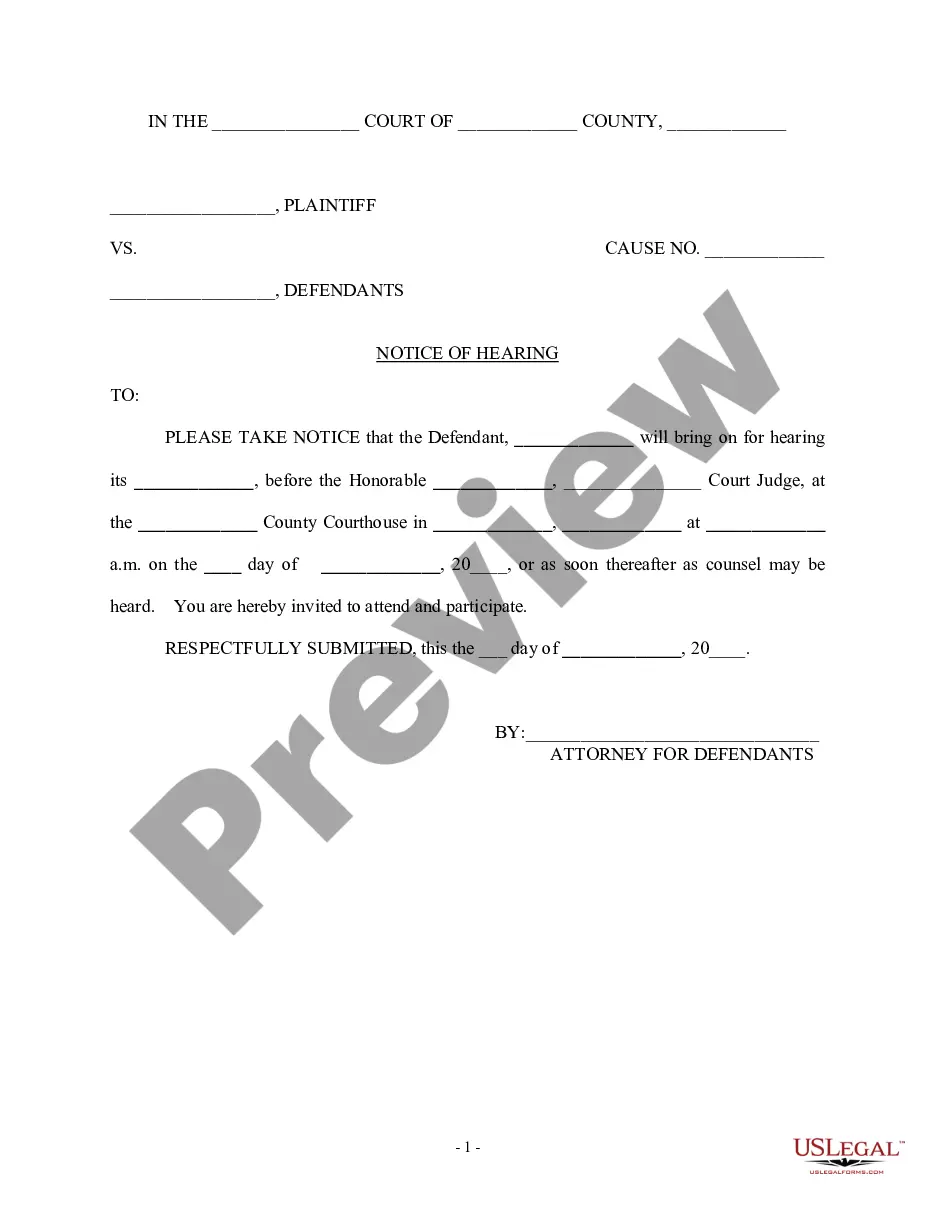
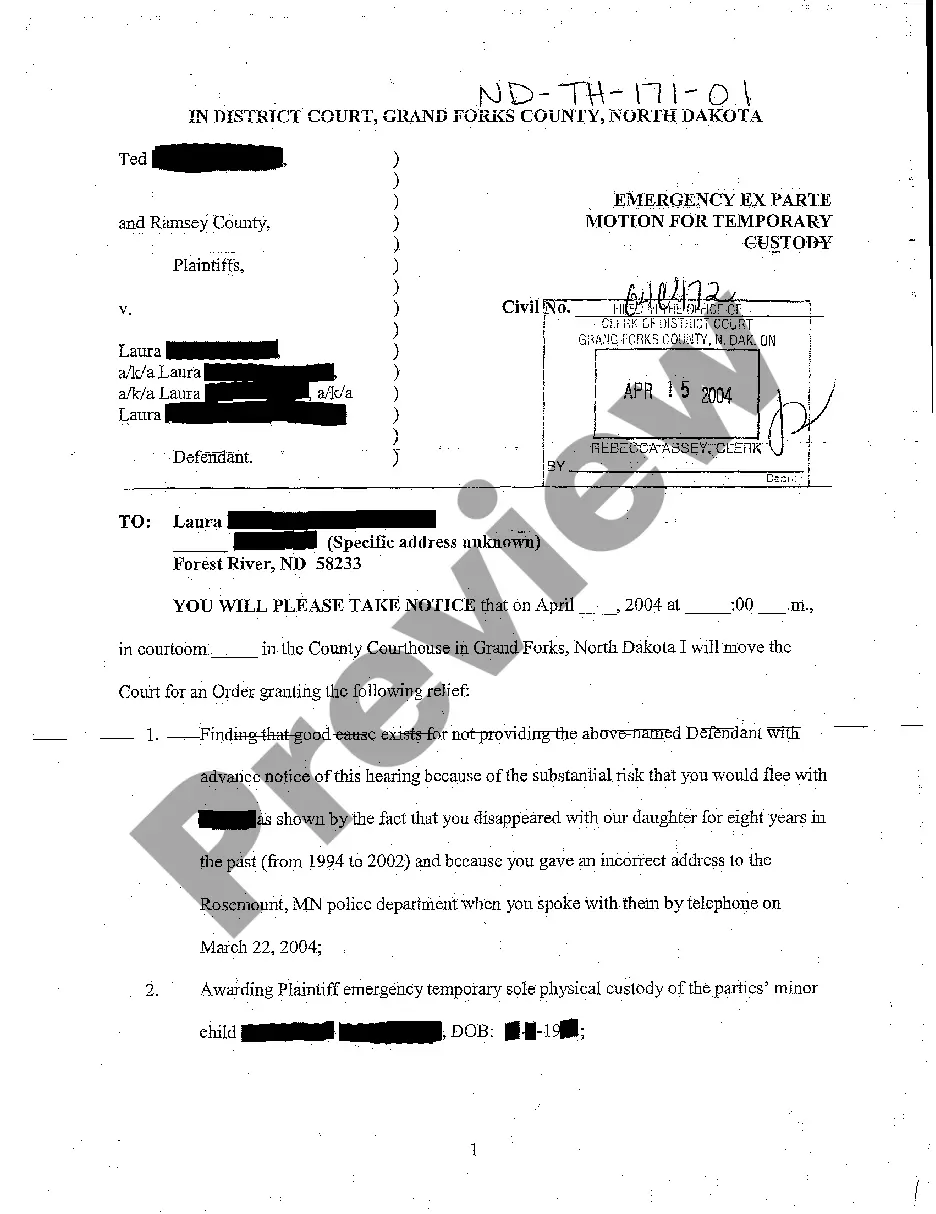
The Court Hearing In Meaning displayed on this page is a reusable formal template crafted by expert attorneys in accordance with federal and state regulations.
For over 25 years, US Legal Forms has supplied individuals, entities, and lawyers with more than 85,000 authenticated, state-specific documents for any business and personal event. It’s the fastest, simplest, and most trustworthy method to acquire the paperwork you require, as the service assures the utmost level of data protection and anti-malware safeguards.
Register for US Legal Forms to have verified legal templates for all of life's situations readily available.
- Search for the document you require and examine it.
- Select the pricing plan that fits you and create an account.
- Choose the format you desire for your Court Hearing In Meaning (PDF, DOCX, RTF) and download the document onto your device.
- Print the template to complete it by hand, or employ an online multifunctional PDF editor to quickly and accurately fill out and sign your form with an electronic signature.
- Utilize the same document again whenever necessary. Access the My documents tab in your profile to redownload any previously saved documents.
Form popularity
FAQ
Proving Your Case Whatever the reason for being at court, you must convince the judge or magistrate that he or she should rule in your favor. This is done by providing sufficient documentary evidence and witness testimony. There are different standards of proof for various types of cases.
A hearing refers to any formal proceeding before a court. The term usually refers to a brief court session that resolves a specific question before a full court trial takes place, or to such specialized proceedings as administrative hearings.
A hearing is a meeting or session of a Senate, House, joint, or special committee of Congress, usually open to the public, to obtain information and opinions on proposed legislation, conduct an investigation, or evaluate/oversee the activities of a government department or the implementation of a Federal law.
6 Tips to Make a Good First Impression in Court Know the judge. Be organized with your paperwork. Dress Appropriately. Stay calm in front of the jury. Keep eye contact with the jury. Don't be late to court.
What NOT to Say while Testifying Don't lie. This seems to be common sense, but it has to be said. ... Don't guess. If you don't know the answer, say so. ... Don't talk about your character. ... Don't call other witnesses liars.