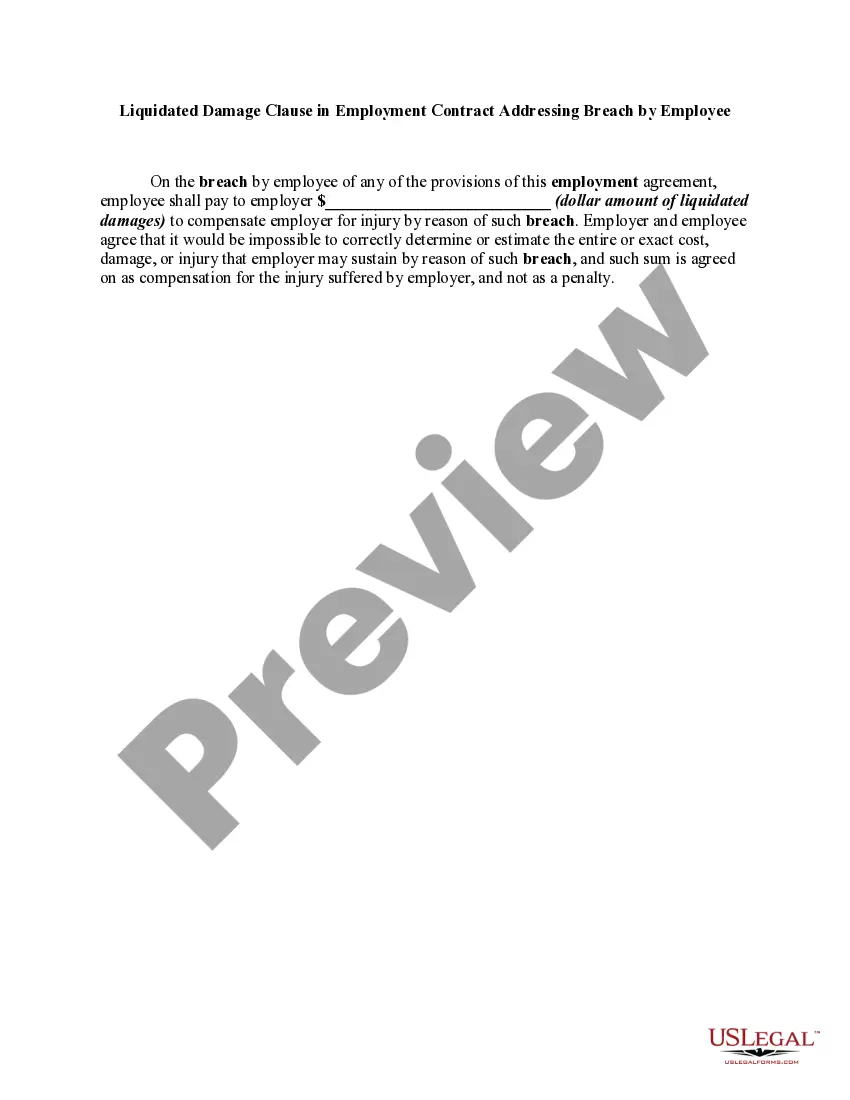
Sample Liquidated Damages Clause For Late Delivery
Description
Get your form ready online
Our built-in tools help you complete, sign, share, and store your documents in one place.
Make edits, fill in missing information, and update formatting in US Legal Forms—just like you would in MS Word.
Download a copy, print it, send it by email, or mail it via USPS—whatever works best for your next step.
Sign and collect signatures with our SignNow integration. Send to multiple recipients, set reminders, and more. Go Premium to unlock E-Sign.
If this form requires notarization, complete it online through a secure video call—no need to meet a notary in person or wait for an appointment.
We protect your documents and personal data by following strict security and privacy standards.

Make edits, fill in missing information, and update formatting in US Legal Forms—just like you would in MS Word.

Download a copy, print it, send it by email, or mail it via USPS—whatever works best for your next step.

Sign and collect signatures with our SignNow integration. Send to multiple recipients, set reminders, and more. Go Premium to unlock E-Sign.

If this form requires notarization, complete it online through a secure video call—no need to meet a notary in person or wait for an appointment.

We protect your documents and personal data by following strict security and privacy standards.
Looking for another form?

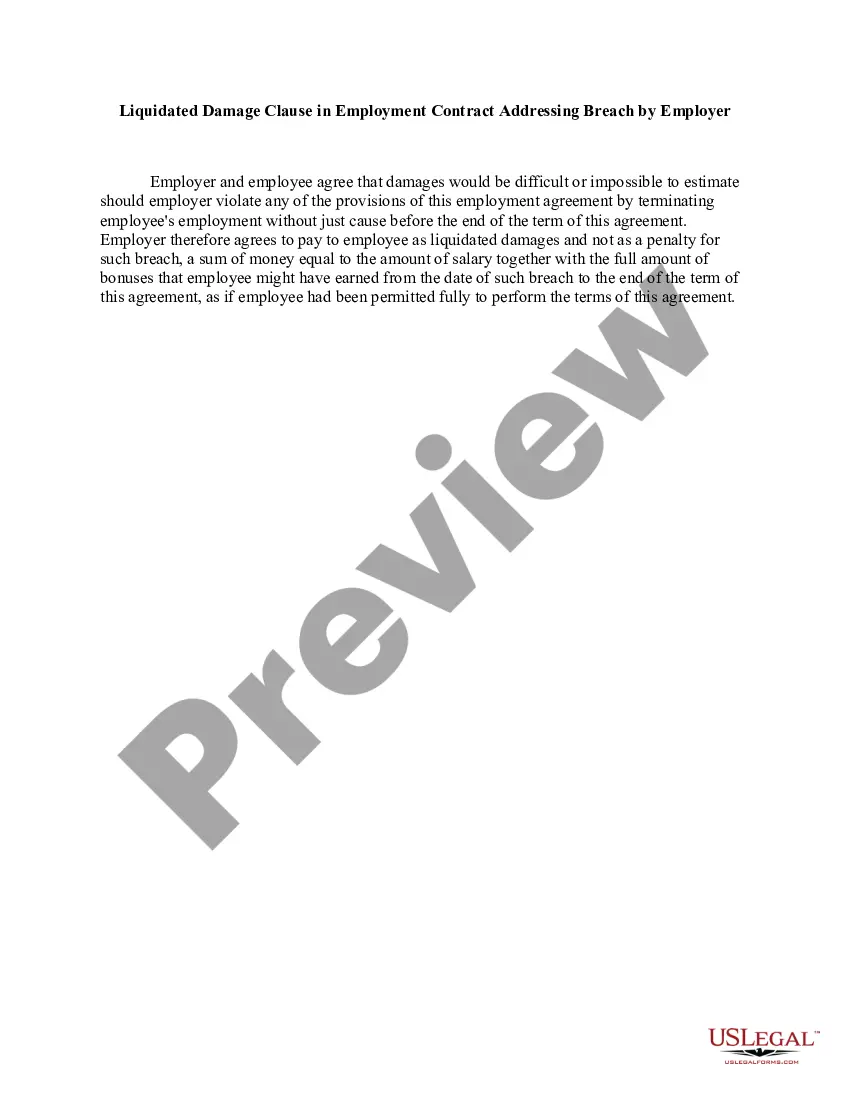
How to fill out Liquidated Damage Clause In Employment Contract Addressing Breach By Employee?
Securing a reliable source for the most up-to-date and pertinent legal templates is a significant part of navigating bureaucracy. Selecting the appropriate legal documents requires accuracy and careful attention, which is why it is essential to obtain samples of Sample Liquidated Damages Clause For Late Delivery exclusively from reputable sources, such as US Legal Forms. An incorrect template will squander your time and delay the matter at hand. With US Legal Forms, you have minimal concerns. You can access and review all the details regarding the document’s application and relevance to your situation and in your locality.
Consider the following steps to complete your Sample Liquidated Damages Clause For Late Delivery.
Once you have the form on your device, you can modify it using the editor or print it and complete it manually. Eliminate the hassle associated with your legal documentation. Explore the comprehensive US Legal Forms library to find legal samples, assess their relevance to your situation, and download them immediately.
- Utilize the library navigation or search bar to find your template.
- Examine the form’s details to verify if it meets the criteria of your state and locality.
- Preview the form, if available, to confirm it is the one you are interested in.
- Return to the search to locate the appropriate template if the Sample Liquidated Damages Clause For Late Delivery does not suit your requirements.
- Once you are certain about the form’s applicability, download it.
- If you are a registered user, click Log in to verify and access your selected templates in My documents.
- If you do not yet have an account, click Buy now to obtain the form.
- Choose the pricing plan that fits your needs.
- Proceed to the registration to complete your purchase.
- Finalize your purchase by selecting a payment option (credit card or PayPal).
- Choose the file format for downloading Sample Liquidated Damages Clause For Late Delivery.
Form popularity
FAQ
Sample liquidated damages clause: In the event of delay in [type of project] completion, the [performing party] shall pay liquidated damages to [the owner] in the amount of [dollar amount per day/week, etc.] [or] ["X" percent of the total contract price per day/week, etc.].
An example of liquidated damages is when a bank or person offers money in the form of a loan and the stipulated time of repayment ends before the completion of payment. The defaulting party must compensate for this damage as agreed in the contract.
(c) The Liquidated Damages shall be paid to each Holder in cash within ten (10)Business Days following the last day of 30-day period that the Holders are entitled to such Liquidated Damages. Any payments made pursuant to this Section2. 02 shall constitute the Holders' exclusive remedy for such events.
Construction contracts often include a clause that identifies a stipulated or ?liquidated? damage amount for unexcused delay. These clauses assess a fixed sum for each day of delay, thereby relieving the owner from proving its actual damages caused by delay.