Suit For Encroachment And Injunction
Description
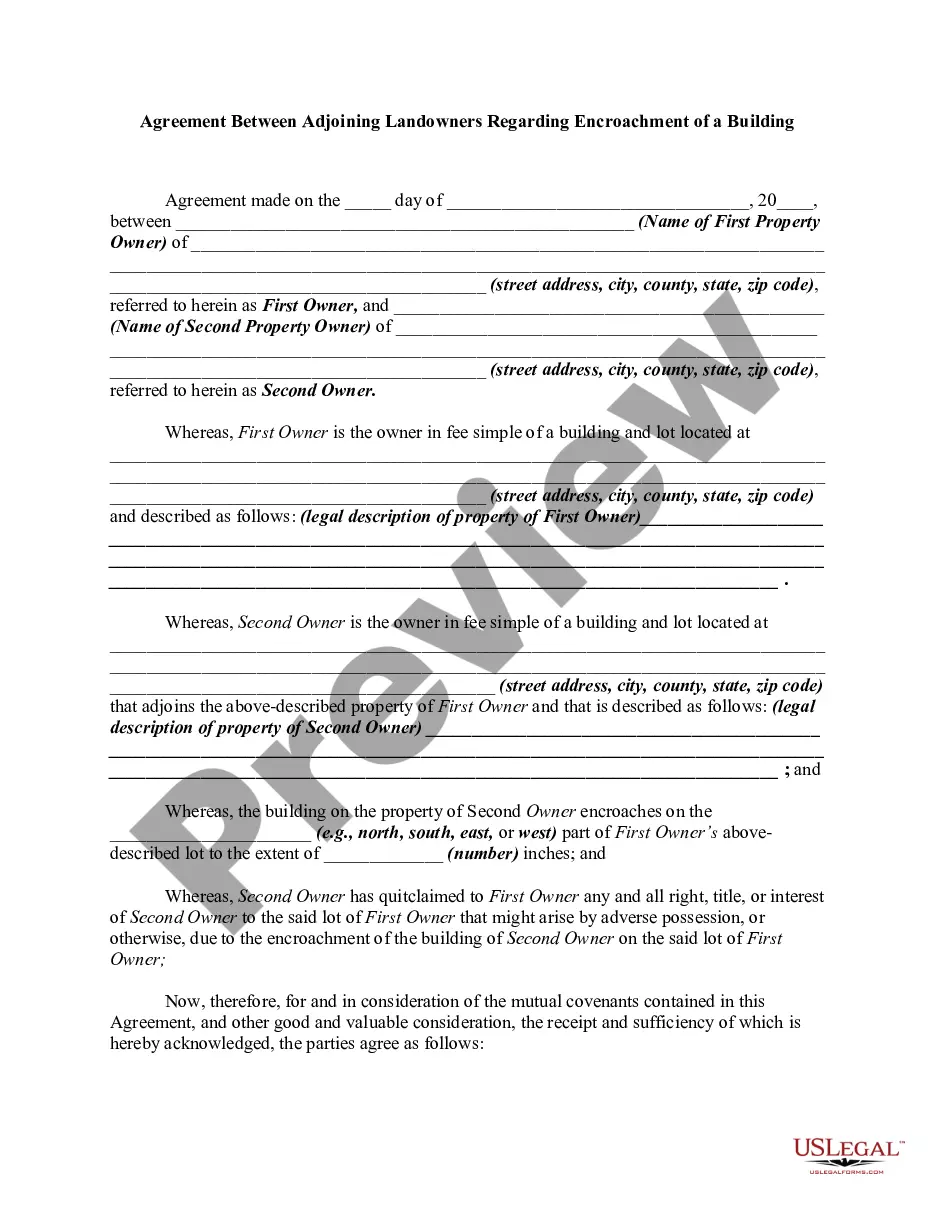
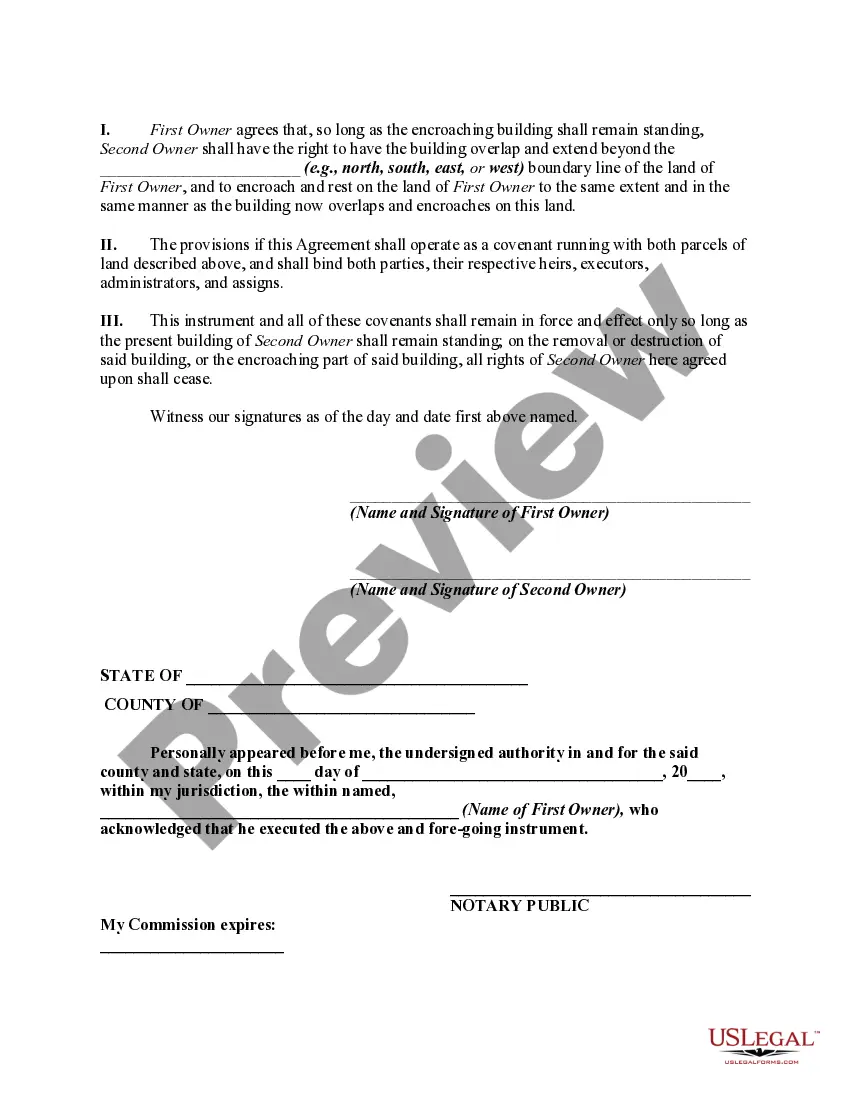
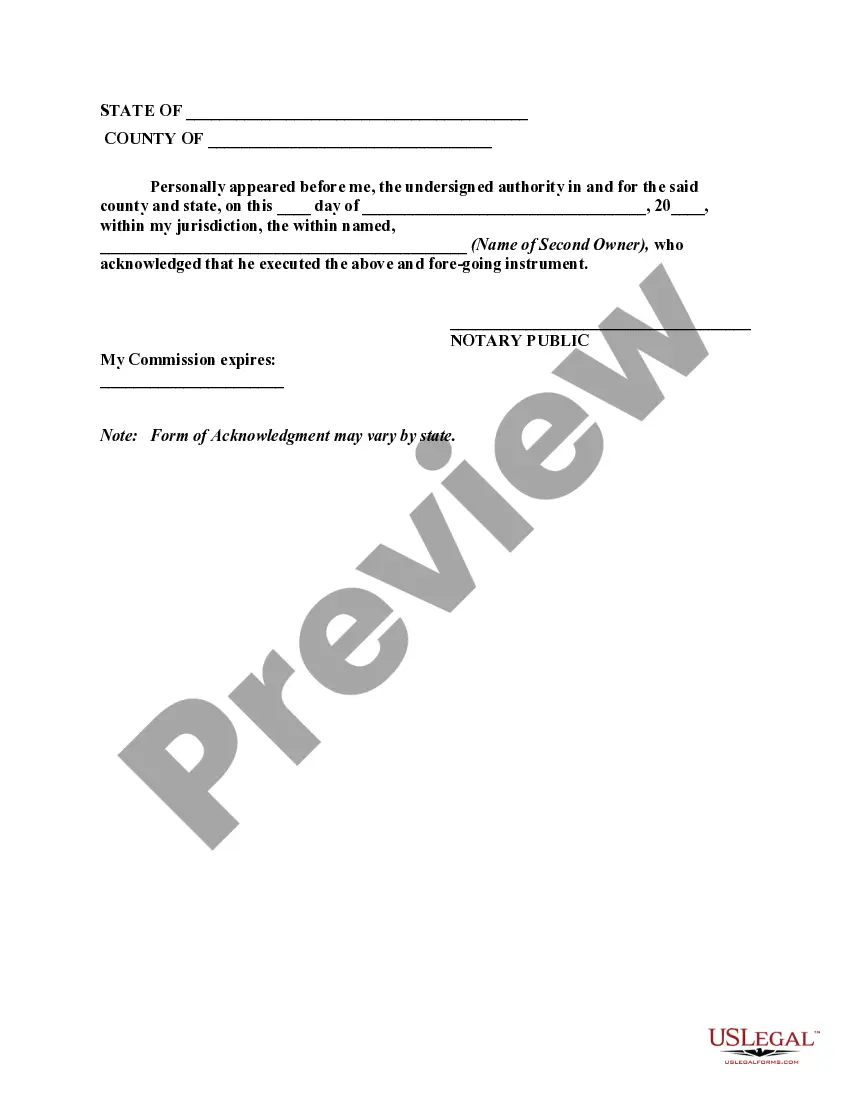
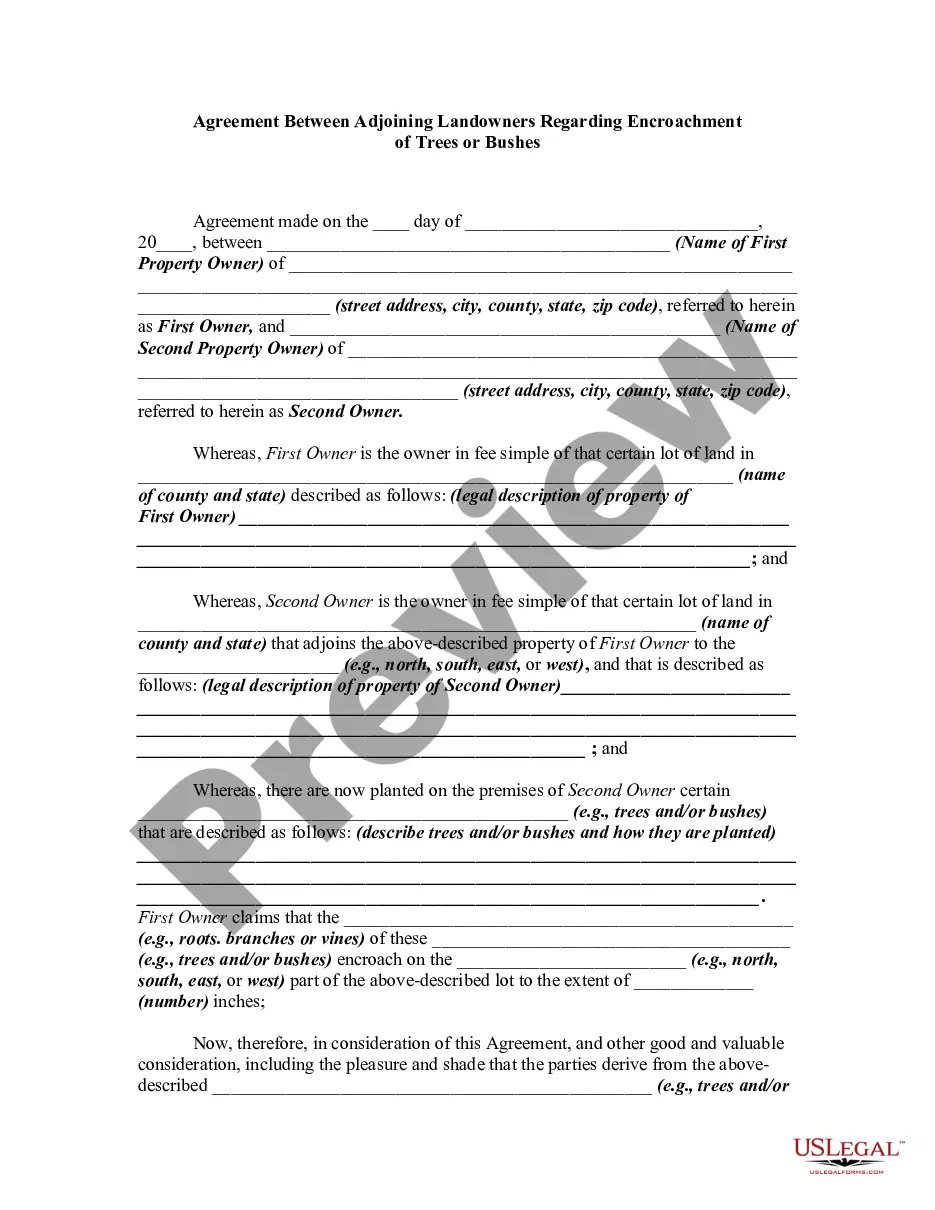
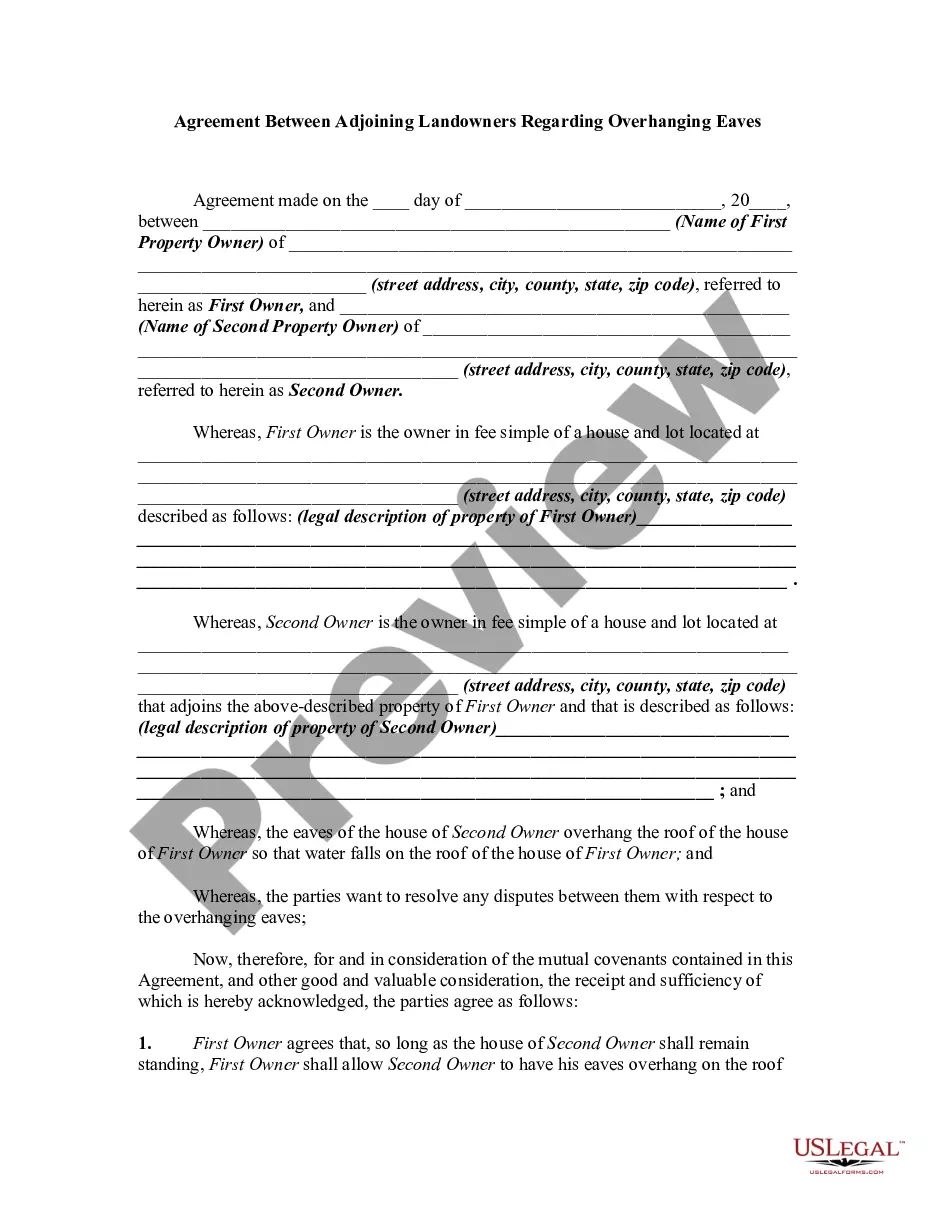
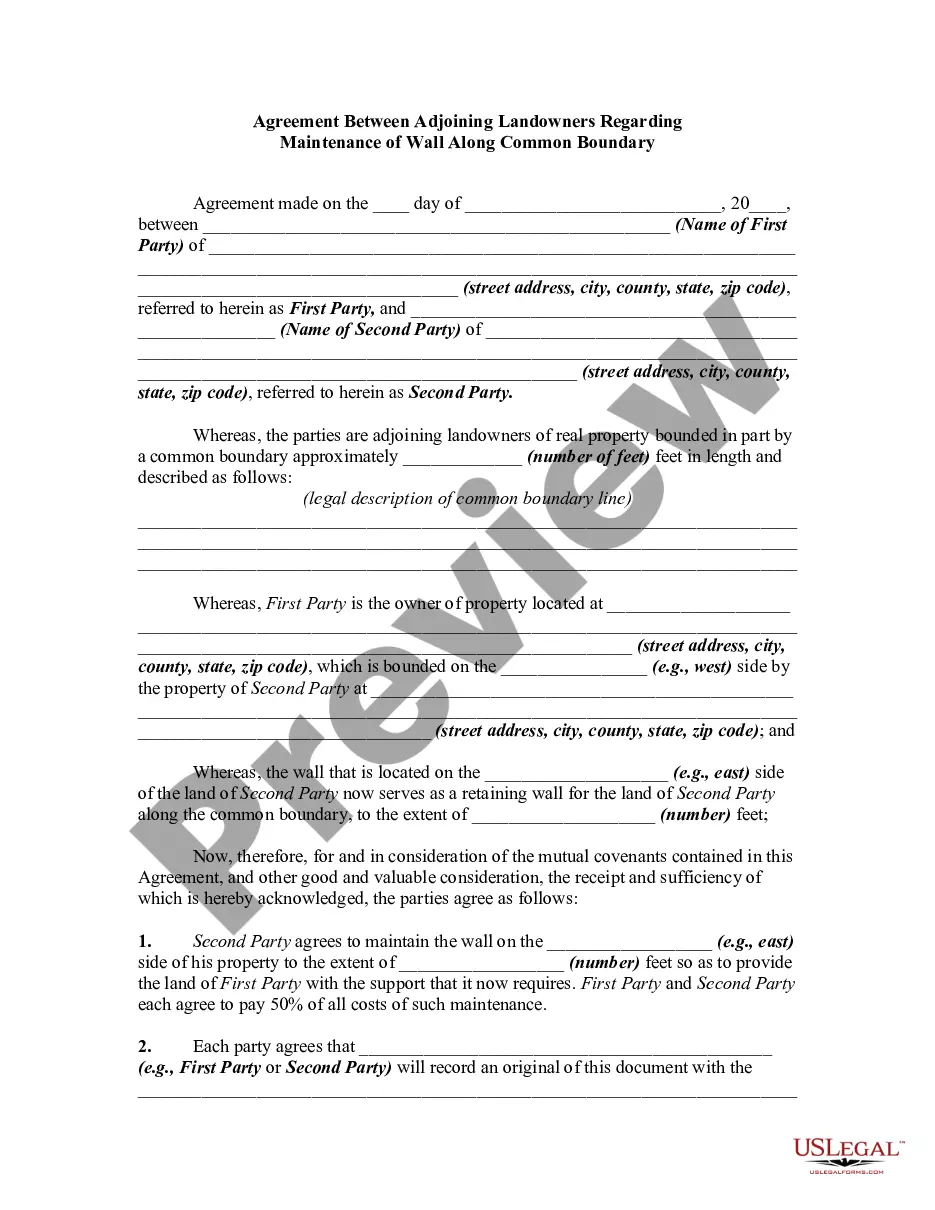
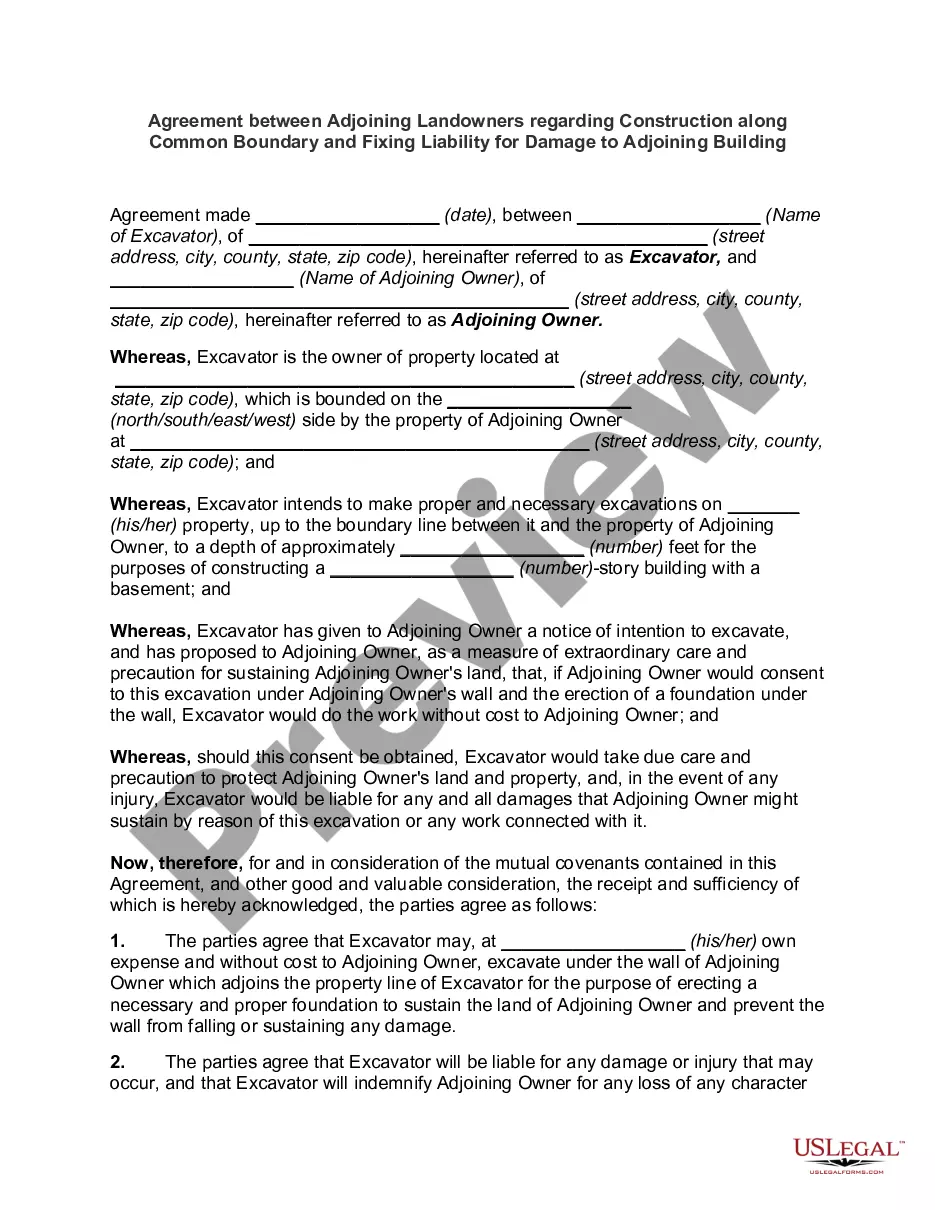
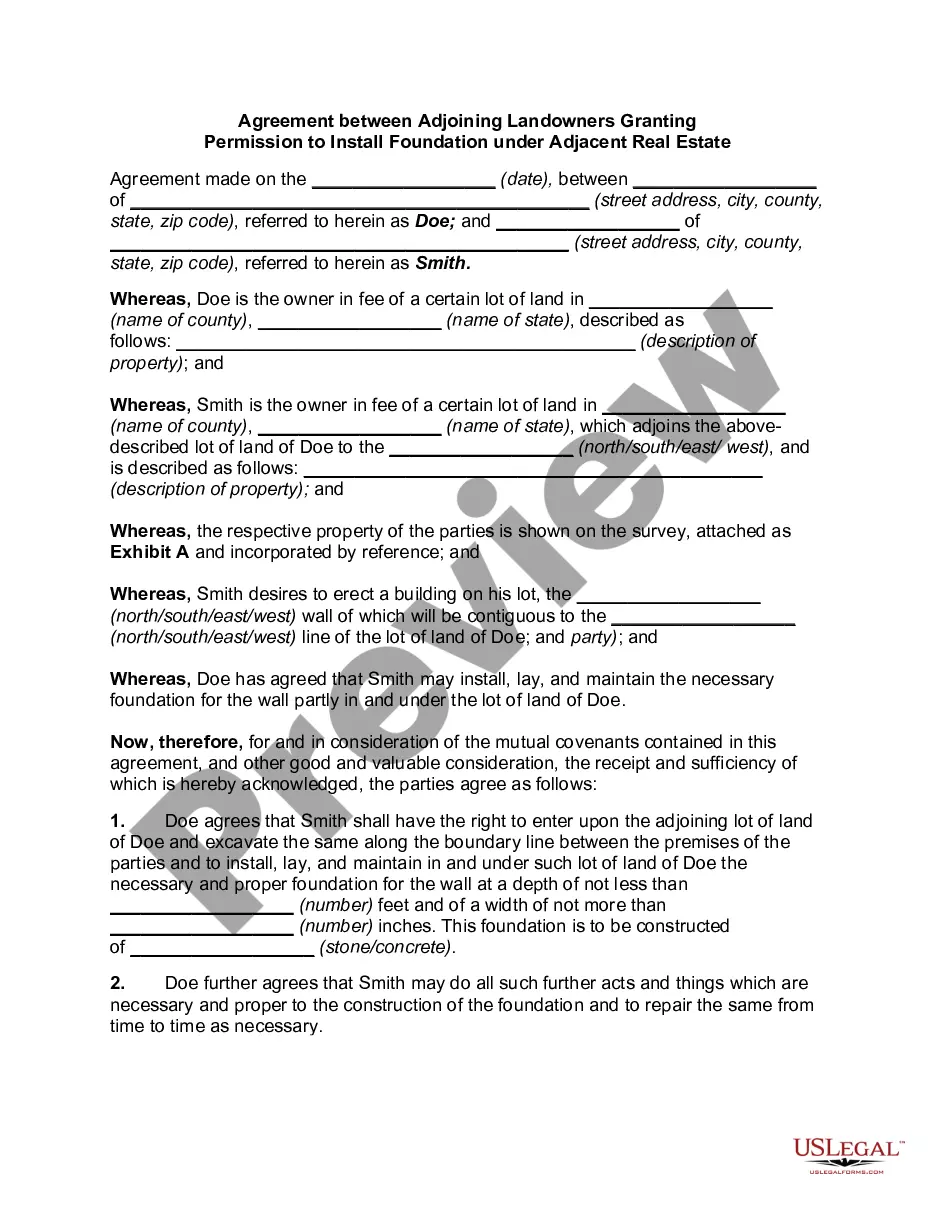
How to fill out Agreement Between Adjoining Landowners Regarding Encroachment Of A Building?
- Log in to your US Legal Forms account if you are a returning user and ensure your subscription is active. If it's expired, renew based on your payment plan.
- For first-time users, start by checking the Preview mode to verify the form's details align with your needs and local jurisdiction requirements.
- If the initial form does not suit your needs, utilize the Search tab to locate another appropriate template.
- Once you find the correct document, click the 'Buy Now' button and select the subscription plan that works best for you. You will need to create an account to access the full library.
- Proceed to checkout by entering your payment information, either via credit card or PayPal, to finalize your subscription.
- After completing your purchase, download the form to your device and access it anytime through the 'My Forms' section of your profile.
Completing legal forms can often feel daunting, but with US Legal Forms, you can confidently navigate through the process. Their extensive library provides more forms than competitors at a similar cost, ensuring you have access to precisely what you need.
In conclusion, whether you're an individual or a legal professional, US Legal Forms offers a robust solution for all your legal document needs. Start your journey today and ensure your documents are accurate and legally sound!
Form popularity
FAQ
An injunction is not always a final order, in the context of a suit for encroachment and injunction, it may be temporary or permanent. A temporary injunction provides immediate relief while the case is ongoing, but it often requires further hearings for a final decision. A permanent injunction, however, is a final order that resolves the dispute and can only be modified under specific circumstances.
An injunction may be denied for various reasons, primarily if you cannot establish a substantial likelihood of success in your suit for encroachment and injunction. Courts may also deny it if they believe that you have not adequately proven the likelihood of irreparable harm. Additionally, if the balance of hardships does not favor you or if the public interest may be harmed, the request for an injunction might be rejected.
When seeking a suit for encroachment and injunction, courts generally evaluate four critical factors. First, you must establish that there is a likelihood of success on the merits of your case. Next, demonstrate that you will suffer irreparable harm without the injunction. The balance of hardships must favor you, and finally, the public interest should not be disserved by granting the injunction.
A mandatory injunction seeks to compel an individual to take a specific action. In the context of a suit for encroachment and injunction, the test typically involves proving that you will suffer irreparable harm without the injunction. You also need to show that the balance of hardships tips in your favor and that the public interest supports your request.
To win a suit for encroachment and injunction, you need to demonstrate that you have a legitimate legal right that is being threatened. Gather all relevant evidence, such as photographs, property deeds, and witness statements. Present your case clearly, showing how the encroachment impacts your rights. Having a knowledgeable attorney can significantly strengthen your position.
An example of an injunction case involves a property owner filing a suit for encroachment and injunction against a neighbor who has built a structure that crosses the property line. This legal action seeks to prevent the misuse of land and restore the rightful boundaries. In such cases, a court may issue an injunction that orders the neighbor to remove the encroaching structure. Utilizing platforms like US Legal Forms can help you prepare the necessary documentation and navigate the legal process efficiently.
To claim encroachment, begin by documenting the encroachment with photographs and professional surveys. Discuss the matter with your neighbor to seek a friendly resolution. If a resolution is not possible, filing a suit for encroachment and injunction may be necessary to restore your property rights legally.
While you might be tempted to move a neighbor's items off your property, this action could lead to conflicts or legal issues. It’s best to communicate with your neighbor about their belongings first. If they refuse to comply, you may need to pursue a suit for encroachment and injunction to handle the situation appropriately.
To solve encroachment problems, first, speak directly to the neighbor about the issue, outlining your concerns. If informal resolution doesn't work, gather evidence proving the encroachment. A suit for encroachment and injunction can be filed to address the issue legally, restoring respect for property boundaries.
Treating encroachment involves several steps, starting with clear communication with the encroaching neighbor. If informal talks fail, you should gather evidence, such as surveys or title documents. Finally, addressing the issue through a suit for encroachment and injunction may be necessary to protect your property rights legally.