Adverse Claim In Florida
Description

Get your form ready online
Our built-in tools help you complete, sign, share, and store your documents in one place.
Make edits, fill in missing information, and update formatting in US Legal Forms—just like you would in MS Word.
Download a copy, print it, send it by email, or mail it via USPS—whatever works best for your next step.
Sign and collect signatures with our SignNow integration. Send to multiple recipients, set reminders, and more. Go Premium to unlock E-Sign.
If this form requires notarization, complete it online through a secure video call—no need to meet a notary in person or wait for an appointment.
We protect your documents and personal data by following strict security and privacy standards.

Make edits, fill in missing information, and update formatting in US Legal Forms—just like you would in MS Word.

Download a copy, print it, send it by email, or mail it via USPS—whatever works best for your next step.

Sign and collect signatures with our SignNow integration. Send to multiple recipients, set reminders, and more. Go Premium to unlock E-Sign.

If this form requires notarization, complete it online through a secure video call—no need to meet a notary in person or wait for an appointment.

We protect your documents and personal data by following strict security and privacy standards.
Looking for another form?








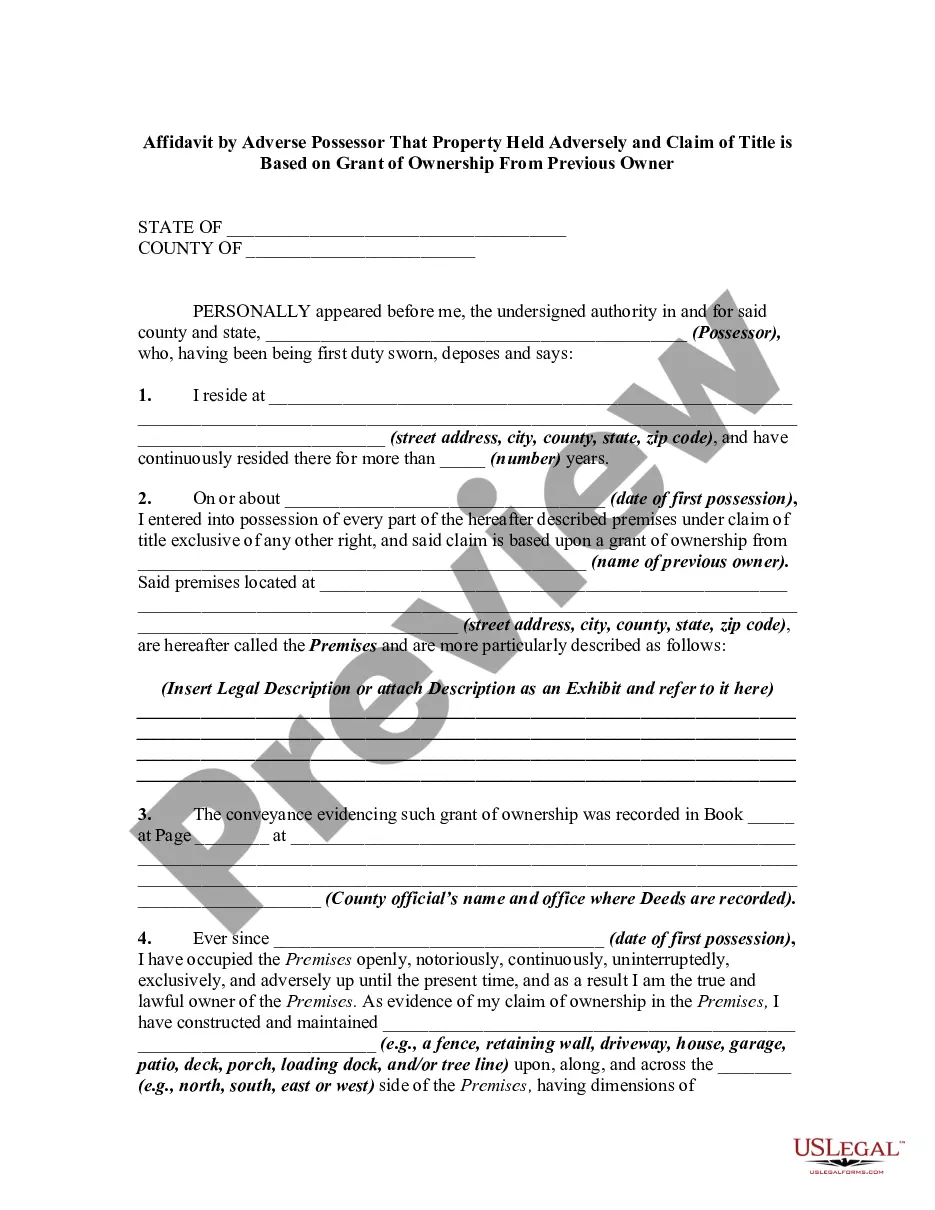
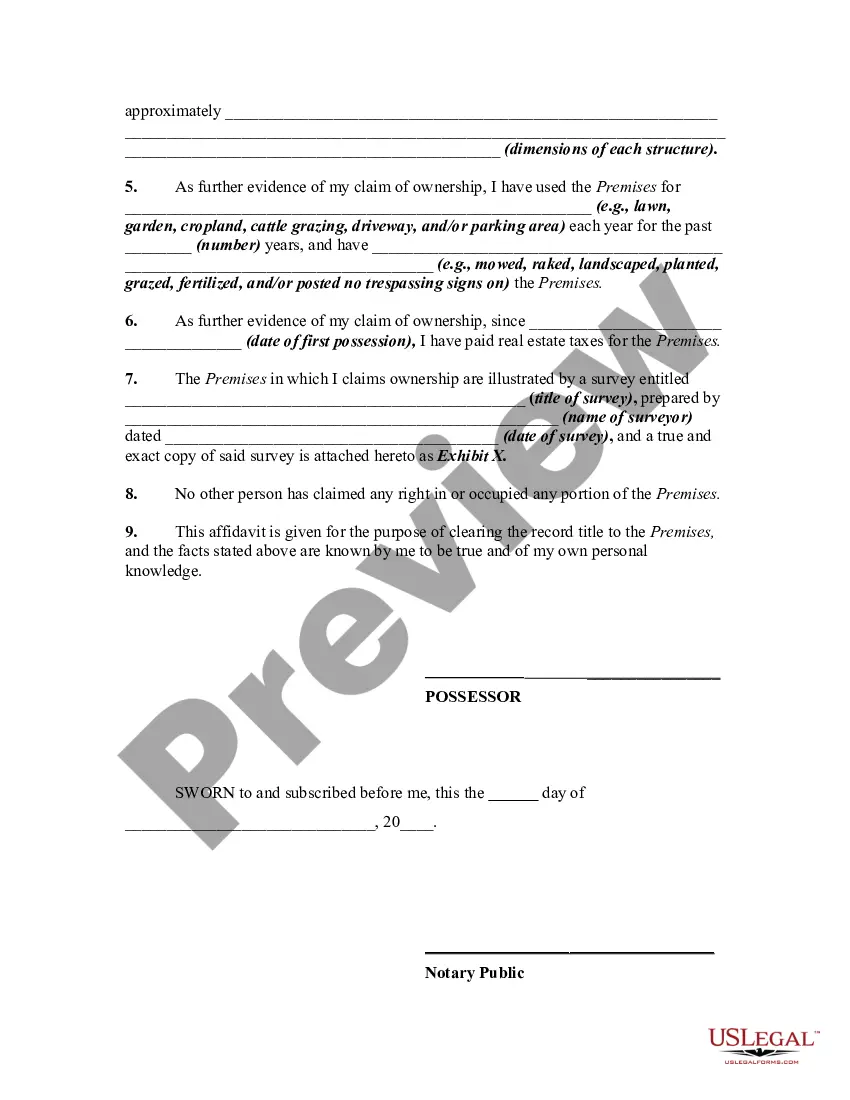
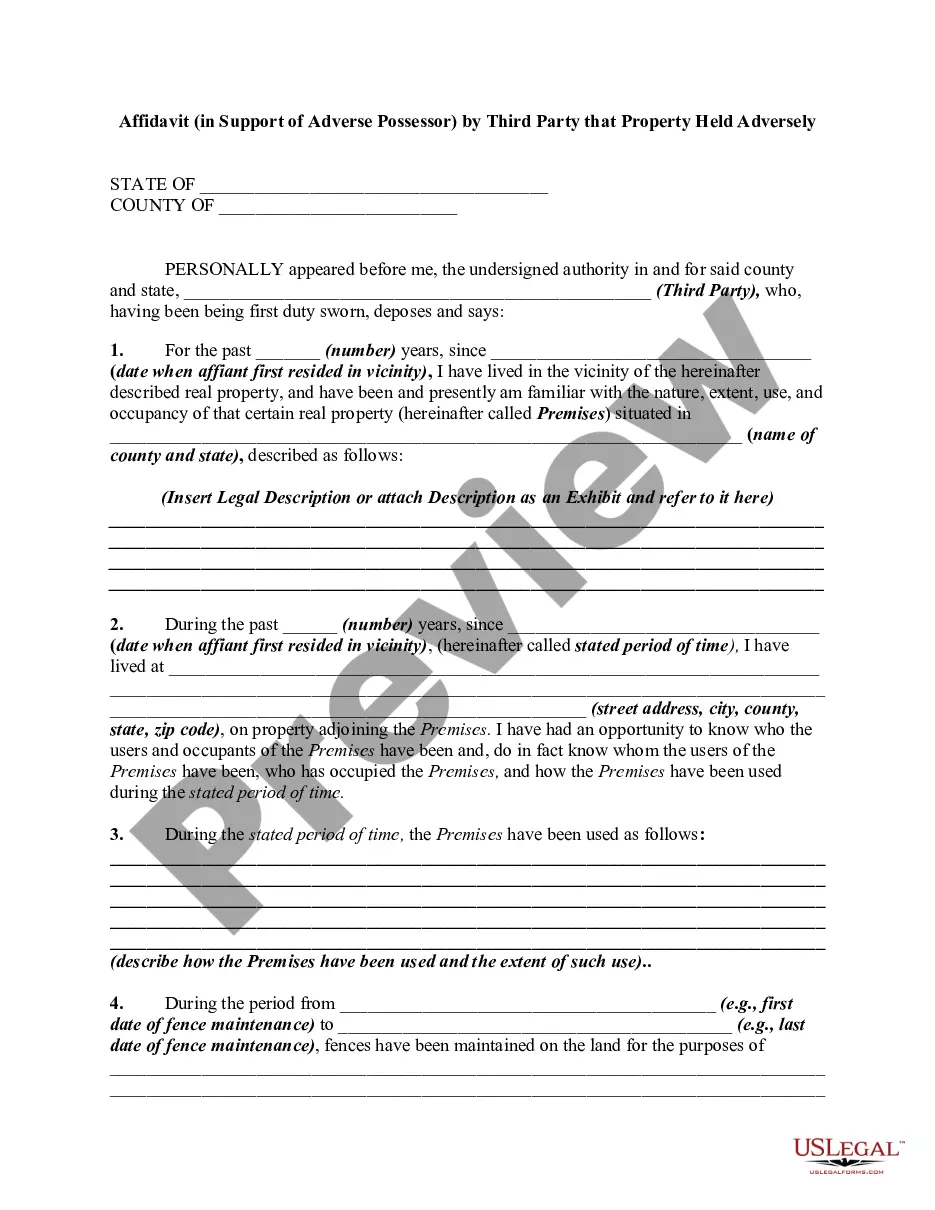
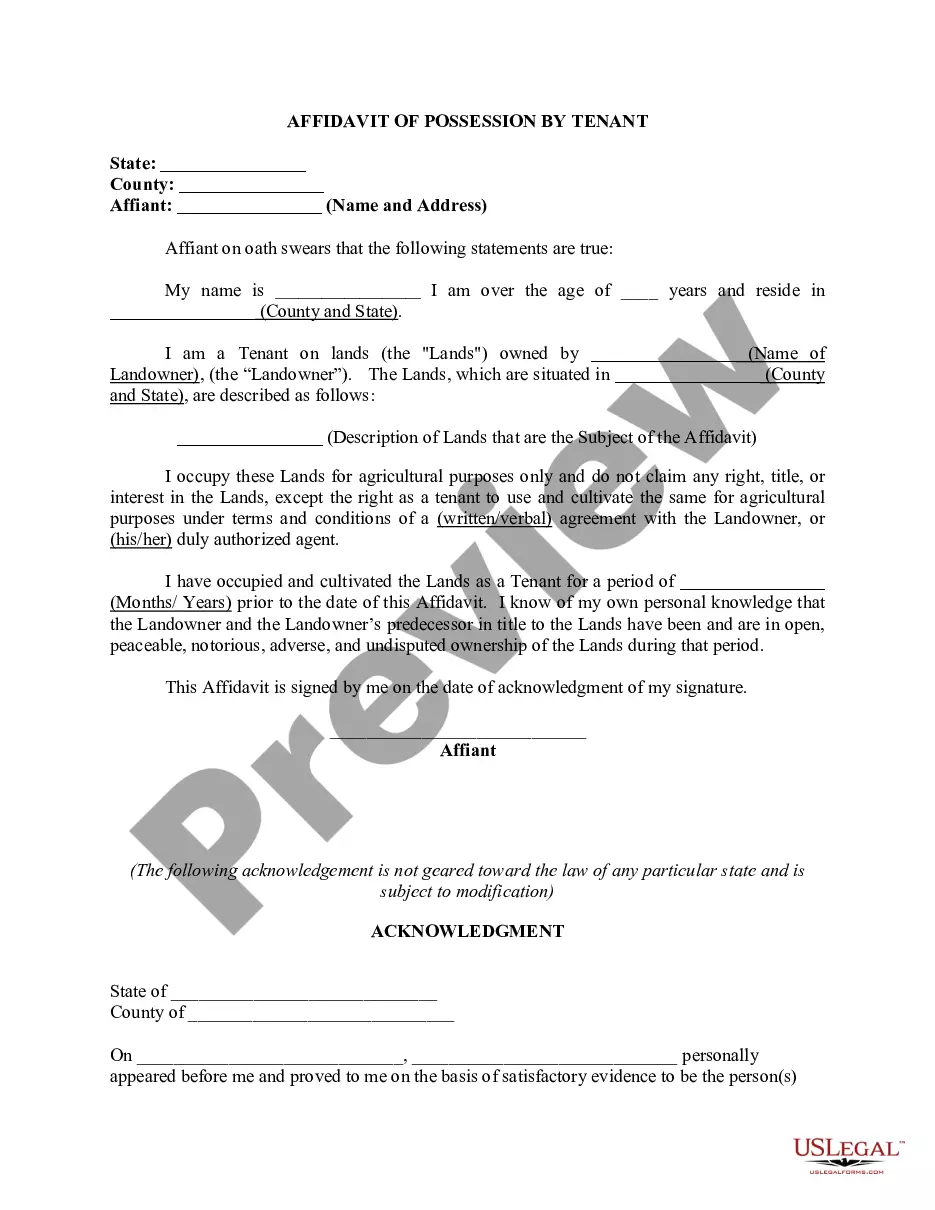
How to fill out Affidavit By Adverse Possessor That Property Held Adversely And Claim Of Title Is Based On Grant Of Ownership From Previous Owner - Squatters Rights?
Locating a reliable source for the most updated and suitable legal documents is a significant part of navigating through the red tape of bureaucracies.
Identifying the precise legal document requirements necessitates accuracy and meticulousness, which highlights the importance of obtaining samples of Adverse Claim In Florida exclusively from trustworthy sources, such as US Legal Forms. An incorrect template can consume your time and hinder your progress.
Eliminate the stress that comes with your legal documents. Explore the extensive US Legal Forms library where you can discover legal templates, verify their applicability to your situation, and download them right away.
- Utilize the catalog navigation or search function to find your template.
- Examine the description of the form to ascertain if it meets the criteria for your state and county.
- Review the form preview, if available, to confirm that it is the form you seek.
- Return to the search and find the appropriate document if the Adverse Claim In Florida does not meet your criteria.
- If you are confident about the form’s relevance, download it.
- As a registered user, click Log in to verify and access your desired templates in My documents.
- If you haven't created an account yet, click Buy now to purchase the template.
- Select the pricing plan that suits your needs.
- Continue to the registration to complete your purchase.
- Finish your transaction by selecting a payment option (credit card or PayPal).
- Choose the file format for downloading Adverse Claim In Florida.
- Once you have the form on your device, you may edit it using the editor or print it out and complete it by hand.
Form popularity
FAQ
The 7 year rule in Florida relates to adverse possession, where a person can claim ownership of property after openly occupying it for seven years. This rule necessitates that the occupancy is exclusive, continuous, and without permission from the owner. If you suspect a situation involving adverse claims in Florida, seeking legal advice can clarify your options.
An adverse incident is automatically defined based on unauthorized use or possession of property that disrupts the owner's rights. For instance, building a structure on someone else's land without permission constitutes an adverse incident. Recognizing these incidents can empower property owners to act swiftly.
An adverse incident in Florida is when an individual occupies or claims land against the will of the rightful owner. This claim usually arises in real estate disputes and can involve lawsuits. Addressing any adverse incidents early is crucial to avoid lengthy legal battles and potential loss of property rights.
Under Florida law, an adverse incident occurs when someone uses or occupies another person's property without consent and meets certain criteria. This includes openly using the property, continuous possession, and treating it as their own. These actions create an adverse claim in Florida that can potentially lead to ownership if the conditions are met.
In Florida, adverse possession allows a person to claim ownership of land under specific conditions. The claimant must openly occupy the property without permission for at least seven years, creating a clear record of possession. This process is guided by Florida's adverse claim laws, which emphasize continuous use and the intent to claim ownership.
An adverse incident refers to a situation where a party makes a claim to a property that is currently owned by someone else. In the context of an adverse claim in Florida, it involves encroachment or use of the property in a way that is contrary to the owner's rights. Understanding adverse incidents can help property owners protect their assets.
In Florida, an adverse claim in Florida without color of title requires that the claimant show clear evidence of possession, and they must have occupied the property continuously for seven years. Additionally, the possession must be open, notorious, and hostile to the interests of the true owner. Meeting these criteria can be complex, so consider using US Legal Forms to access helpful templates and guidance tailored to your needs.
To file an adverse claim in Florida, begin by demonstrating continuous and uninterrupted possession of the property for at least seven years. You should use the property openly and without permission from the owner. Gather evidence of your use and prepare to file your claim through the appropriate court system. Utilizing a resource like US Legal Forms can help simplify the process and provide necessary forms tailored to your situation.
A key requirement for acquiring ownership through an adverse claim in Florida is that the possession of the property must be open and notorious. This means that the use of the land must be visible and obvious to anyone, including the rightful owner. Understanding this essential element ensures that you strengthen your adverse claim in Florida effectively.
Claiming adverse possession in Florida involves filing a legal action in court after satisfying the necessary criteria for possession. You should prepare evidence demonstrating your open, notorious, exclusive, and continuous use of the property over 7 years. Utilizing resources from platforms like US Legal Forms can help streamline this process by providing the necessary forms and guidance to solidify your adverse claim in Florida.