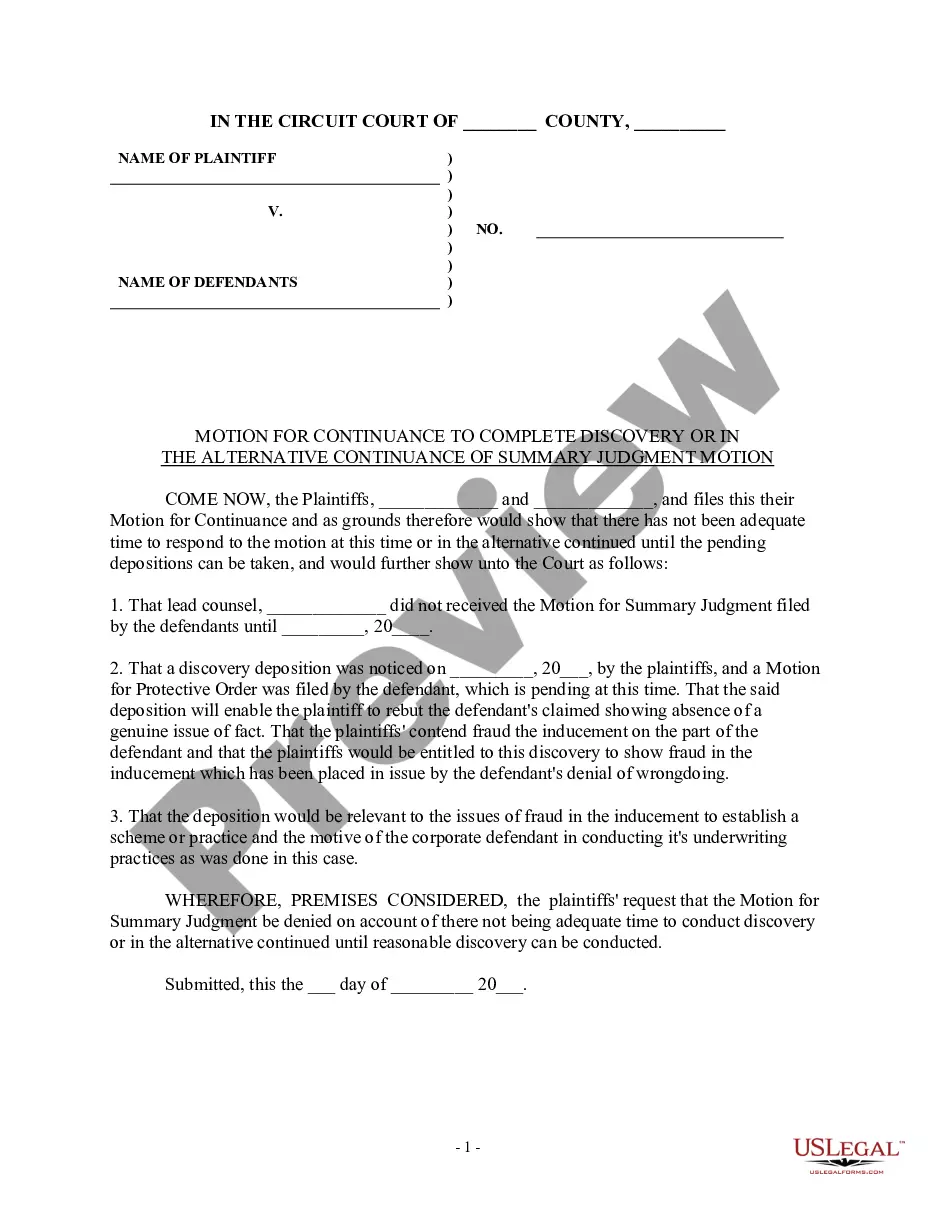
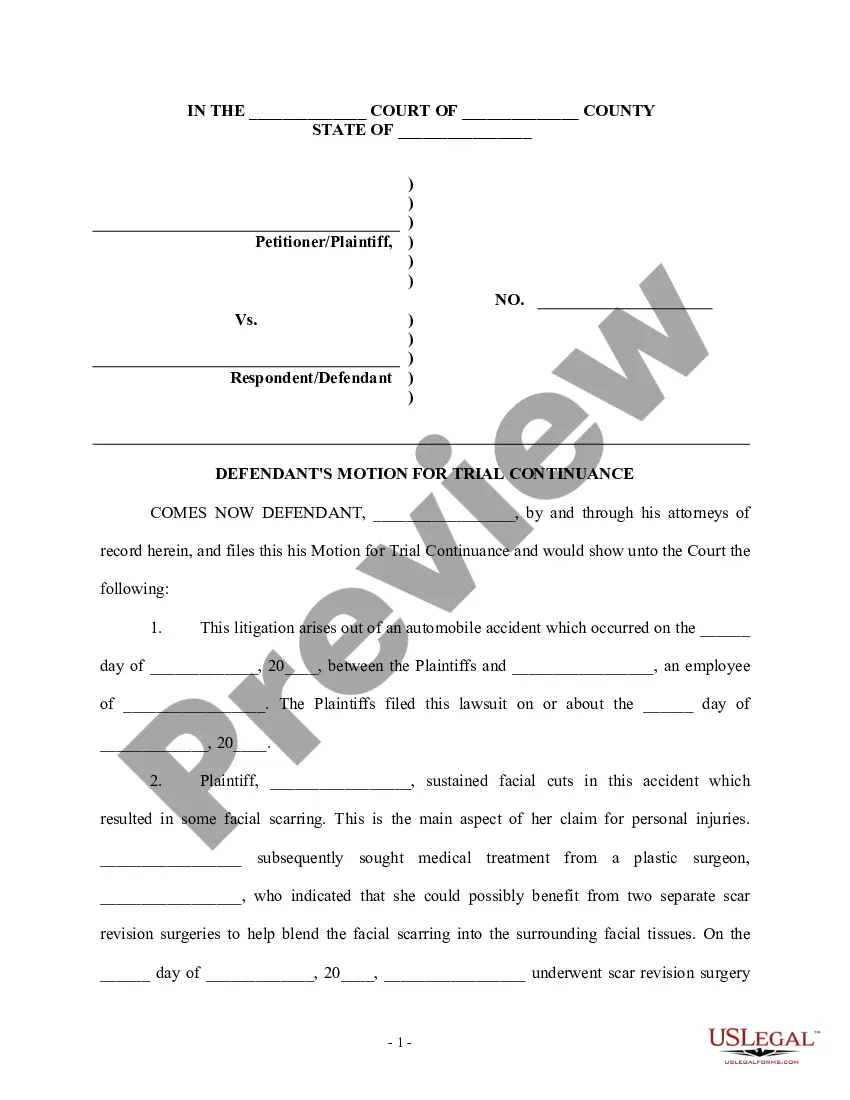
Reasons For Motion For Continuance
Description
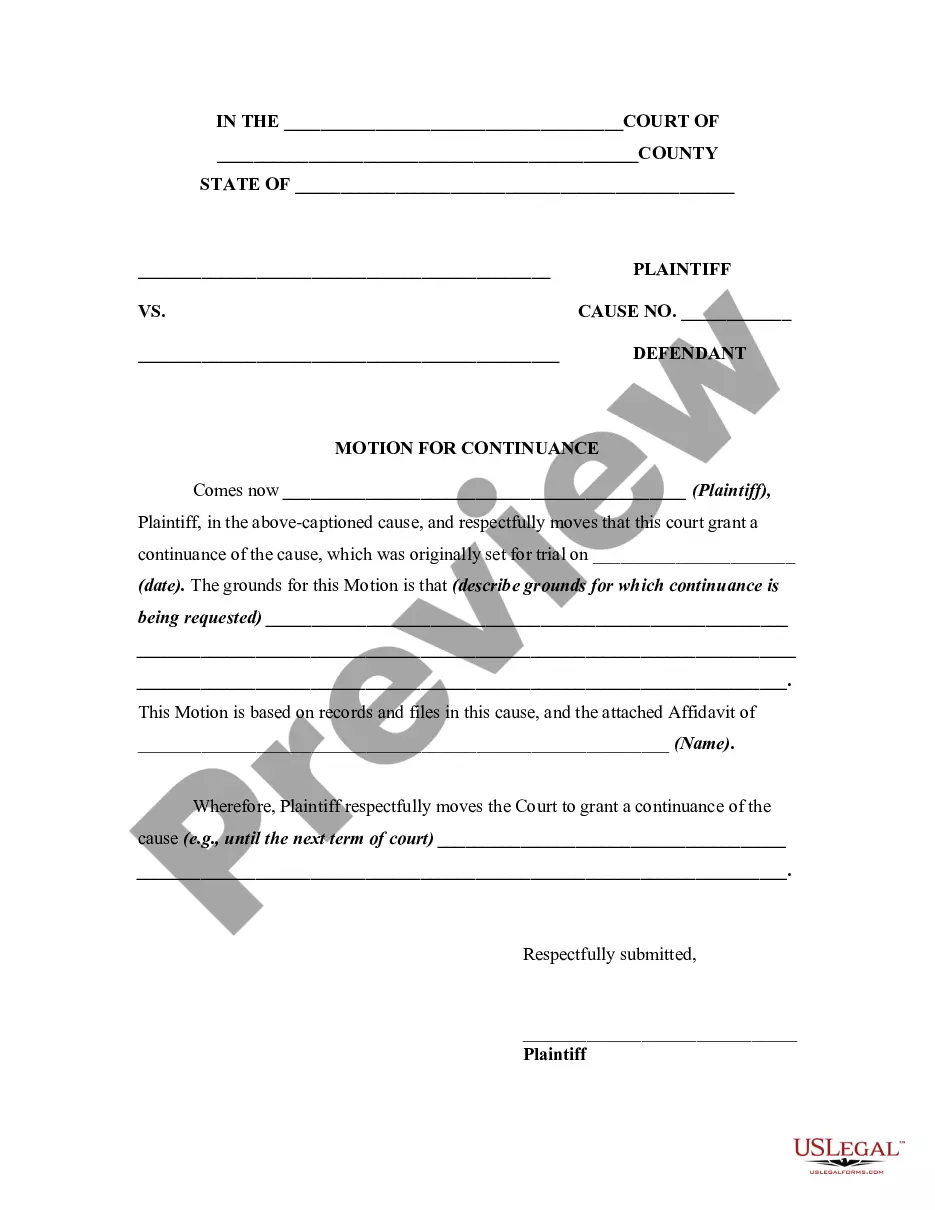
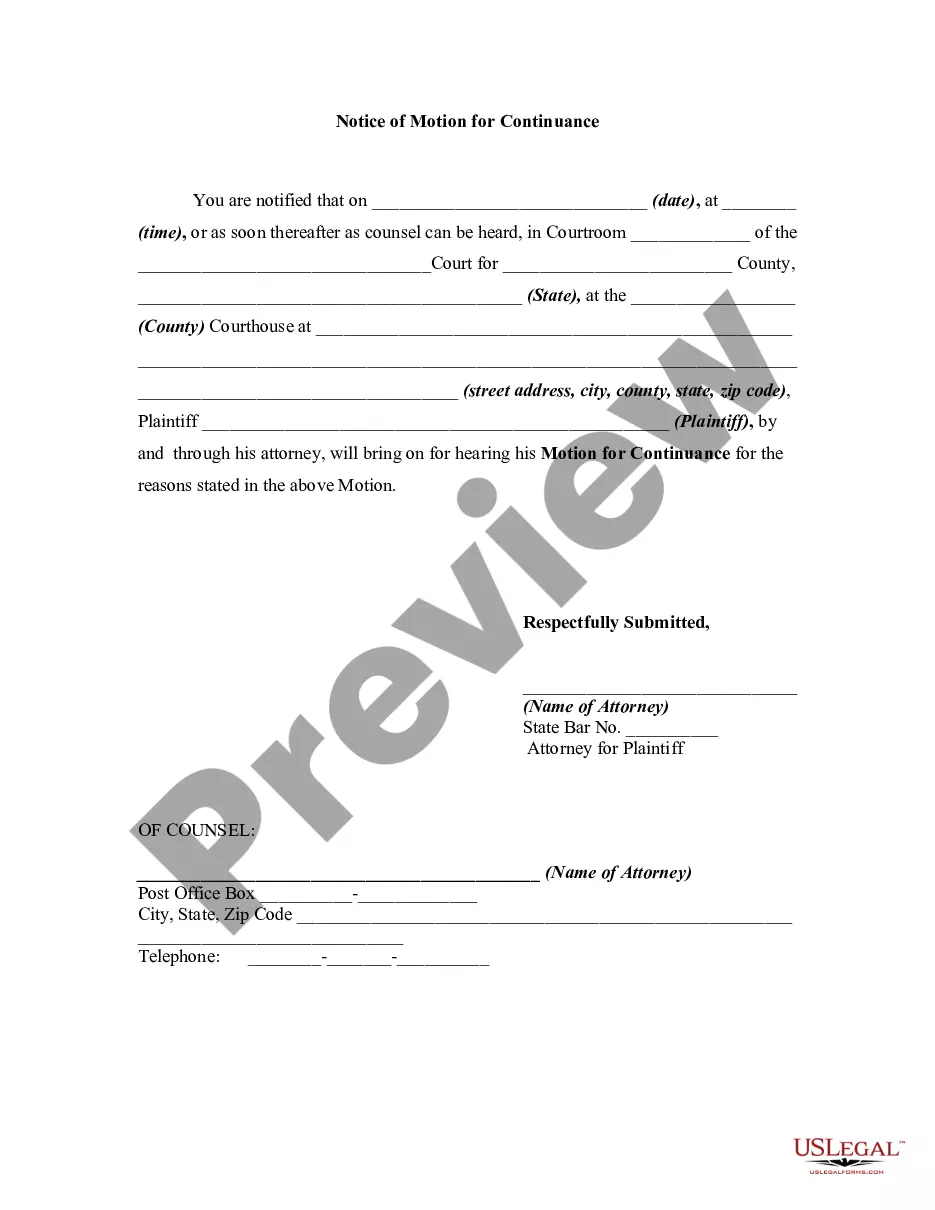
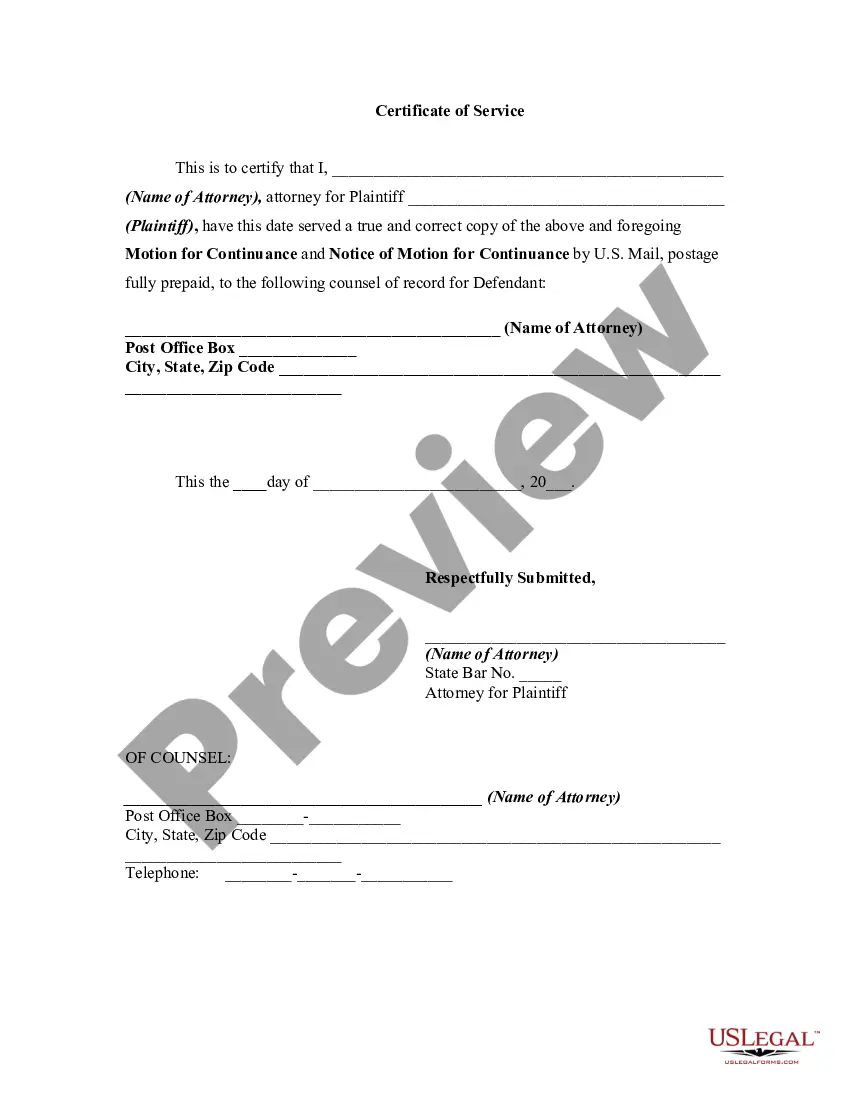

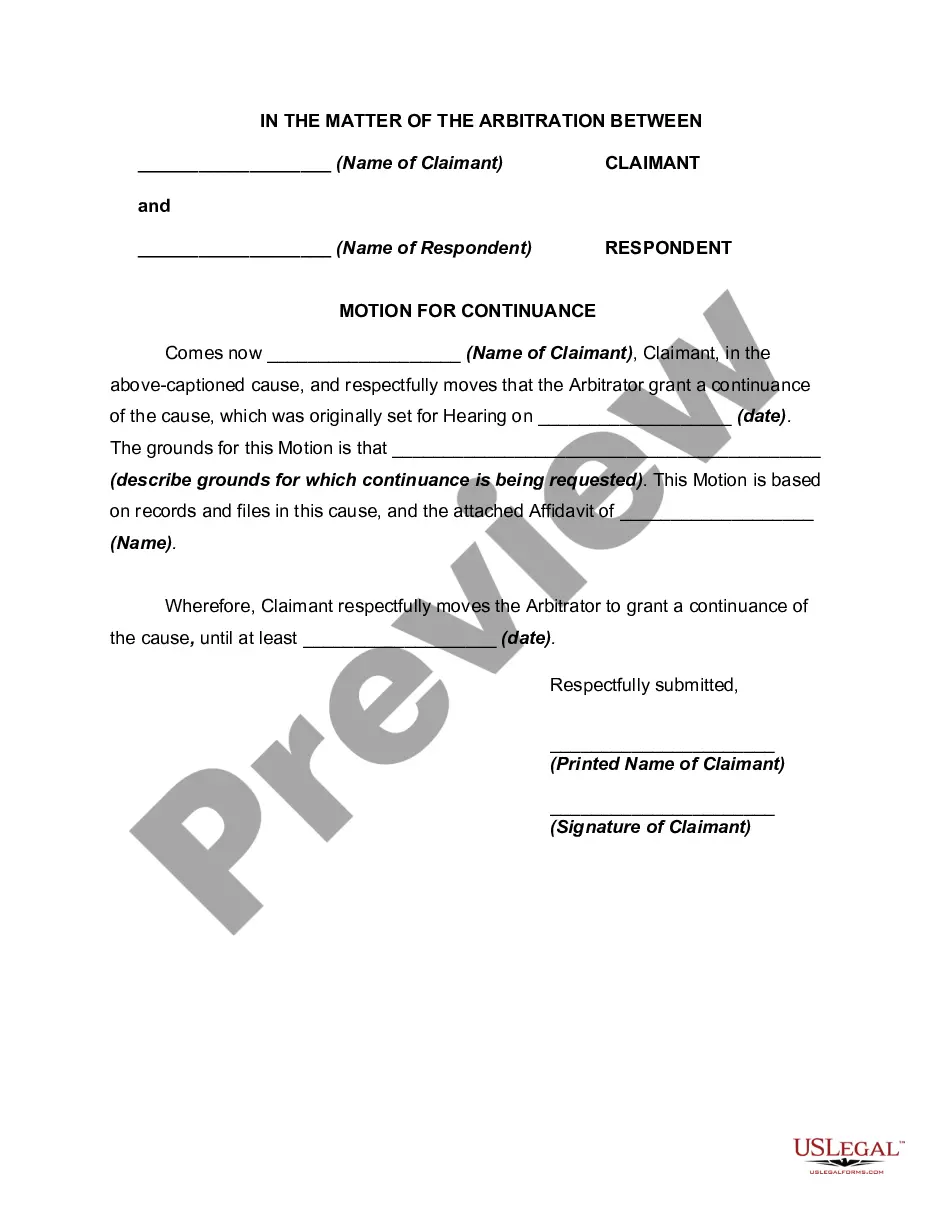
Get your form ready online
Our built-in tools help you complete, sign, share, and store your documents in one place.
Make edits, fill in missing information, and update formatting in US Legal Forms—just like you would in MS Word.
Download a copy, print it, send it by email, or mail it via USPS—whatever works best for your next step.
Sign and collect signatures with our SignNow integration. Send to multiple recipients, set reminders, and more. Go Premium to unlock E-Sign.
If this form requires notarization, complete it online through a secure video call—no need to meet a notary in person or wait for an appointment.
We protect your documents and personal data by following strict security and privacy standards.

Make edits, fill in missing information, and update formatting in US Legal Forms—just like you would in MS Word.

Download a copy, print it, send it by email, or mail it via USPS—whatever works best for your next step.

Sign and collect signatures with our SignNow integration. Send to multiple recipients, set reminders, and more. Go Premium to unlock E-Sign.

If this form requires notarization, complete it online through a secure video call—no need to meet a notary in person or wait for an appointment.

We protect your documents and personal data by following strict security and privacy standards.
Looking for another form?


How to fill out Generic Motion For Continuance And Notice Of Motion?
- Log in to your US Legal Forms account if you are a returning user to access your stored documents.
- For first-time users, begin by reviewing the Preview mode and form descriptions to confirm you have selected the correct form consistent with your jurisdiction's requirements.
- If necessary, utilize the Search functionality to find alternative templates that better meet your needs.
- Once you've identified the correct document, click the Buy Now button to choose a subscription plan that suits your needs.
- Complete your purchase by entering your credit card information or utilizing your PayPal account.
- After successful payment, download the form to your device and access it anytime from the My Forms section of your profile.
US Legal Forms empowers both individuals and legal professionals by providing a comprehensive library of over 85,000 legal forms. This extensive collection ensures you can find what you need quickly and easily.
With premium expert assistance available, you can rest assured that your documents will be completed accurately and in accordance with legal standards. Start streamlining your legal processes today!
Form popularity
FAQ
Filing a motion for continuance serves important legal purposes. It allows you to request more time to prepare your case adequately, ensuring you present your best arguments. Common reasons for motion for continuance include needing additional evidence, scheduling conflicts, or health issues. Utilizing platforms like US Legal Forms can simplify the motion filing process, helping you navigate this critical aspect smoothly.
To write a motion for continuance, start by clearly stating your case information and the parties involved. Next, explain the reasons for motion for continuance, providing specific details that justify your request for additional time. Include any relevant evidence or supporting documents that strengthen your argument. Lastly, submit the motion to the court following the appropriate legal procedures and adhere to deadlines to ensure a smooth process.
A good reason to ask for a continuance includes having a legitimate scheduling conflict that prevents you from attending court. Other valid reasons for motion for continuance can include needing more time to gather crucial documents or the necessity to secure expert testimony. By providing solid reasoning and documentation, you can strengthen your request. Utilizing resources from uslegalforms can help you draft a well-structured request.
In family court, reasons for motion for continuance often include conflicting schedules, the need for mediation, or the desire to gather additional evidence. Parties might seek extra time to consult with legal counsel or mental health professionals. Understanding these reasons helps you articulate your request effectively. It's crucial to present your request thoughtfully to enhance the chances of approval.
The rule of court continuance may vary by jurisdiction, but generally, it allows parties to request a delay in court proceedings for valid reasons. The reasons for motion for continuance typically include needing more time to prepare your case or unavoidable circumstances like illness. Courts generally require a formal request and may ask for supporting documentation. Understanding these rules helps you navigate the process effectively.
An effective letter requesting a continuance should clearly state your reasons for motion for continuance. For instance, you can mention a scheduling conflict or the need for additional time to gather evidence. Include details such as the case number, court date, and your contact information. This format helps the court understand your situation and increases the likelihood of approval.
Continuances are granted fairly often, depending on the circumstances presented. Courts strive to ensure fair proceedings, and if valid reasons for motion for continuance are demonstrated, they may grant the extension. However, excessive requests might raise concerns, so it's crucial to justify each request adequately.
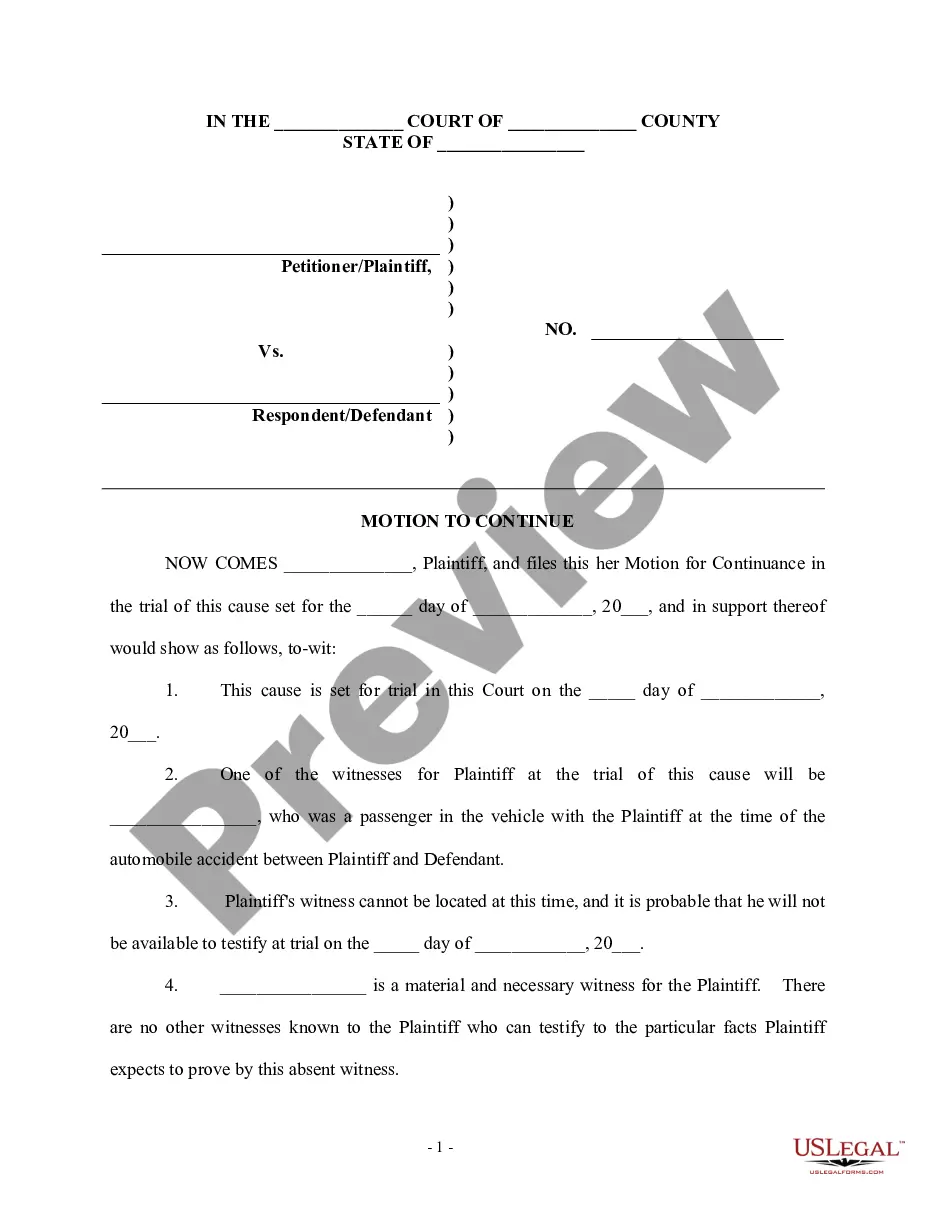
A good reason for a continuance might be the unavailability of a key witness whose testimony is vital for the case. This situation can impact the outcome significantly, and hence, it would warrant consideration by the court. Recognizing strong reasons for motion for continuance is essential for achieving a fair trial.
Two common reasons for granting a trial continuance include the necessity to allow for the collection of significant evidence and to accommodate unforeseen personal circumstances affecting a party involved. Courts tend to be understanding when solid reasons for motion for continuance are presented, as they uphold the integrity of the legal process. Providing valid justifications helps in securing a postponement.
An example of asking for a continuance would be a lawyer filing a motion stating they need more time because a crucial witness is unavailable due to illness. This motion would outline the specific reasons for the delay and request to reschedule the court date. Understanding the reasons for motion for continuance can help individuals articulate their requests effectively.