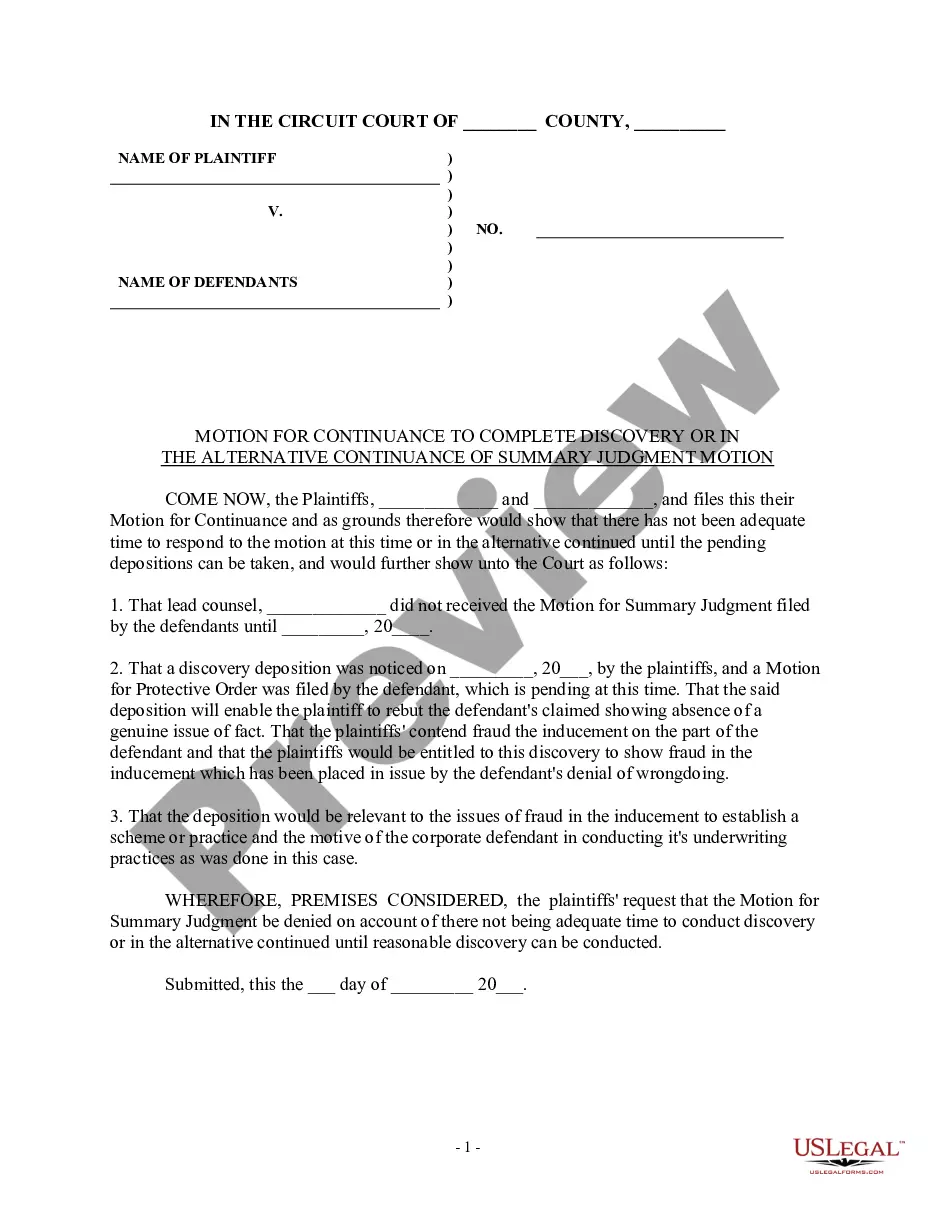
Sample Motion To Stay Form Texas
Description
Get your form ready online
Our built-in tools help you complete, sign, share, and store your documents in one place.
Make edits, fill in missing information, and update formatting in US Legal Forms—just like you would in MS Word.
Download a copy, print it, send it by email, or mail it via USPS—whatever works best for your next step.
Sign and collect signatures with our SignNow integration. Send to multiple recipients, set reminders, and more. Go Premium to unlock E-Sign.
If this form requires notarization, complete it online through a secure video call—no need to meet a notary in person or wait for an appointment.
We protect your documents and personal data by following strict security and privacy standards.

Make edits, fill in missing information, and update formatting in US Legal Forms—just like you would in MS Word.

Download a copy, print it, send it by email, or mail it via USPS—whatever works best for your next step.

Sign and collect signatures with our SignNow integration. Send to multiple recipients, set reminders, and more. Go Premium to unlock E-Sign.

If this form requires notarization, complete it online through a secure video call—no need to meet a notary in person or wait for an appointment.

We protect your documents and personal data by following strict security and privacy standards.
Looking for another form?
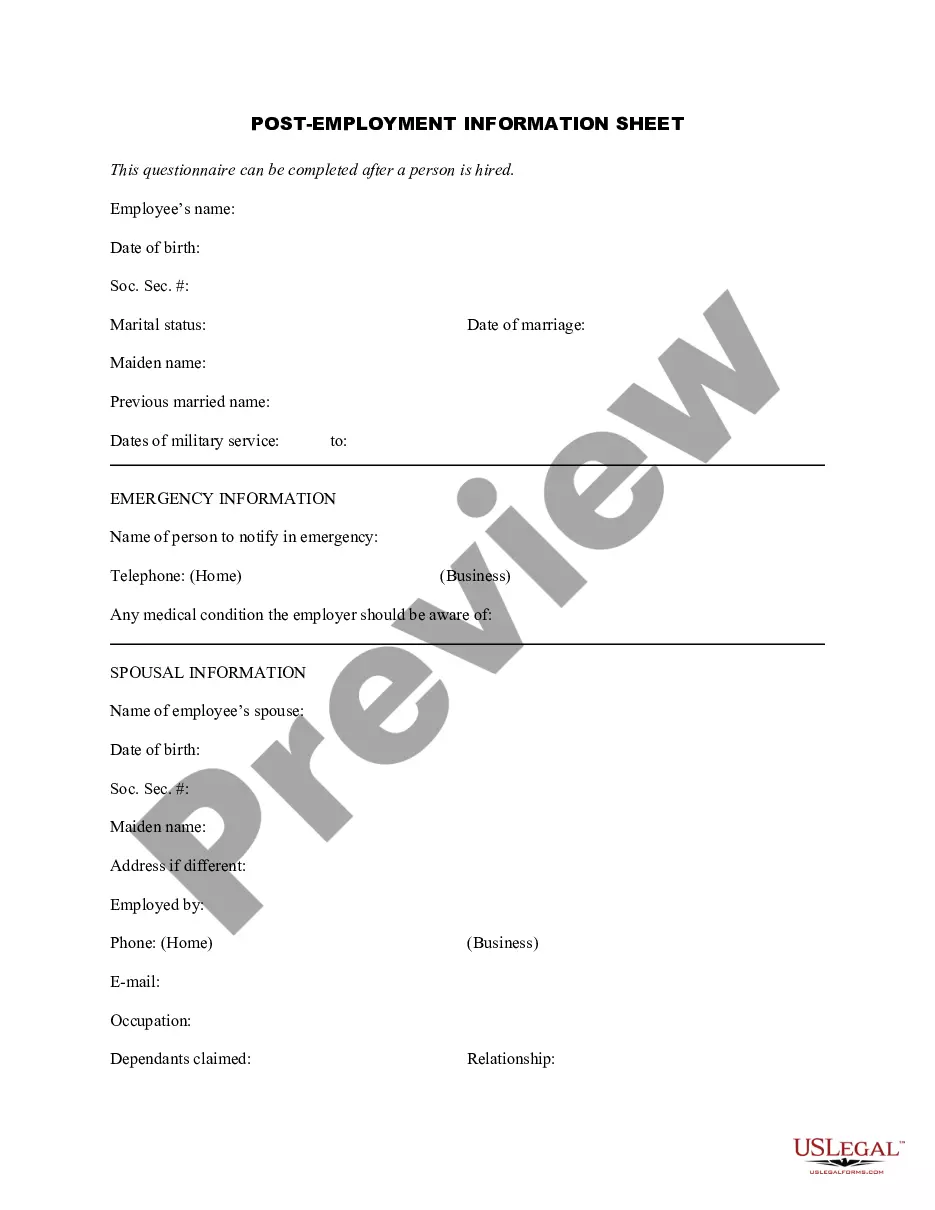
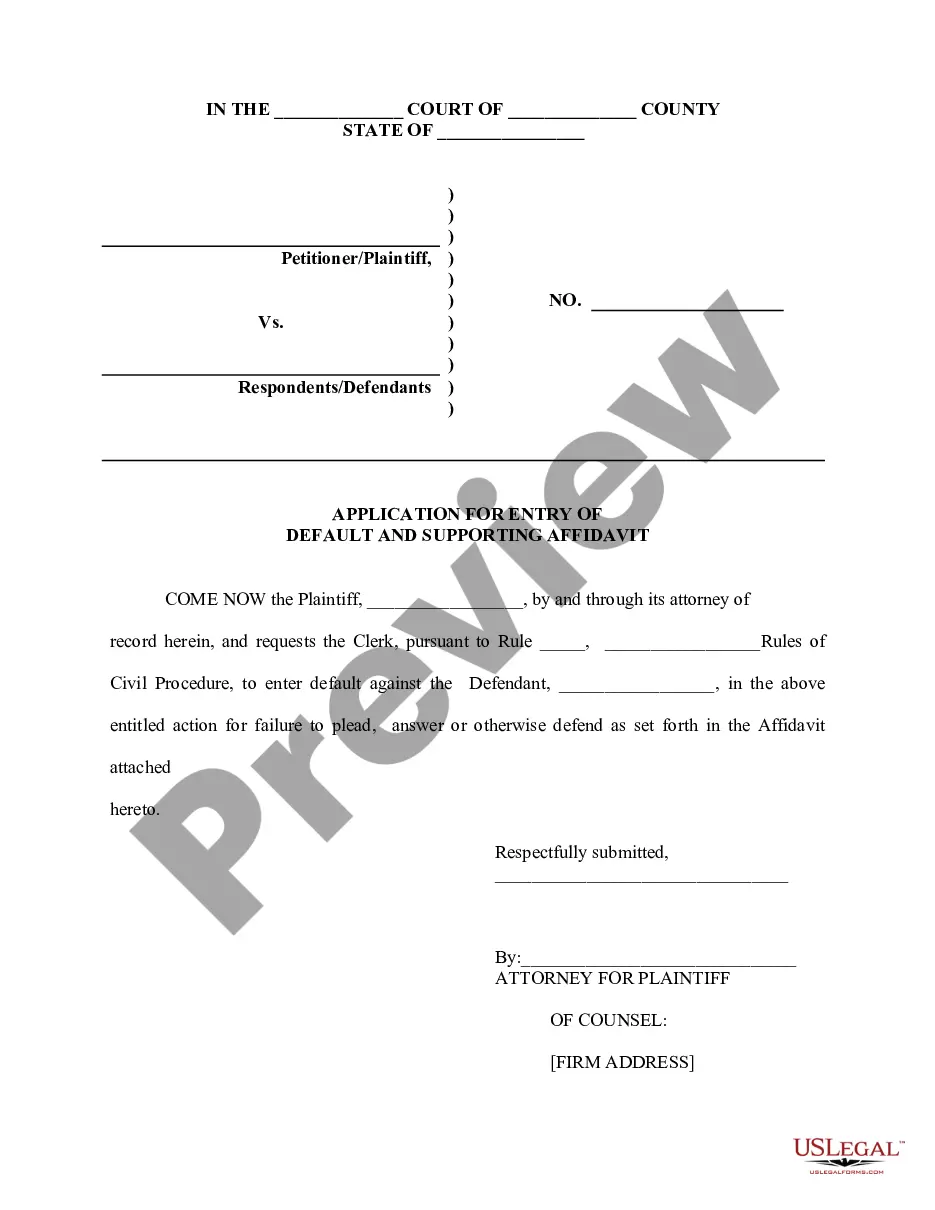

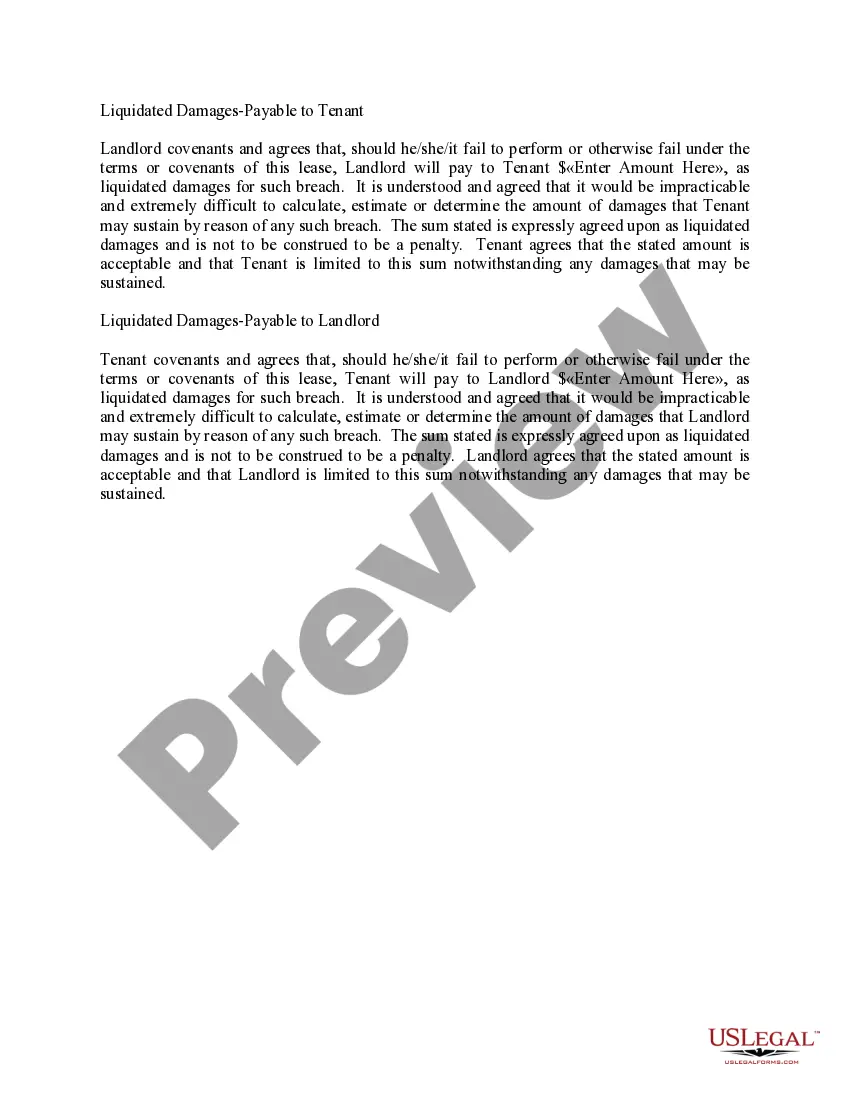
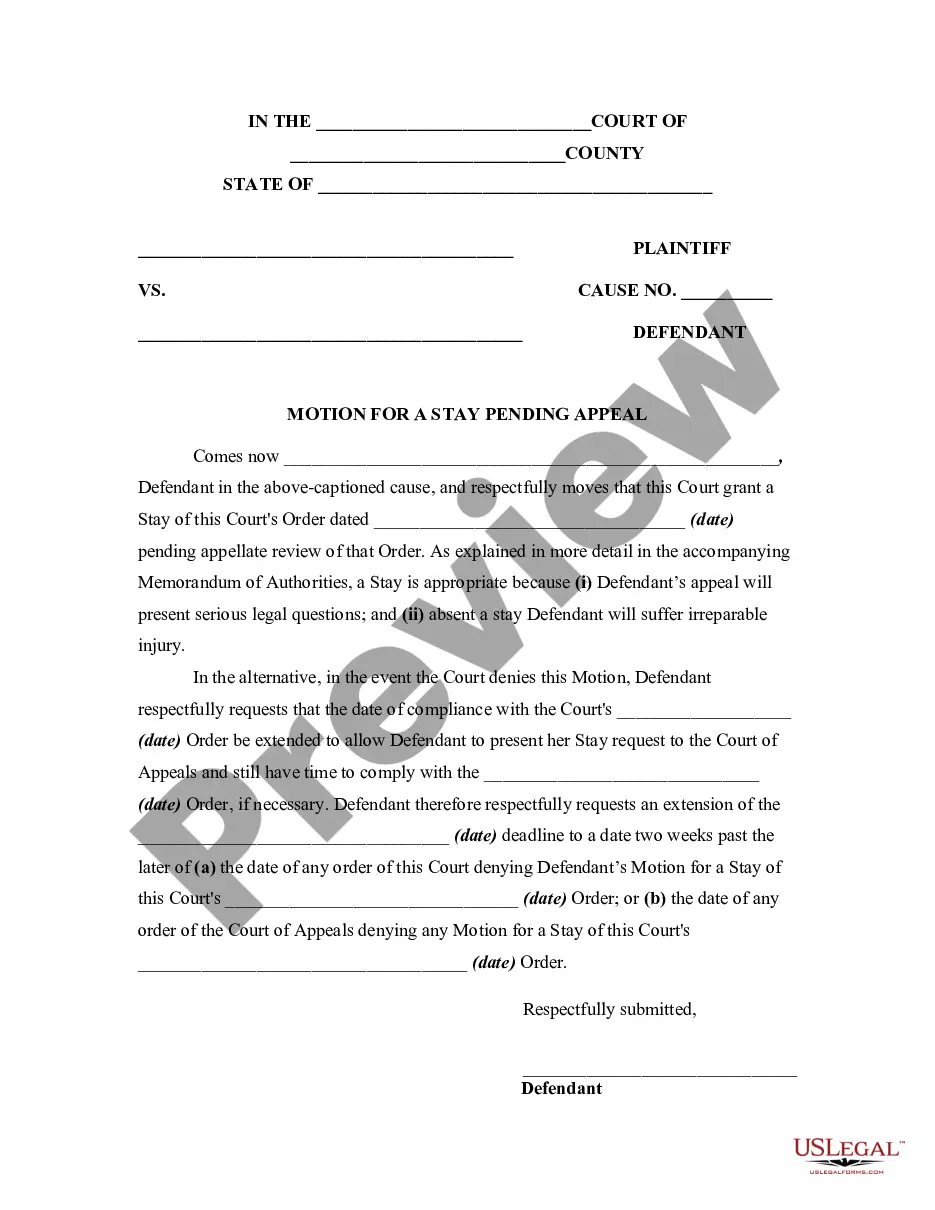
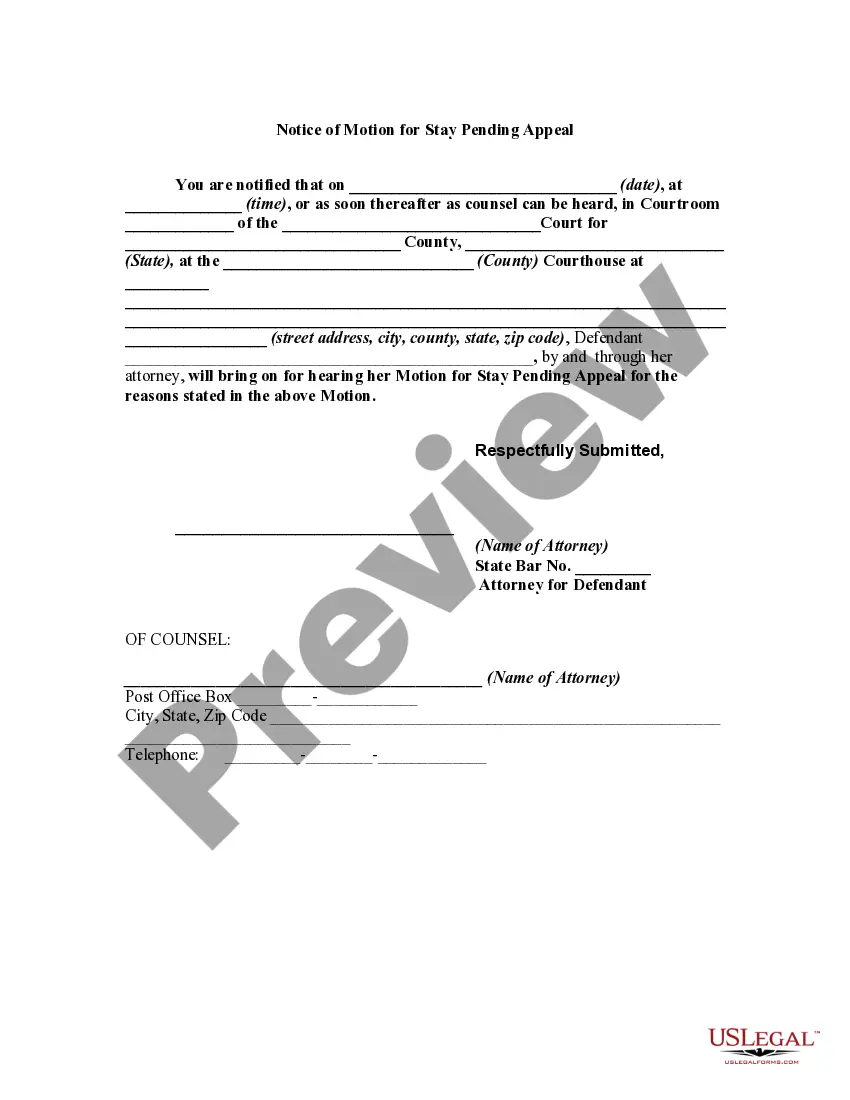
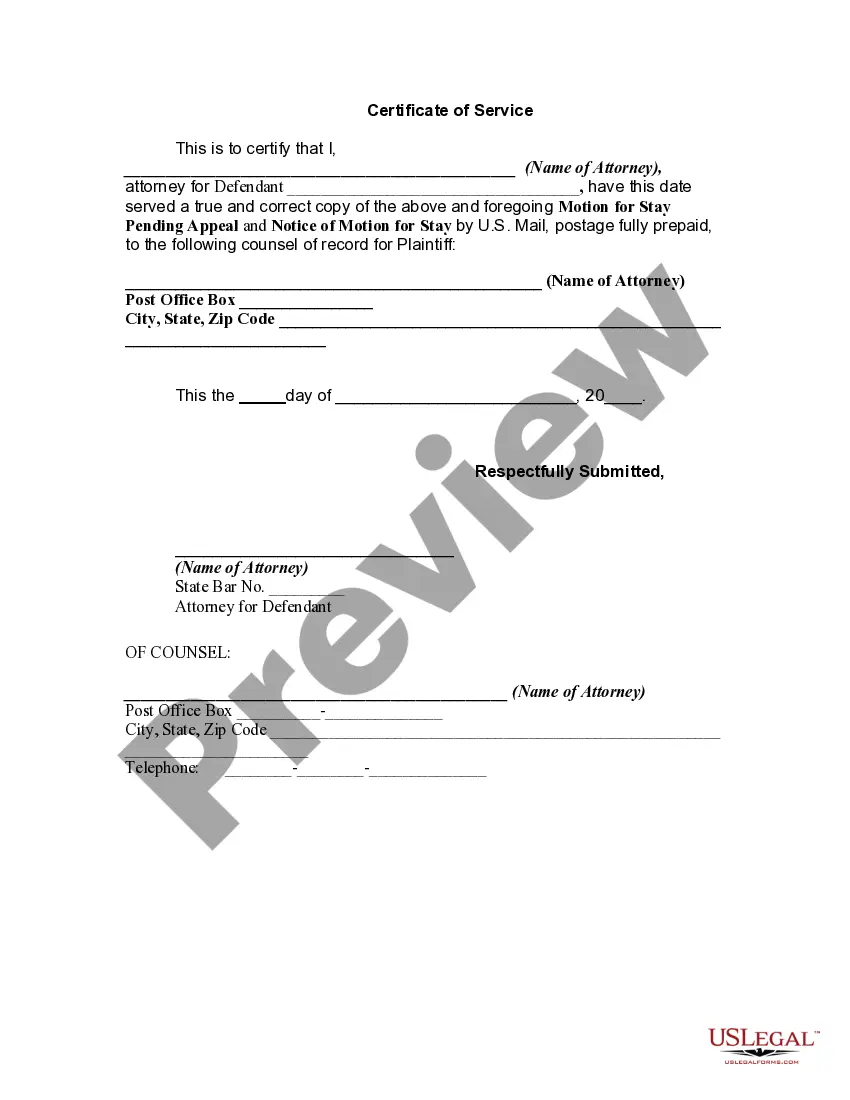
How to fill out Motion For Stay Pending Appeal And Notice Of Motion?
Utilizing legal document templates that adhere to national and local regulations is vital, and the internet provides a wealth of choices available.
However, why squander time searching for the suitable Sample Motion To Stay Form Texas on the internet when the US Legal Forms online repository already consolidates such templates in one location.
US Legal Forms is the largest online legal repository housing over 85,000 editable templates crafted by lawyers for various personal and business situations.
Review the template using the Preview option or another textual description to confirm it suits your requirements.
- They are easy to navigate with all documents classified by state and intended use.
- Our experts keep pace with legal modifications, ensuring the form you acquire is current and compliant when obtaining a Sample Motion To Stay Form Texas from our site.
- Retrieving a Sample Motion To Stay Form Texas is straightforward and quick for existing and new users.
- If you possess an account with a valid membership, Log In and save the document sample you need in your desired format.
- If you are new to our platform, follow the steps outlined below.
Form popularity
FAQ
To write a proper motion, start with a clear title and include the case information at the top. Follow with a concise introduction stating your request, and outline the facts and arguments that support your motion. It's crucial to adhere to formatting and procedural requirements as specified by Texas law, and referring to a sample motion to stay form Texas can help ensure you meet these standards.
An example of a motion is a motion to stay proceedings, which requests a temporary suspension of legal actions in a case. This can happen during ongoing negotiations, appeals, or when additional evidence comes to light. Reviewing a sample motion to stay form Texas can provide you with a concrete example of how to format your request and present your arguments.
A judge may deny a motion to stay for various reasons, including finding that the request lacks adequate justification or is not supported by sufficient legal grounds. If the judge believes that granting the stay would cause unfair harm to other parties, they may choose to deny it. Understanding these factors can help you craft a more effective motion, perhaps by using a sample motion to stay form Texas for better insight.
Writing a successful motion to dismiss requires clarity and legal precision. Begin by outlining the grounds for dismissal, such as lack of jurisdiction or failure to state a claim. Use specific legal references to strengthen your argument. You may find a sample motion to stay form Texas to aid you in drafting a compelling motion that meets court requirements.
To write a motion to stay, start by stating the case's caption at the top. In the introduction, clearly express your request to stay the proceedings, and include the relevant legal basis. Provide factual information and reasons supporting your motion, emphasizing how a stay benefits the case. For illustrative purposes, you can refer to a sample motion to stay form Texas to structure your document correctly.
Filling out a motion form involves providing detailed information about the matter at hand, including the parties involved and the relief being requested. It’s crucial to be clear and concise while following the court’s formatting rules. Reference a sample motion to stay form Texas for guidance on structure and content. This will increase the chance of your motion being accepted.
To file a motion form, you need to complete the form accurately according to the specific requirements of your case. Once completed, submit the form to the appropriate court along with any required filing fees. Don't forget to serve copies of the motion to all relevant parties. A sample motion to stay form Texas can help ensure that your motion is comprehensive and correctly formatted.
Filing in motion refers to the formal process of submitting a request to the court for a specific legal relief or action. This action prompts the court to take notice and possibly schedule a hearing. By filing a motion, you communicate your intentions clearly to all parties involved. Utilizing a sample motion to stay form Texas provides you with a solid foundation for your request.
To stay a writ of possession in Texas, you typically need to file a motion with the court that issued the writ. This motion must explain your reason for seeking a stay and supporting evidence if necessary. It’s important to act quickly, as there are strict deadlines. You can use a sample motion to stay form Texas to simplify your filing process.
In Texas, you generally have a specific time frame, usually around 10 to 20 days, to respond to a motion after it has been served to you. The exact timeline can vary based on the type of motion and local rules. Be sure to check your local court’s regulations to avoid missing important deadlines. Consulting a sample motion to stay form Texas can clarify what to include in your response.