Eviction-soft
Description
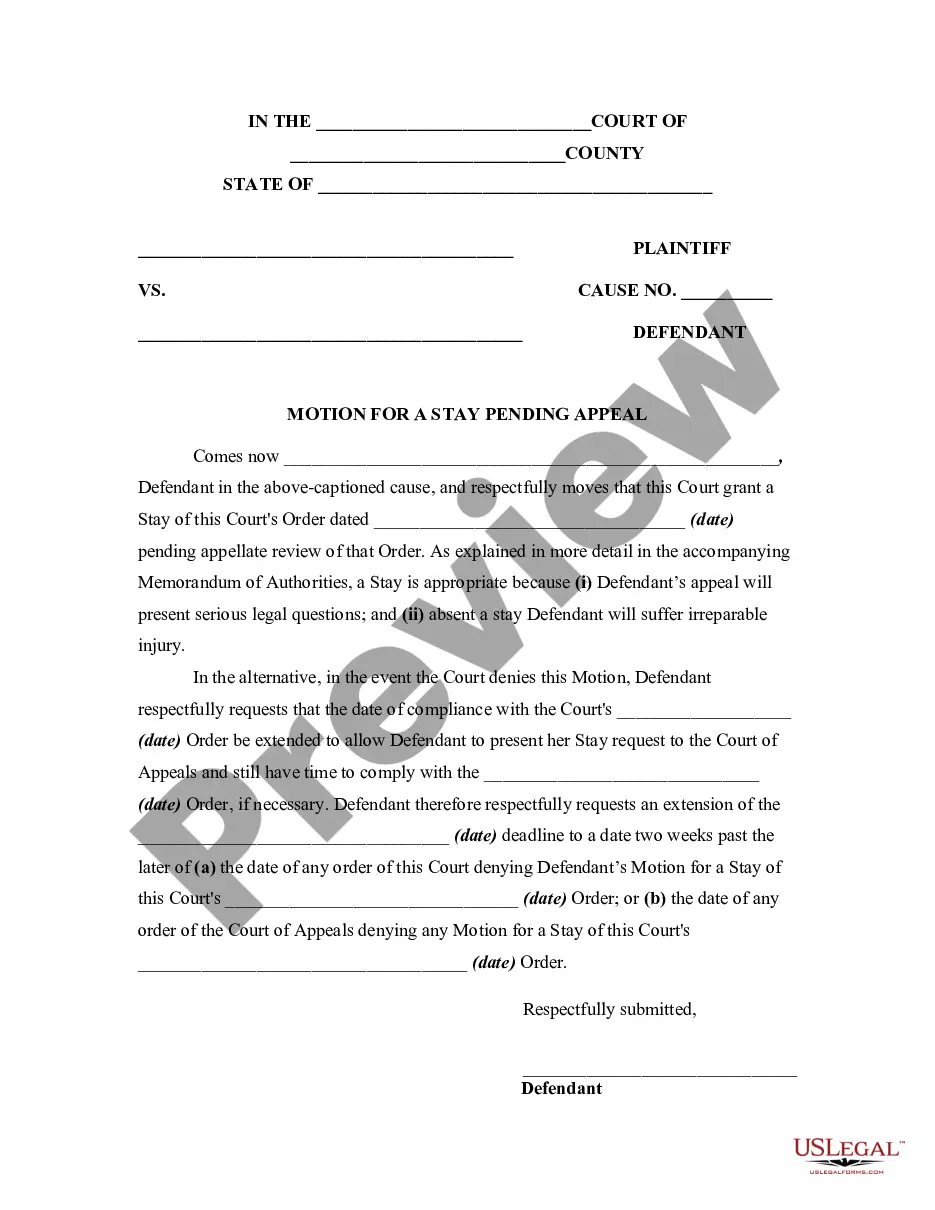
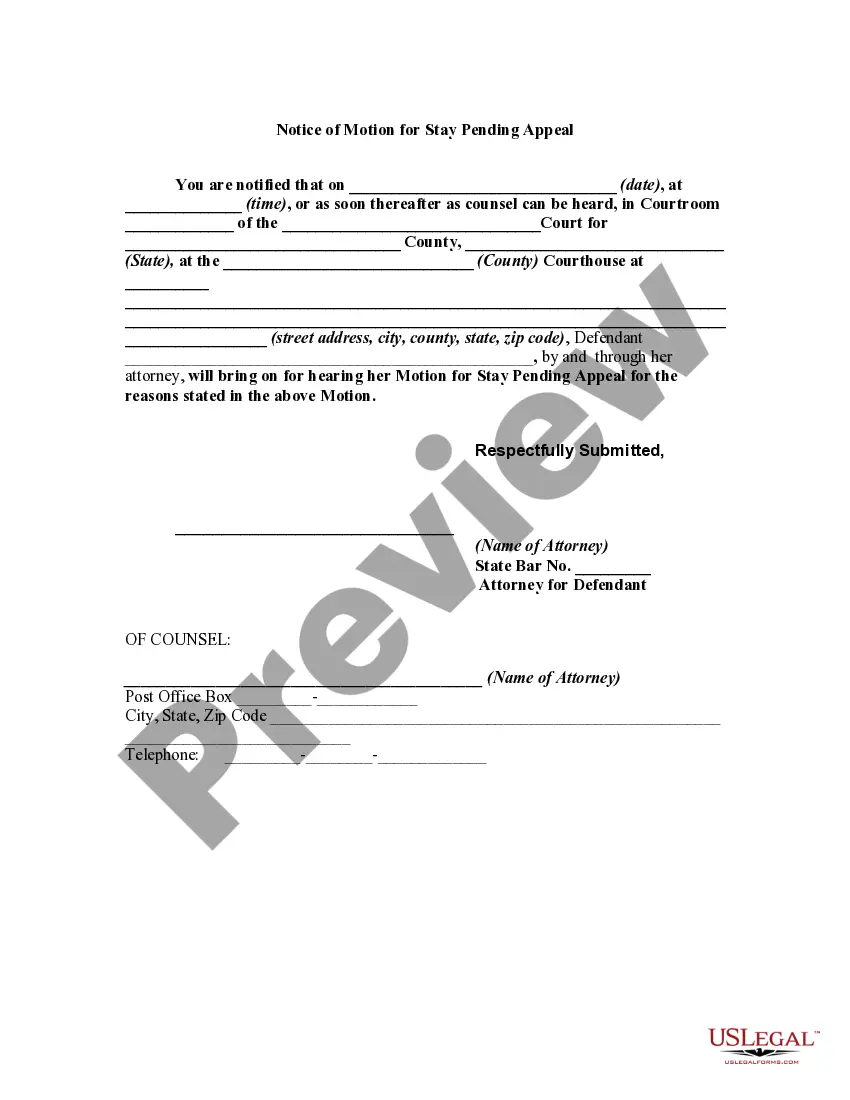
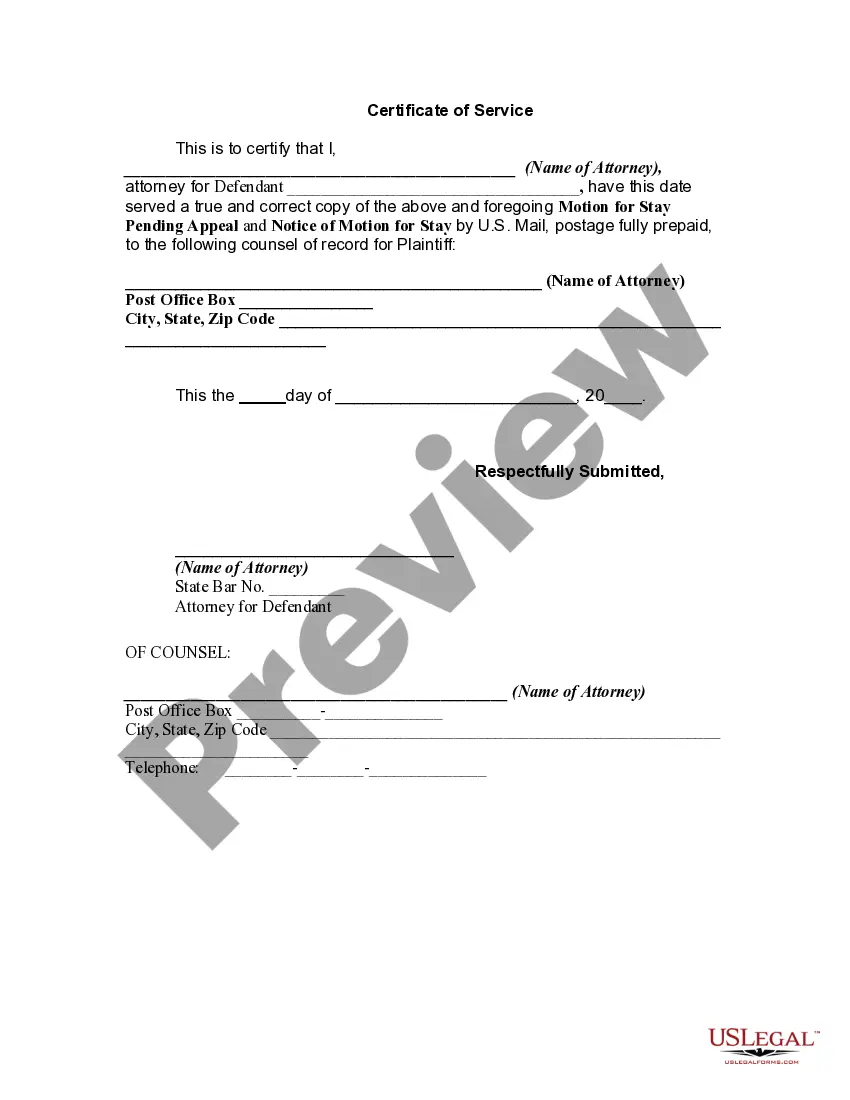




How to fill out Motion For Stay Pending Appeal And Notice Of Motion?
- If you are a returning user, log in to access your account and select the form template you need. Confirm your subscription status and renew it if necessary.
- For first-time users, explore the Preview mode and read the form description carefully to ensure it aligns with your requirements and local jurisdictions.
- Search for alternative templates if the first option does not meet your needs. Utilize the Search tab for additional options.
- Purchase the document by clicking the Buy Now button, choosing your preferred subscription plan, and registering your account for library access.
- Complete your transaction by entering your credit card information or using your PayPal account for payment.
- Download the form to your device for completion. You can access it anytime via the My Forms section.
By following these steps, you will quickly harness the power of US Legal Forms to obtain the legal documents you need. The platform offers an extensive library of over 85,000 forms and direct access to legal experts, ensuring you have accurate documentation.
Start your journey with US Legal Forms today, and experience the ease of obtaining legal documents with 'Eviction-soft'!
Form popularity
FAQ
To write a letter explaining an eviction, start with a clear statement of intent, followed by the reasons for the eviction, such as lease violations or non-payment. Include important dates, such as the notice period and the date by which the tenant must vacate. Utilizing the templates provided by Eviction-soft can make this process simpler, ensuring you cover all essential information.
Yes, you can evict someone in the winter in Vermont, but certain protections apply. Tenants facing eviction during cold weather may have additional rights under state law, especially if the eviction poses a risk to their safety. Using Eviction-soft can help ensure you navigate the regulations appropriately and respectfully.
Vermont eviction laws require landlords to follow specific procedures, including serving written notice and obtaining a court order if necessary. For non-payment of rent, landlords often start with a 14-day notice before proceeding to court. Staying informed about these laws is critical, and Eviction-soft provides resources that enhance your understanding and compliance.
The eviction process in Vermont typically takes about 60 to 90 days, depending on various factors such as court schedules and tenant responses. After serving notice, the landlord must file for eviction, which can lengthen the timeline. Using tools like Eviction-soft helps streamline the process, making it more efficient for landlords.
In Vermont, a tenant must provide at least 30 days' notice to terminate a month-to-month rental agreement. This notice gives both parties time to prepare for the transition. If you're unsure about the nuances, Eviction-soft can offer guidance and templates to simplify communication with tenants.
A good sentence for eviction might be: 'The court ordered the eviction of the tenant based on missed rent payments and violations of the lease agreement.' This sentence succinctly captures the essence of eviction, showcasing that legal action follows a tenant's failure to uphold their contractual obligations. Eviction-soft ensures smooth transitions for landlords navigating these complex situations.
In Vermont, landlords must provide a proper notice before initiating eviction proceedings, typically giving tenants 30 days to vacate in most cases. If the tenant does not leave, the landlord must file for eviction in court. Using Eviction-soft can guide you through the specific rules and ensure you comply with all legal requirements.
In Washington State, the eviction process can take around 21 days if the tenant does not respond to the notice. If they choose to contest the eviction, the process may take longer, sometimes lasting several weeks. With Eviction-soft, you can manage the necessary paperwork effortlessly, keeping your timeline on track.
In South Carolina, the eviction process usually takes about 2 to 4 weeks if the tenant does not contest the eviction. If the tenant files an appeal, the process can extend several weeks or more. Utilizing Eviction-soft can assist you in navigating the process, providing templates and resources that save you time.
To speed up the eviction process, ensure you follow all legal procedures carefully and file documents promptly. Using automated services like Eviction-soft can help you fill out and submit required forms quickly. Additionally, being prepared for court and having all necessary evidence ready can significantly shorten the timeline.