Appeals Case
Description
Get your form ready online
Our built-in tools help you complete, sign, share, and store your documents in one place.
Make edits, fill in missing information, and update formatting in US Legal Forms—just like you would in MS Word.
Download a copy, print it, send it by email, or mail it via USPS—whatever works best for your next step.
Sign and collect signatures with our SignNow integration. Send to multiple recipients, set reminders, and more. Go Premium to unlock E-Sign.
If this form requires notarization, complete it online through a secure video call—no need to meet a notary in person or wait for an appointment.
We protect your documents and personal data by following strict security and privacy standards.

Make edits, fill in missing information, and update formatting in US Legal Forms—just like you would in MS Word.

Download a copy, print it, send it by email, or mail it via USPS—whatever works best for your next step.

Sign and collect signatures with our SignNow integration. Send to multiple recipients, set reminders, and more. Go Premium to unlock E-Sign.

If this form requires notarization, complete it online through a secure video call—no need to meet a notary in person or wait for an appointment.

We protect your documents and personal data by following strict security and privacy standards.
Looking for another form?



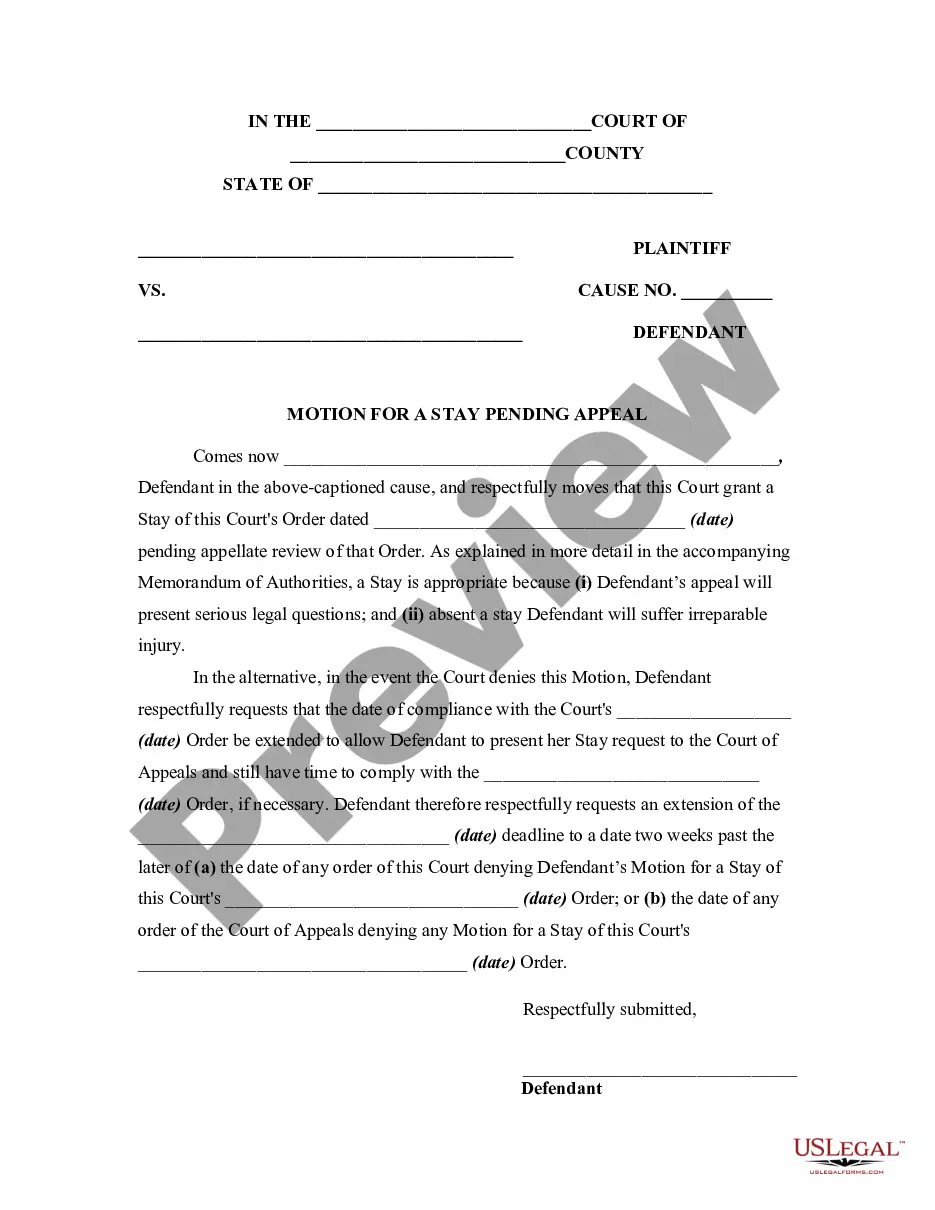
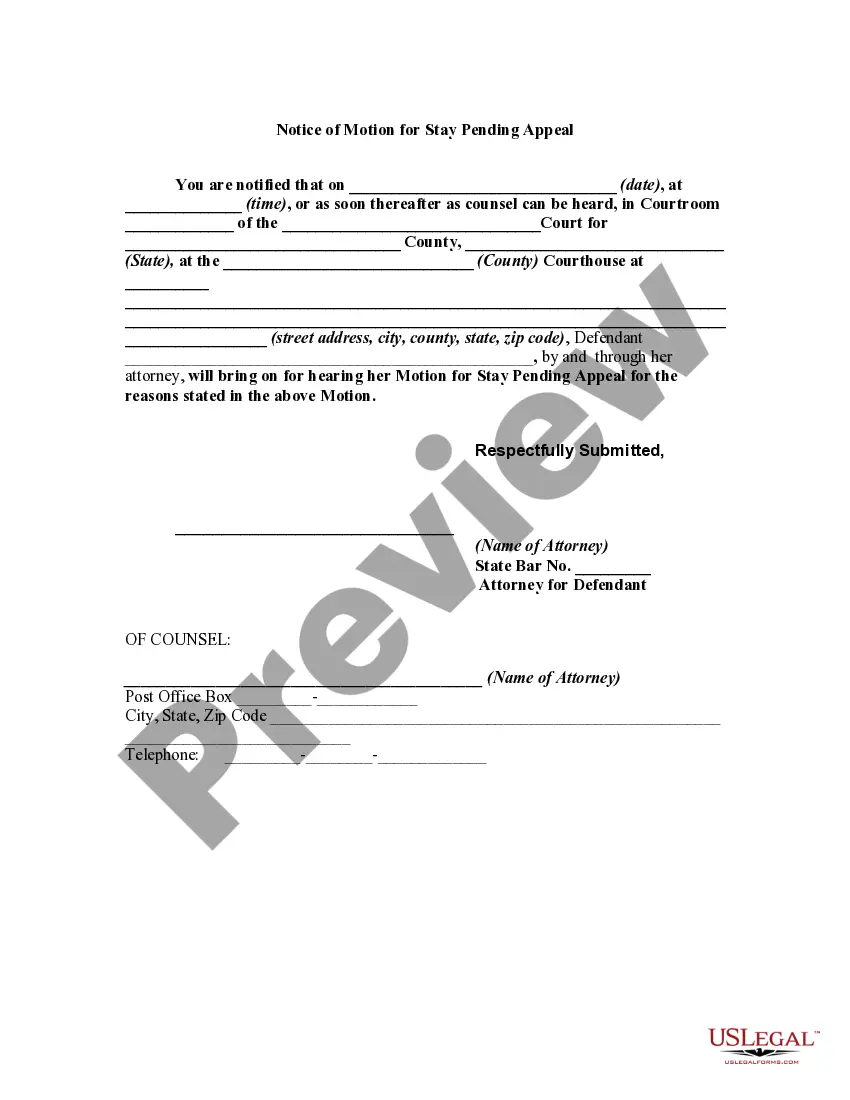
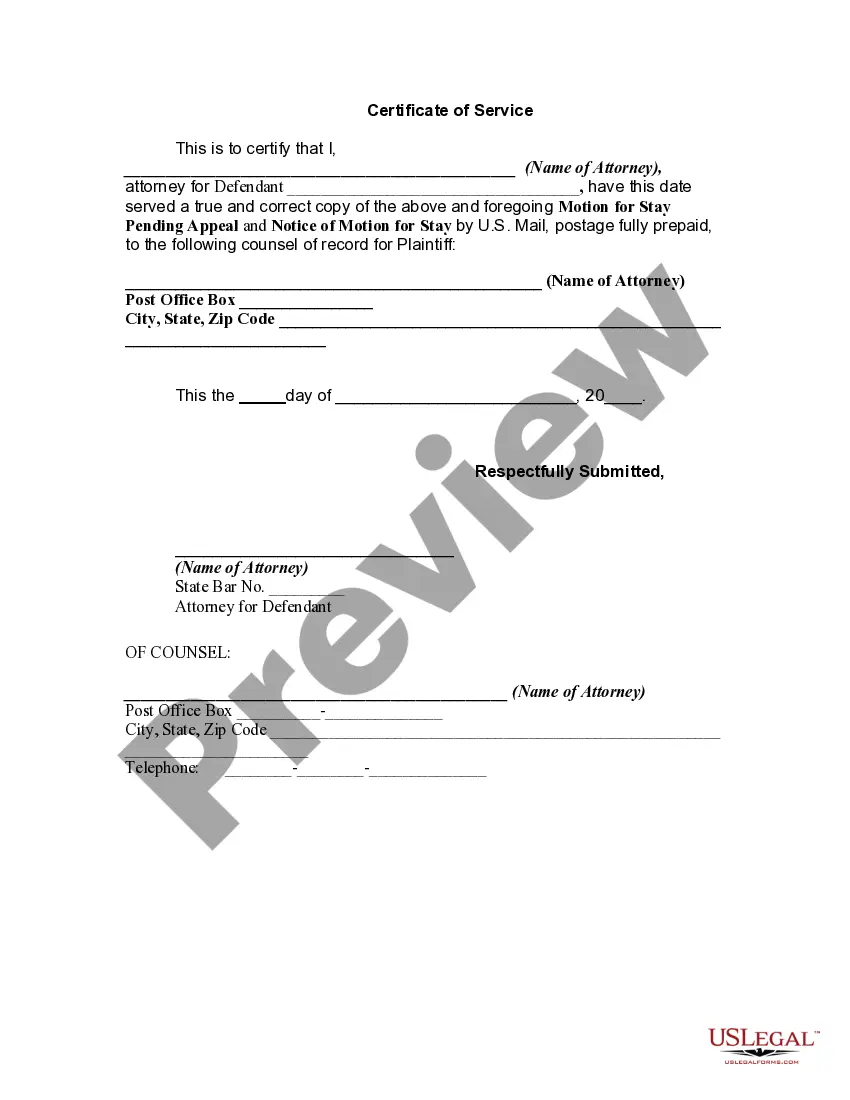
How to fill out Motion For Stay Pending Appeal And Notice Of Motion?
- Log into your US Legal Forms account using this link. Ensure your subscription is active; if it’s expired, renew it according to your payment plan.
- Browse the available templates and check the Preview mode to ensure you find the correct document that aligns with your legal requirements.
- If you can't find the right template, use the Search function to locate the specific form needed for your appeals case.
- Once you select your document, click on the Buy Now button and choose a suitable subscription plan. You will need to create an account for full access.
- Complete your purchase by entering your payment information or using your PayPal account.
- After your purchase is confirmed, download the form to your device. You can also revisit the My Forms section of your profile to access it in the future.
US Legal Forms offers unparalleled benefits, including a vast collection of over 85,000 editable legal forms and the assurance of expert assistance. These features help ensure that your documents are both accurate and compliant with local laws.
Ready to take the next step? Visit US Legal Forms today to access a world of legal resources tailored to your appeals case needs!
Form popularity
FAQ
Common grounds to make an appeal include legal errors during the trial, newly discovered evidence, and issues related to jury misconduct. These grounds must show how they negatively impacted the trial's outcome to be valid in the appeals case. Understanding the legal framework surrounding these grounds is vital for your appeal's success. Partnering with professionals from USLegalForms can help clarify these grounds and assist in the preparation process.
A successful appeal hinges on clear, specific legal grounds that substantiate the claim of error. Additionally, presenting a thorough understanding of the appellate process and the relevant laws will further enhance your case. Your legal team should effectively communicate these elements to demonstrate the necessity for a different outcome. Utilizing resources from USLegalForms can provide crucial support in this aspect.
To win an appeals case, focus on highlighting errors from the original trial and providing evidence that shows these errors affected the outcome. It's essential to create a detailed brief that outlines these points clearly and persuasively. Consulting with seasoned legal experts can strengthen your case and improve the likelihood of a successful appeal. Use reliable platforms like USLegalForms to access tools and resources for crafting strong legal arguments.
An appeals case can be denied for several reasons, mainly if the appellate court finds no legal error in the original decision. Additionally, if the appeal is filed too late or if the issues raised were not previously presented in the trial, the court may dismiss the appeal. Understanding these grounds can help you prepare better if you wish to pursue an appeal.
The odds of winning an appeals case vary by jurisdiction and the specifics of the case. Generally, appeals do not overturn the original verdict unless significant errors are present. Statistics indicate that only a small percentage result in a complete victory for the appellant. However, with a strong legal foundation and a clear demonstration of error, your chances improve significantly.
Winning an appeal hearing involves crafting a compelling legal argument based on the original trial's shortcomings. You'll need to focus on the specific legal errors made, rather than re-arguing the entire case. Preparing thorough documentation and utilizing experienced legal professionals can enhance your chances of success in an appeals case. Engage with the appropriate legal frameworks and precedents to support your arguments.
The best reason for an appeals case to be granted is the presence of a legal error in the original trial. If there is clear evidence that the law was misapplied, or that key evidence was improperly excluded, an appeals court may reverse the lower court's decision. This ensures that justice is served and the legal process is upheld. It's crucial to present strong arguments that demonstrate how the error affected the trial's outcome.
Writing an appeal for a court case involves detailing the errors you believe occurred during the trial. Begin with the court's decision you are contesting, followed by a clear explanation of the grounds for your appeal. Incorporate factual references and legal precedents to advocate for your case effectively. Consider using platforms like US Legal Forms for guidance throughout this process.
A good appeal brief combines clarity of ideas and structured arguments. Begin with a strong introduction that outlines your main points, then delve into your arguments supported by evidence. Conclude by summarizing your position and emphasizing the rationale behind your appeal case. This approach captures the attention of the reviewing court.
Writing a powerful appeal letter starts with clarity in your purpose and a compelling introduction. Clearly articulate the decision you’re appealing and why it merits reconsideration. Use strong yet respectful language, and support your arguments with relevant facts and evidence that can influence your appeal case positively.