Amend Complaint In Federal Court
Description
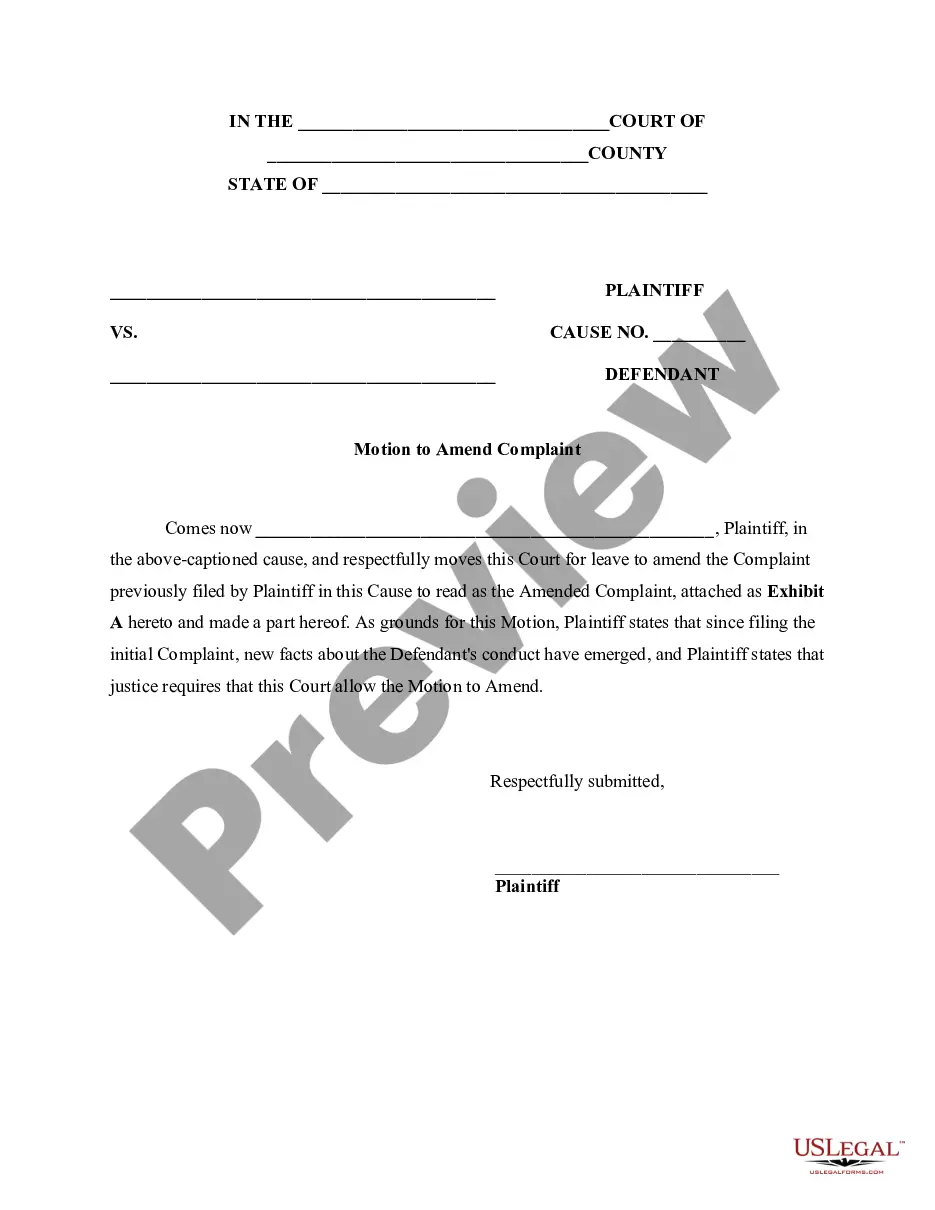
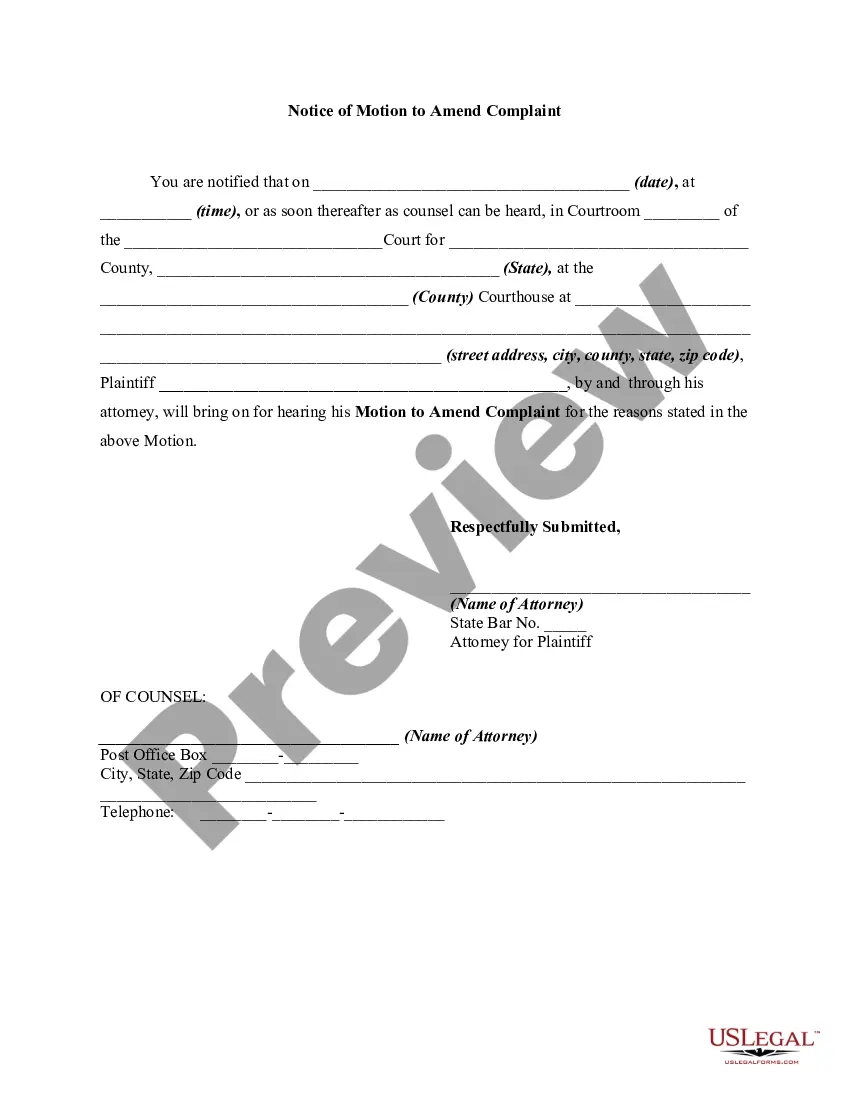
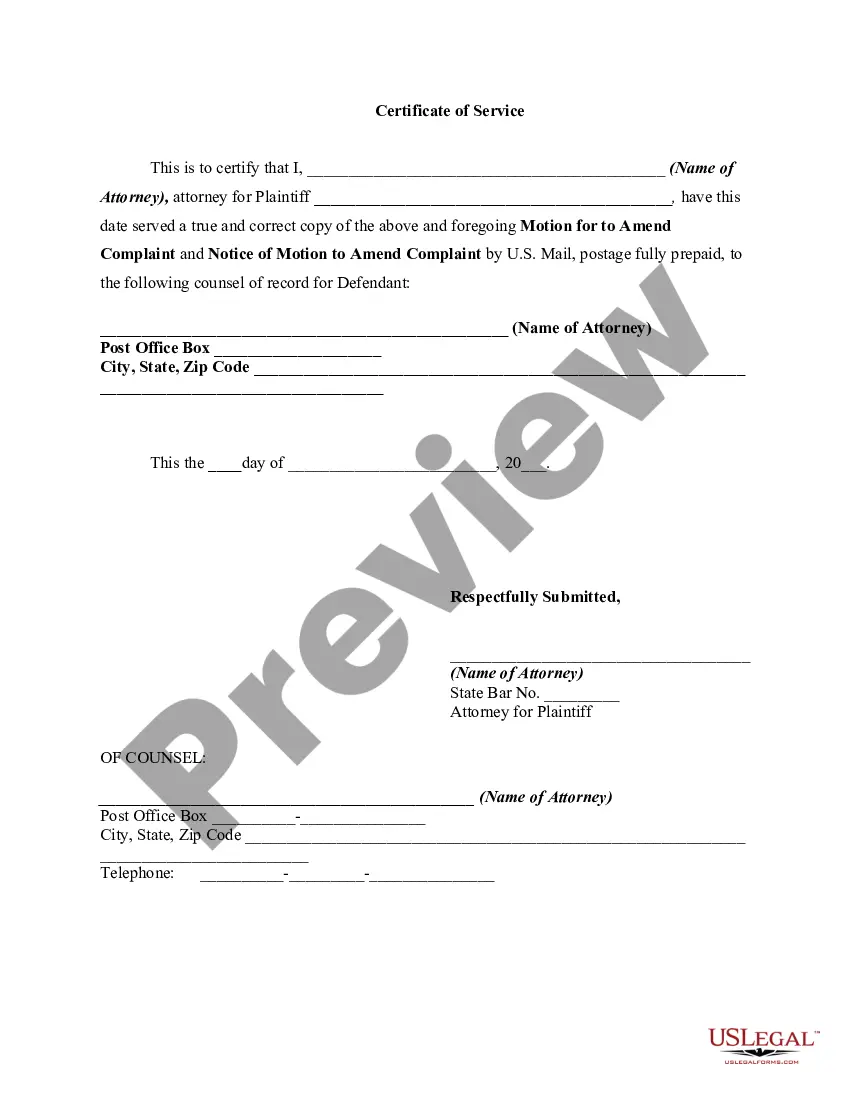

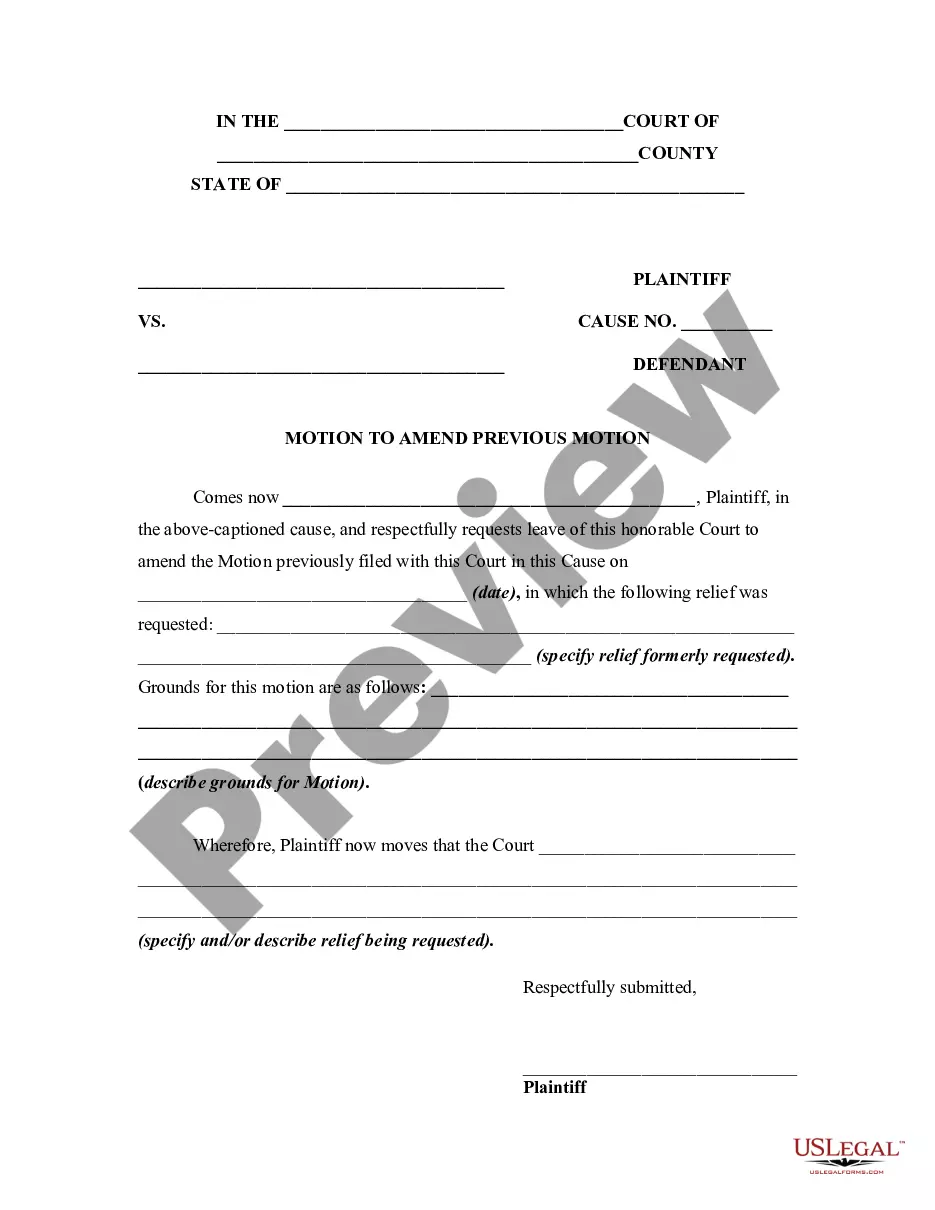
Get your form ready online
Our built-in tools help you complete, sign, share, and store your documents in one place.
Make edits, fill in missing information, and update formatting in US Legal Forms—just like you would in MS Word.
Download a copy, print it, send it by email, or mail it via USPS—whatever works best for your next step.
Sign and collect signatures with our SignNow integration. Send to multiple recipients, set reminders, and more. Go Premium to unlock E-Sign.
If this form requires notarization, complete it online through a secure video call—no need to meet a notary in person or wait for an appointment.
We protect your documents and personal data by following strict security and privacy standards.

Make edits, fill in missing information, and update formatting in US Legal Forms—just like you would in MS Word.

Download a copy, print it, send it by email, or mail it via USPS—whatever works best for your next step.

Sign and collect signatures with our SignNow integration. Send to multiple recipients, set reminders, and more. Go Premium to unlock E-Sign.

If this form requires notarization, complete it online through a secure video call—no need to meet a notary in person or wait for an appointment.

We protect your documents and personal data by following strict security and privacy standards.
Looking for another form?

How to fill out Simple Motion To Amend Complaint And Notice Of Motion?
Managing legal documents can be daunting, even for the most experienced professionals.
If you're looking to Amend a Complaint In Federal Court and don't have the opportunity to search for the correct and latest version, the process can become taxing.
Utilize state- or county-specific legal and business forms. US Legal Forms meets all your needs, from personal to corporate documents, in one convenient location.
Use advanced tools to complete and manage your Amend Complaint In Federal Court.
After downloading the necessary form, follow these steps: Verify that it is the correct form by previewing it and reviewing its description. Ensure that the template is authorized in your state or county. Click Buy Now when you're ready. Select a subscription plan. Find the format you require, and Download, complete, sign, print, and send your document. Leverage the US Legal Forms online catalog, bolstered by 25 years of experience and reliability. Turn your routine document management into a simple and user-friendly process today.
- Access a valuable repository of articles, guides, and resources pertinent to your circumstances and requirements.
- Conserve time and energy searching for the necessary documents, making use of US Legal Forms’ advanced search and Preview feature to find Amend Complaint In Federal Court and download it.
- If you possess a subscription, Log In to your US Legal Forms profile, search for the form you need, and download it.
- Check your My documents section to view the documents you have previously downloaded and to manage your folders as required.
- If this is your first experience with US Legal Forms, create a complimentary account for unlimited access to all the benefits of the library.
- A comprehensive online form catalog may be a revolutionary tool for anyone looking to navigate these circumstances efficiently.
- US Legal Forms is a leading provider of online legal documents, boasting over 85,000 state-specific legal templates accessible at any time.
- With US Legal Forms, you can.
Form popularity
FAQ
Filing an amendment to a complaint involves several key steps. First, prepare your amended complaint and ensure it complies with court rules. Then, file the document with the court clerk, and serve copies to all parties involved in the case. To streamline this process, consider using USLegalForms, which provides user-friendly templates and guidance for filing amendments appropriately.
You can amend a complaint in federal court at various stages of your case. Generally, you have the right to amend your complaint once as a matter of course within 21 days after serving it or within 21 days after the opposing party has filed a responsive pleading. Additionally, the court may allow further amendments with permission. Understanding these rules can help you effectively amend a complaint in federal court.
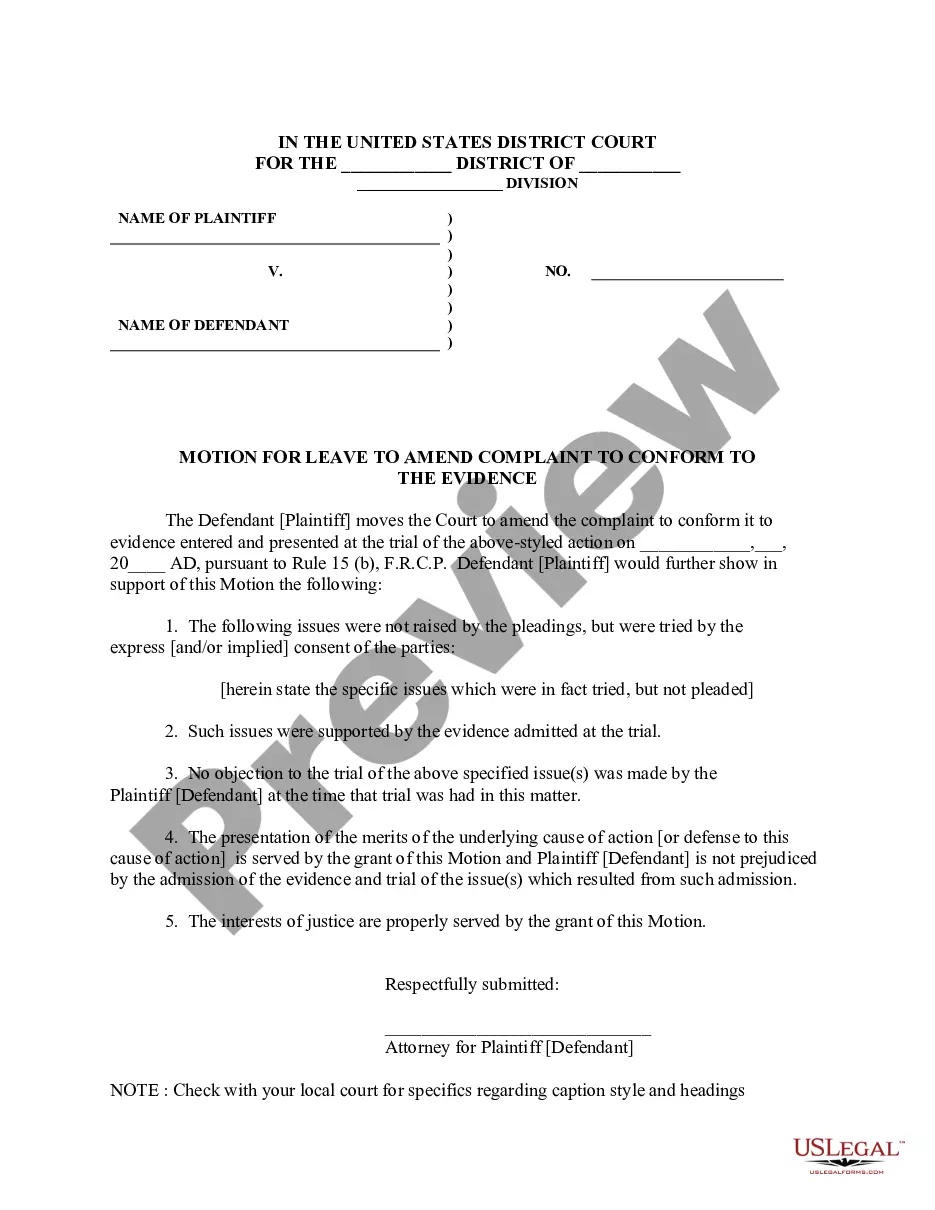
To amend a complaint in federal court, you first need to prepare a revised version of your original complaint. This document should clearly outline the changes you wish to make. Next, you must file the amended complaint with the court, along with any required documents. Using platforms like USLegalForms can simplify this process, offering templates that ensure your amendment meets federal requirements.
The federal rule regarding amended complaints is found in Rule 15 of the Federal Rules of Civil Procedure. This rule allows a party to amend their pleading with the court's permission or within a specified time after the initial complaint is served. Understanding this rule is vital for effectively navigating the amendment process in federal court. With USLegalForms, you can access helpful resources that clarify these rules and assist you in filing an amended complaint.
Leave to amend should be granted when it promotes justice and does not unfairly disadvantage the other parties involved. Courts generally favor allowing amendments, especially when they help clarify the issues or include new facts. However, if the amendment would cause undue delay or prejudice to the opposing party, the court might deny the request. Consulting resources like USLegalForms can guide you through the process of amending your complaint in federal court.
Yes, when you amend your complaint in federal court, the amended complaint takes the place of the original one. This means that the original complaint is no longer considered part of the case. It is crucial to ensure that your amended complaint includes all necessary information and addresses any issues raised by the court or opposing parties. USLegalForms offers templates that can help you create a comprehensive amended complaint.
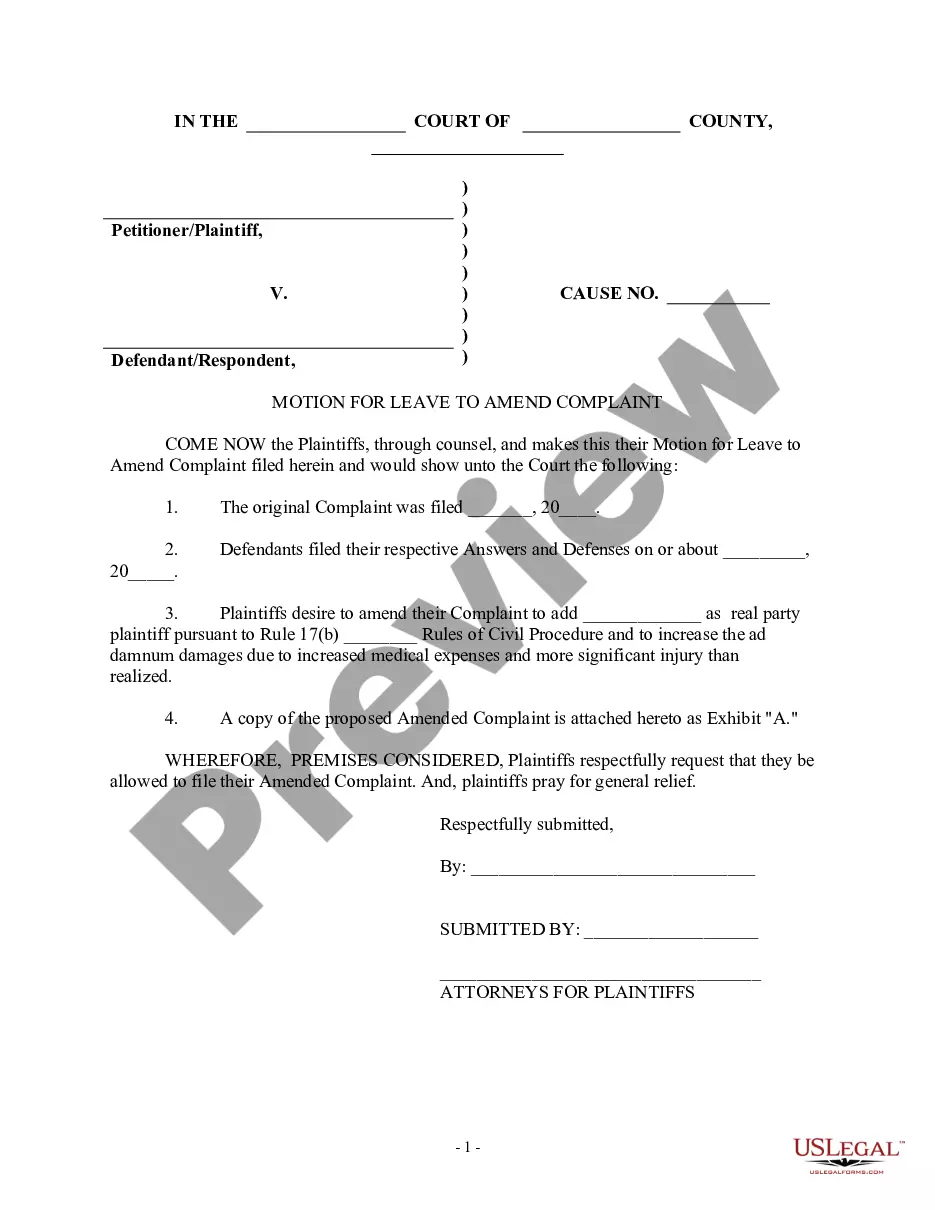
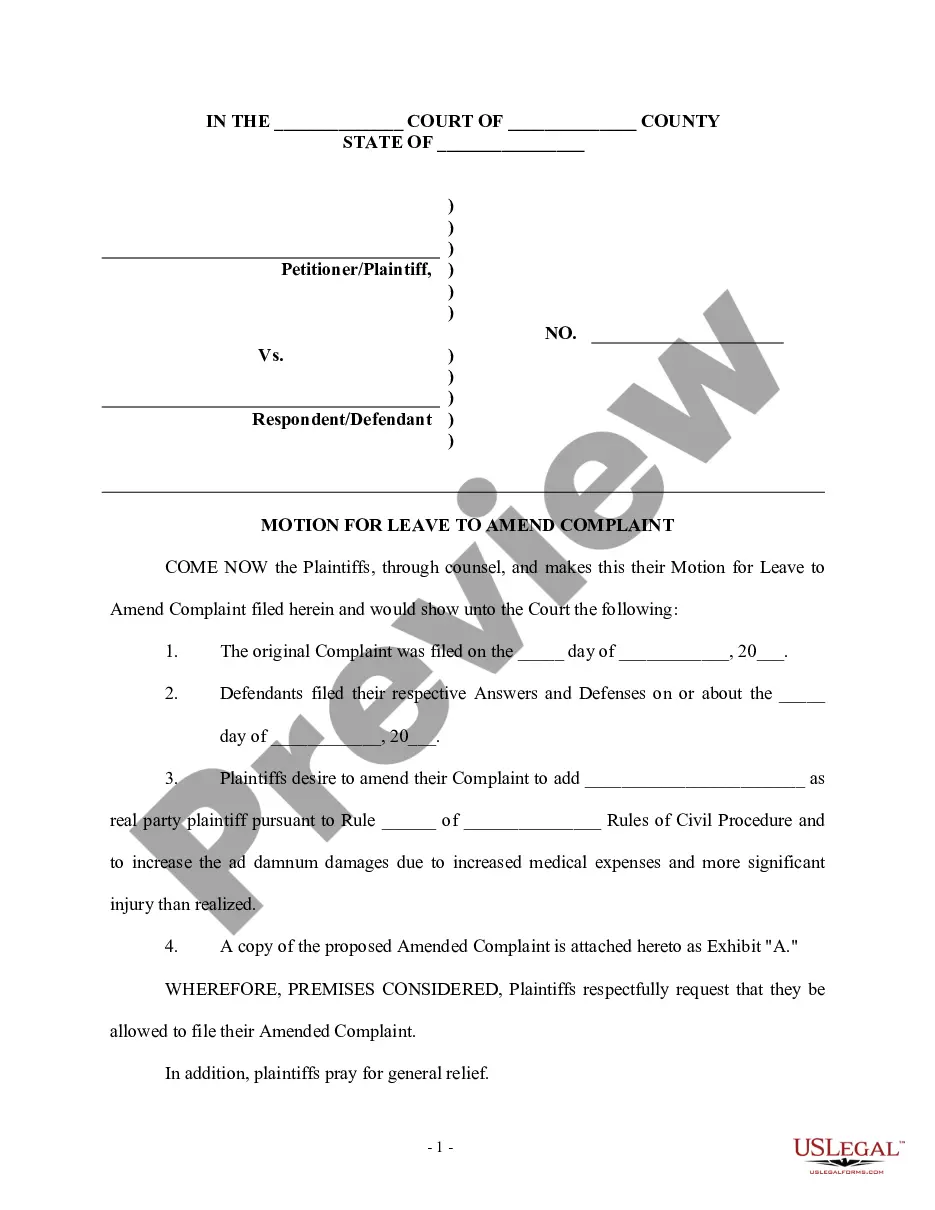
A motion to leave to file an amended complaint is a formal request made to the court, seeking permission to modify your original complaint. When you want to amend your complaint in federal court, this motion must clearly explain the reasons for the changes. It's essential to provide a valid justification, as the court typically considers the potential impact on all parties involved. Using platforms like USLegalForms can help you draft this motion effectively.
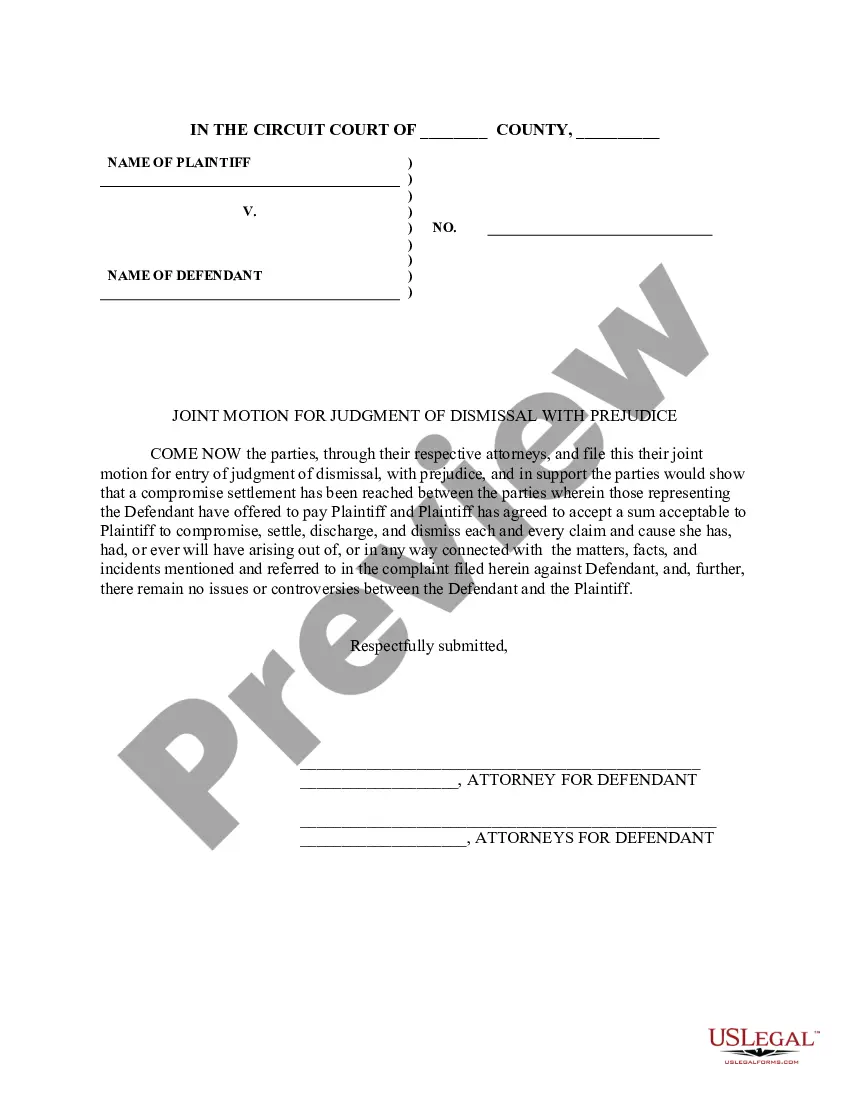
The procedure for amending a complaint in federal court involves several steps. First, determine if you need to seek leave of court or if you can amend as a matter of course. Next, prepare the amended complaint, ensuring it addresses all necessary changes. Finally, file the amended complaint with the court and serve it on all parties involved in the case.
To amend a complaint in federal court, you must file a motion to amend along with your proposed amended complaint. If you are within the allowable time frame, you may not need to file a motion at all. Platforms like uslegalforms can guide you through the process, providing templates and legal information to simplify your amendments.
You usually have 21 days to amend your complaint in federal court without needing permission from the court. This period begins from the date you serve your original complaint or from the date a responsive pleading is filed. Understanding this timeline is essential for maintaining the integrity of your case.