Court Order For Child Custody
Description

Get your form ready online
Our built-in tools help you complete, sign, share, and store your documents in one place.
Make edits, fill in missing information, and update formatting in US Legal Forms—just like you would in MS Word.
Download a copy, print it, send it by email, or mail it via USPS—whatever works best for your next step.
Sign and collect signatures with our SignNow integration. Send to multiple recipients, set reminders, and more. Go Premium to unlock E-Sign.
If this form requires notarization, complete it online through a secure video call—no need to meet a notary in person or wait for an appointment.
We protect your documents and personal data by following strict security and privacy standards.

Make edits, fill in missing information, and update formatting in US Legal Forms—just like you would in MS Word.

Download a copy, print it, send it by email, or mail it via USPS—whatever works best for your next step.

Sign and collect signatures with our SignNow integration. Send to multiple recipients, set reminders, and more. Go Premium to unlock E-Sign.

If this form requires notarization, complete it online through a secure video call—no need to meet a notary in person or wait for an appointment.

We protect your documents and personal data by following strict security and privacy standards.
Looking for another form?
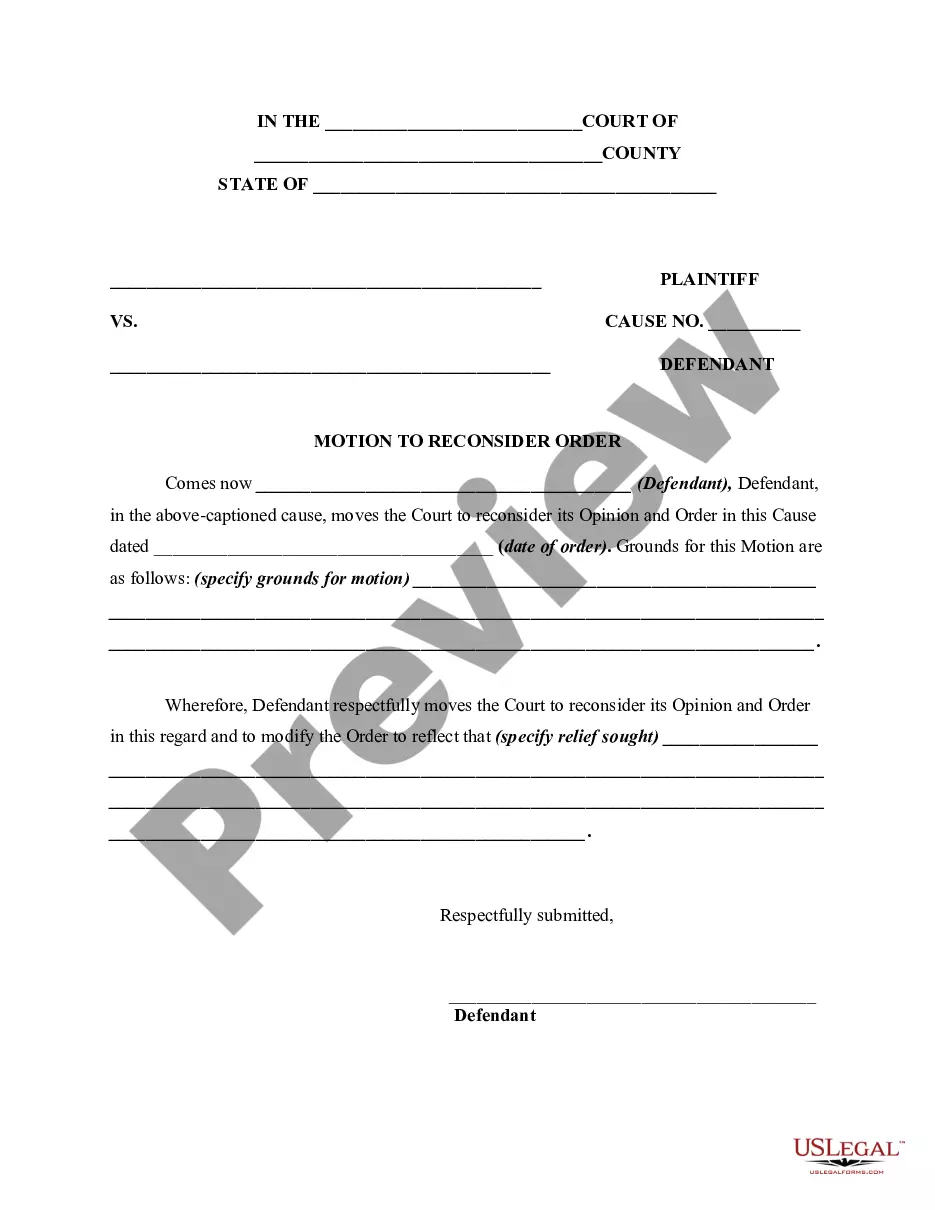
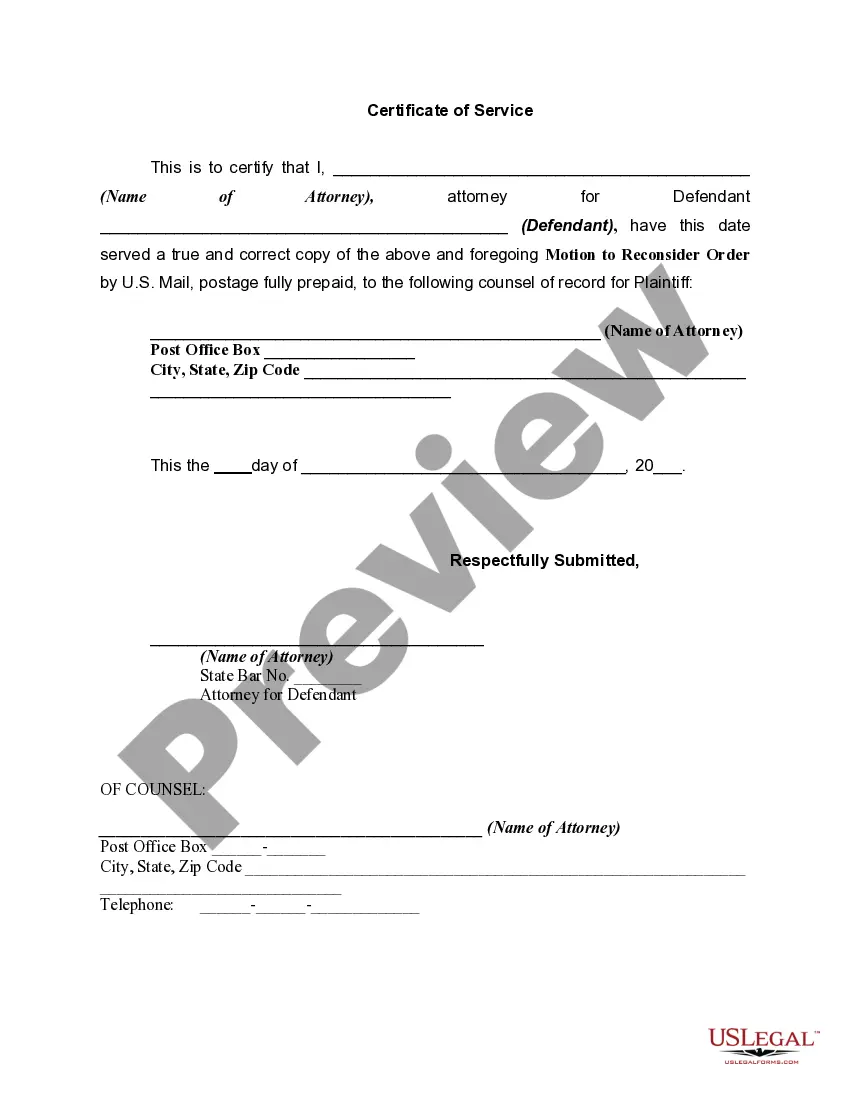
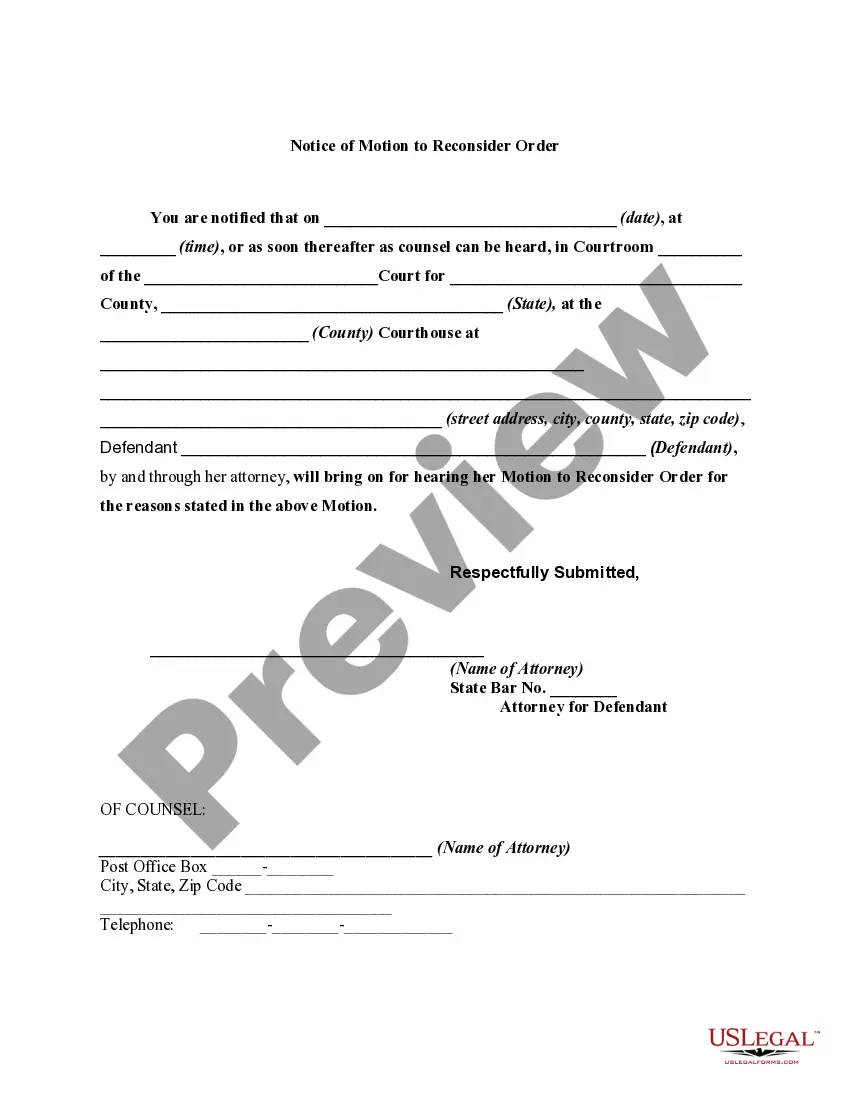
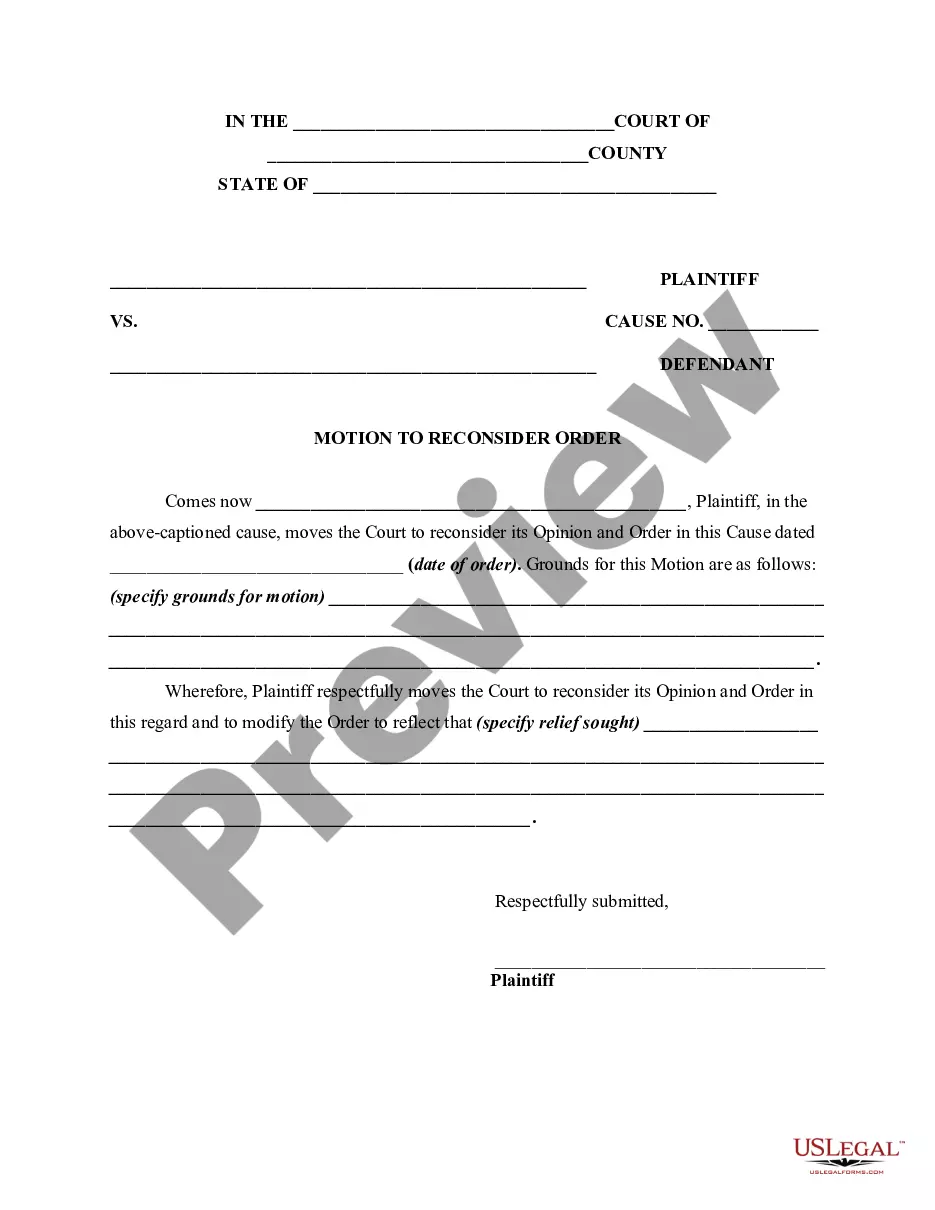
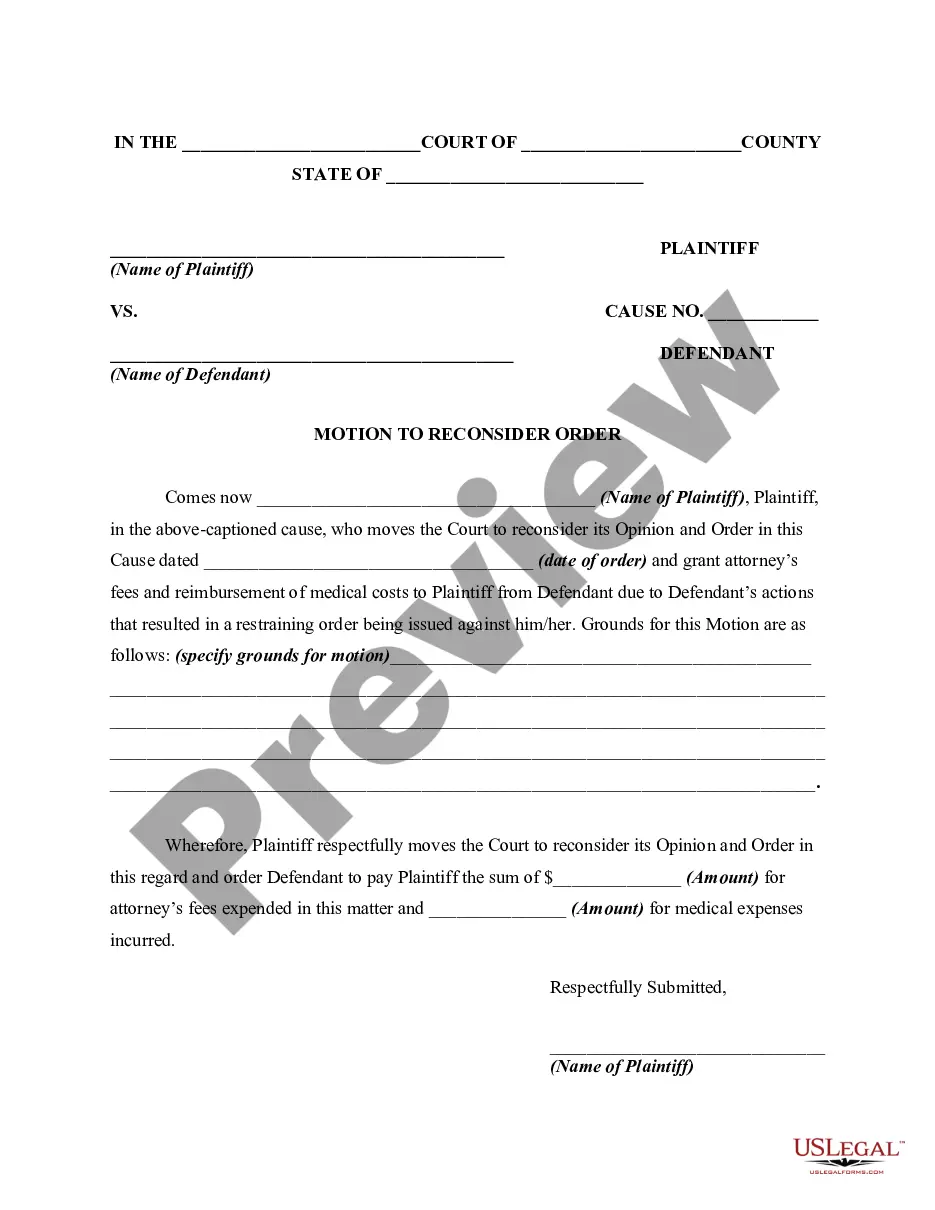
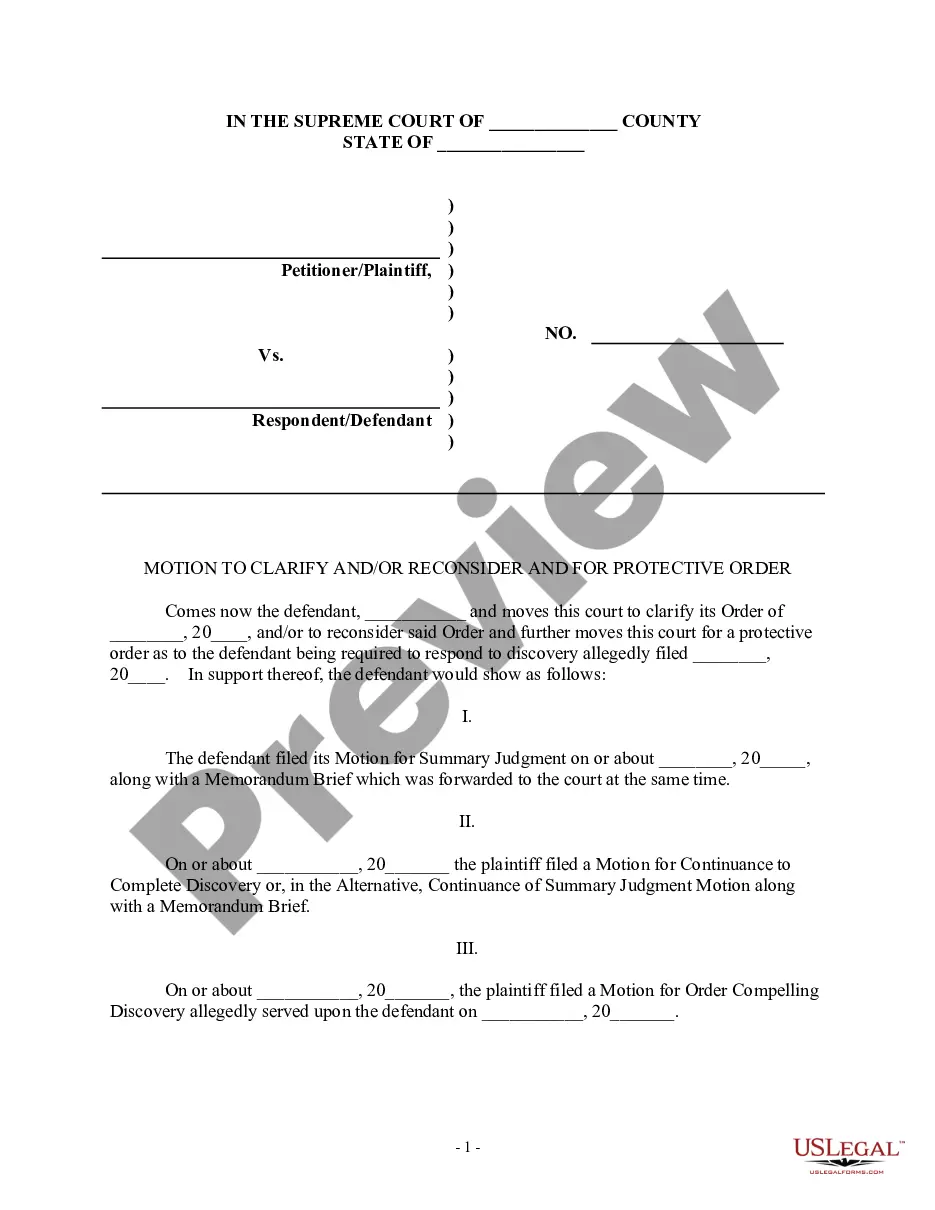
How to fill out Motion Of Defendant Requesting Court To Reconsider An Order And Notice Of Motion To Plaintiff?
Individuals frequently link legal documents with a task that is intricate and can only be managed by an expert.
This notion has some validity, as formulating a Court Order For Child Custody necessitates a significant grasp of the relevant subject matter, encompassing state and local statutes.
However, with US Legal Forms, the process has been simplified: pre-prepared legal templates applicable to any personal or business scenario, tailored to state regulations, are compiled in a single digital library and are now accessible to all.
All templates in our catalog are reusable: once purchased, they are saved in your profile. You can access them anytime via the My documents tab. Discover all the benefits of using the US Legal Forms platform. Subscribe today!
- US Legal Forms offers over 85,000 current forms categorized by state and area of application, allowing you to find a Court Order For Child Custody or any specific template within minutes.
- Users who have previously registered with a valid subscription must Log In to their account and click Download to obtain the form.
- New users on the platform will need to establish an account and subscribe before they can store any documentation.
- Here’s a detailed guide on how to obtain the Court Order For Child Custody.
- Thoroughly review the page content to confirm it meets your specifications.
- Examine the form description or view it using the Preview feature.
- If the earlier option does not meet your needs, search for another sample using the Search field above.
- Once you find the proper Court Order For Child Custody, click Buy Now.
- Select a subscription plan that aligns with your requirements and financial plan.
- Either register for an account or Log In to move on to the payment page.
- Pay for your subscription via PayPal or using your credit card.
- Choose the format for your document and click Download.
- Print your document or import it into an online editor for quicker completion.
Form popularity
FAQ
Actions such as displaying hostility towards the other parent or failing to meet your child's needs can significantly hurt your position in a custody battle. Additionally, poor financial decisions or involvement with substances can raise concerns about your ability to care for your child. It is essential to present yourself as a responsible and caring parent to achieve a favorable court order for child custody.
During a custody battle, it is important to avoid making negative comments about the other parent. This can reflect poorly on you and may influence the court's decision regarding a court order for child custody. Instead, focus on constructive communication about your child's needs and well-being to create a more positive impression.
The best evidence for child custody typically includes documentation such as school records, medical reports, and proof of involvement in the child's life. Observations from teachers or counselors can also serve as valuable evidence. All of these pieces demonstrate your ability to provide a stable and nurturing environment, which is vital in securing a court order for child custody.
The requirements for a court order for child custody vary by state but generally include filing a petition, serving notice to the other parent, and attending a court hearing. Documentation that supports the request, such as witness statements or proof of parenting capability, may also be necessary. A judge will then evaluate the evidence to make a decision based on the child’s welfare. Ensuring compliance with these requirements can significantly impact the outcome of your case.
To obtain a court order for child custody, parents typically need to file specific legal documents detailing their proposed custody arrangements. This includes any affidavits or evidence supporting their claims, along with the child's best interests in mind. After submitting required documentation, a hearing usually follows, allowing both parents to present their cases. Using platforms like US Legal can streamline this process and ensure that you meet all necessary requirements.
A valid court order for child custody must contain specific elements, such as jurisdiction, clear terms for custody and visitation, and signatures from all parties involved. Additionally, it must be issued by the appropriate court and properly served to all relevant parties. Ensuring that these elements are in place helps maintain the order's enforceability and clarity. It's crucial to understand these aspects to avoid any delays or complications.
In custody cases, courts prioritize the child's best interests, which can influence who wins custody. Factors such as the parent’s ability to provide a stable environment, emotional bond with the child, and involvement in the child’s life weigh heavily in the decision. While there is no guaranteed winner, parents who demonstrate a commitment to co-parenting and effectively meet their child’s needs can improve their chances. It's wise to consult legal experts when preparing for a court order for child custody.
A court order for child custody is a legal document issued by a judge that determines the custody arrangement between parents. For example, the court may decide that one parent has primary custody while the other has visitation rights. This order includes specific details about living arrangements, decision-making responsibilities, and visitation schedules. Understanding this example can help you navigate the legal process effectively.
While it is not mandatory to have a lawyer to file for a court order for child custody in Pennsylvania, it can be highly advantageous. An experienced attorney can guide you through the legal complexities, ensuring that your rights are protected and that all required documents are properly filed. Having legal representation can enhance your chances of achieving a favorable ruling in custody matters. Consider utilizing platforms like US Legal Forms to simplify the process.
When appearing before a judge, it is essential to present clear and honest arguments that highlight your commitment to your child's well-being. Emphasize your ability to provide stability, support, and a nurturing environment. Focus on the aspects of your life that reflect your capability as a caregiver. Ultimately, communicating your genuine desire to prioritize your child's needs can positively impact the outcome of your court order for child custody.
