Refer Mediation Form With Decimals
Description
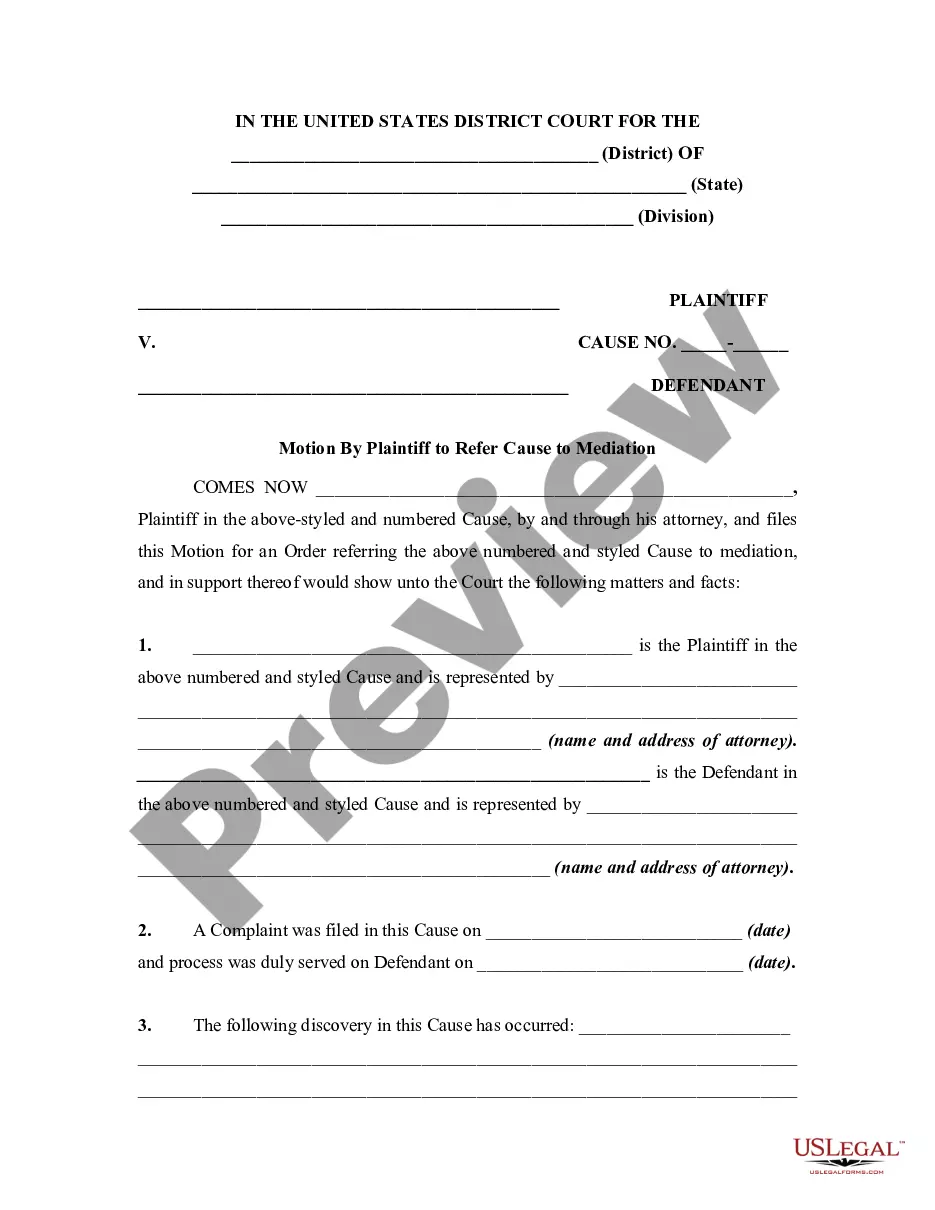
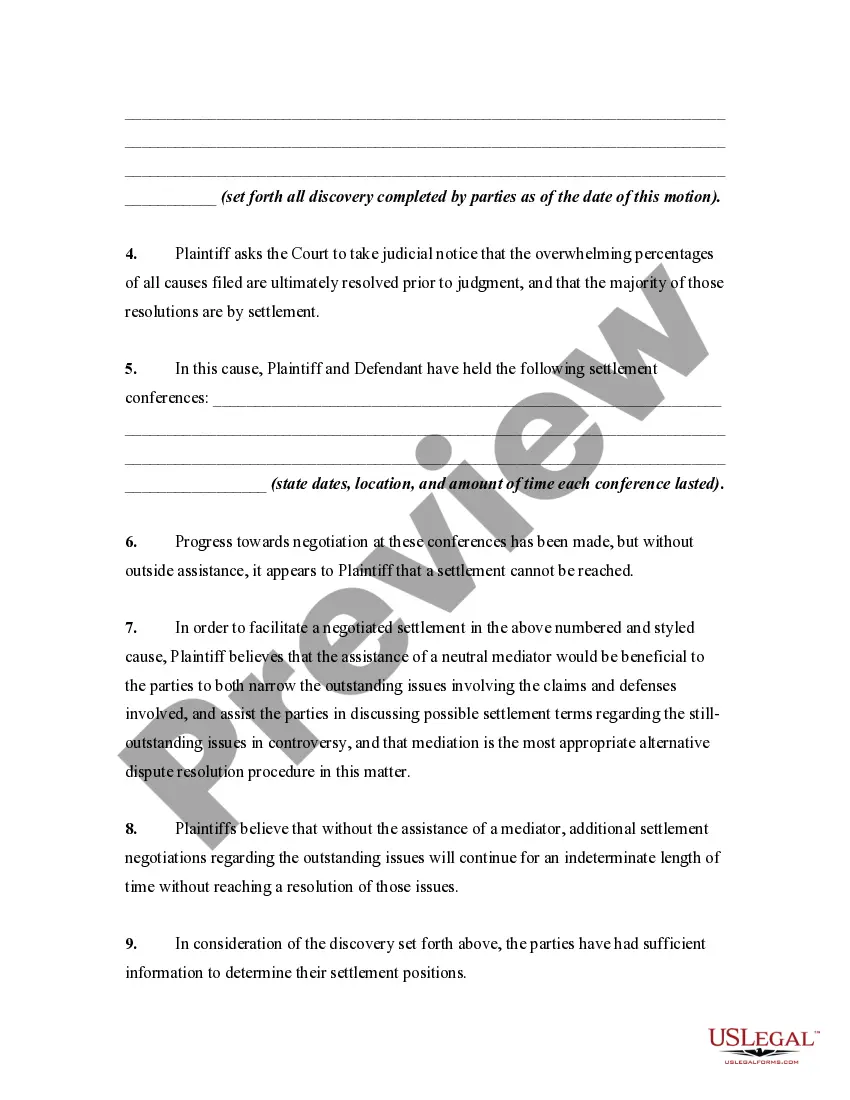
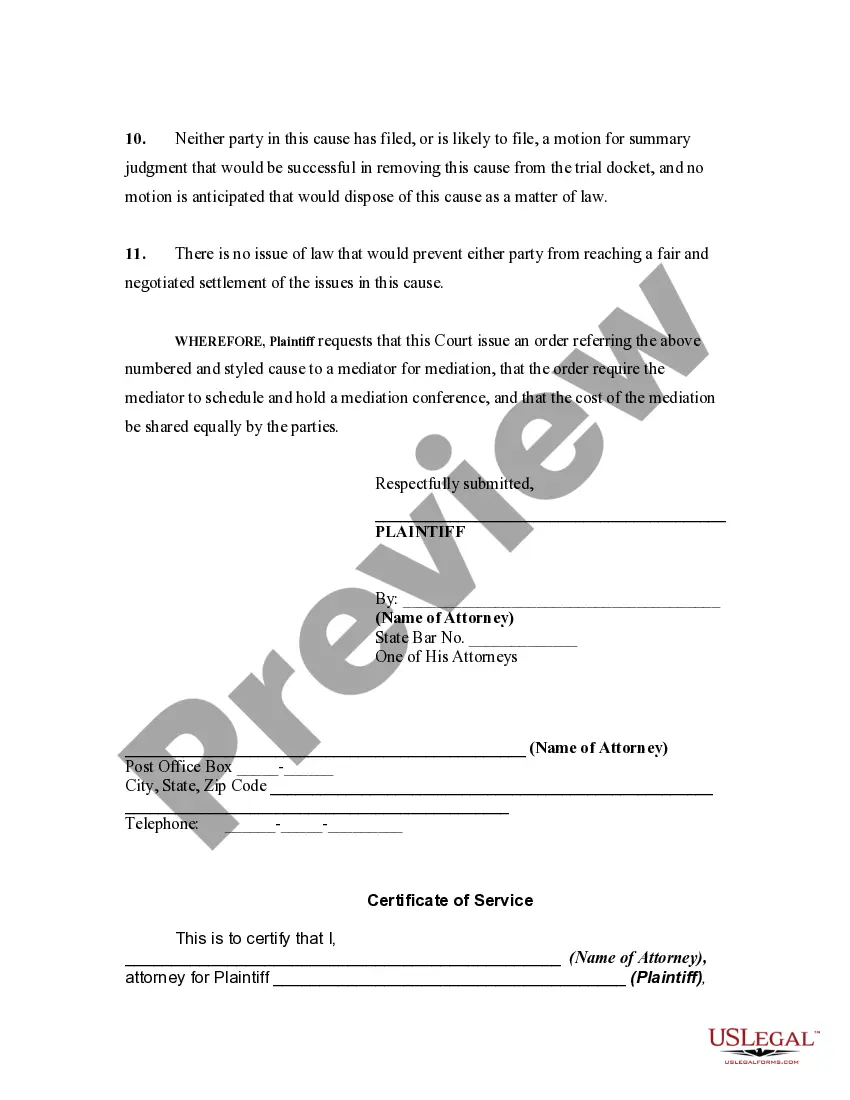
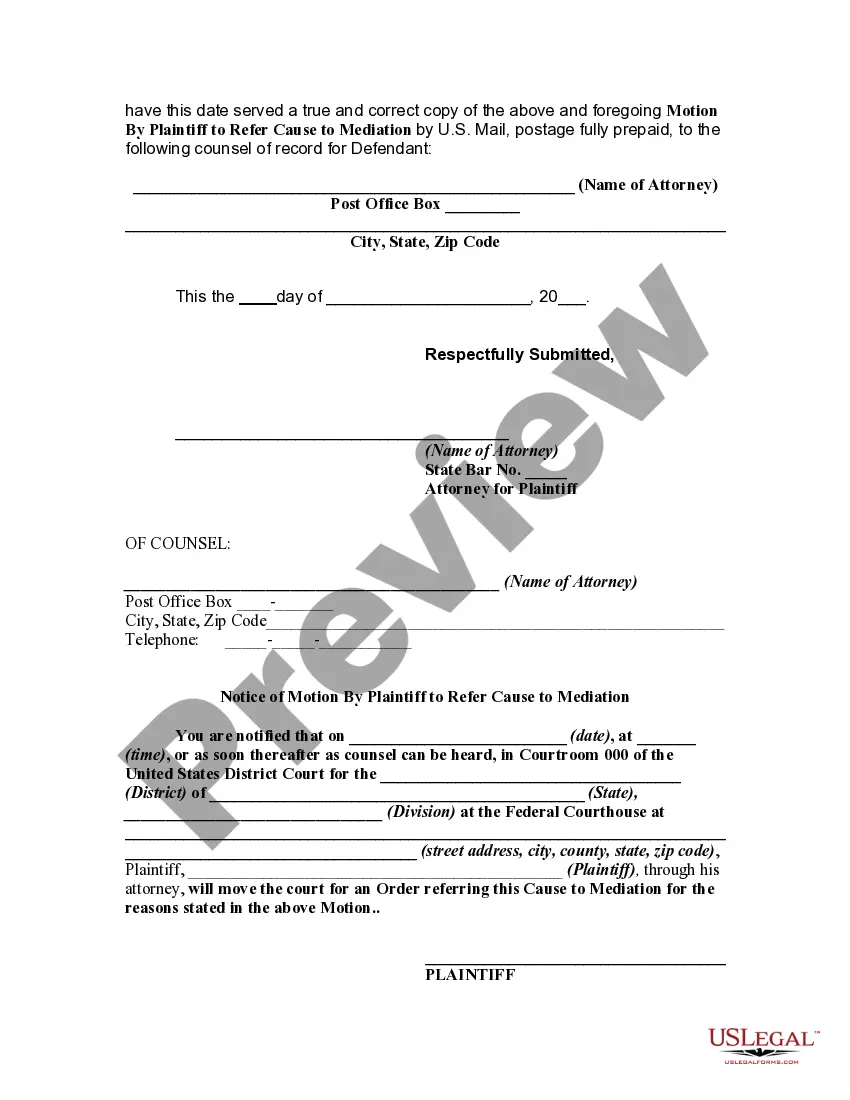

Get your form ready online
Our built-in tools help you complete, sign, share, and store your documents in one place.
Make edits, fill in missing information, and update formatting in US Legal Forms—just like you would in MS Word.
Download a copy, print it, send it by email, or mail it via USPS—whatever works best for your next step.
Sign and collect signatures with our SignNow integration. Send to multiple recipients, set reminders, and more. Go Premium to unlock E-Sign.
If this form requires notarization, complete it online through a secure video call—no need to meet a notary in person or wait for an appointment.
We protect your documents and personal data by following strict security and privacy standards.

Make edits, fill in missing information, and update formatting in US Legal Forms—just like you would in MS Word.

Download a copy, print it, send it by email, or mail it via USPS—whatever works best for your next step.

Sign and collect signatures with our SignNow integration. Send to multiple recipients, set reminders, and more. Go Premium to unlock E-Sign.

If this form requires notarization, complete it online through a secure video call—no need to meet a notary in person or wait for an appointment.

We protect your documents and personal data by following strict security and privacy standards.
Looking for another form?



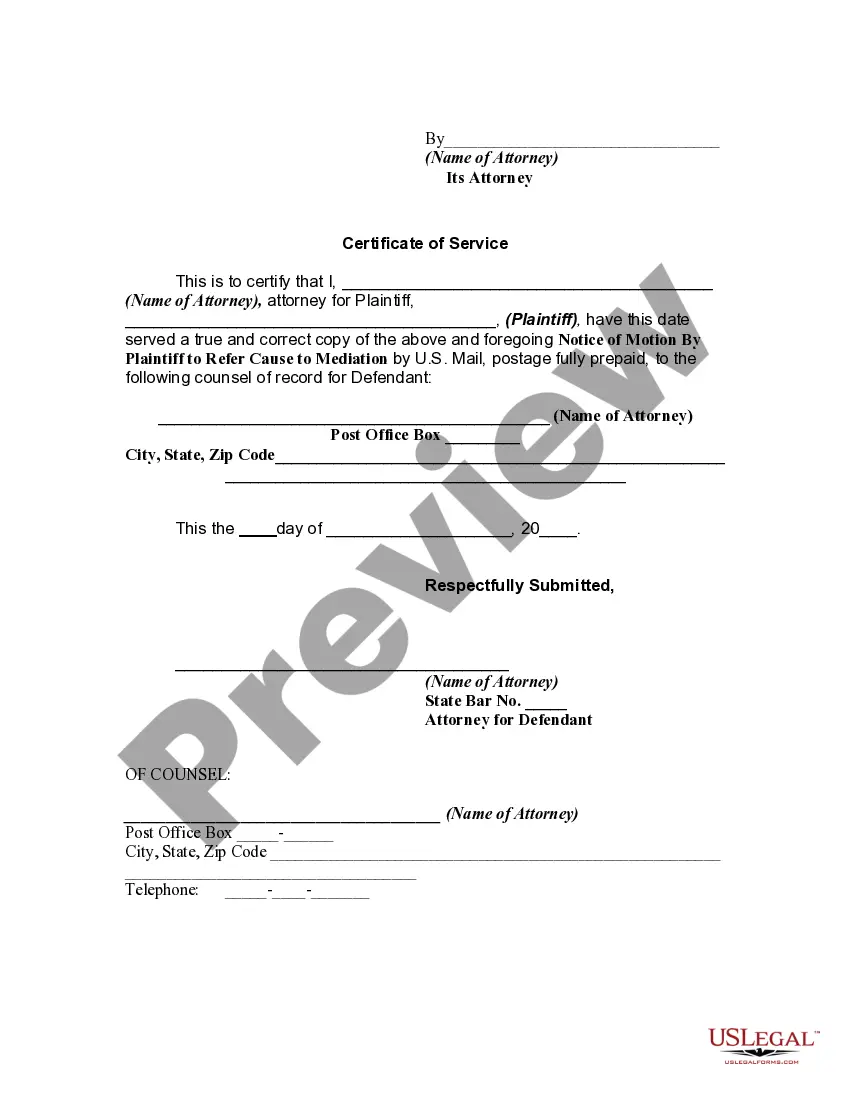
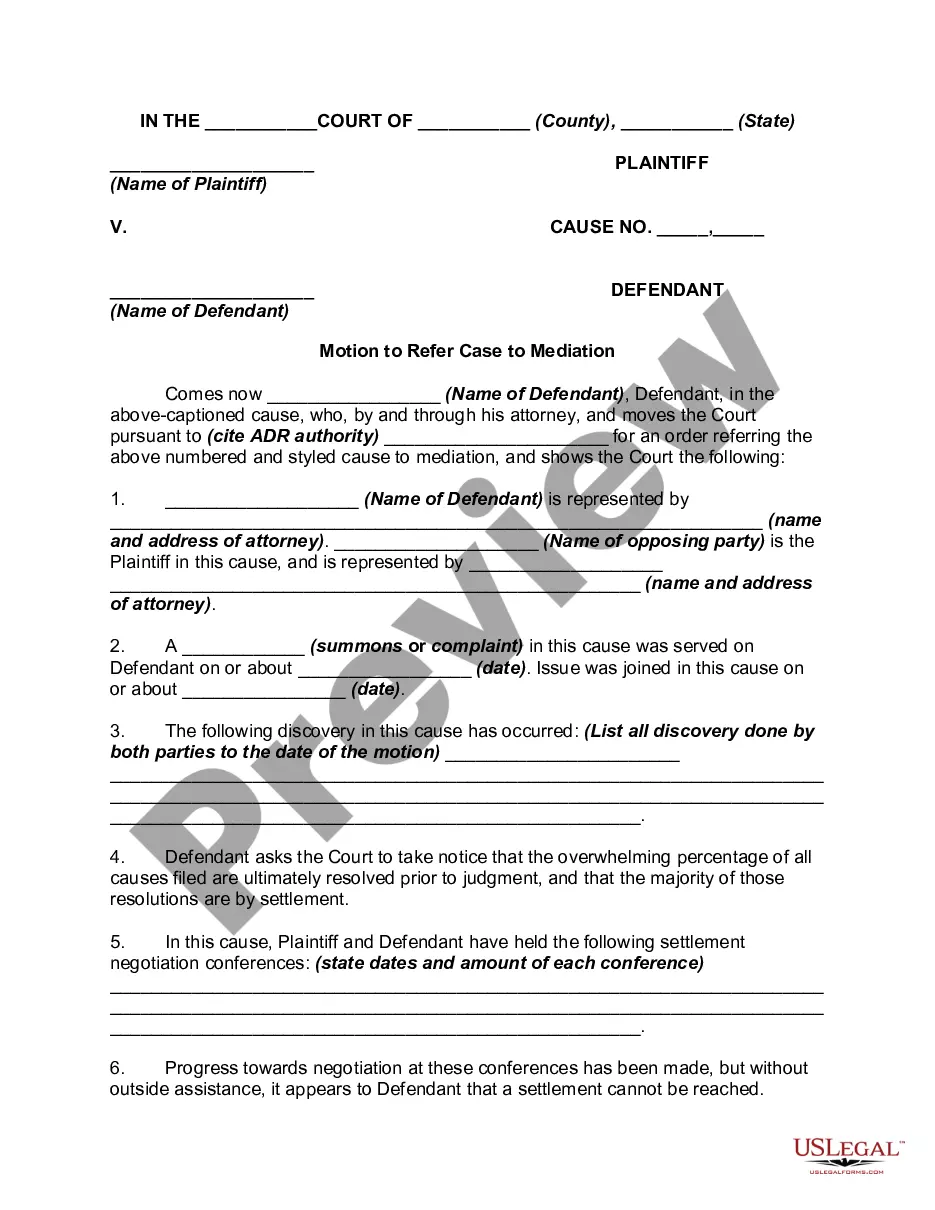
How to fill out Motion By Plaintiff To Refer Cause To Mediation?
Working with legal papers and procedures could be a time-consuming addition to your day. Refer Mediation Form With Decimals and forms like it usually require you to look for them and navigate how to complete them correctly. As a result, if you are taking care of economic, legal, or personal matters, having a comprehensive and practical web library of forms on hand will significantly help.
US Legal Forms is the top web platform of legal templates, featuring more than 85,000 state-specific forms and a variety of resources to assist you to complete your papers effortlessly. Explore the library of pertinent papers accessible to you with just one click.
US Legal Forms gives you state- and county-specific forms available at any time for downloading. Safeguard your papers administration procedures having a high quality support that allows you to make any form within minutes without any additional or hidden fees. Simply log in in your account, identify Refer Mediation Form With Decimals and download it immediately within the My Forms tab. You may also gain access to previously saved forms.
Could it be the first time utilizing US Legal Forms? Sign up and set up a free account in a few minutes and you’ll gain access to the form library and Refer Mediation Form With Decimals. Then, adhere to the steps below to complete your form:
- Ensure you have found the right form using the Review option and looking at the form description.
- Pick Buy Now as soon as ready, and choose the monthly subscription plan that suits you.
- Select Download then complete, eSign, and print the form.
US Legal Forms has twenty five years of expertise supporting users deal with their legal papers. Get the form you require right now and improve any process without breaking a sweat.
Form popularity
FAQ
The mediation proportion, defined as the change in the effect of the exposure due to mediation by the mediator relative to the total effect, is a main parameter of interest when performing mediation analysis.
Finally, the mediation effect (ACME) is the total effect minus the direct effect (b1?b4, or 0.3961 - 0.0396 = 0.3565 ), which equals to a product of a coefficient of X in the second step and a coefficient of M in the last step (b2×b3, or 0.56102 * 0.6355 = 0.3565 ).
A mediator model decomposes the total effect, c , into the indirect effect, ab (product of the indirect paths a and b ) and the direct effect, c ' (with the effect of the mediator removed). The total effect can be describes as c = c' + ab , and hence the indirect effect as ab = c ? c'.
Mediation analysis requires one to report that the IV predicts the mediator and the DV, that the mediator predicts the DV, and that the link between the IV and the DV decreases when the mediator is controlled.
Mediation analysis requires one to report that the IV predicts the mediator and the DV, that the mediator predicts the DV, and that the link between the IV and the DV decreases when the mediator is controlled.