Refer Mediation Form Formal Conflict
Description

Get your form ready online
Our built-in tools help you complete, sign, share, and store your documents in one place.
Make edits, fill in missing information, and update formatting in US Legal Forms—just like you would in MS Word.
Download a copy, print it, send it by email, or mail it via USPS—whatever works best for your next step.
Sign and collect signatures with our SignNow integration. Send to multiple recipients, set reminders, and more. Go Premium to unlock E-Sign.
If this form requires notarization, complete it online through a secure video call—no need to meet a notary in person or wait for an appointment.
We protect your documents and personal data by following strict security and privacy standards.

Make edits, fill in missing information, and update formatting in US Legal Forms—just like you would in MS Word.

Download a copy, print it, send it by email, or mail it via USPS—whatever works best for your next step.

Sign and collect signatures with our SignNow integration. Send to multiple recipients, set reminders, and more. Go Premium to unlock E-Sign.

If this form requires notarization, complete it online through a secure video call—no need to meet a notary in person or wait for an appointment.

We protect your documents and personal data by following strict security and privacy standards.
Looking for another form?
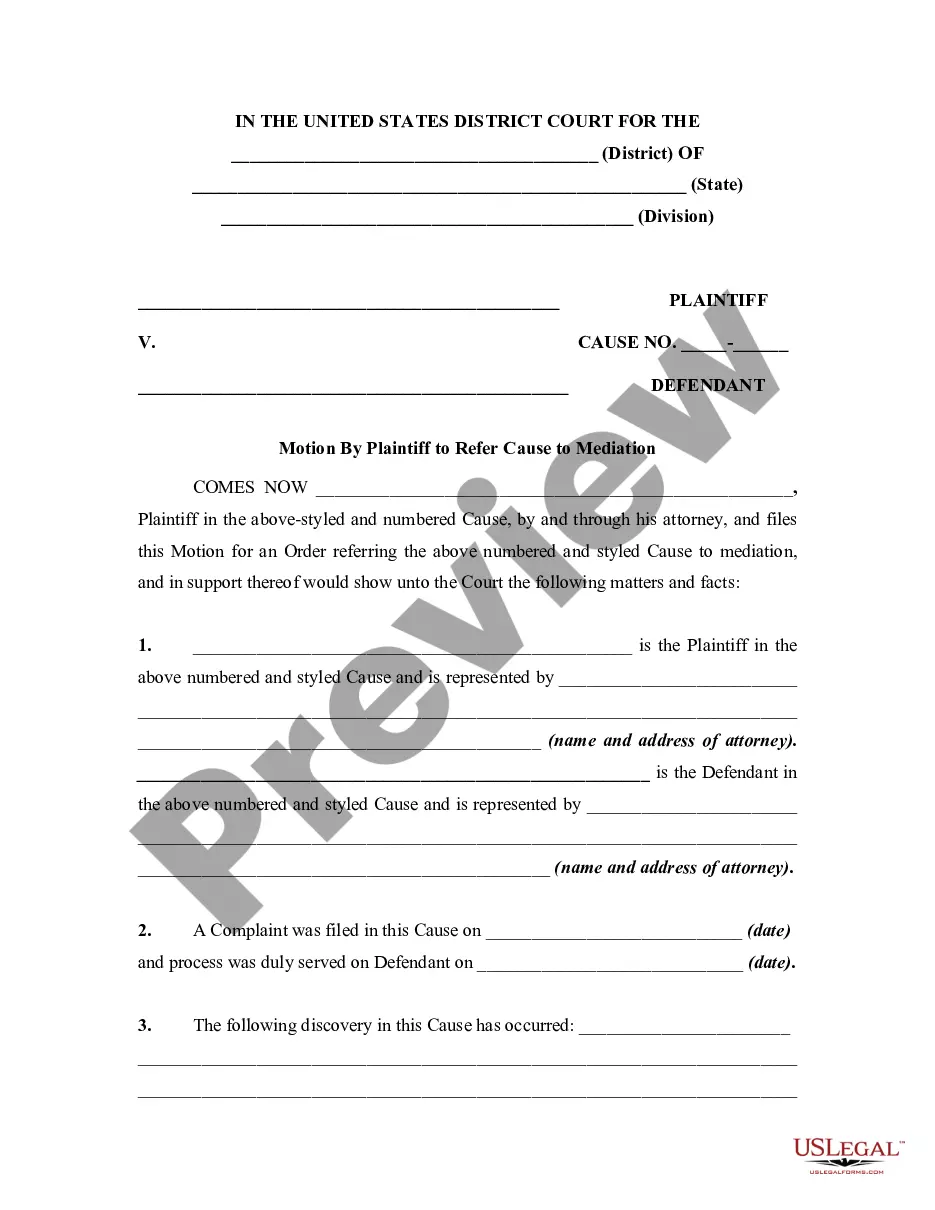
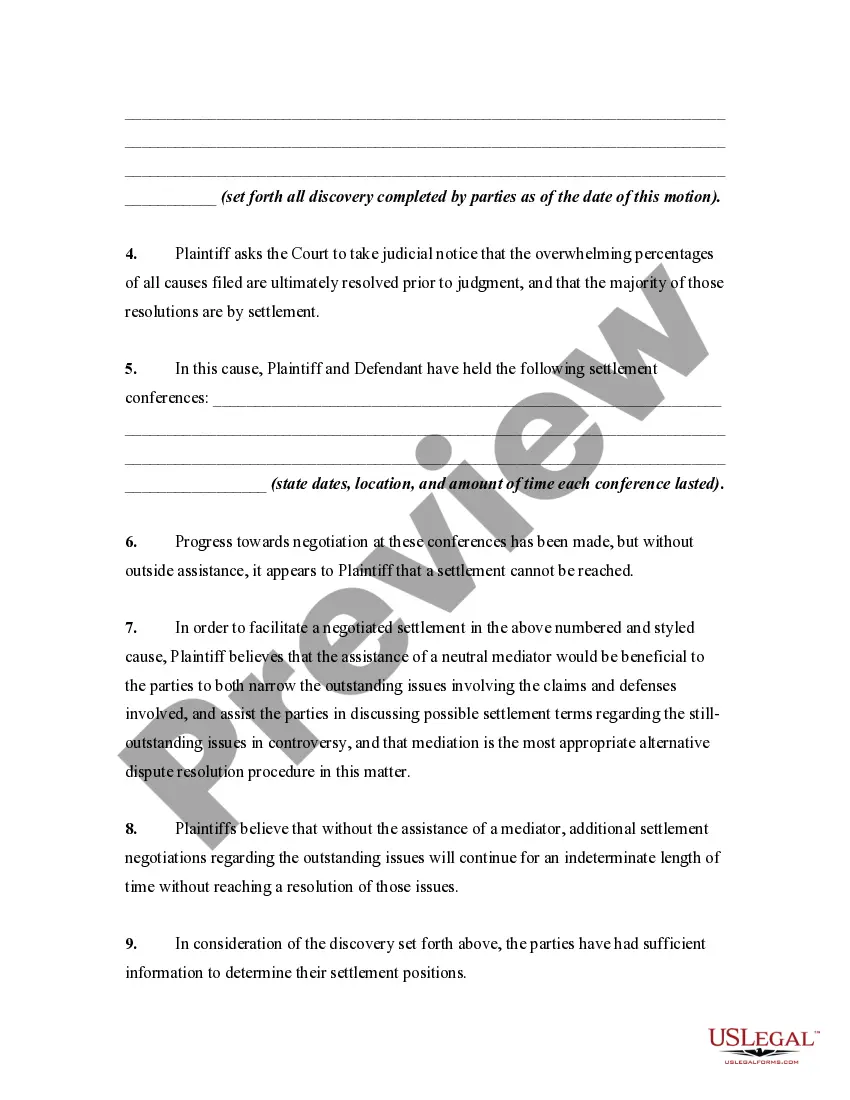
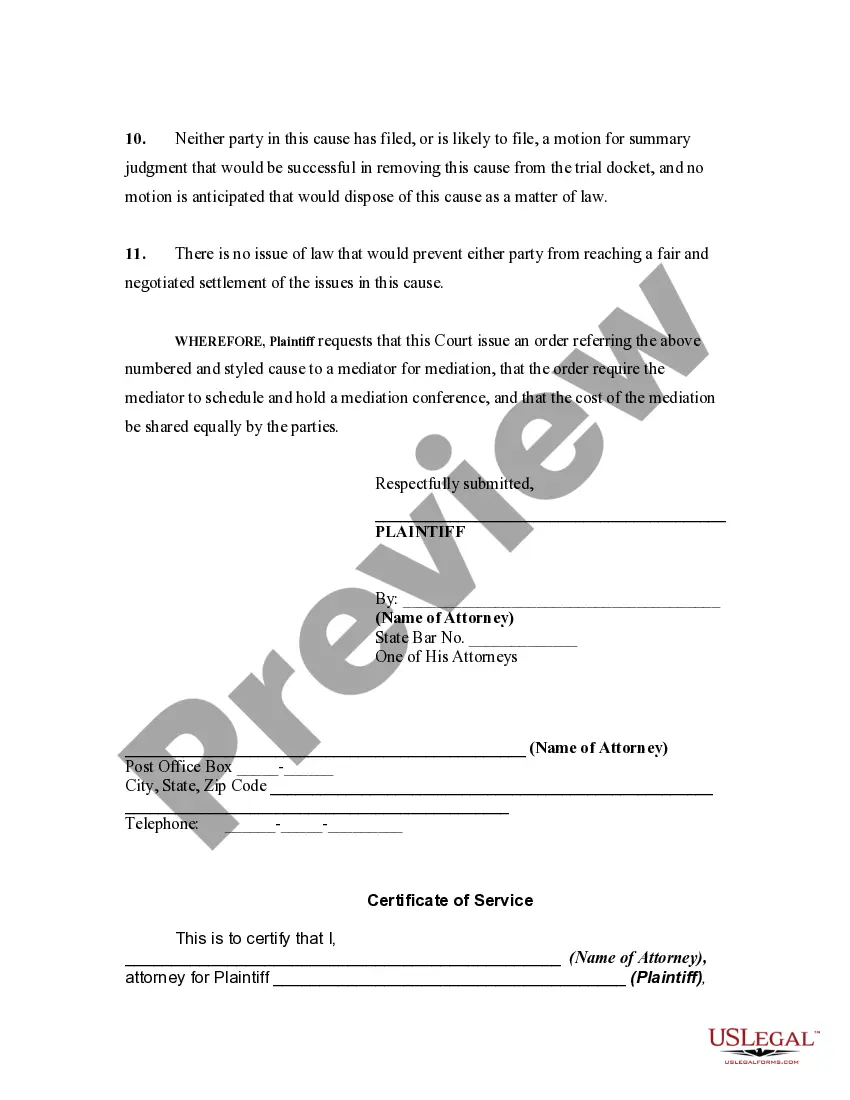
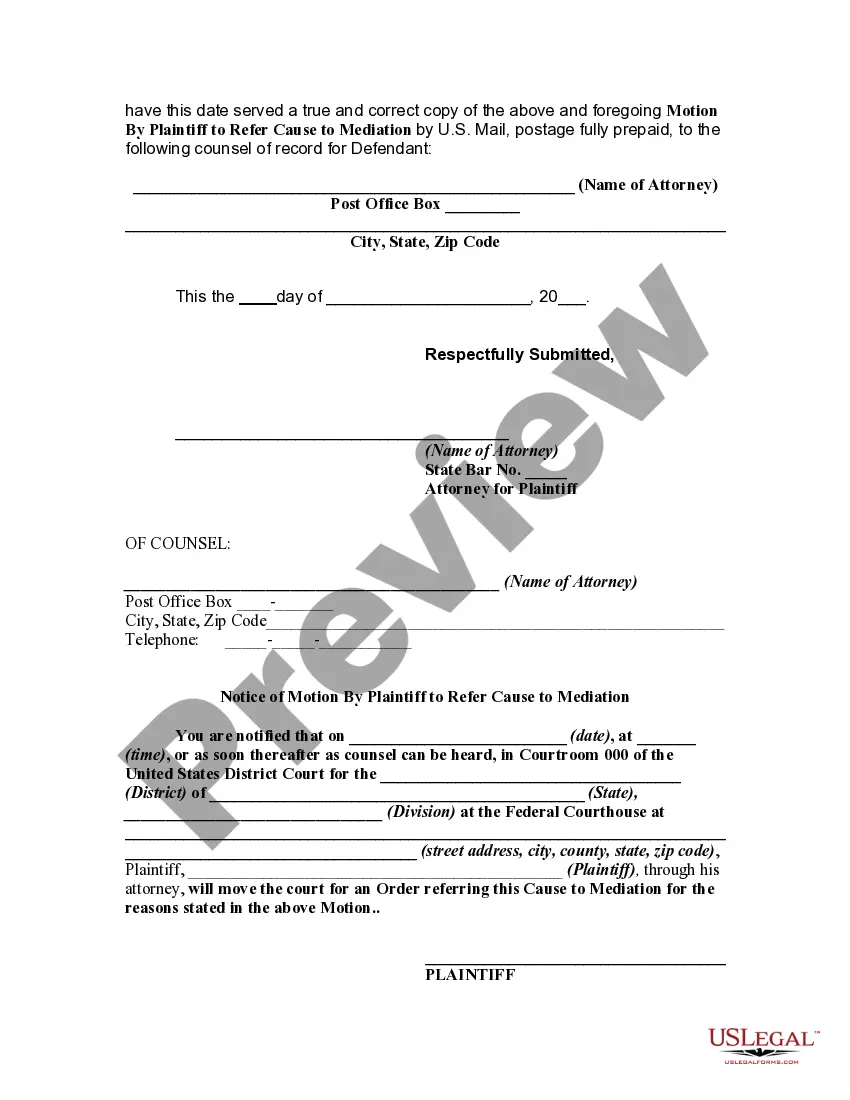
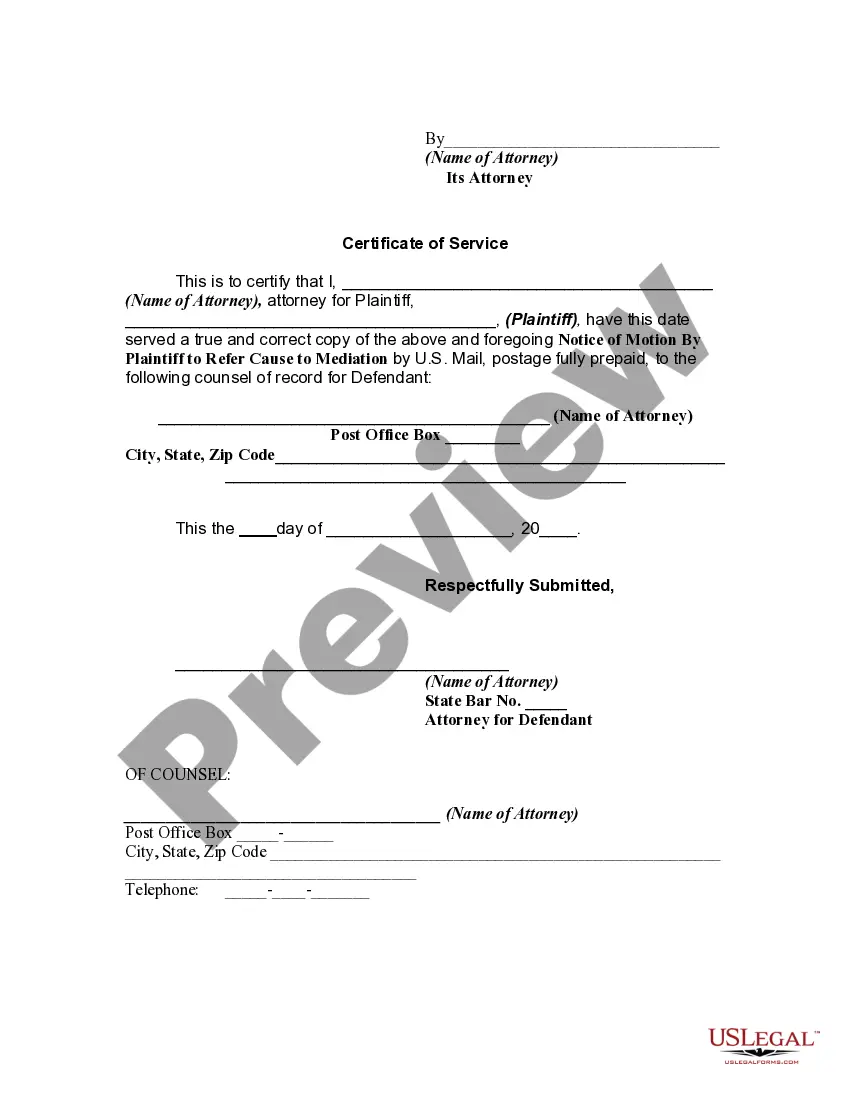
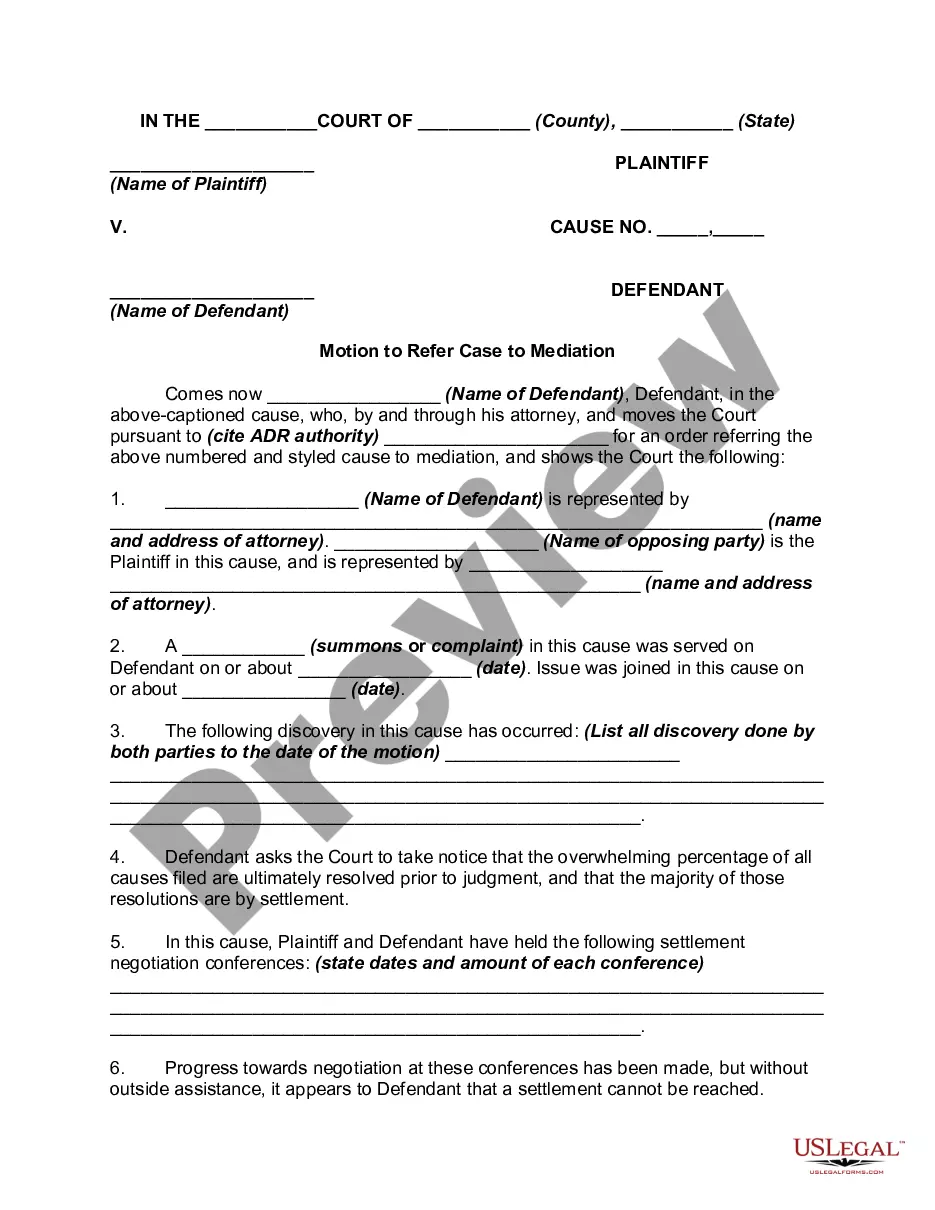
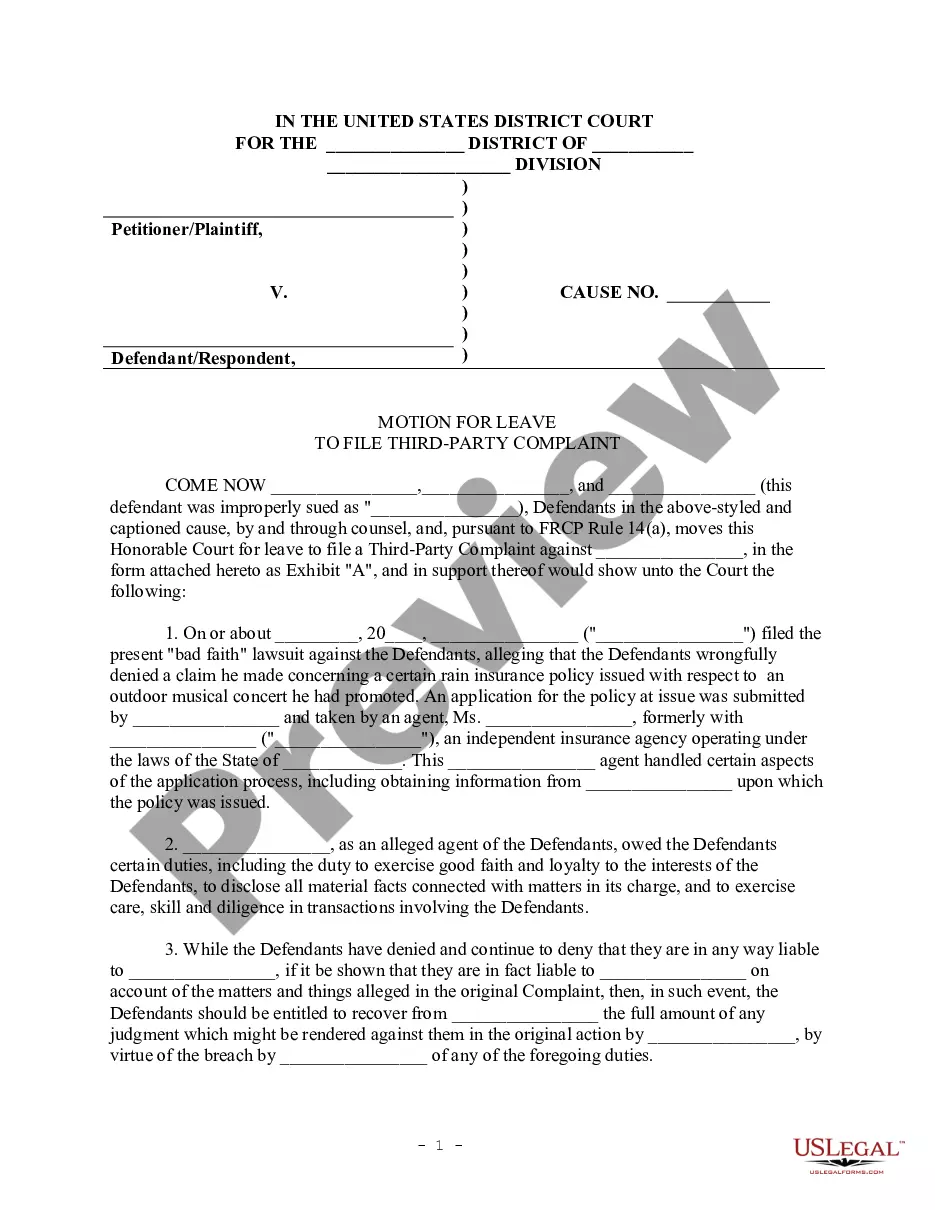
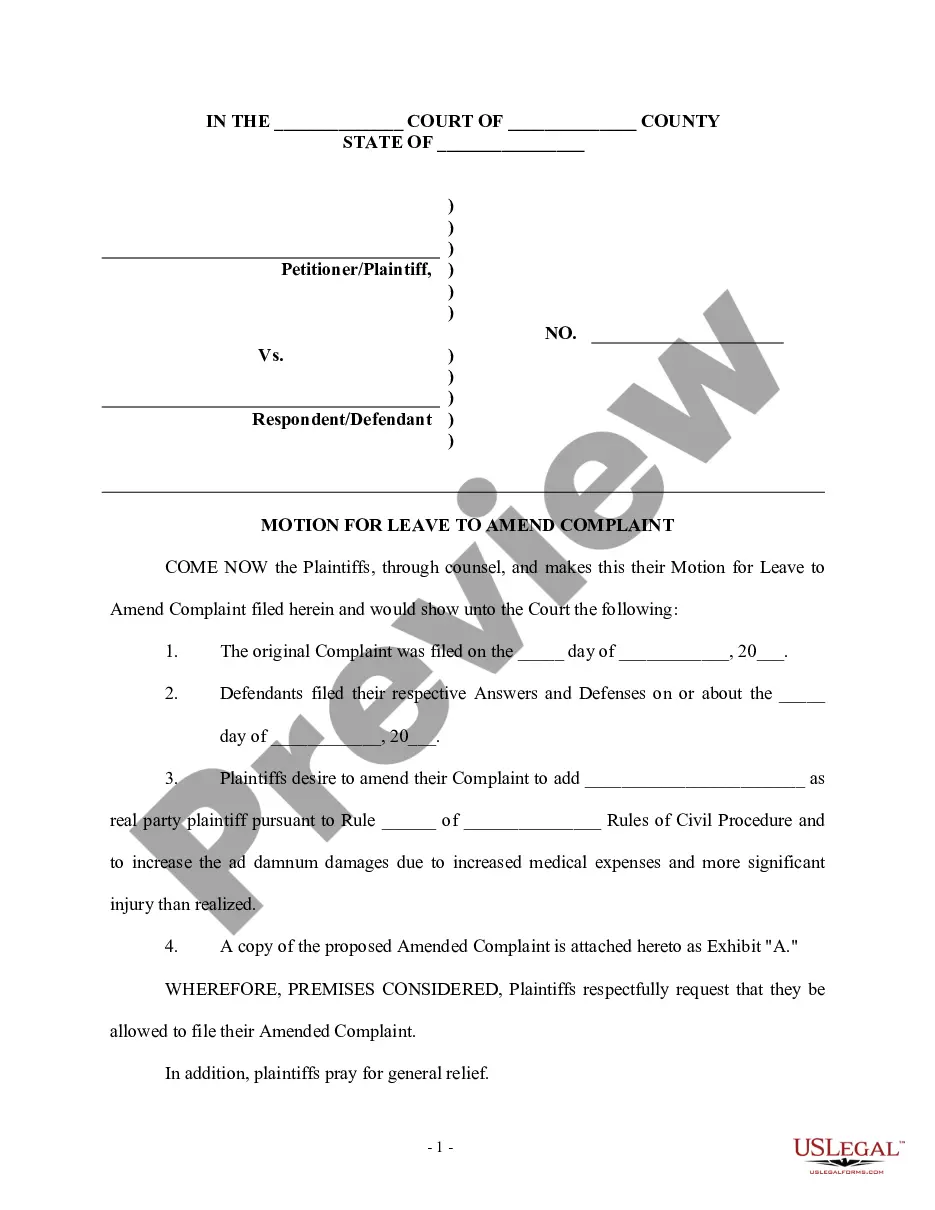
How to fill out Motion By Plaintiff To Refer Cause To Mediation?
Whether for business purposes or for individual affairs, everyone has to manage legal situations at some point in their life. Filling out legal paperwork needs careful attention, beginning from selecting the proper form template. For instance, if you select a wrong version of the Refer Mediation Form Formal Conflict, it will be declined when you submit it. It is therefore crucial to have a dependable source of legal documents like US Legal Forms.
If you have to obtain a Refer Mediation Form Formal Conflict template, follow these easy steps:
- Get the sample you need by utilizing the search field or catalog navigation.
- Look through the form’s information to ensure it suits your situation, state, and region.
- Click on the form’s preview to see it.
- If it is the wrong form, go back to the search function to find the Refer Mediation Form Formal Conflict sample you need.
- Get the file if it meets your requirements.
- If you already have a US Legal Forms profile, just click Log in to access previously saved files in My Forms.
- In the event you don’t have an account yet, you may download the form by clicking Buy now.
- Select the appropriate pricing option.
- Finish the profile registration form.
- Select your transaction method: you can use a credit card or PayPal account.
- Select the document format you want and download the Refer Mediation Form Formal Conflict.
- Once it is saved, you can complete the form with the help of editing software or print it and finish it manually.
With a substantial US Legal Forms catalog at hand, you do not need to spend time seeking for the appropriate sample across the internet. Make use of the library’s simple navigation to get the right form for any situation.
Form popularity
FAQ
Cases Suitable for Mediation? All civil cases, except those where there are serious allegations of fraud. eg., Rent cases, partition, matrimonial, labour, specific performance, money, damages, injunction, declaration, land-lord and tenant, intellectual property etc.
Generally, mediation is best used when a disagreement first arises, as the longer a dispute goes on, the greater the chances that people's relationships will break down, or that they raise formal grievances. However, the process can help you to rebuild relationships after formal dispute procedures, too.
These principles are useful suggestions and pointers that will help you prepare for a productive, constructive collaborative problem solving experience. Listen Actively. ... Think Before Reacting. ... Attack the Problem - NOT each other! ... Accept Responsibility. ... Use Direct Communication. ... Look for Common Interests. ... Focus on the Future.
I'm (Mediator's Name) and this is (Mediator's Name). We will be serving as your Mediators. You may call us by our first names; how would you like us to address you? The purpose of our meeting is to help you work out an understanding acceptable to both of you to resolve the situation that has been developing for you.
Provide a concise summary of the facts and claims. The mediator will not have the patience or need to read an appellate brief. Avoid prose but use headings and bullet points to organize the section, and to summarize the claims, defenses and background about the parties.