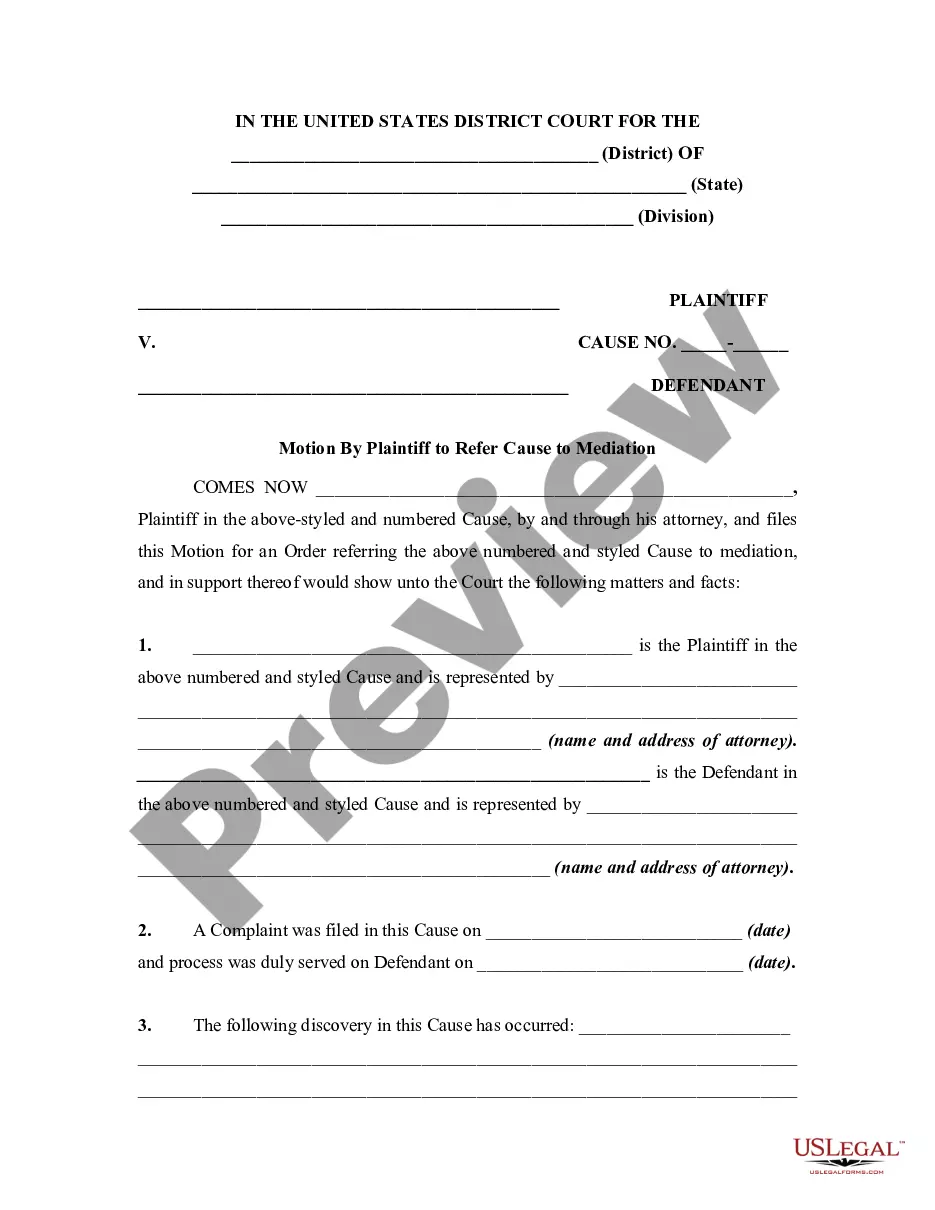
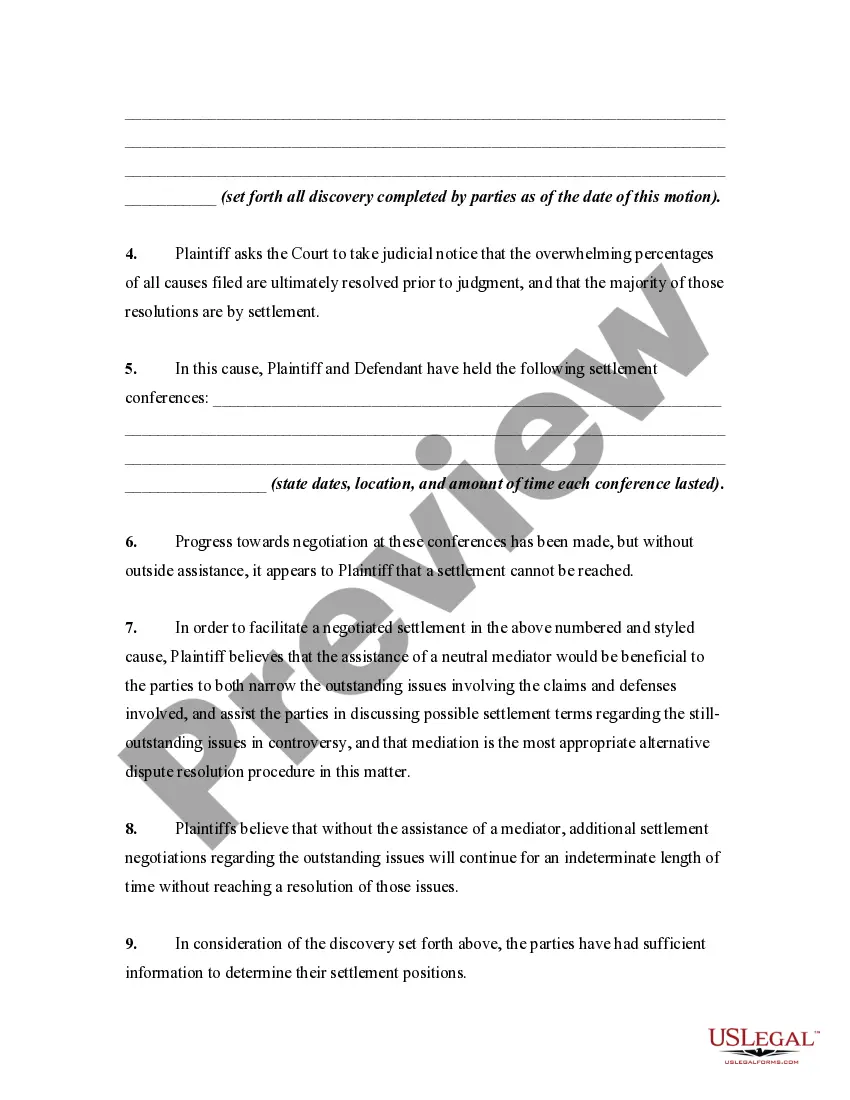
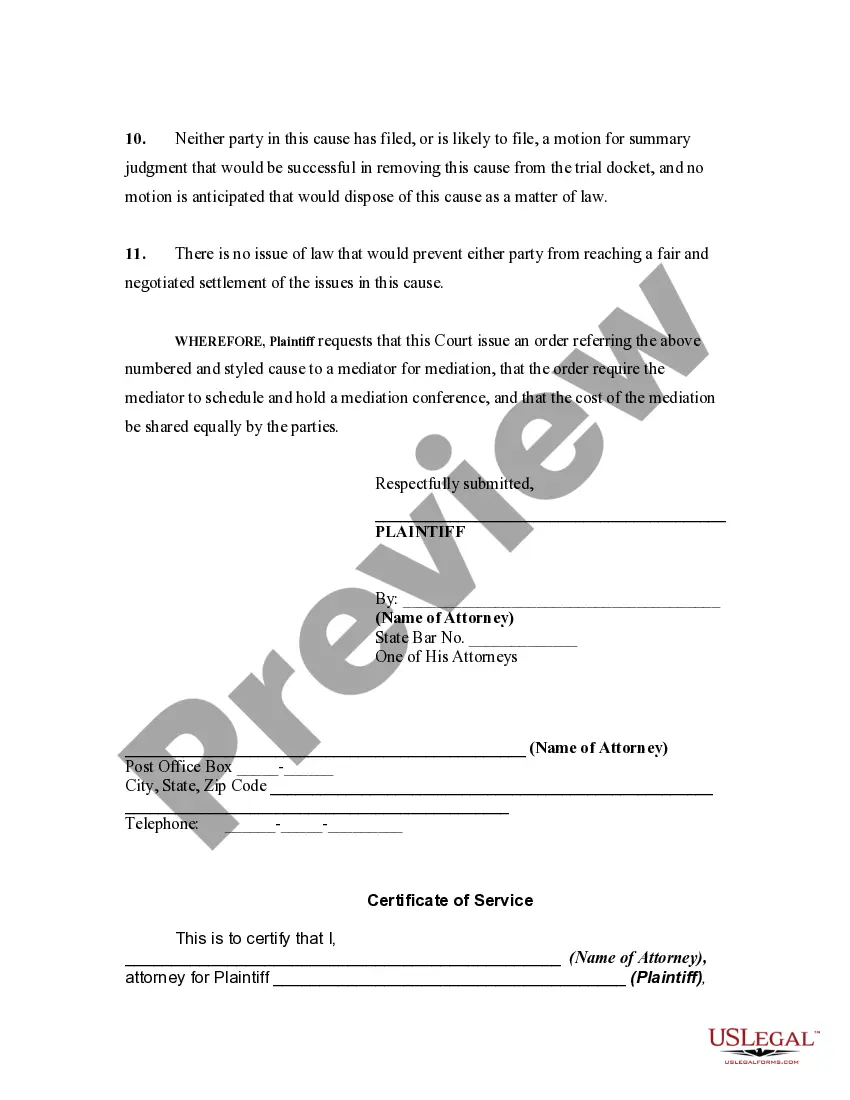
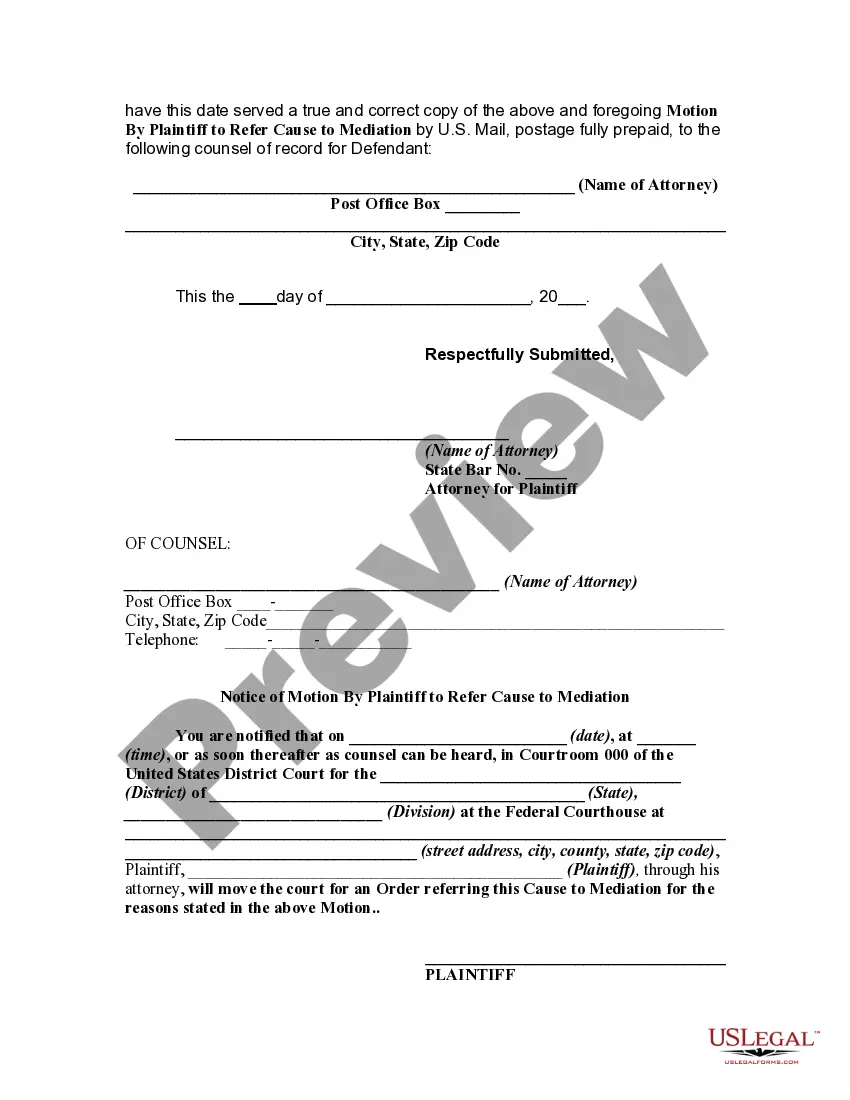
Motion To Compel For Mediation
Description

Get your form ready online
Our built-in tools help you complete, sign, share, and store your documents in one place.
Make edits, fill in missing information, and update formatting in US Legal Forms—just like you would in MS Word.
Download a copy, print it, send it by email, or mail it via USPS—whatever works best for your next step.
Sign and collect signatures with our SignNow integration. Send to multiple recipients, set reminders, and more. Go Premium to unlock E-Sign.
If this form requires notarization, complete it online through a secure video call—no need to meet a notary in person or wait for an appointment.
We protect your documents and personal data by following strict security and privacy standards.

Make edits, fill in missing information, and update formatting in US Legal Forms—just like you would in MS Word.

Download a copy, print it, send it by email, or mail it via USPS—whatever works best for your next step.

Sign and collect signatures with our SignNow integration. Send to multiple recipients, set reminders, and more. Go Premium to unlock E-Sign.

If this form requires notarization, complete it online through a secure video call—no need to meet a notary in person or wait for an appointment.

We protect your documents and personal data by following strict security and privacy standards.
Looking for another form?


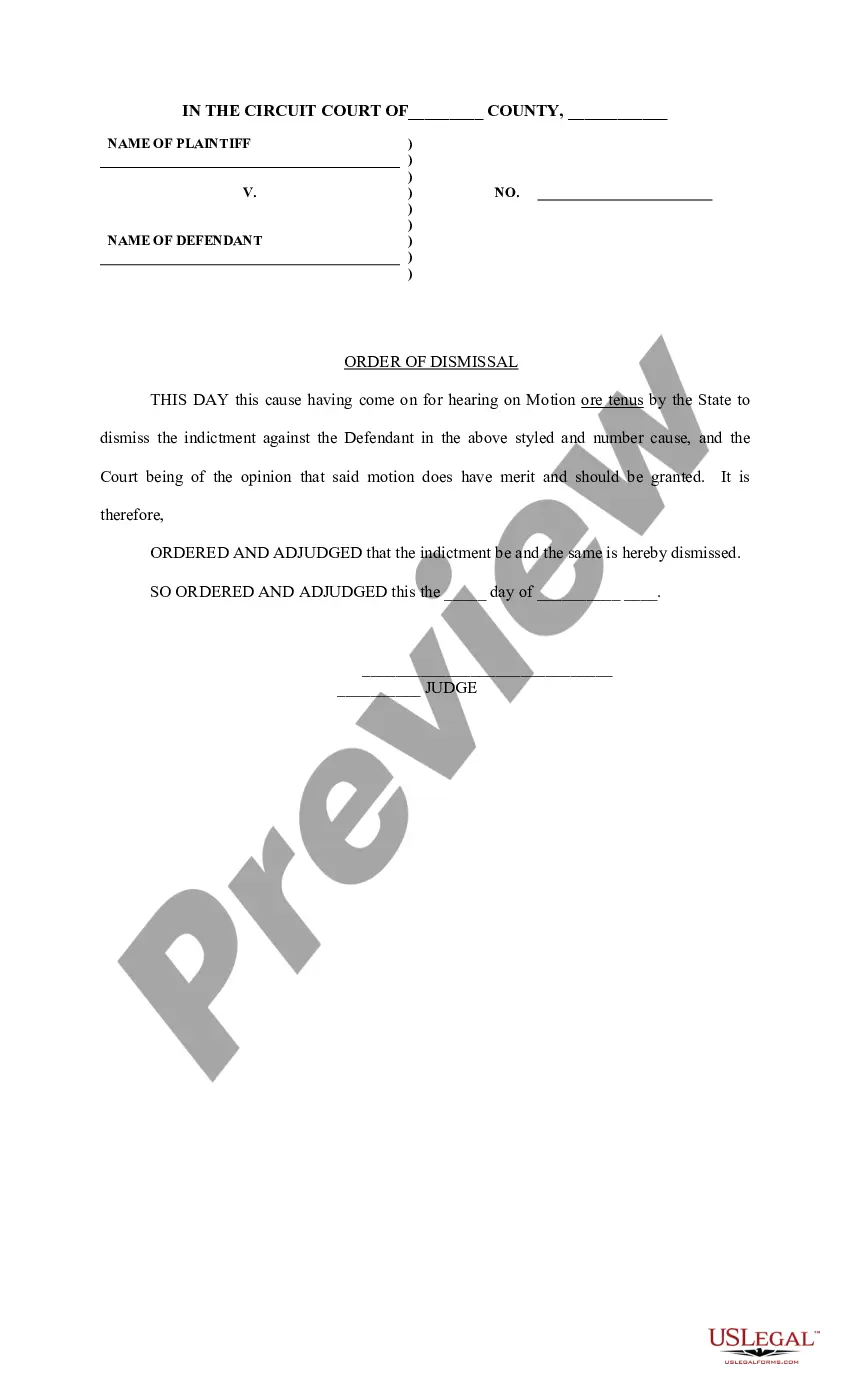
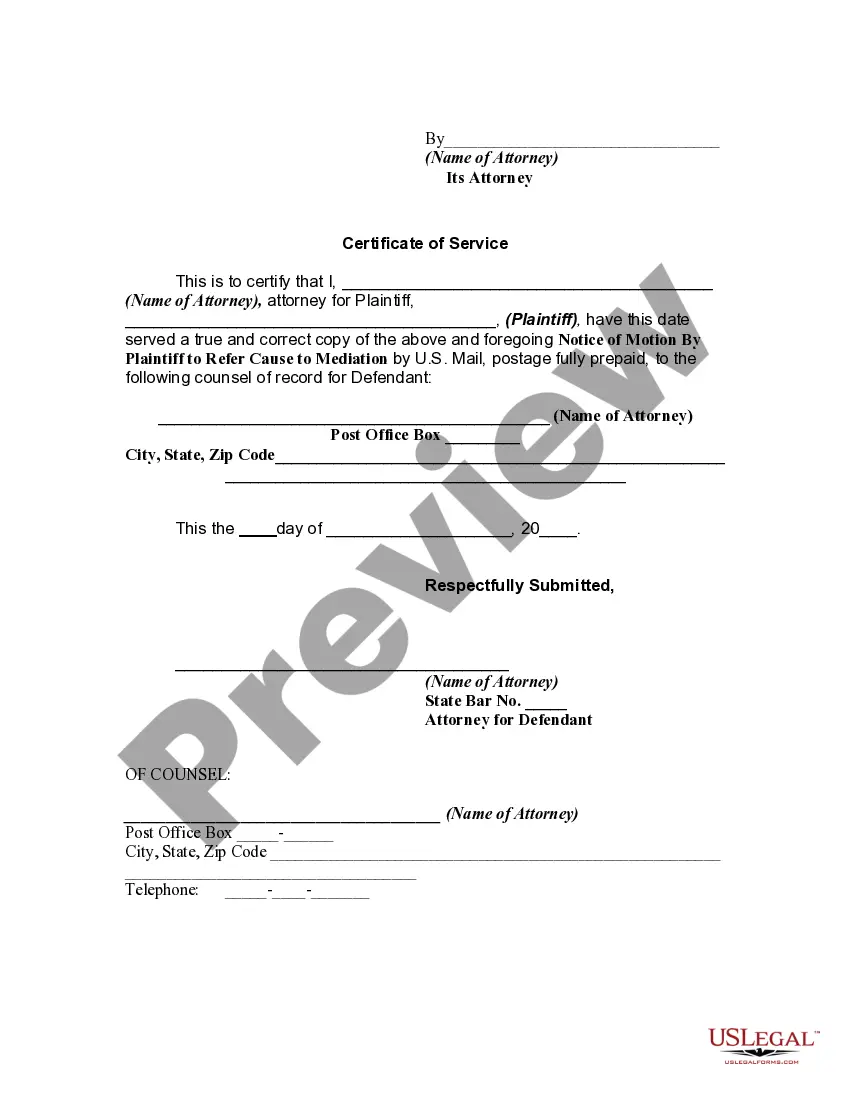
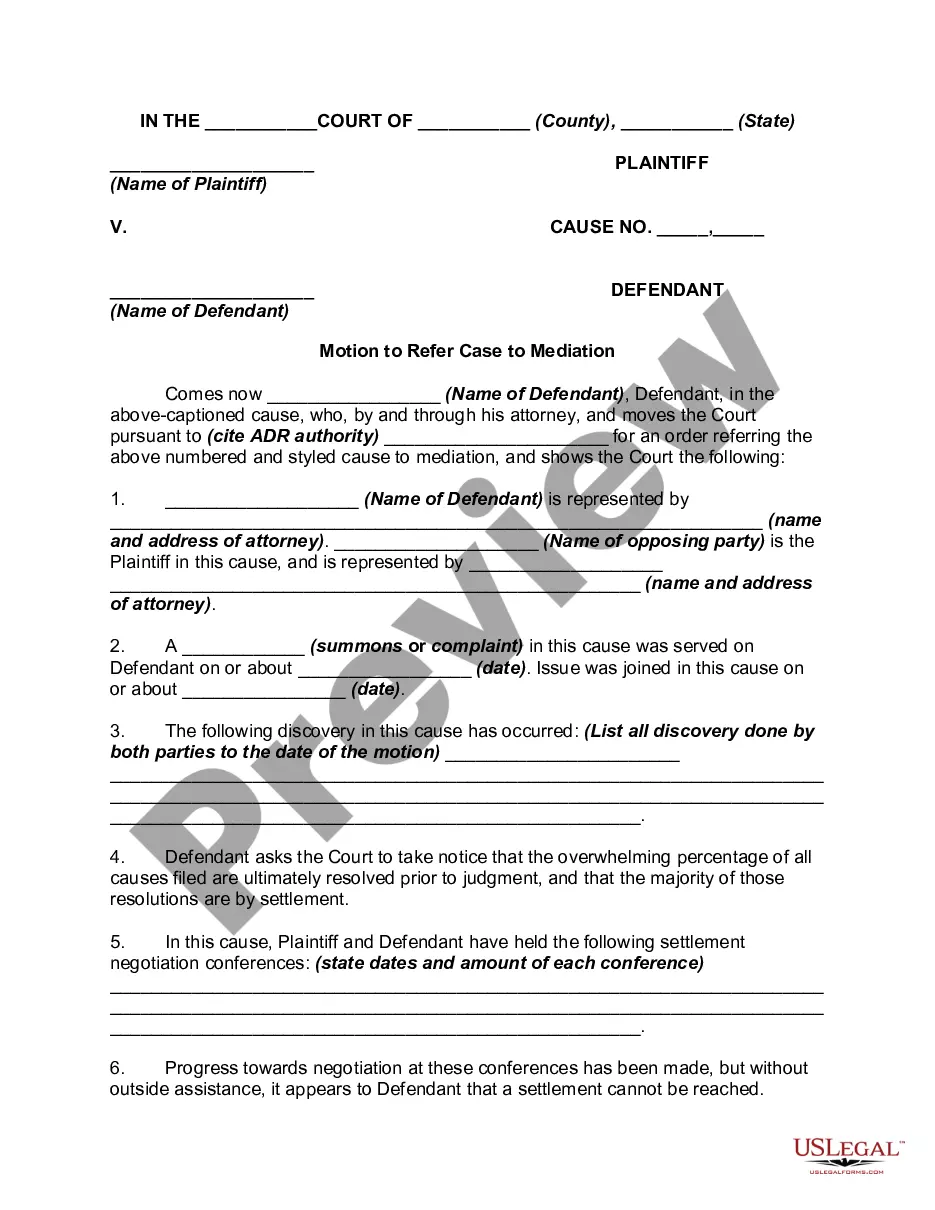
How to fill out Motion By Plaintiff To Refer Cause To Mediation?
Handling legal documents can be daunting, even for seasoned professionals.
When you are looking for a Motion To Compel For Mediation and do not have the opportunity to spend time searching for the correct and updated version, the process can be stressful.
Access a valuable repository of articles, guides, and resources related to your situation and needs.
Save time and effort searching for the necessary documents, and utilize US Legal Forms’ advanced search and Review tool to locate Motion To Compel For Mediation and obtain it.
Leverage the US Legal Forms online catalog, backed by 25 years of experience and trustworthiness. Transform your everyday document management into a simple and user-friendly process today.
- If you have a monthly subscription, Log In to your US Legal Forms account, search for the form, and procure it.
- Check the My documents tab to view the documents you’ve previously saved and organize your folders as needed.
- If it’s your first visit to US Legal Forms, create an account to gain unlimited access to all platform benefits.
- Here are the steps to take after accessing the form you need.
- Verify it is the correct form by previewing it and reviewing its description.
- Obtain state- or county-specific legal and business documents.
- US Legal Forms addresses any requirements you may have, from personal to corporate papers, in one convenient location.
- Employ cutting-edge tools to complete and manage your Motion To Compel For Mediation.
Form popularity
FAQ
Compelling mediation refers to the legal process of requiring parties involved in a dispute to participate in mediation, often through a court order. By filing a motion to compel for mediation, you seek to enforce the requirement for both parties to engage in this constructive discussion. This process aims to foster communication and help reach a resolution outside of the courtroom. Understanding this concept can be vital for effectively navigating your legal challenges.
Mediation is typically regarded as a positive approach to resolving disputes. It encourages collaboration, increases communication, and often leads to mutually satisfactory outcomes. Many people find mediation less adversarial compared to traditional litigation, which can be costly and stressful. By considering a motion to compel for mediation, you can create a pathway to resolve your issues constructively.
A motion to compel is a serious legal tool that you can use to encourage parties to engage in mediation. When you file this motion, you're essentially asking the court to intervene and mandate mediation participation under specific circumstances. This action demonstrates your commitment to resolving the conflict and can pressure the opposing party to engage seriously. It's crucial to approach this process with careful consideration and a clear understanding of its implications.
If you're involved in a legal dispute with your ex, you may have the option to file a motion to compel for mediation. This motion can prompt a court to require participation in mediation to resolve issues, such as child custody or financial disputes. However, whether you can force your ex to attend will depend on your specific circumstances and local laws. It’s wise to consult a legal expert for advice tailored to your situation.
Many sources indicate that a significant percentage of cases settle at mediation. In fact, studies show that around 60% to 80% of disputes reach resolution during this process. This high success rate is due to the collaborative environment mediation fosters, encouraging parties to find common ground. Thus, utilizing a motion to compel for mediation can significantly enhance your chances of achieving a favorable outcome.
To file a motion to compel for mediation, start by drafting the motion, clearly stating the reasons for your request. Include all relevant information, including the parties involved and the specific relief you seek. Once completed, file the motion with the court where your case is pending, and ensure you serve copies to all involved parties. Utilizing platforms like USLegalForms can streamline this process by providing templates and detailed guidance tailored for filing motions.
Someone might file a motion to compel when they believe that the other party is not engaging in the mediation process as required or agreed upon. This step can help ensure that all parties participate in mediation, allowing for a fair chance at resolution. Filing such a motion emphasizes the importance of communication and compromise, which can lead to satisfactory outcomes. Using our platform for assistance can simplify this process and provide valuable resources.
Formatting a motion to compel requires adherence to specific court rules, which can vary by jurisdiction. Generally, your document should include a title, an introduction stating the purpose, a body outlining your arguments, and a conclusion. Use clear headings and subheadings to organize your content, and make sure to include page numbers and proper margins. Attention to detail in formatting can help present your motion to compel for mediation in the best light.
To increase your chances of winning a motion to compel, present a strong case backed by clear evidence and sound arguments. Demonstrating the necessity of mediation and showing that prior efforts to resolve the matter failed can significantly strengthen your position. Additionally, being concise and adhering to court rules will help maintain clarity and professionalism. Utilizing resources from platforms like uslegalforms can greatly assist in crafting a persuasive motion.
Writing a motion to compel involves creating a structured document that clearly states your request to the court. Start with a title that indicates the purpose, such as 'Motion to Compel for Mediation'. Next, introduce the reasons for your motion, reference any relevant laws, and provide supporting evidence. Ensure to conclude with a clear request for the court to grant your motion, making it easy for the judge to understand your needs.