Mediation Effect Example
Description
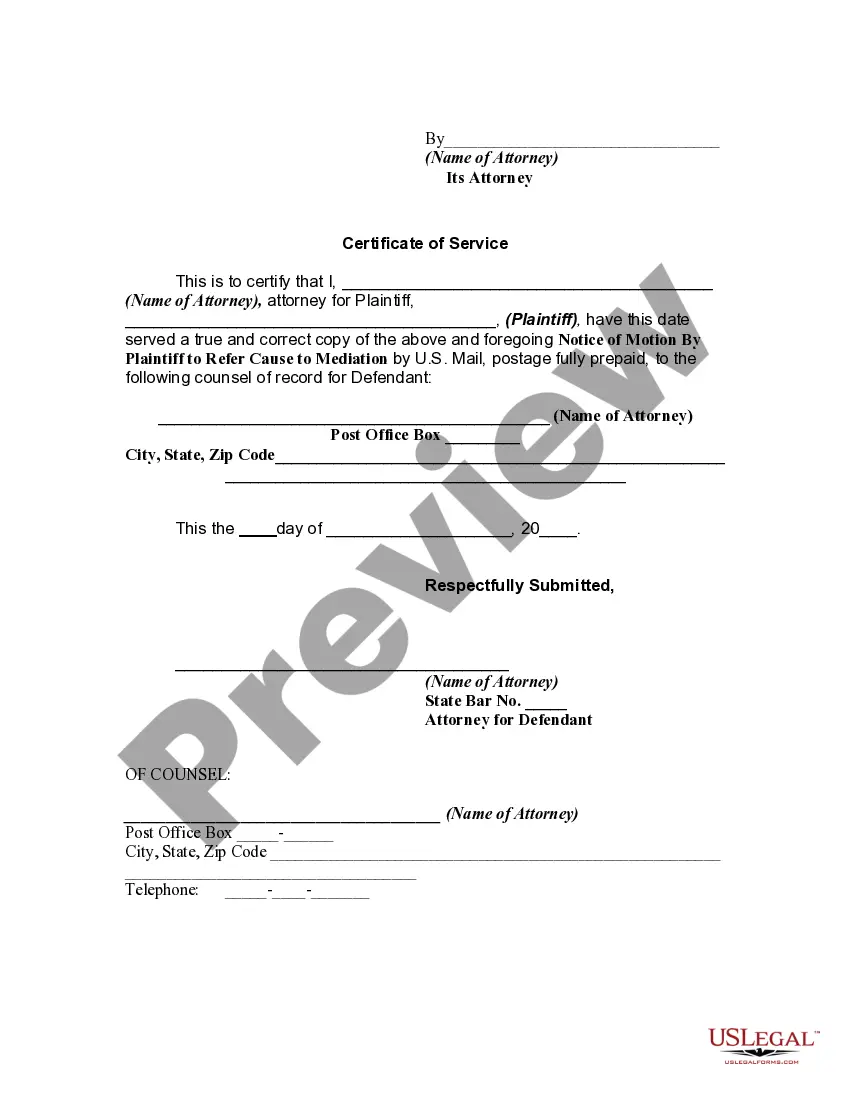
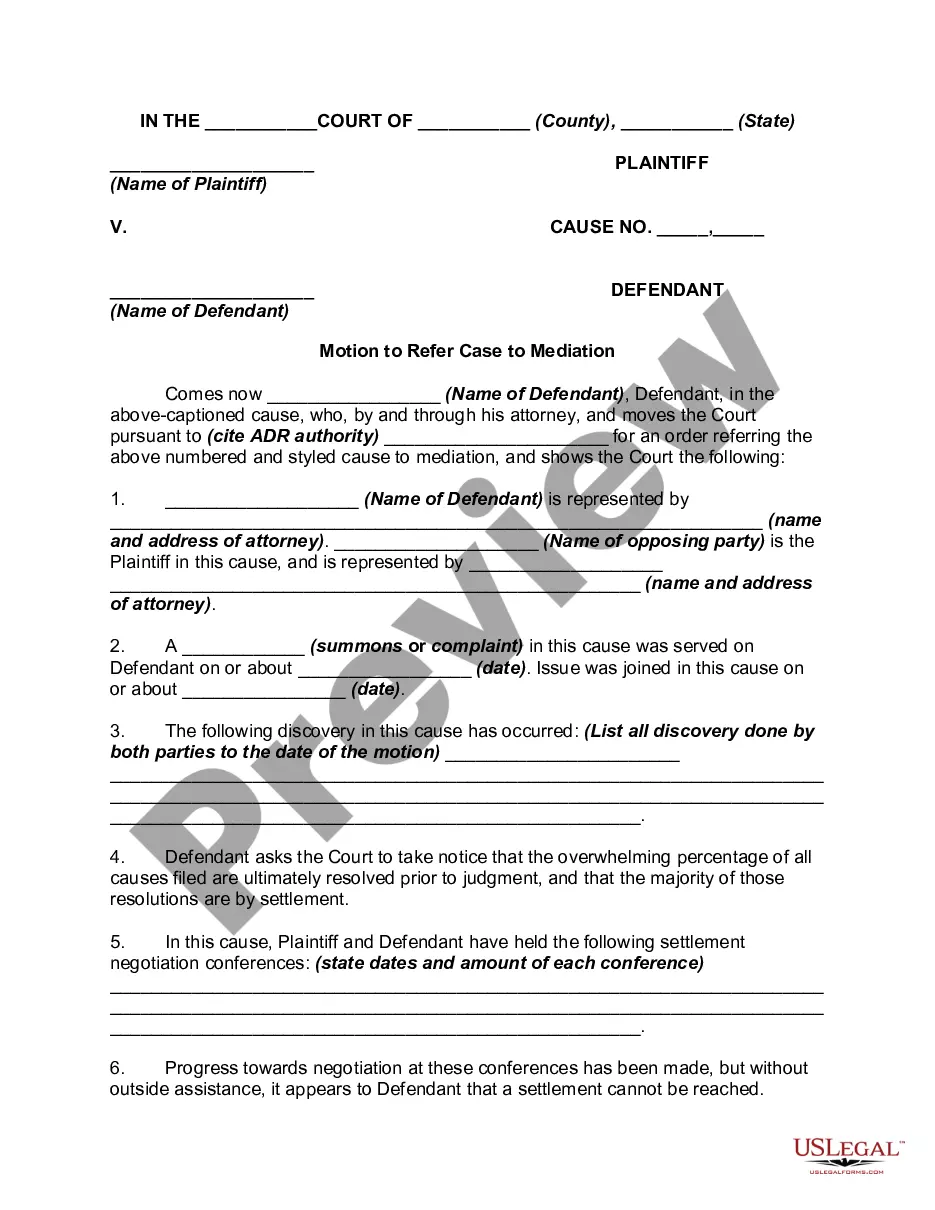

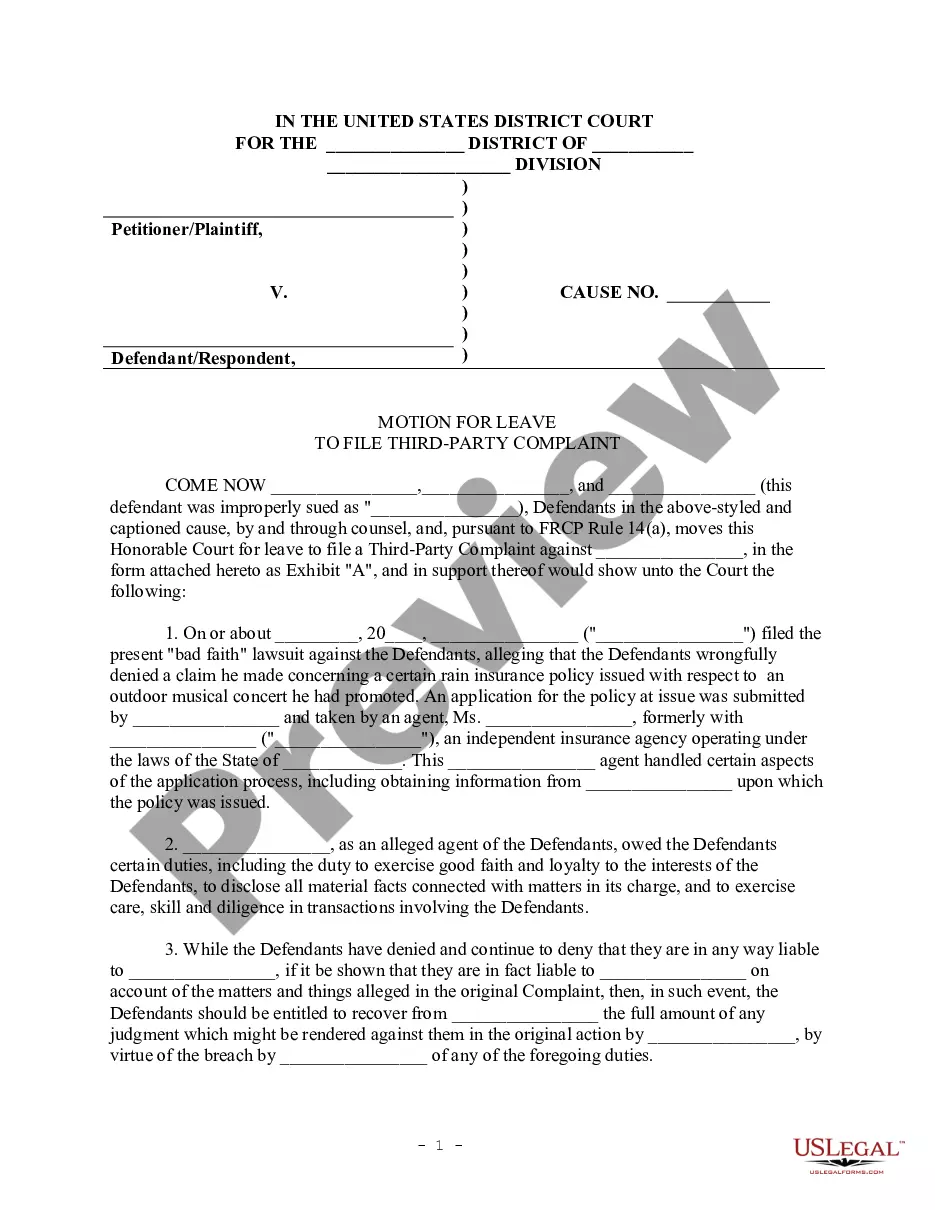
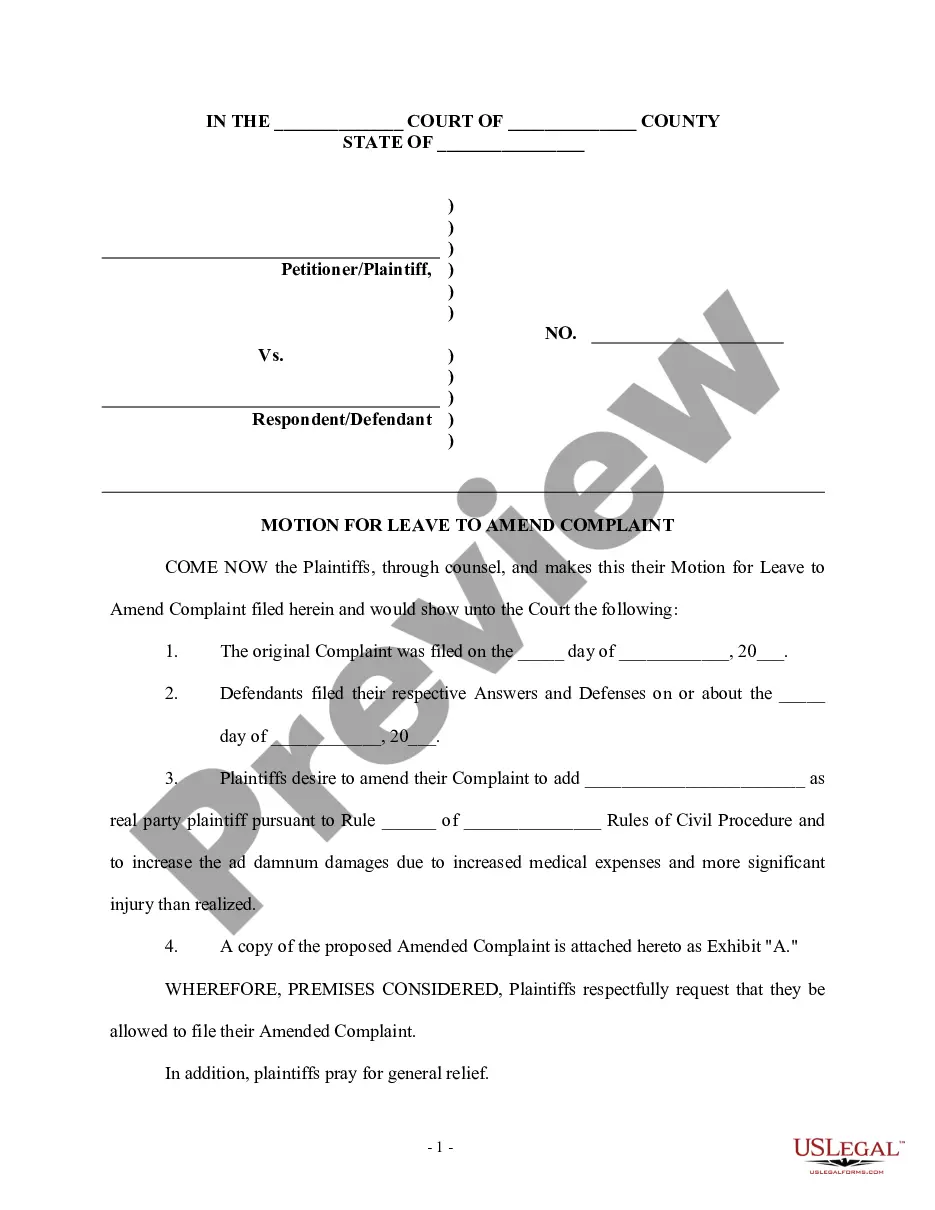
Get your form ready online
Our built-in tools help you complete, sign, share, and store your documents in one place.
Make edits, fill in missing information, and update formatting in US Legal Forms—just like you would in MS Word.
Download a copy, print it, send it by email, or mail it via USPS—whatever works best for your next step.
Sign and collect signatures with our SignNow integration. Send to multiple recipients, set reminders, and more. Go Premium to unlock E-Sign.
If this form requires notarization, complete it online through a secure video call—no need to meet a notary in person or wait for an appointment.
We protect your documents and personal data by following strict security and privacy standards.

Make edits, fill in missing information, and update formatting in US Legal Forms—just like you would in MS Word.

Download a copy, print it, send it by email, or mail it via USPS—whatever works best for your next step.

Sign and collect signatures with our SignNow integration. Send to multiple recipients, set reminders, and more. Go Premium to unlock E-Sign.

If this form requires notarization, complete it online through a secure video call—no need to meet a notary in person or wait for an appointment.

We protect your documents and personal data by following strict security and privacy standards.
Looking for another form?



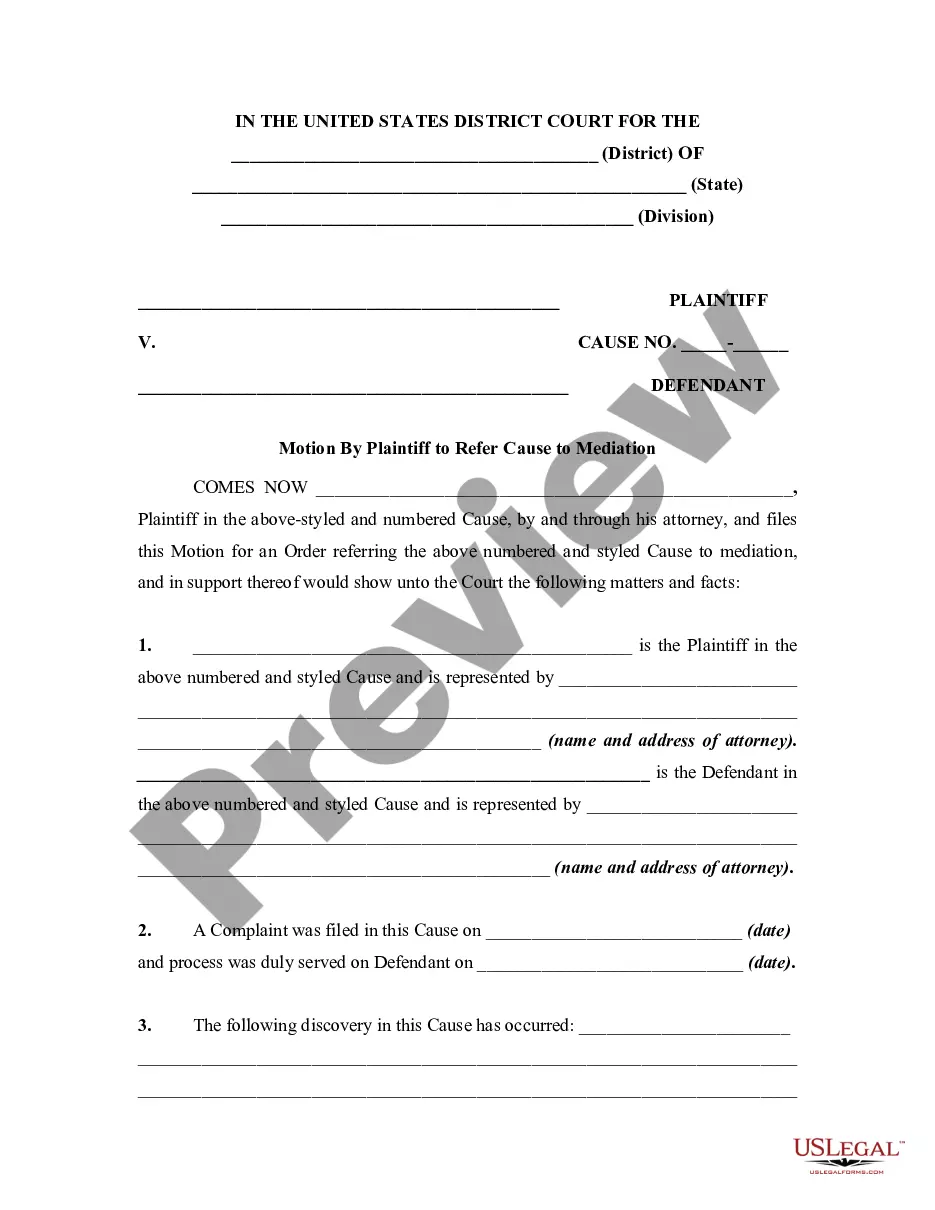
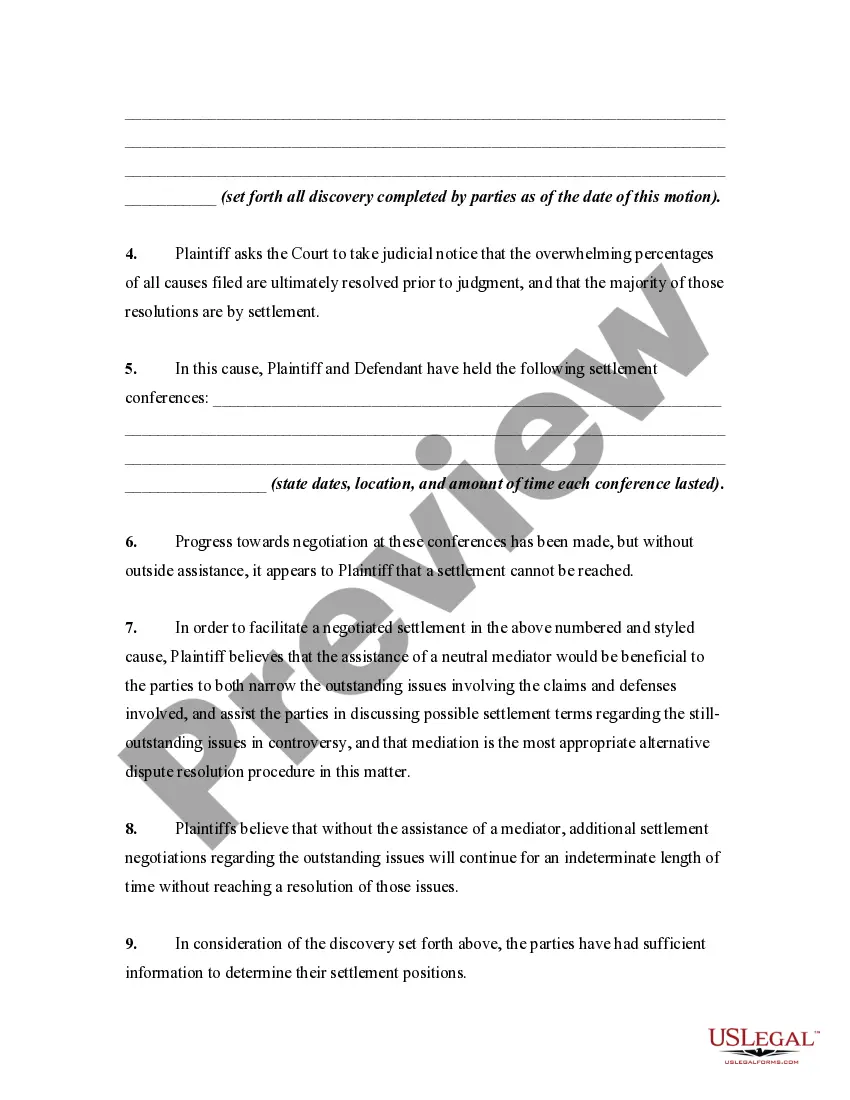
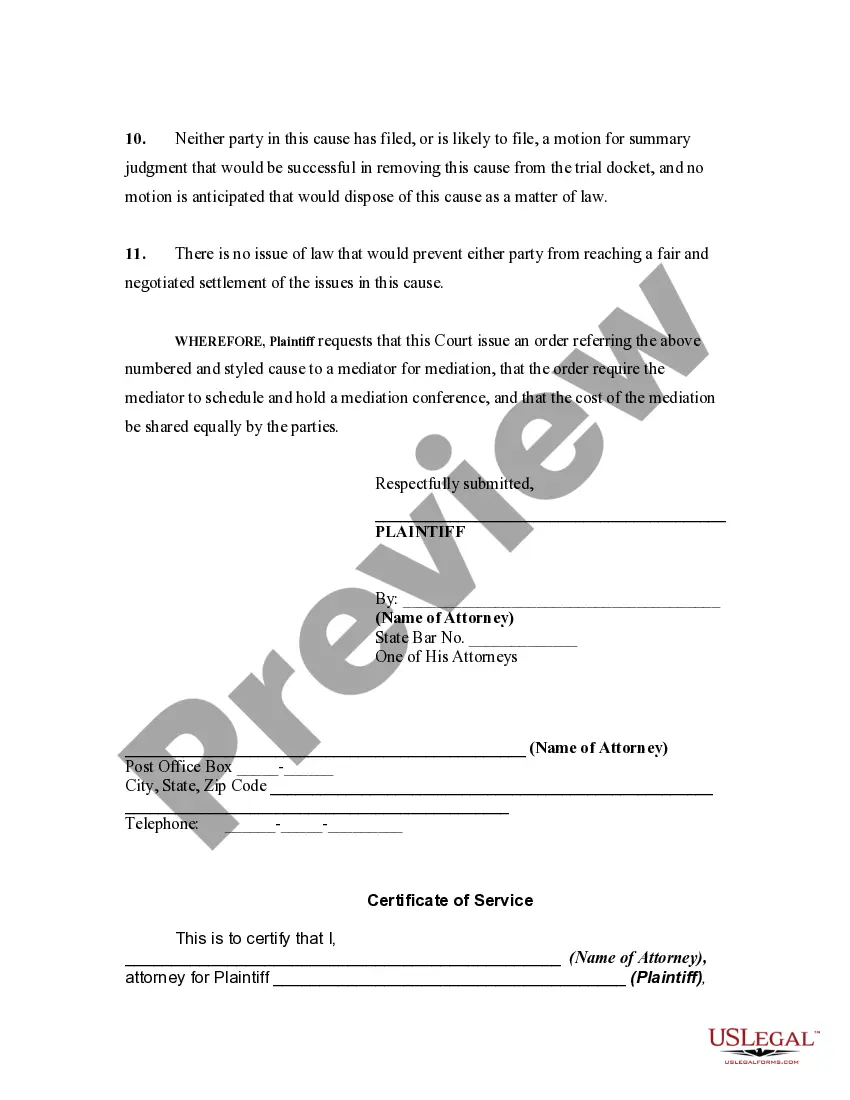
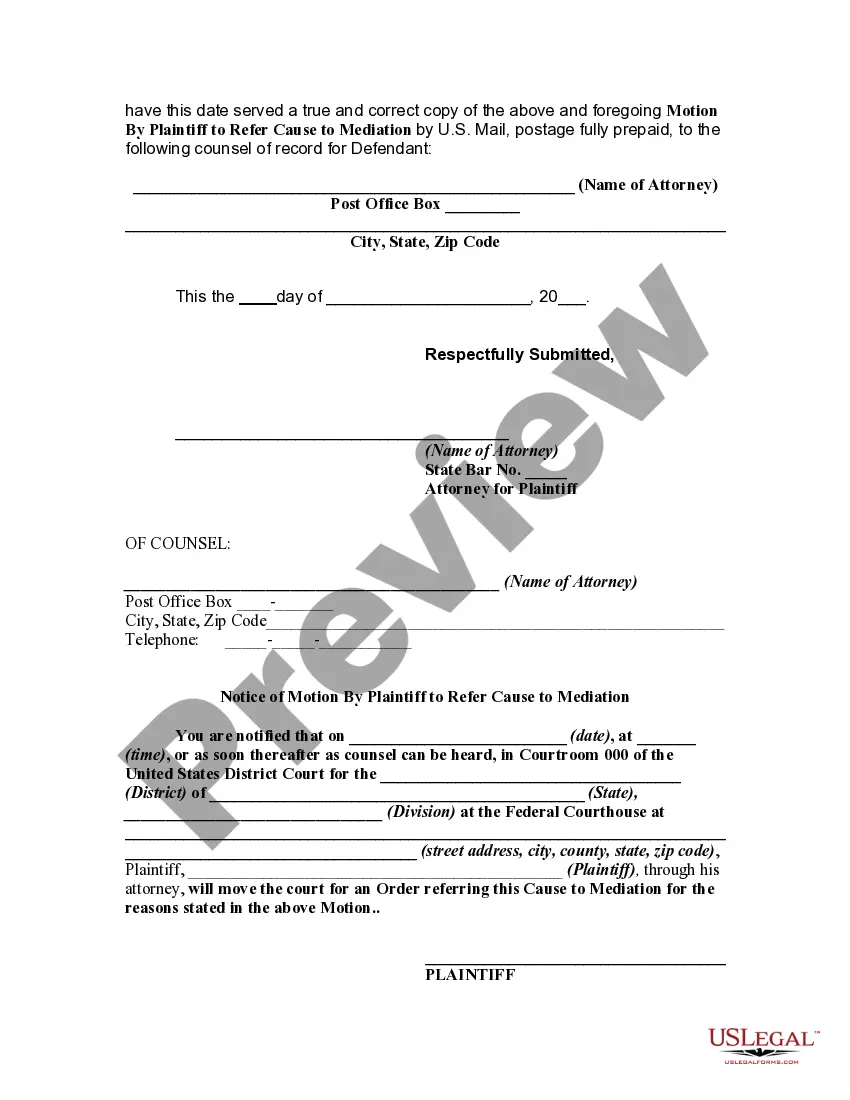
How to fill out Motion By Plaintiff To Refer Cause To Mediation?
The Mediation Effect Sample you observe on this site is a versatile official blueprint created by experienced attorneys in alignment with national and local regulations.
For over 25 years, US Legal Forms has assisted individuals, enterprises, and legal experts with more than 85,000 authenticated, state-specific documents for any commercial and personal circumstance. It’s the fastest, simplest, and most reliable means to acquire the forms you require, as the service guarantees bank-level data protection and anti-malware safeguards.
Select the format you desire for your Mediation Effect Example (PDF, DOCX, RTF) and store the sample on your device.
- Search for the document you require and review it.
- Examine the file you searched and preview it or check the form description to confirm it meets your requirements. If it doesn’t, use the search bar to find the correct one. Click Buy Now once you have found the document you need.
- Subscribe and Log In.
- Choose the pricing plan that fits you and create an account. Use PayPal or a credit card to make a quick payment. If you already possess an account, Log In and verify your subscription to continue.
- Acquire the editable template.
Form popularity
FAQ
The mediation effect is a phenomenon where a variable (the mediator) explains the relationship between an independent variable and a dependent variable. Think of it as a pathway that demonstrates how one factor influences another through a third party. A common mediation effect example is how education impacts career success through skill development. Understanding this effect can enhance your insights into various relationships.
To show a mediating effect, you can conduct statistical analyses that reveal how a mediator influences the relationship between two variables. For example, if you analyze data showing how support from friends affects happiness through reduced stress, you highlight the mediation effect example. Presenting this data visually, such as through graphs, can provide clear insights into the relationships at play.
Mediation is a conflict resolution process where a neutral third party helps disputing parties reach an agreement. It allows individuals to communicate openly about their issues while exploring mutually beneficial solutions. By using mediation, participants can avoid lengthy court battles, making it a valuable tool. Moreover, it serves as a practical mediation effect example, showcasing how effective communication leads to resolution.
To explain a mediation effect, start by identifying the three key components: the independent variable, the mediator, and the dependent variable. For example, if you say that exercise improves mood through increased endorphin levels, you clarify how exercise (independent variable) influences mood (dependent variable) via endorphins (mediator). This framework helps illustrate the mediation effect example effectively.
A mediating effect refers to the process whereby a mediator variable explains the relationship between an independent and a dependent variable. For instance, if increased education leads to higher income through improved job opportunities, education is the mediator. This relationship serves as a perfect mediation effect example, demonstrating how one aspect influences another indirectly.
Interpreting a mediation effect involves understanding how one variable influences another through a mediator. For example, if stress impacts health through sleep patterns, sleep acts as a mediator. To grasp this, you can visualize how changes in one factor lead to changes in another, illustrating the mediation effect example clearly. This interpretation helps clarify the relationships between different variables.
Mediation occurs in various contexts, such as family disputes, workplace conflicts, and legal negotiations. In a family setting, for instance, parents may mediate to resolve custody arrangements. In business, two companies might engage in mediation to settle a contract disagreement. Each of these scenarios provides a clear mediation effect example that highlights how mediation facilitates communication and resolution.