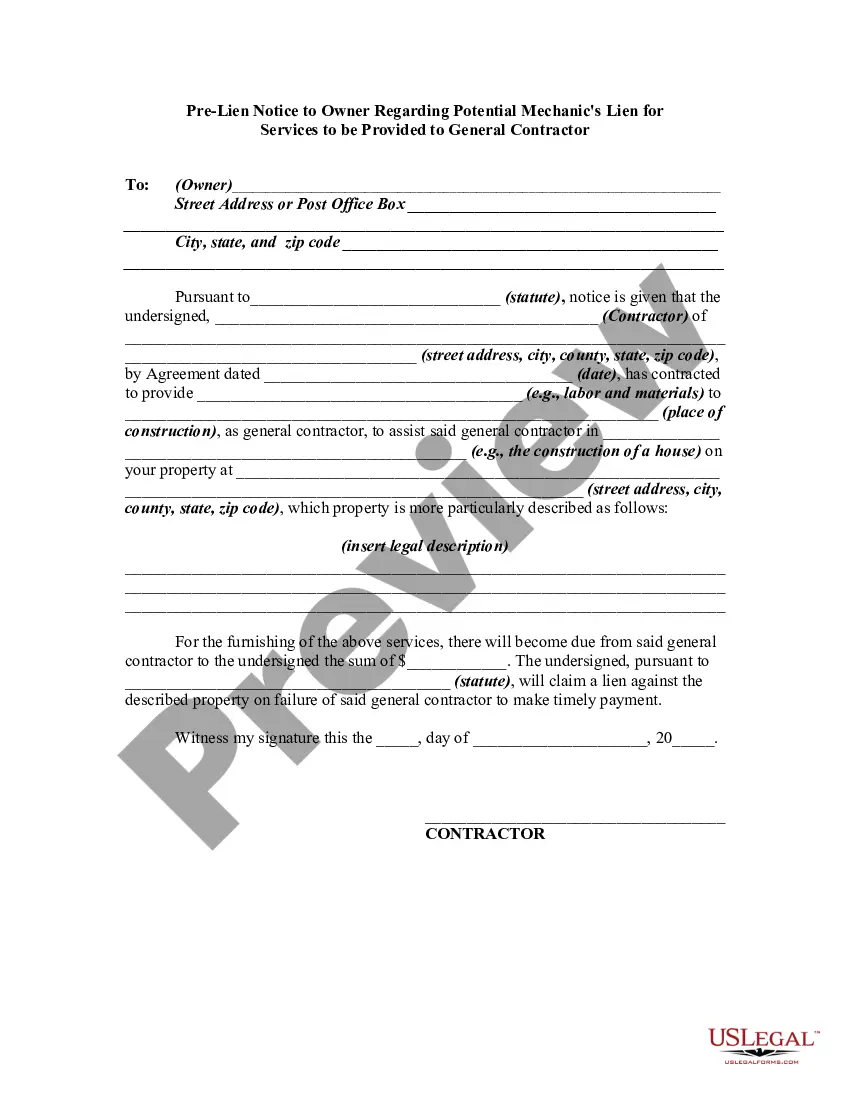
Notice Lien Contractor For The Future
Description
Get your form ready online
Our built-in tools help you complete, sign, share, and store your documents in one place.
Make edits, fill in missing information, and update formatting in US Legal Forms—just like you would in MS Word.
Download a copy, print it, send it by email, or mail it via USPS—whatever works best for your next step.
Sign and collect signatures with our SignNow integration. Send to multiple recipients, set reminders, and more. Go Premium to unlock E-Sign.
If this form requires notarization, complete it online through a secure video call—no need to meet a notary in person or wait for an appointment.
We protect your documents and personal data by following strict security and privacy standards.

Make edits, fill in missing information, and update formatting in US Legal Forms—just like you would in MS Word.

Download a copy, print it, send it by email, or mail it via USPS—whatever works best for your next step.

Sign and collect signatures with our SignNow integration. Send to multiple recipients, set reminders, and more. Go Premium to unlock E-Sign.

If this form requires notarization, complete it online through a secure video call—no need to meet a notary in person or wait for an appointment.

We protect your documents and personal data by following strict security and privacy standards.
Looking for another form?


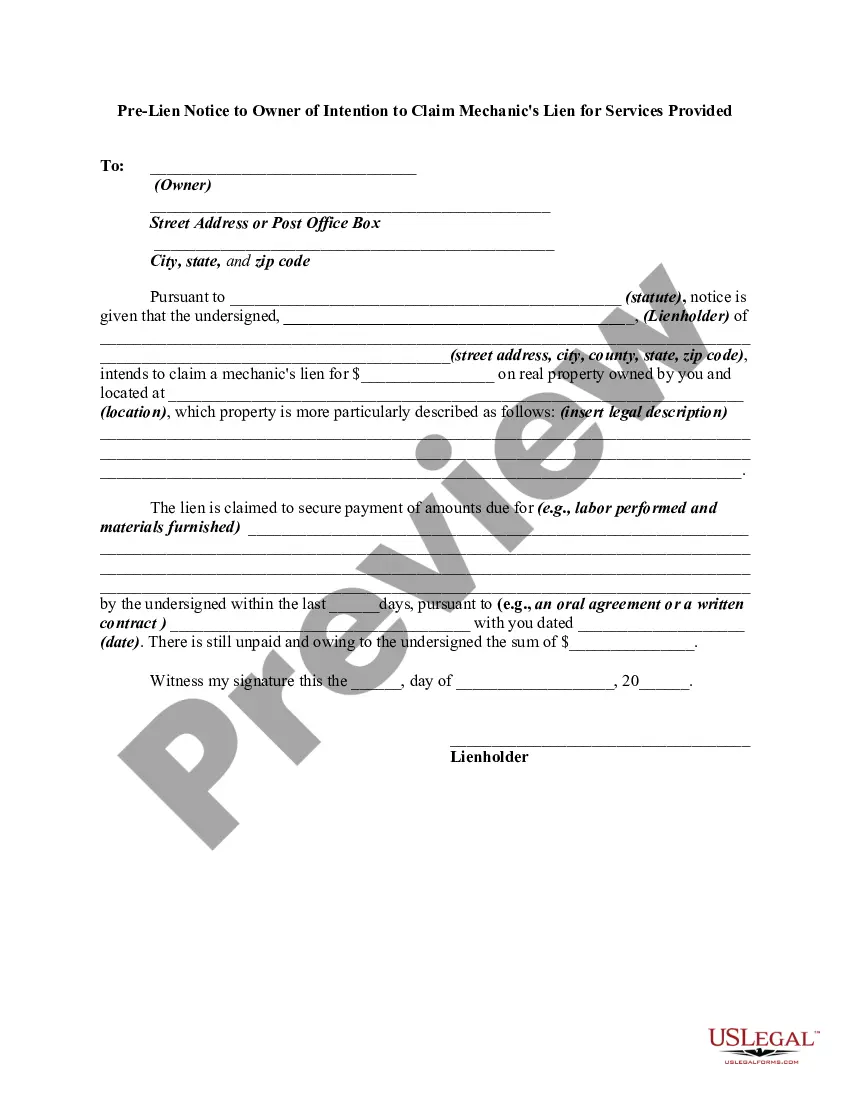
How to fill out Pre-Lien Notice To Owner Regarding Potential Mechanic's Lien For Services To Be Provided To General Contractor?
- Log in to your US Legal Forms account if you're an existing user, or create a new account if this is your first visit.
- Browse through the extensive library to find the appropriate notice lien form that suits your needs, ensuring it aligns with your jurisdiction.
- Examine the preview mode and the description of the form for accuracy.
- If necessary, utilize the Search bar to find alternative templates that may be more appropriate.
- Select the document and choose your desired subscription plan by clicking on the Buy Now button.
- Complete your purchase using credit card details or your PayPal account.
- Download the form onto your device and access it anytime from the My Forms section of your profile.
The process of securing a notice lien is streamlined with US Legal Forms. By utilizing their resources, you can efficiently manage your legal documentation while ensuring accuracy.
Start protecting your rights today by exploring US Legal Forms. Don't miss out on the advantages; create an account now and take the first step towards secure legal documentation.
Form popularity
FAQ
One major disadvantage of a lien is that it can complicate future property transactions. When a lien is placed, it can deter potential buyers and affect property values. Additionally, the process of enforcing a lien can be time-consuming and may require legal assistance. As you consider a notice lien contractor for the future, weigh the pros and cons carefully to ensure it aligns with your business strategy.
To obtain a lien release form, you can request one from the property owner, or you can use a trusted platform like US Legal Forms. This ensures that you receive a proper and legally compliant document. Having a lien release is essential once your work is completed and payment has been received. It helps to clear any notice lien contractor for the future and protects both parties involved.
In Indiana, you typically have 60 days to file a lien after the completion of your work. This is a crucial timeline to remember for any contractor looking to protect their interests. If you wait too long, you might lose your chance to secure a notice lien contractor for the future. It's always wise to stay organized and be proactive in managing your deadlines.
In Minnesota, the rules for liens specify that contractors must file a notice lien contractor for the future within 120 days after the last work was done or materials were provided. This notice needs to be recorded with the county recorder or registrar of titles. Additionally, property owners must be notified of the lien for it to be enforceable. Familiarizing yourself with these regulations can help ensure compliance and protect your interests.
The conditions for a lien often include the requirement that a debt is owed for services rendered or materials supplied. A notice lien contractor for the future must typically be filed within a specified period, which varies by state. It is also crucial that you have provided the services or materials as agreed upon in the contract. Understanding these conditions can help protect your rights when dealing with liens.
To place a contractor lien on your business, you must first provide a notice lien contractor for the future to the property owner, informing them of your intent. After you fulfill this requirement, file the lien with the appropriate county office where the property is located. Make sure to follow your state's specific guidelines and deadlines for filing, as failure to comply could invalidate your claim.
In Florida, the rules regarding liens require that contractors file a notice lien contractor for the future within a specific timeframe, usually within 90 days after the last service or materials were provided. This notice must be sent to the property owner and recorded with the county clerk's office. It is essential to follow these rules to ensure that your lien is valid and enforceable, protecting your right to payment.
Generally, you should receive notification if a lien is placed on your property, especially for construction-related liens. A notice lien contractor for the future is designed to ensure that property owners are aware of potential claims. However, some states have specific requirements regarding notification, which may vary. Therefore, it is beneficial to understand your local laws regarding liens.
A lien can be seen as both good and bad depending on your perspective. From a contractor’s view, a lien secures their right to payment for services rendered, which is a positive aspect. However, from a property owner’s standpoint, a lien can create financial strain and complicate property transactions. Understanding the implications of notice lien contractor for the future can help you navigate these challenges with confidence.
In North Carolina, a lien agent is required to protect property owners and suppliers in construction projects. This agent acts as a point of contact for contractors filing notice lien contractor for the future, ensuring all parties are informed about payment rights. Having a lien agent helps streamline the process and mitigates disputes over payments. This requirement enhances transparency in the construction industry.