Warranty Deed Vs Quit Claim For Trust
Description
Get your form ready online
Our built-in tools help you complete, sign, share, and store your documents in one place.
Make edits, fill in missing information, and update formatting in US Legal Forms—just like you would in MS Word.
Download a copy, print it, send it by email, or mail it via USPS—whatever works best for your next step.
Sign and collect signatures with our SignNow integration. Send to multiple recipients, set reminders, and more. Go Premium to unlock E-Sign.
If this form requires notarization, complete it online through a secure video call—no need to meet a notary in person or wait for an appointment.
We protect your documents and personal data by following strict security and privacy standards.

Make edits, fill in missing information, and update formatting in US Legal Forms—just like you would in MS Word.

Download a copy, print it, send it by email, or mail it via USPS—whatever works best for your next step.

Sign and collect signatures with our SignNow integration. Send to multiple recipients, set reminders, and more. Go Premium to unlock E-Sign.

If this form requires notarization, complete it online through a secure video call—no need to meet a notary in person or wait for an appointment.

We protect your documents and personal data by following strict security and privacy standards.
Looking for another form?
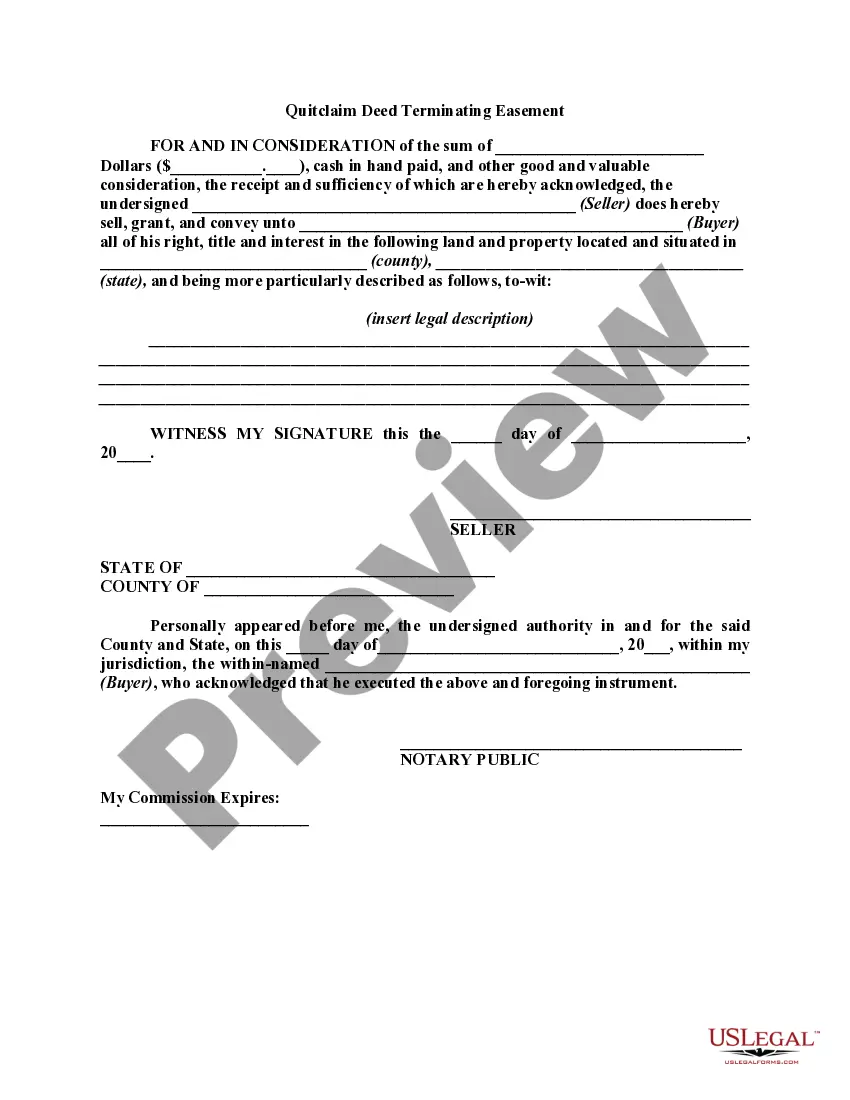
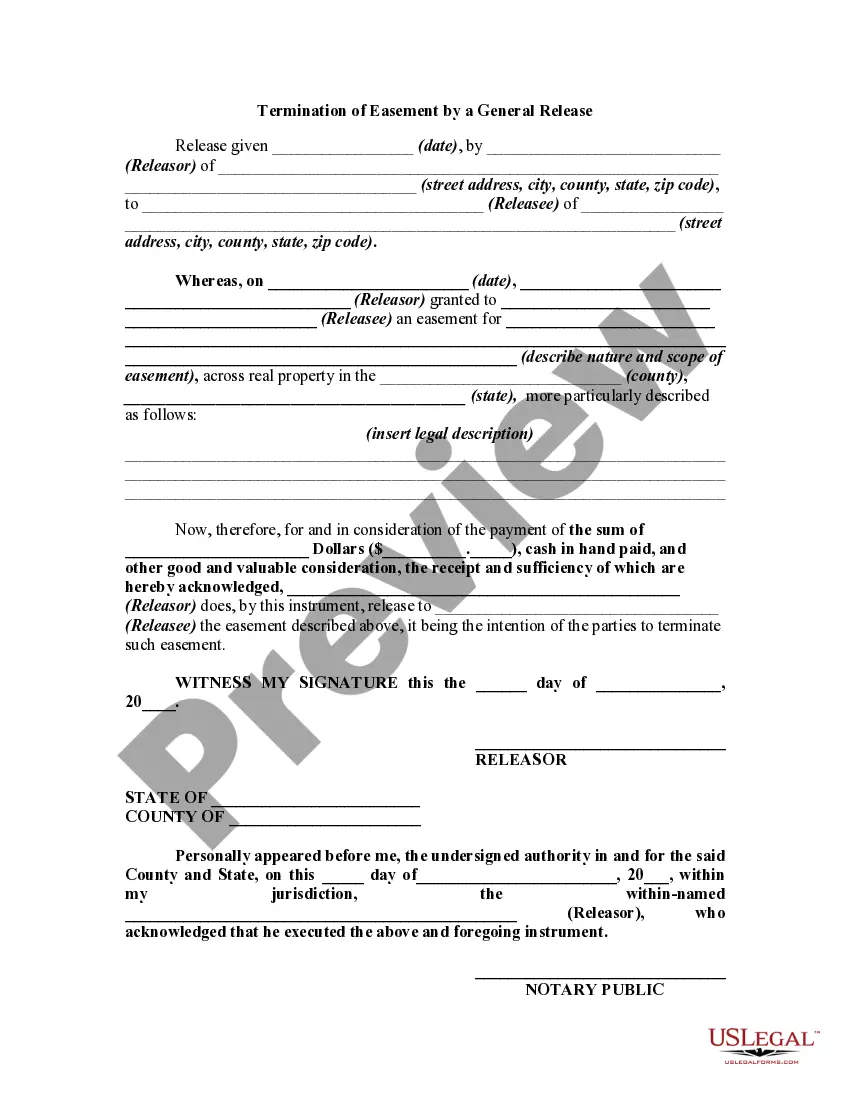
How to fill out Quitclaim Deed Termination Or Terminating Easement?
Handling legal paperwork and processes can be a lengthy addition to your whole day.
Warranty Deed Vs Quit Claim For Trust and similar forms often require you to seek them out and figure out the best method to complete them correctly.
As a result, whether you are managing financial, legal, or personal issues, having a comprehensive and user-friendly online directory of forms readily available will be very beneficial.
US Legal Forms is the top online platform for legal templates, offering over 85,000 state-specific documents and various tools to help you fill out your paperwork swiftly.
Is it your first experience with US Legal Forms? Sign up and create your account in a few minutes, and you will gain access to the form directory and Warranty Deed Vs Quit Claim For Trust. Then, follow the steps below to finalize your form.
- Explore the collection of relevant documents available to you with just one click.
- US Legal Forms provides state- and county-specific forms accessible at any time for download.
- Protect your document management processes with a high-quality service that enables you to prepare any form in just a few minutes without additional or hidden charges.
- Simply Log In to your account, search for Warranty Deed Vs Quit Claim For Trust, and download it immediately from the My documents section.
- You can also retrieve forms you've saved previously.
Form popularity
FAQ
Filling out a warranty deed requires careful attention to detail. Start by including the names of both the grantor and grantee, along with an accurate property description. Then, specify any conditions or restrictions, if necessary. If you need guidance, platforms like USLegalForms provide templates and resources to ensure the warranty deed vs quit claim for trust is completed correctly.
When considering warranty deed vs quit claim for trust, it’s important to understand the differences. A warranty deed provides a guarantee that the property title is clear, which offers protection to the buyer. In contrast, a quitclaim deed transfers interest without any guarantees, leaving the buyer exposed to potential title issues. For securing trust assets, a warranty deed is often the safer choice.
Choosing between a trust and a quitclaim deed depends on your goals. A trust provides more comprehensive asset protection and can help avoid probate, while a quitclaim deed offers a quicker transfer of property without warranties. In the context of warranty deed vs quit claim for trust, you should consider how each option aligns with your estate planning objectives. Platforms like US Legal Forms can guide you through these choices, ensuring you make informed decisions.
A warranty deed offers strong protection for the buyer, but it has some disadvantages. The seller must guarantee a clear title, which can lead to legal issues if any claims arise later. Additionally, the process is often more complex and time-consuming compared to a quitclaim deed. When considering a warranty deed vs quit claim for trust, it’s essential to weigh these factors against your specific needs.
Yes, you can execute a quitclaim deed to transfer property into a trust. This process is a common practice when managing assets within a trust framework, especially in the discussion of warranty deed vs quit claim for trust. By using a quitclaim deed, the property owner can efficiently convey ownership to the trust without the complex assurances found in a warranty deed. For guidance on completing this process correctly, consider utilizing USLegalForms for tailored deed forms and expert support.
In the context of warranty deed vs quit claim for trust, a quitclaim deed does not automatically supersede a warranty deed. A warranty deed provides a guarantee of clear title and includes specific protections for the buyer, while a quitclaim deed transfers ownership without any guarantees. Therefore, if a warranty deed exists, it remains effective unless legally challenged or modified by a court. It is important to understand the implications of each deed type when transferring property.
When considering warranty deed vs quit claim for trust, it’s essential to understand the purpose of each. A warranty deed offers a guarantee that the seller has clear title to the property and can defend against any claims. In contrast, a quitclaim deed transfers ownership without any guarantees, which may lead to potential complications. It’s crucial to evaluate your specific situation to determine which option suits your needs best.