Conservatee Estate Conservator For A Minor
Description

Get your form ready online
Our built-in tools help you complete, sign, share, and store your documents in one place.
Make edits, fill in missing information, and update formatting in US Legal Forms—just like you would in MS Word.
Download a copy, print it, send it by email, or mail it via USPS—whatever works best for your next step.
Sign and collect signatures with our SignNow integration. Send to multiple recipients, set reminders, and more. Go Premium to unlock E-Sign.
If this form requires notarization, complete it online through a secure video call—no need to meet a notary in person or wait for an appointment.
We protect your documents and personal data by following strict security and privacy standards.

Make edits, fill in missing information, and update formatting in US Legal Forms—just like you would in MS Word.

Download a copy, print it, send it by email, or mail it via USPS—whatever works best for your next step.

Sign and collect signatures with our SignNow integration. Send to multiple recipients, set reminders, and more. Go Premium to unlock E-Sign.

If this form requires notarization, complete it online through a secure video call—no need to meet a notary in person or wait for an appointment.

We protect your documents and personal data by following strict security and privacy standards.
Looking for another form?








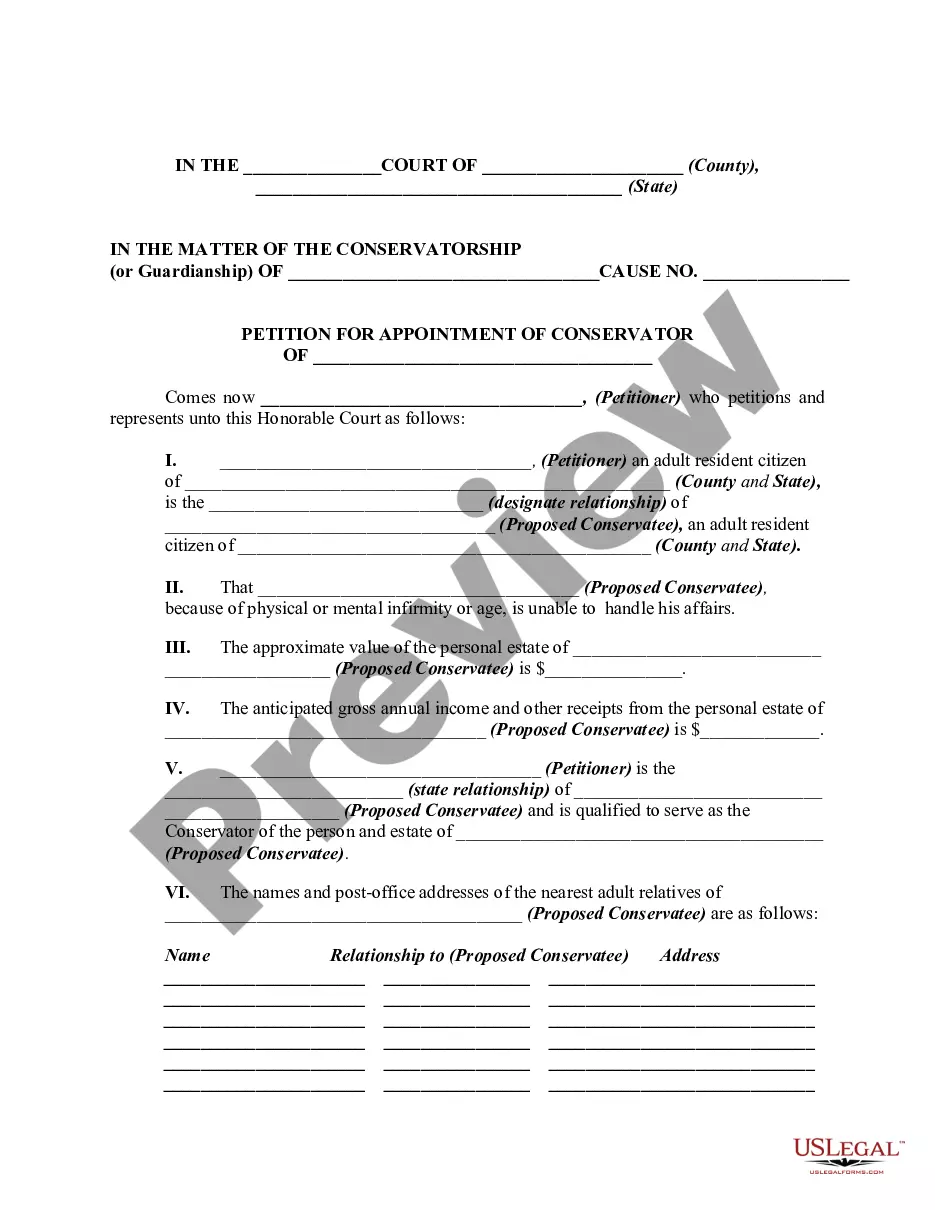
How to fill out Petition For Appointment Of Conservator Or Legal Guardian Of Person And Estate Of Adult Who Physical Or Mental Infirmity Or Age, Is Unable To Handle Affairs?
Creating legal documents from the ground up can frequently feel a bit daunting.
Certain situations may require extensive research and significant financial investment.
If you’re seeking a more straightforward and economical method of preparing Conservatee Estate Conservator For A Minor or any other forms without unnecessary complications, US Legal Forms is always accessible to you.
Our online repository of over 85,000 current legal documents encompasses nearly every aspect of your financial, legal, and personal affairs.
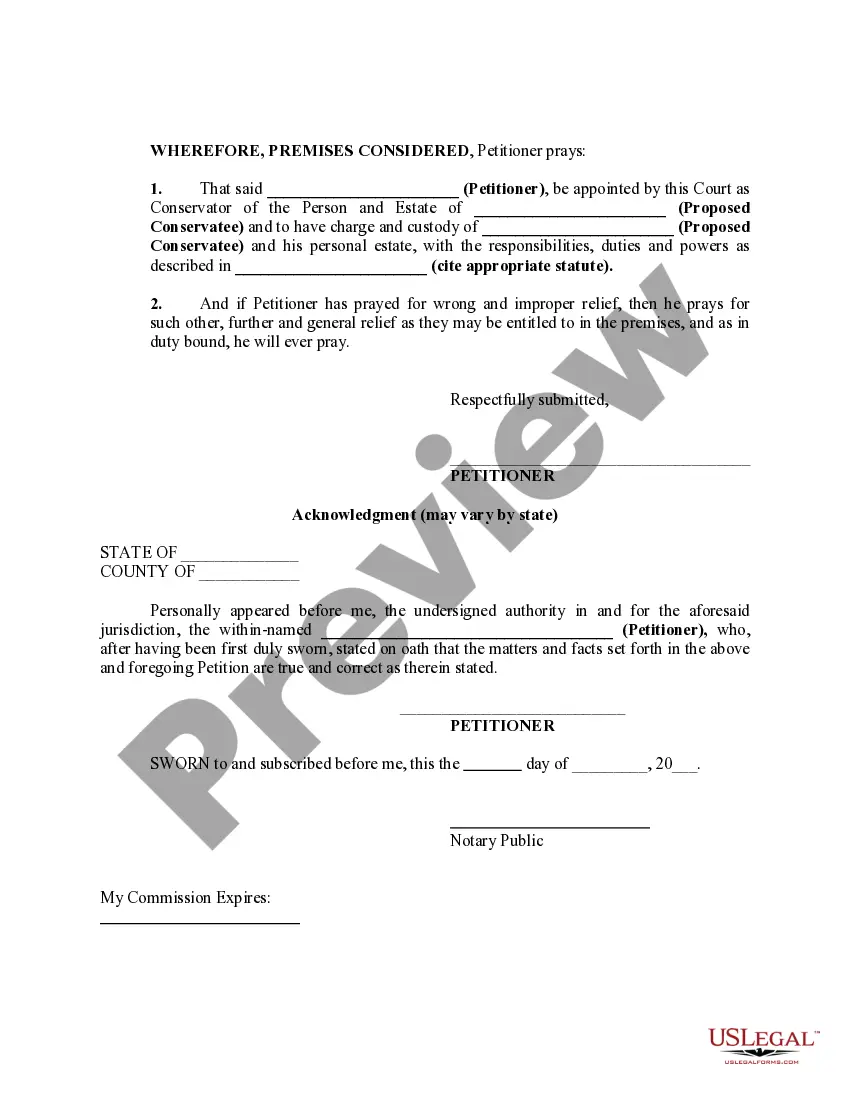
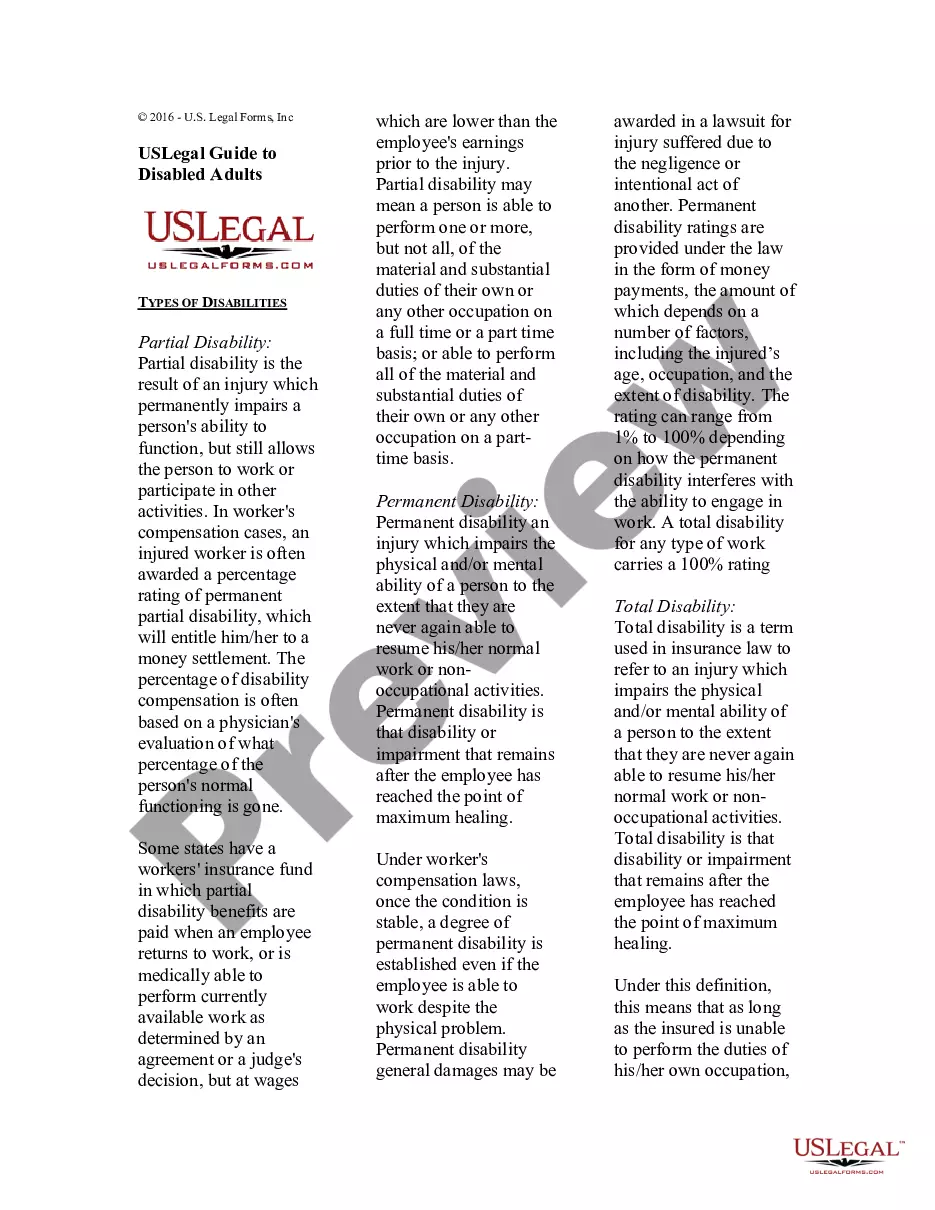
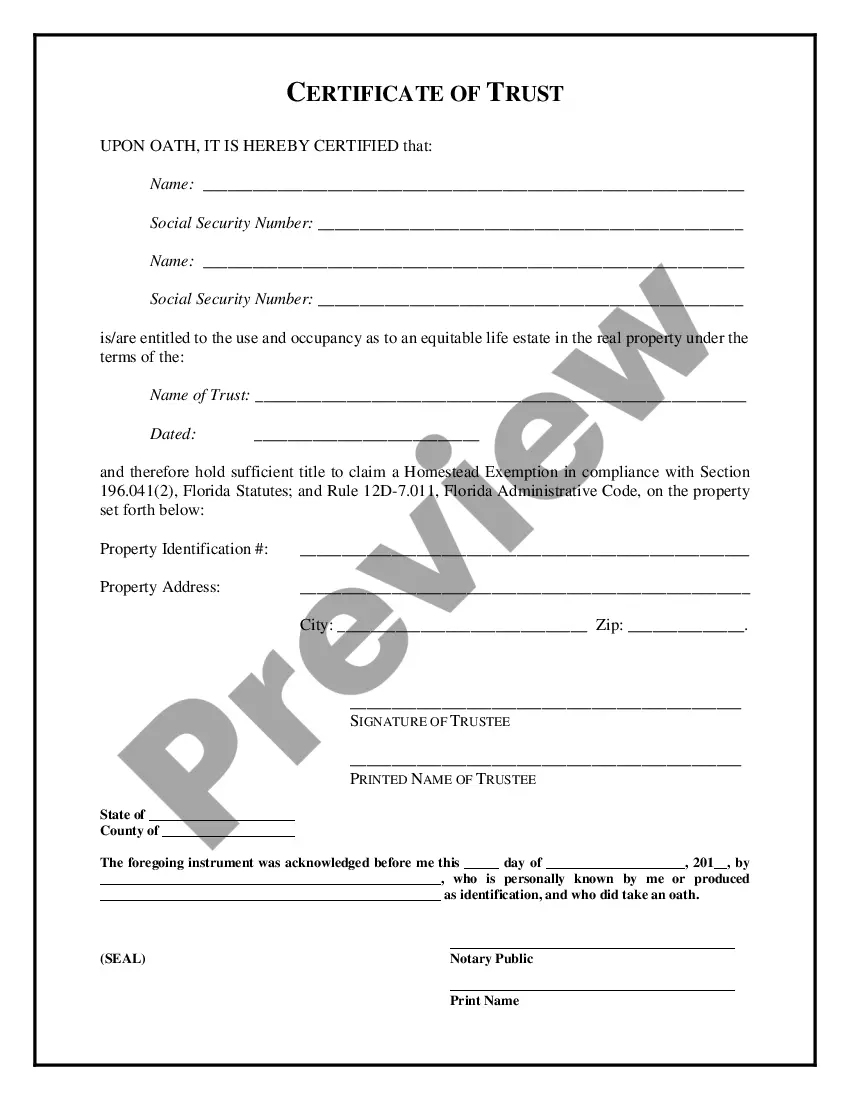
Review the document preview and descriptions to ensure you’ve found the document you need. Verify if the template you select adheres to the regulations and laws of your state and county. Choose the appropriate subscription plan to purchase the Conservatee Estate Conservator For A Minor. Download the file. Then complete, sign, and print it out. US Legal Forms has an impeccable reputation and over 25 years of experience. Join us now and make form execution a straightforward and efficient process!
- With just a few clicks, you can quickly obtain state- and county-compliant forms carefully prepared for you by our legal experts.
- Utilize our platform whenever you require dependable and trustworthy services through which you can swiftly locate and download the Conservatee Estate Conservator For A Minor.
- If you’re familiar with our website and have previously established an account with us, simply Log In to your account, find the template and download it or re-download it anytime from the My documents section.
- Don’t have an account? No problem. It takes minimal time to register and explore the library.
- But before jumping straight to downloading Conservatee Estate Conservator For A Minor, follow these suggestions.
Form popularity
FAQ
The primary difference between a guardianship and a conservatorship is the level of responsibility of the person providing assistance; a guardian provides for or helps manage personal care for a person (?ward?), whereas a conservator provides for or helps manage financial matters for a ward.
Adults who cannot take care of themselves or their finances, usually elderly individuals, qualify for conservatorship in California. Adults with developmental disabilities who cannot fully care for themselves or their finances are also eligible for a conservatorship.
A conservatorship refers to the legal process of someone taking control over your personal or financial decisions after you become unable to make them on your own. It's arranged in court and can vary in what type of responsibility the conservatee will have over the conservator.
Generally, guardians have control over the every-day decisions and care of a minor. Conservators have similar control over an adult, but they're typically limited to financial decisions.
While both legal arrangements might be used to help someone manage their affairs if they lack the mental competence to do so themselves, conservatorships differ from powers of attorney because they are not voluntary; they are created by the court; and they can only be revoked by the court.