Adverse Possession North Carolina Without A Will
Description
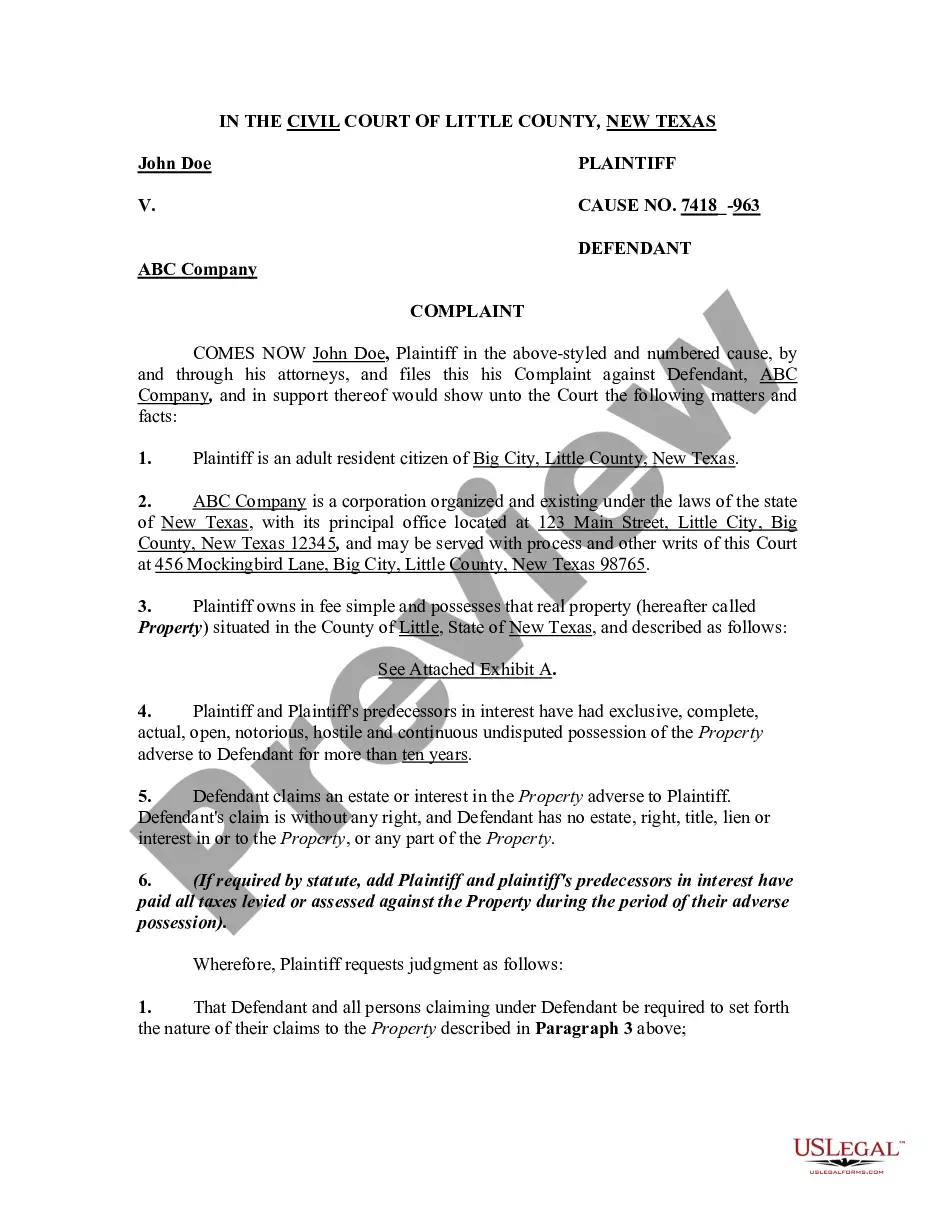
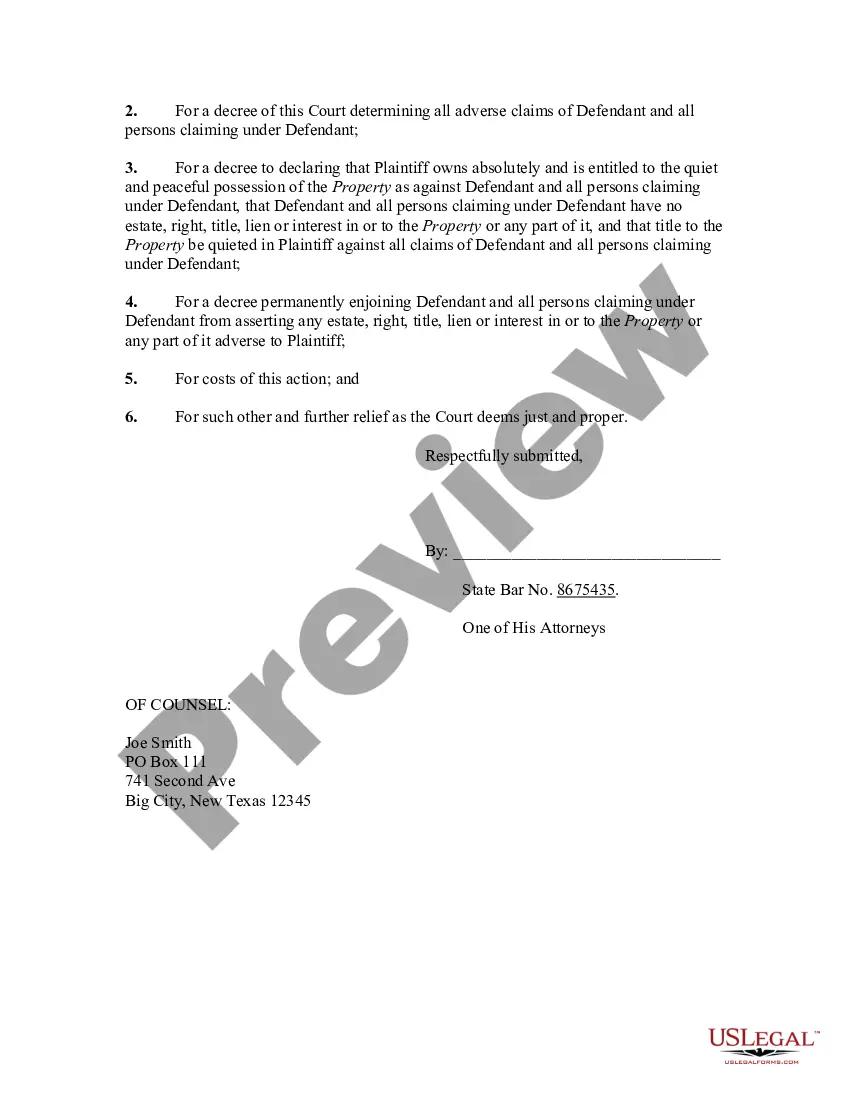
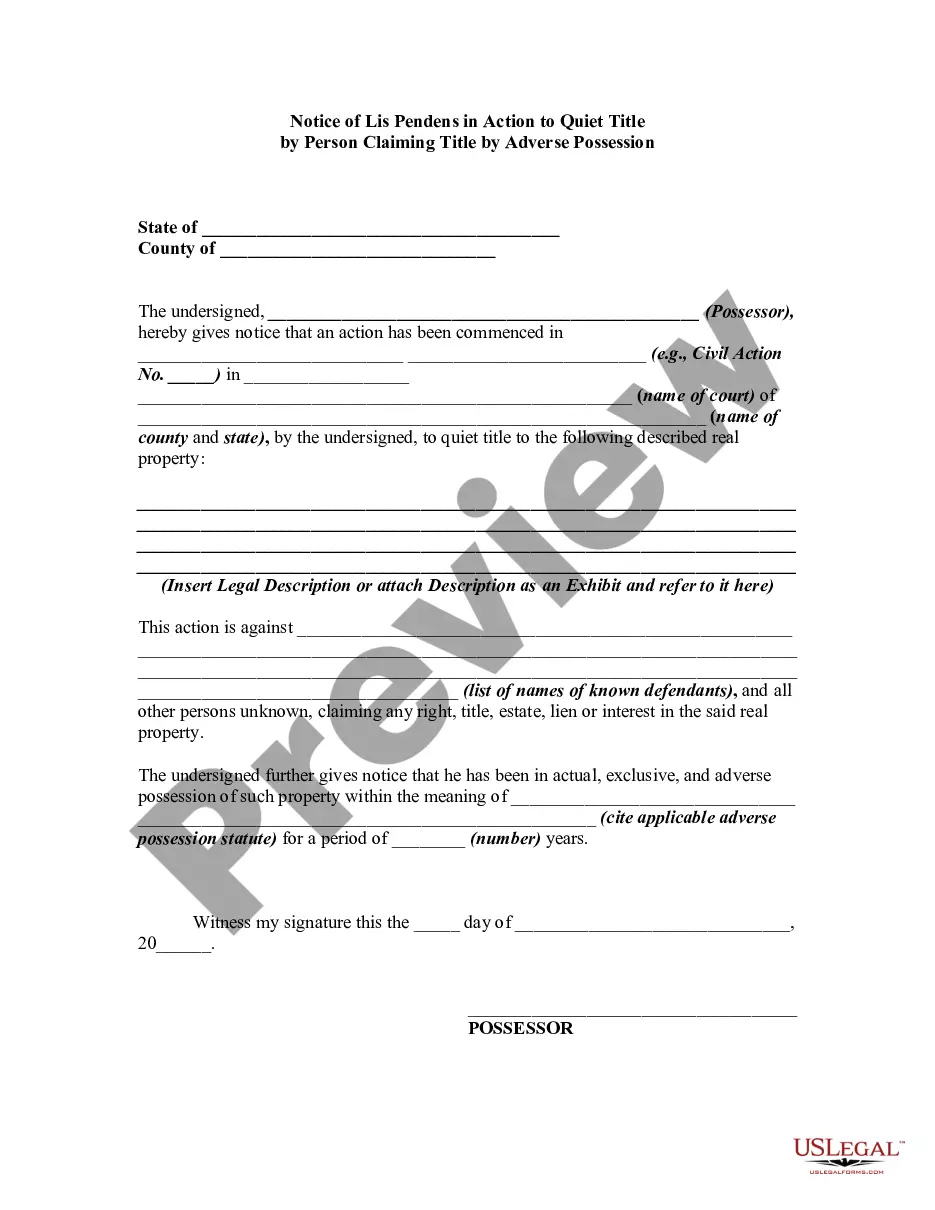
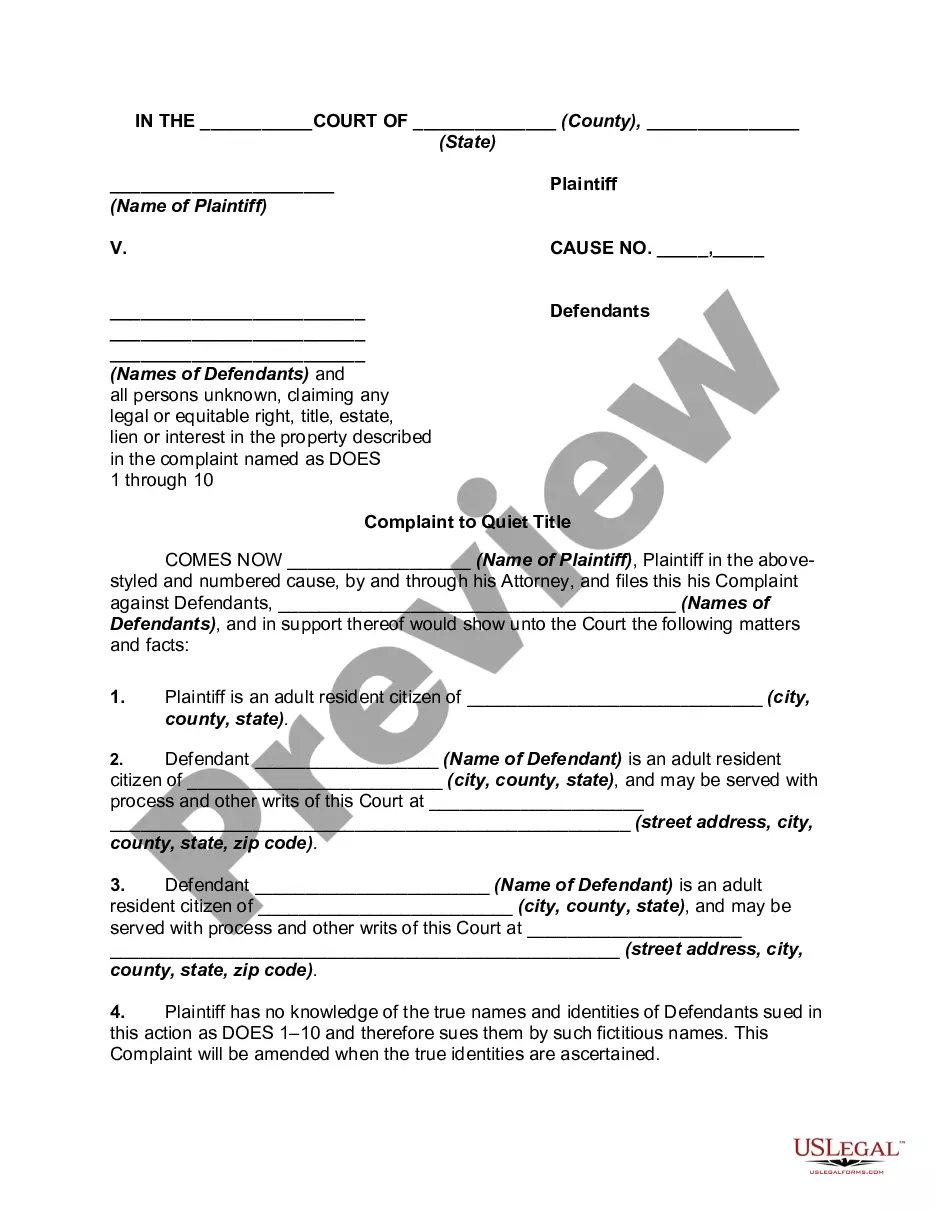
How to fill out Complaint To Quiet Title By Person Claiming Adverse Possession - Squatters Rights?
Locating a reliable source for the latest and suitable legal forms is half the battle of navigating bureaucracy. Acquiring the correct legal documents requires accuracy and meticulousness, which is why it is crucial to obtain samples of Adverse Possession North Carolina Without A Will exclusively from reputable sources, such as US Legal Forms. An incorrect form will squander your time and prolong the issue you are facing. With US Legal Forms, you have minimal concerns. You can access and verify all the specifics regarding the document’s application and relevance for your situation and in your state or county.
Follow these steps to complete your Adverse Possession North Carolina Without A Will.
Eliminate the stress that comes with your legal paperwork. Explore the vast US Legal Forms library to find legal templates, assess their applicability to your situation, and download them instantly.
- Use the catalog navigation or search bar to find your template.
- Check the document’s information to ensure it meets the criteria of your state and area.
- Preview the form, if available, to confirm it is indeed the one you need.
- Continue searching and find the appropriate template if the Adverse Possession North Carolina Without A Will does not fulfill your needs.
- Once you are certain about the form’s relevance, download it.
- If you are a registered user, click Log in to verify and access your selected forms in My documents.
- If you do not have an account yet, click Buy now to acquire the document.
- Choose the payment plan that suits your needs.
- Proceed to the registration to complete your purchase.
- Finalize your transaction by selecting a payment method (credit card or PayPal).
- Choose the file format for downloading Adverse Possession North Carolina Without A Will.
- After obtaining the document on your device, you can modify it using the editor or print it out and fill it in manually.
Form popularity
FAQ
There are two ways to eliminate heir property: All heirs may agree to give ownership to one person. One heir may buy the others' shares, or the others may voluntarily give their share to a single family member. ... Any owner of the property may file for partition.
The adverse possessor must use the land continuously, and not intermittently. This doesn't mean that they have to be on the land constantly, just that they have to use the land continuously like an actual owner would. North Carolina's statutory period for adverse possession is twenty years.
All states require at least three years to establish a claim for adverse possession; some require up to 30 years.
In North Carolina, to acquire title to land by adverse possession, the claimant must show actual, open, hostile, exclusive, and continuous possession of the land claimed for the prescriptive period under known and visible lines and boundaries.
No action for the recovery or possession of real property shall be maintained, unless it appears that the plaintiff, or those under whom he claims, was seized or possessed of the premises in question within 20 years before the commencement of the action, unless he was under the disabilities prescribed by law.