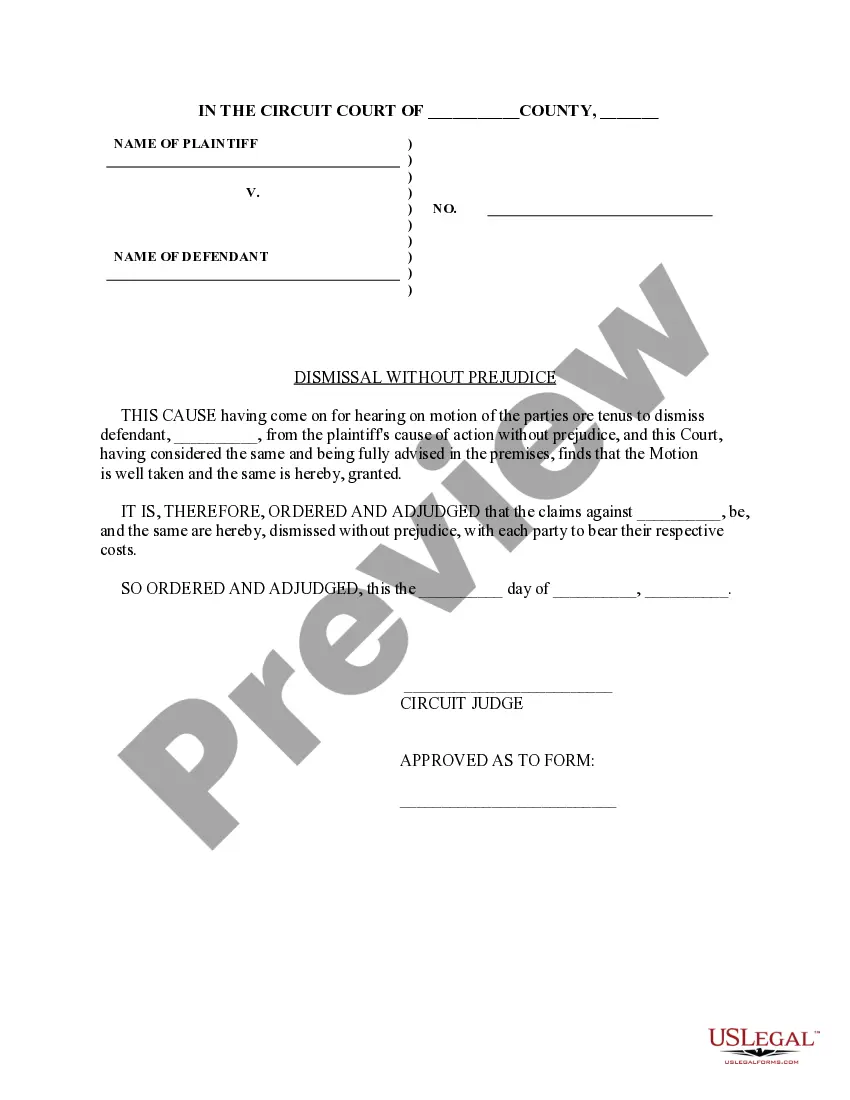
Civil Case Dismissed With Prejudice
Description
Get your form ready online
Our built-in tools help you complete, sign, share, and store your documents in one place.
Make edits, fill in missing information, and update formatting in US Legal Forms—just like you would in MS Word.
Download a copy, print it, send it by email, or mail it via USPS—whatever works best for your next step.
Sign and collect signatures with our SignNow integration. Send to multiple recipients, set reminders, and more. Go Premium to unlock E-Sign.
If this form requires notarization, complete it online through a secure video call—no need to meet a notary in person or wait for an appointment.
We protect your documents and personal data by following strict security and privacy standards.

Make edits, fill in missing information, and update formatting in US Legal Forms—just like you would in MS Word.

Download a copy, print it, send it by email, or mail it via USPS—whatever works best for your next step.

Sign and collect signatures with our SignNow integration. Send to multiple recipients, set reminders, and more. Go Premium to unlock E-Sign.

If this form requires notarization, complete it online through a secure video call—no need to meet a notary in person or wait for an appointment.

We protect your documents and personal data by following strict security and privacy standards.
Looking for another form?






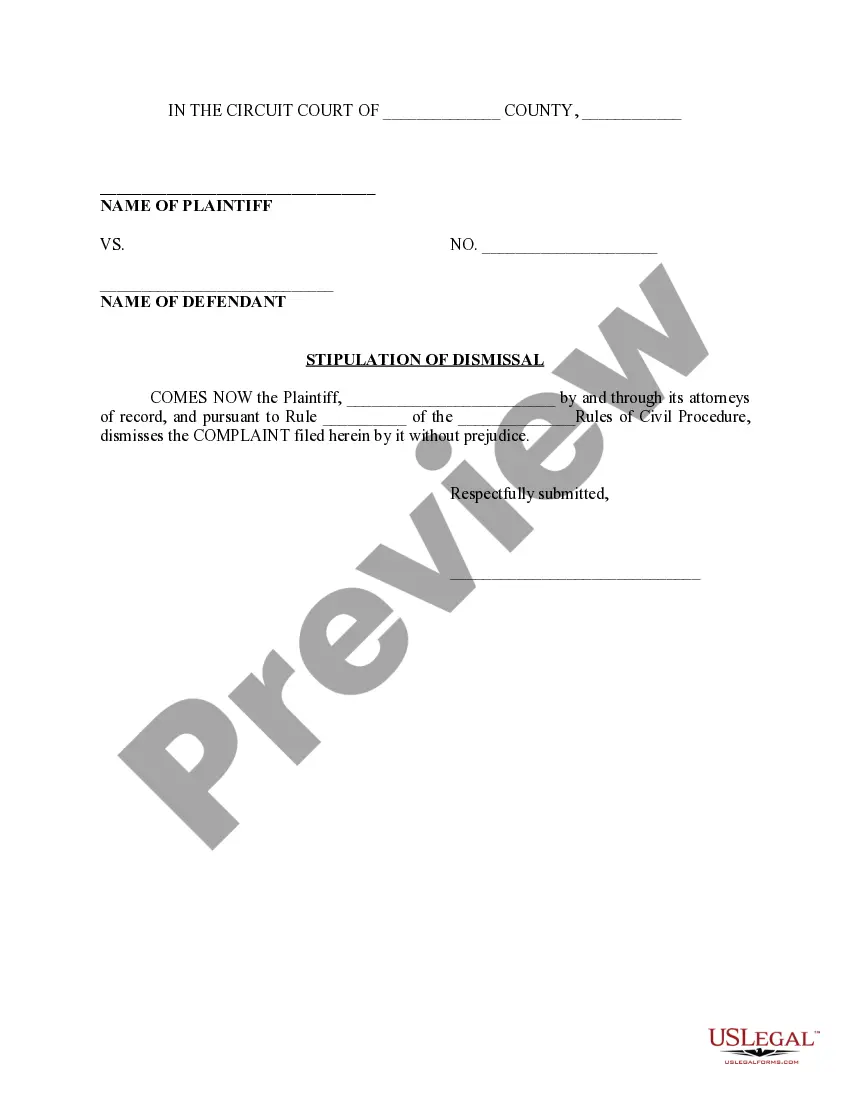
How to fill out Dismissal Without Prejudice?
The Civil Case Dismissed With Prejudice you observe on this page is a versatile legal template prepared by qualified attorneys in accordance with federal and state laws. For over 25 years, US Legal Forms has offered individuals, businesses, and lawyers access to more than 85,000 validated, state-specific documents for any business and personal situation. It’s the quickest, easiest, and most dependable method to obtain the documentation you require, as the service assures the utmost level of data protection and anti-malware safeguards.
Acquiring this Civil Case Dismissed With Prejudice will require you just a few straightforward steps.
Register for US Legal Forms to have verified legal templates for all of life’s situations at your fingertips.
- Search for the document you require and examine it. Browse through the example you searched and preview it or review the form description to confirm it meets your needs. If it doesn’t, use the search bar to find the appropriate one. Click Buy Now once you have found the template you need.
- Register and Log In. Choose the pricing plan that fits you and create an account. Use PayPal or a credit card for a swift transaction. If you already possess an account, Log In and verify your subscription to continue.
- Acquire the fillable template. Select the format you desire for your Civil Case Dismissed With Prejudice (PDF, DOCX, RTF) and download the document onto your device.
- Complete and sign the documents. Print the template to fill it out manually. Alternatively, use an online multi-functional PDF editor to quickly and accurately complete and sign your form with a legally-binding electronic signature.
- Download your documents one more time. Use the same document again whenever needed. Access the My documents tab in your profile to redownload any previously downloaded templates.
Form popularity
FAQ
When a civil case is dismissed with prejudice, it means the court has decided to permanently close the case, preventing the plaintiff from bringing the same claim again in the future. This type of dismissal often occurs when the court finds that the case lacks merit or has been resolved in a way that does not allow for re-litigation. Essentially, the dismissal indicates a final judgment, which can significantly impact the parties involved. If you are navigating a civil case and need guidance on the implications of such dismissals, platforms like US Legal Forms can provide valuable resources and templates to help you understand your rights.
In most cases, a civil case dismissed with prejudice is considered better than one dismissed without. This finality prevents any future claims based on the same issue, offering you greater legal protection. While dismissals without prejudice can be useful in specific situations, the certainty of a dismissal with prejudice often outweighs its benefits.
To determine if your case was dismissed with prejudice, you can review the court's official records or consult your attorney. The court documents will typically state clearly whether the dismissal is with or without prejudice. Additionally, platforms like US Legal Forms can help you find and understand these legal documents easily.
A party may opt to dismiss a case without prejudice for various reasons, such as needing more time to gather evidence or hoping for a settlement out of court. This allows them to reassess their position without permanently closing the case. It can be a tactical move to maintain flexibility in legal strategy.
You might choose to dismiss a case without prejudice when you believe you may want to pursue the matter again in the future. This type of dismissal keeps the door open for re-filing the case if new evidence or circumstances arise. It's a strategic decision often made to preserve legal options while resolving the current situation.
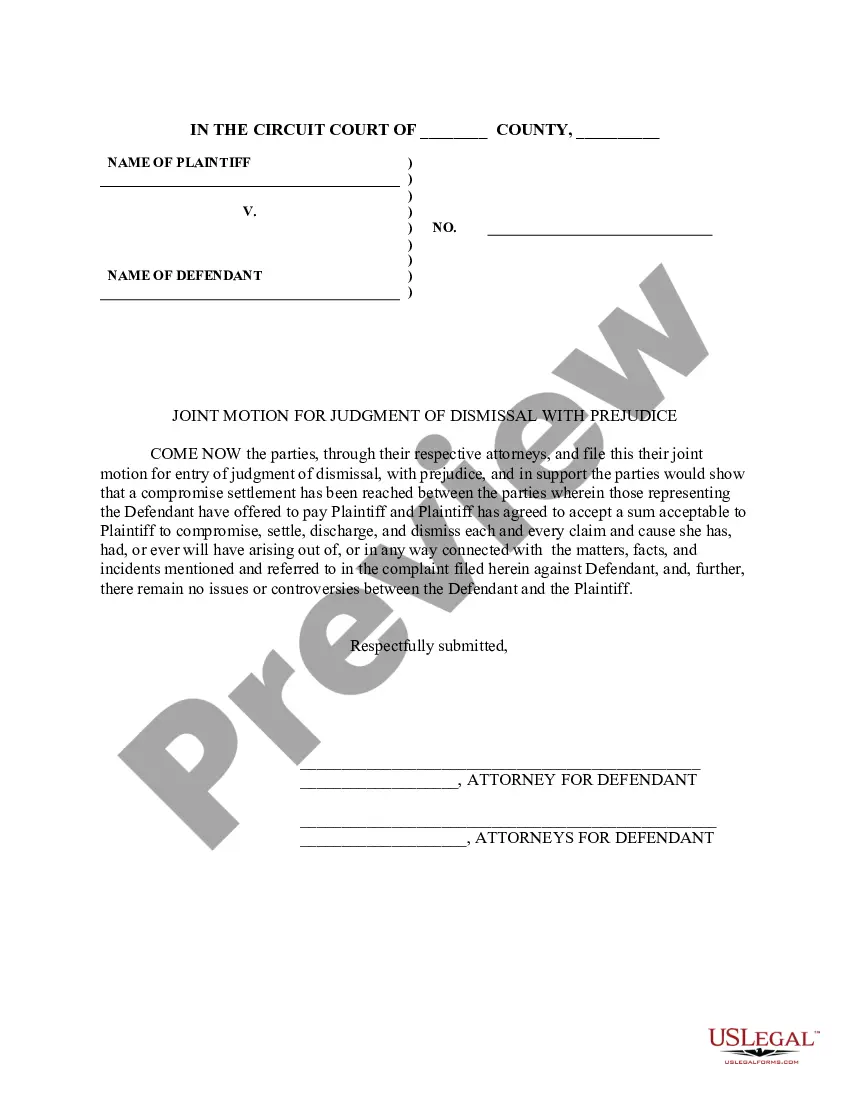
Having a civil case dismissed with prejudice is generally better for defendants compared to a dismissal without prejudice. A dismissal with prejudice means the case is permanently closed, while a dismissal without prejudice allows the plaintiff to potentially re-file the case. This finality can provide peace of mind and protect your interests moving forward.
Yes, a civil case dismissed with prejudice can affect your legal record. The dismissal signifies that the case has been resolved conclusively, which may be noted in legal databases. However, this dismissal often works in your favor, as it prevents the plaintiff from pursuing the same claims against you in the future.
A civil case dismissed with prejudice is generally considered more favorable than a not guilty verdict. When a case is dismissed with prejudice, it indicates that the court has made a final decision, preventing the plaintiff from re-filing the same case. In contrast, a not guilty verdict is specific to criminal cases and does not carry the same implications for future legal actions.
Generally, a civil case dismissed with prejudice cannot be appealed in a way that would allow the same claims to be refiled. The dismissal is typically considered final and conclusive. However, there may be unique circumstances where an appeal is possible, particularly if there were procedural errors. For clarification on your specific case, it might be wise to consult with a legal professional who can help you explore your options.
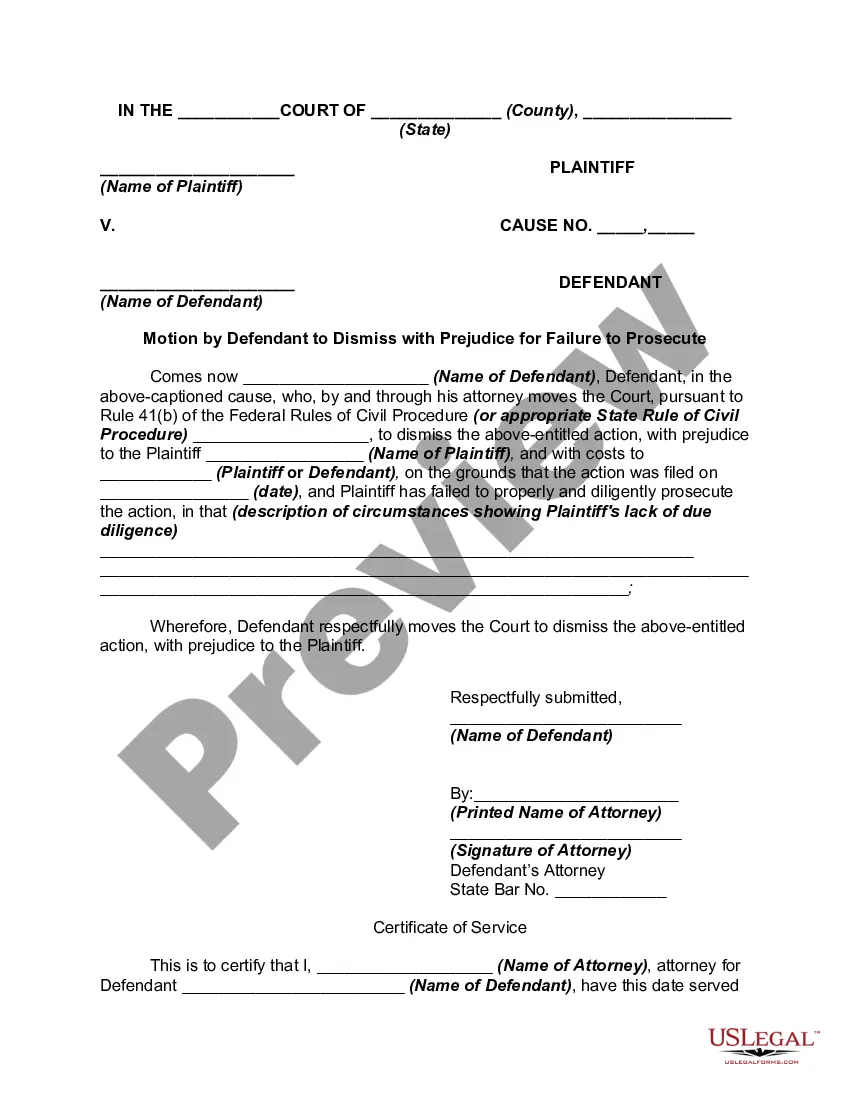
An example of a motion to dismiss with prejudice could involve a defendant arguing that the plaintiff has repeatedly failed to provide necessary documentation. The motion would request that the court dismiss the case permanently, preventing any future claims on the same issue. This legal strategy can effectively protect defendants from ongoing litigation. Resources available on uslegalforms can help you draft a strong motion to dismiss.