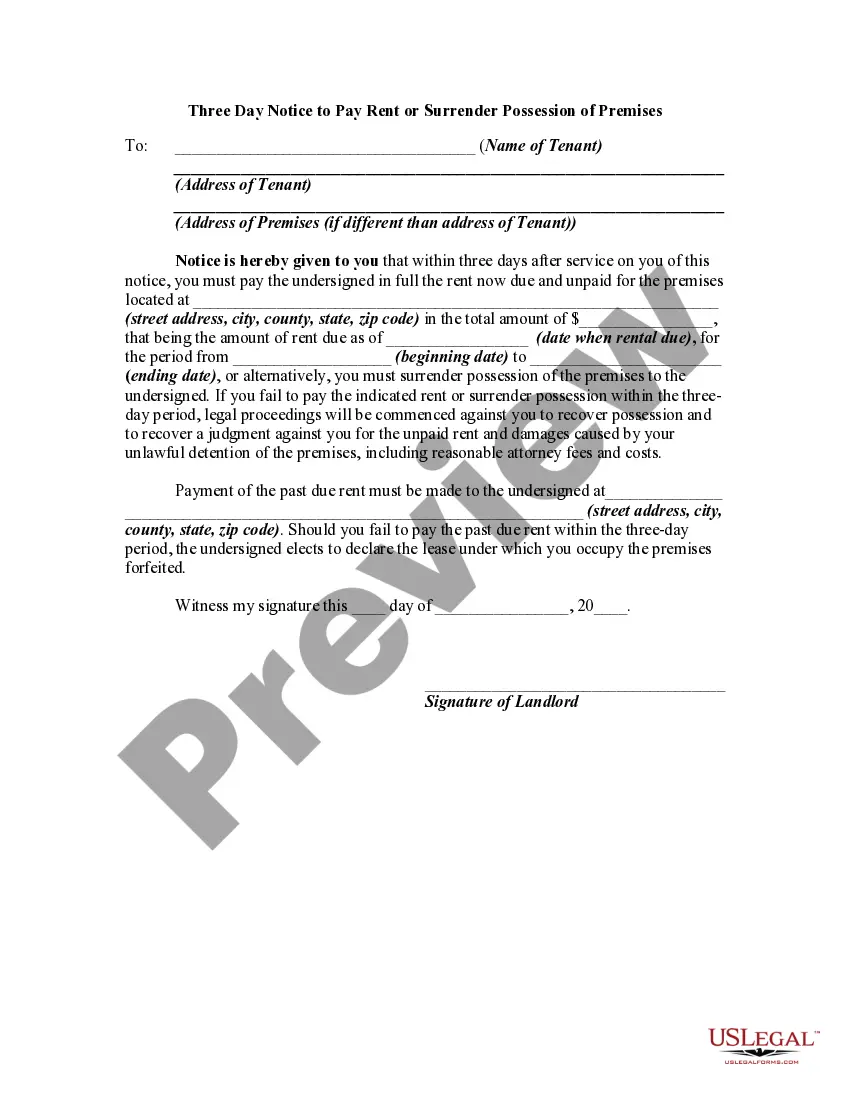
Premises Eviction Without Notice
Description
Get your form ready online
Our built-in tools help you complete, sign, share, and store your documents in one place.
Make edits, fill in missing information, and update formatting in US Legal Forms—just like you would in MS Word.
Download a copy, print it, send it by email, or mail it via USPS—whatever works best for your next step.
Sign and collect signatures with our SignNow integration. Send to multiple recipients, set reminders, and more. Go Premium to unlock E-Sign.
If this form requires notarization, complete it online through a secure video call—no need to meet a notary in person or wait for an appointment.
We protect your documents and personal data by following strict security and privacy standards.

Make edits, fill in missing information, and update formatting in US Legal Forms—just like you would in MS Word.

Download a copy, print it, send it by email, or mail it via USPS—whatever works best for your next step.

Sign and collect signatures with our SignNow integration. Send to multiple recipients, set reminders, and more. Go Premium to unlock E-Sign.

If this form requires notarization, complete it online through a secure video call—no need to meet a notary in person or wait for an appointment.

We protect your documents and personal data by following strict security and privacy standards.
Looking for another form?






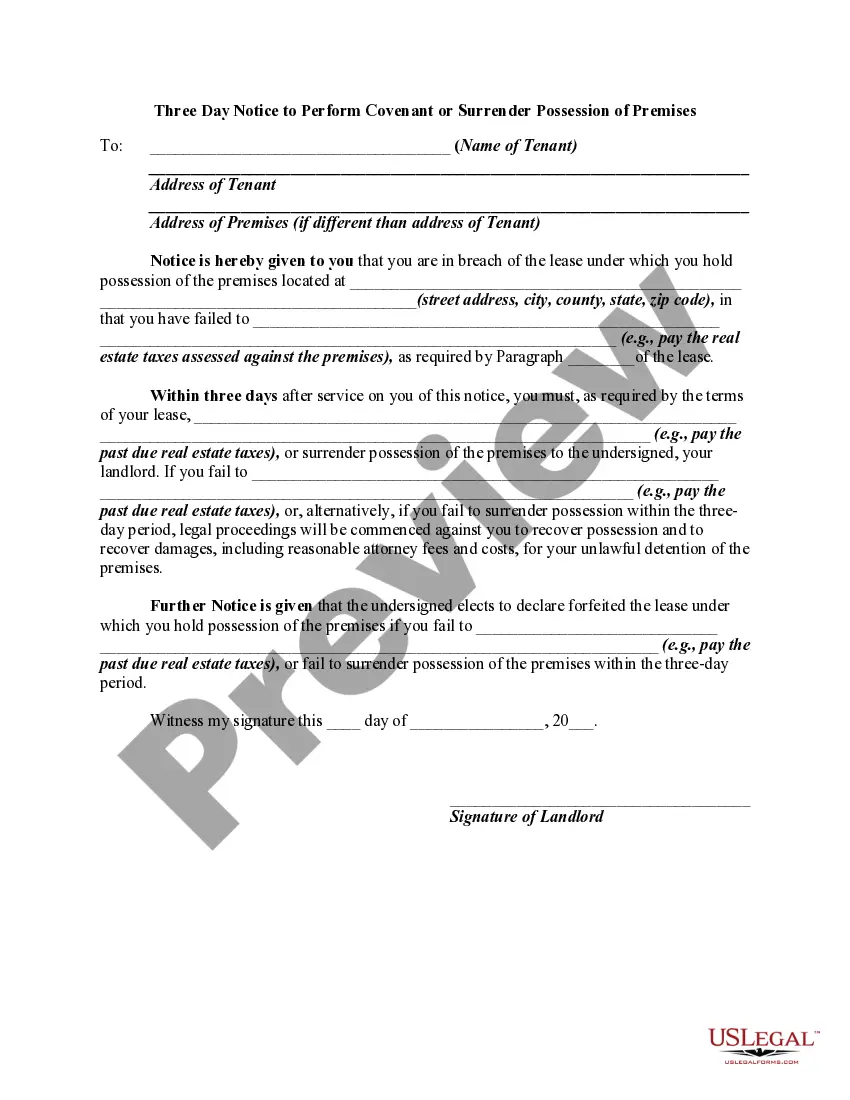
How to fill out Three Day Notice To Pay Rent Or Surrender Possession Of Premises - Vacate - Past Due Rent - Eviction?
The Eviction of Premises Without Notification displayed on this page is a reusable formal document crafted by expert attorneys in accordance with federal and state laws.
For over 25 years, US Legal Forms has supplied individuals, businesses, and legal professionals with more than 85,000 validated, state-specific templates for any professional and personal need.
Register for US Legal Forms to have authenticated legal documents for all of life’s situations at your fingertips.
- Search for the document you require and examine it.
- Review the sample you found and view it or assess the form description to confirm it meets your needs. If it does not, make use of the search bar to find the correct one. Click Buy Now when you have identified the template you need.
- Subscribe and Log In.
- Choose the payment plan that works best for you and create an account. Use PayPal or a credit card for a swift transaction. If you already possess an account, Log In and verify your subscription to proceed.
- Acquire the editable template.
Form popularity
FAQ
Yes, you can write your own eviction letter, but it is essential to ensure that it complies with local laws regarding premises eviction without notice. An eviction letter should clearly state the reason for eviction and include any required notice periods. For a more efficient process, consider using templates available on platforms like USLegalForms to ensure accuracy and legality in your eviction communication.
The new eviction law in Washington state emphasizes tenant rights and includes specific protocols for premises eviction without notice. Recently, lawmakers introduced regulations to extend notice periods and provide tenants with options to avoid eviction. These changes aim to create a fairer system for both landlords and tenants. Staying informed about these laws is essential for landlords to navigate the eviction process effectively.
The timeline for evicting a tenant in Washington state can vary, especially in cases of premises eviction without notice. Typically, after filing an eviction lawsuit, it can take anywhere from a few weeks to several months, depending on court schedules and tenant responses. Understanding the legal process and preparing properly can help expedite the eviction. Utilize resources like USLegalForms to streamline your eviction process.
Washington state has strict rules regarding eviction, which include following the proper notice procedures for premises eviction without notice. Landlords must generally give written notice to tenants, specifying the reasons for eviction. Depending on the situation, this notice can vary in length, often from 3 to 30 days. Always ensure that you are familiar with local regulations to avoid legal complications.
In Mississippi, landlords must follow specific procedures for eviction, even for premises eviction without notice. They typically need to provide a written notice to the tenant, outlining the reasons for eviction. If the tenant does not comply, the landlord can file an eviction lawsuit in court. It's crucial to adhere to local laws to ensure a legally binding eviction process.
In California, a landlord generally cannot evict a tenant without going to court unless there is a specific agreement allowing it. A premises eviction without notice is typically not an option, as tenants have legal rights that must be respected. Seeking legal advice or using a reliable resource, like USLegalForms, can provide guidance on the correct procedures you should follow in such cases.
The easiest way to evict someone often involves understanding local eviction laws clearly. However, in many cases, a premises eviction without notice is not legally permissible. Instead, landlords should provide a proper notice as mandated by law. Utilizing our platform at USLegalForms can help simplify this process, ensuring you follow the required steps properly.
An eviction notice is a legal document that informs a tenant of their landlord's intention to evict them. This notice outlines reasons for eviction and provides a timeline for the tenant to resolve the situation. On the other hand, an actual eviction occurs after the notice period ends, when a court order removes the tenant from the property. For assistance in understanding these terms better, check out the resources from US Legal Forms.
Typically, a tenant cannot be evicted immediately without following proper legal procedures. Though certain situations may warrant a premises eviction without notice, landlords usually must provide a formal eviction notice first. This process ensures that the tenant has the opportunity to respond and resolve the issue at hand. Explore resources on US Legal Forms to navigate eviction processes effectively.
In Arizona, a landlord must provide at least a 30-day notice to a tenant for a month-to-month rental agreement. However, if there's a valid reason, such as a lease violation, a landlord may issue a shorter notice. Understanding these timelines is crucial, especially if you are considering a premises eviction without notice. For more information on legal procedures, consider using US Legal Forms.