Premises Eviction For Unauthorised Occupants) Act 1958
Description
Get your form ready online
Our built-in tools help you complete, sign, share, and store your documents in one place.
Make edits, fill in missing information, and update formatting in US Legal Forms—just like you would in MS Word.
Download a copy, print it, send it by email, or mail it via USPS—whatever works best for your next step.
Sign and collect signatures with our SignNow integration. Send to multiple recipients, set reminders, and more. Go Premium to unlock E-Sign.
If this form requires notarization, complete it online through a secure video call—no need to meet a notary in person or wait for an appointment.
We protect your documents and personal data by following strict security and privacy standards.

Make edits, fill in missing information, and update formatting in US Legal Forms—just like you would in MS Word.

Download a copy, print it, send it by email, or mail it via USPS—whatever works best for your next step.

Sign and collect signatures with our SignNow integration. Send to multiple recipients, set reminders, and more. Go Premium to unlock E-Sign.

If this form requires notarization, complete it online through a secure video call—no need to meet a notary in person or wait for an appointment.

We protect your documents and personal data by following strict security and privacy standards.
Looking for another form?

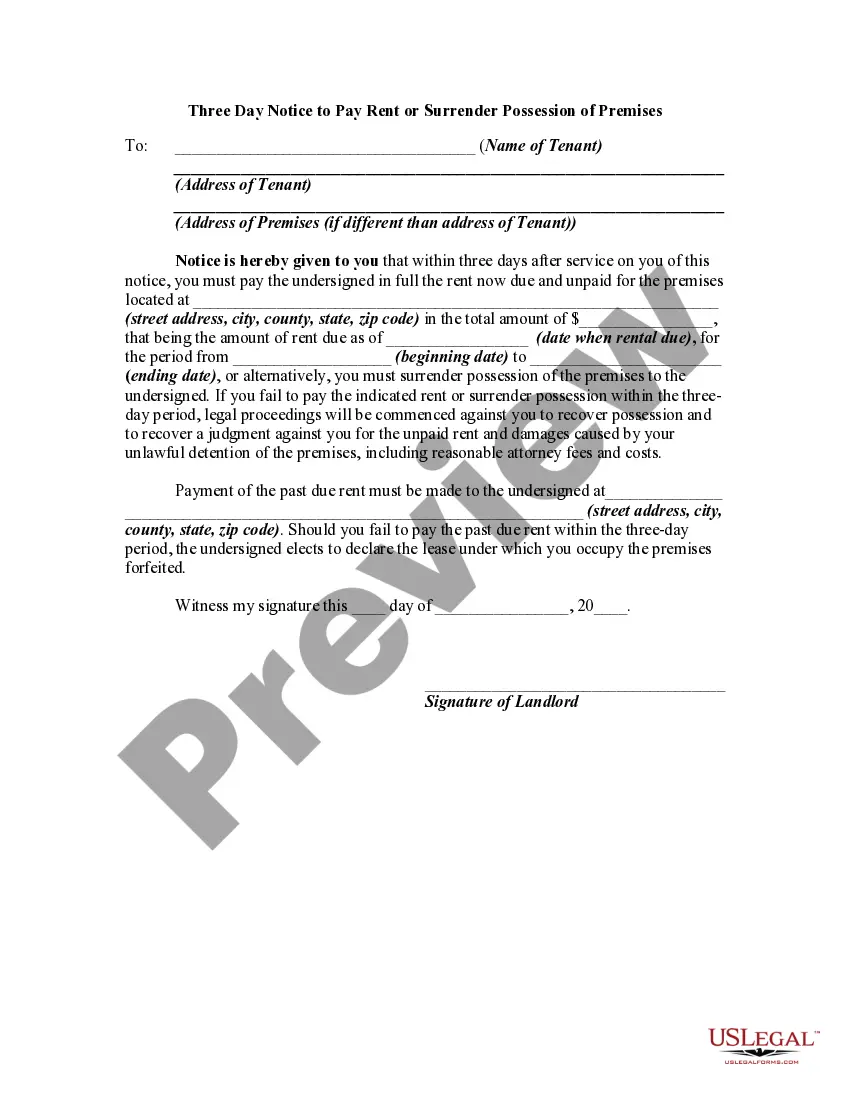
How to fill out Three Day Notice To Pay Rent Or Surrender Possession Of Premises - Vacate - Past Due Rent - Eviction?
Whether for commercial intentions or for personal affairs, everyone must face legal situations at some time in their lives.
Completing legal paperwork requires meticulous care, starting with choosing the proper form template.
Once it is downloaded, you can fill out the form with the assistance of editing software or print it and complete it manually.
- For example, if you select an incorrect version of the Premises Eviction For Unauthorised Occupants Act 1958, it will be rejected when you submit it.
- Thus, it is crucial to find a reliable source of legal documents like US Legal Forms.
- If you want to acquire a sample of the Premises Eviction For Unauthorised Occupants Act 1958, follow these simple steps.
- Locate the sample you require by using the search field or catalog navigation.
- Review the form’s details to confirm it aligns with your case, state, and county.
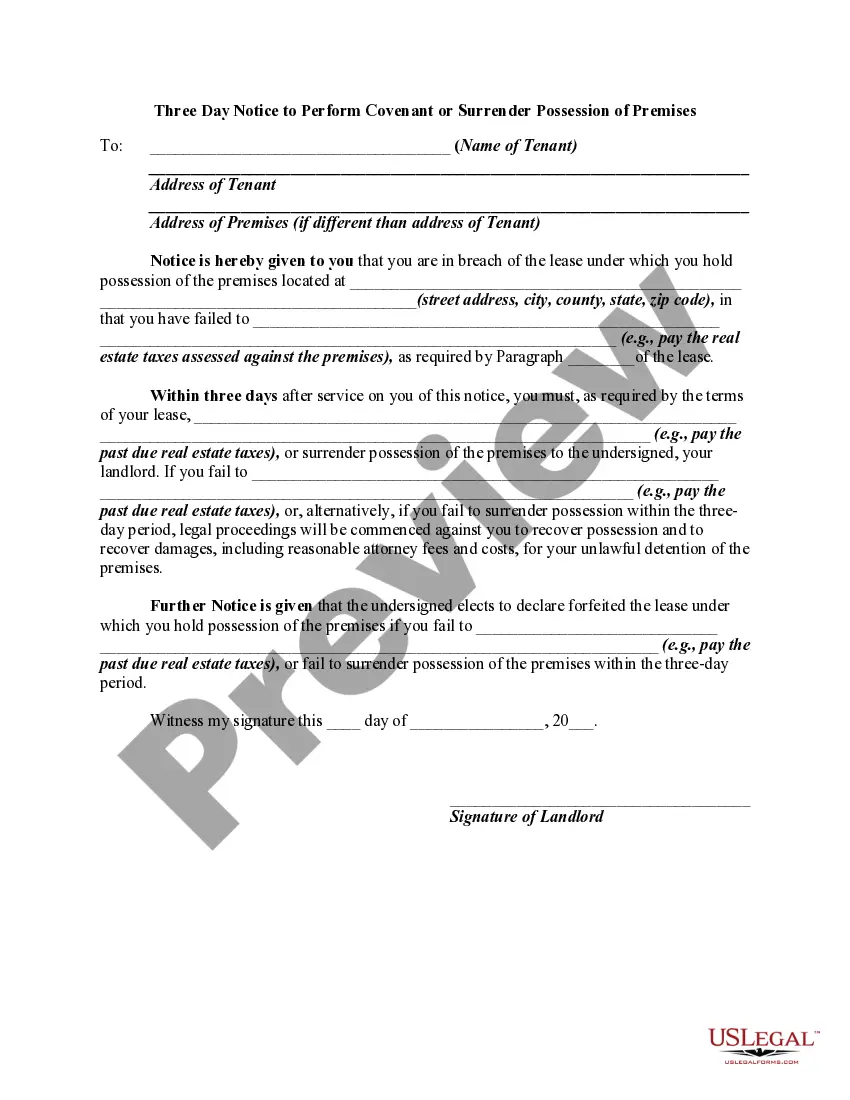
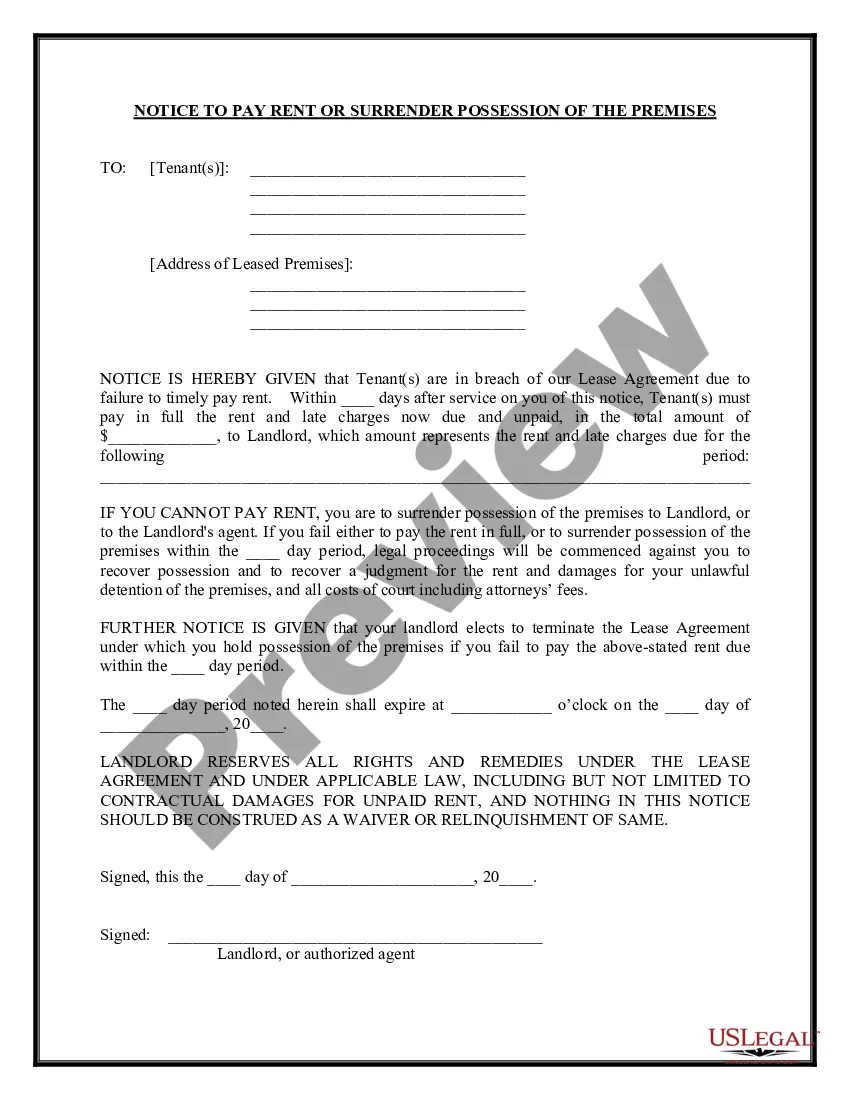
- Click on the form’s preview to examine it.
- If it is the incorrect document, return to the search function to find the sample of the Premises Eviction For Unauthorised Occupants Act 1958 you need.
- Download the template once it fulfills your criteria.
- If you already possess a US Legal Forms account, simply click Log in to access previously saved templates in My documents.
- If you don’t have an account yet, you can acquire the form by clicking Buy now.
- Choose the appropriate pricing option.
- Complete the account registration form.
- Select your payment method: you can utilize a credit card or PayPal account.
- Choose the file type you desire and download the Premises Eviction For Unauthorised Occupants Act 1958.
Form popularity
FAQ
Yes, you can evict a permitted occupier, but the process must follow the law outlined in the Premises Eviction for Unauthorised Occupants Act 1958. It is important to properly notify the occupier and provide them with the necessary information regarding the eviction. If they refuse to leave, you may need to seek legal assistance to ensure compliance with the law. Utilizing resources from USLegalForms can guide you through the steps necessary for a smooth eviction process.
An unlawful occupant is someone who resides in a property without the owner's permission or legal right. This can occur when a tenant sublets without approval or when someone trespasses. Understanding the definition of unlawful occupancy helps in taking appropriate action, such as filing for eviction under the Premises Eviction for Unauthorised Occupants Act 1958.
If someone refuses to move out, initiate the process by serving them an eviction notice as stipulated in the Premises Eviction for Unauthorised Occupants Act 1958. If they continue to resist, you may need to file for an eviction in court. It’s vital to remain calm and legally compliant throughout this process to reclaim your property effectively.
Proving unauthorized occupants involves gathering substantial evidence that supports your claim. This may include lease agreements, witness testimonies, and any relevant documentation showing the individual’s lack of consent to occupy the property. If you're unsure how to compile this evidence or need assistance navigating the legal process, uslegalforms can provide valuable resources.
In Mississippi, the eviction process requires the landlord to provide a notice to the tenant or unauthorized occupant, typically giving them a few days to vacate. If they do not comply, you can file an eviction lawsuit in court. The judge will review the case, and if granted, a legal order for removal will be issued, in accordance with the Premises Eviction for Unauthorised Occupants Act 1958. It's important to follow local legal procedures to avoid complications.
Unauthorized occupancy refers to a situation where a person resides in a property without the owner’s consent. This can occur when a tenant allows someone to live with them without permission or when a person breaks into a property. Understanding the nuances of unauthorized occupancy is crucial when it comes to taking action under the Premises Eviction for Unauthorised Occupants Act 1958.
If someone is living in your house without permission, your first step is to communicate with them and request they leave. If that doesn’t work, you may need to send a formal eviction notice, stating that you wish to reclaim your property in accordance with the Premises Eviction for Unauthorised Occupants Act 1958. If they still refuse to vacate, consider enlisting professional legal help to navigate the eviction process effectively.
To prove an unauthorized occupant under the Premises Eviction for Unauthorised Occupants Act 1958, you must show evidence of their presence without permission. This can include documentation like lease agreements, utility bills, or photos. Collecting testimonies from neighbors can also strengthen your case. A clear understanding of your rights is essential, and seeking legal assistance may be beneficial.
To remove unwanted people from your property, communicate clearly and, if necessary, provide a written notice to vacate. Should they refuse to leave, you’ll want to understand your rights under the Premises Eviction for Unauthorised Occupants Act 1958. Consulting with a legal expert or using resources like USLegalForms can simplify this process and ensure compliance with the law.
To get rid of unauthorized occupants, you should first approach them to discuss their status and request that they leave. If this does not work, document the situation and consider starting formal eviction proceedings under the Premises Eviction for Unauthorised Occupants Act 1958. Engaging with legal resources, such as USLegalForms, can guide you through this process and provide the necessary documentation.