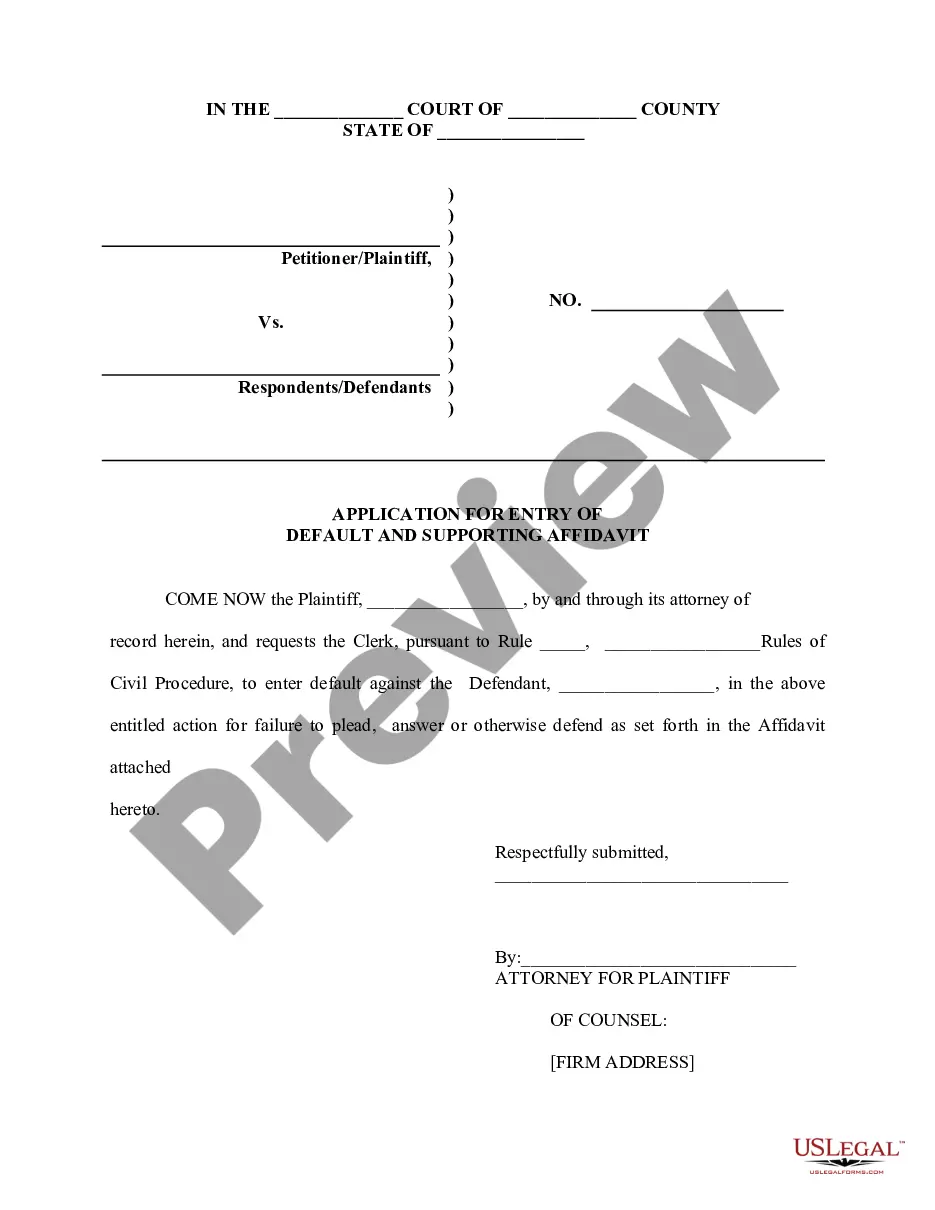
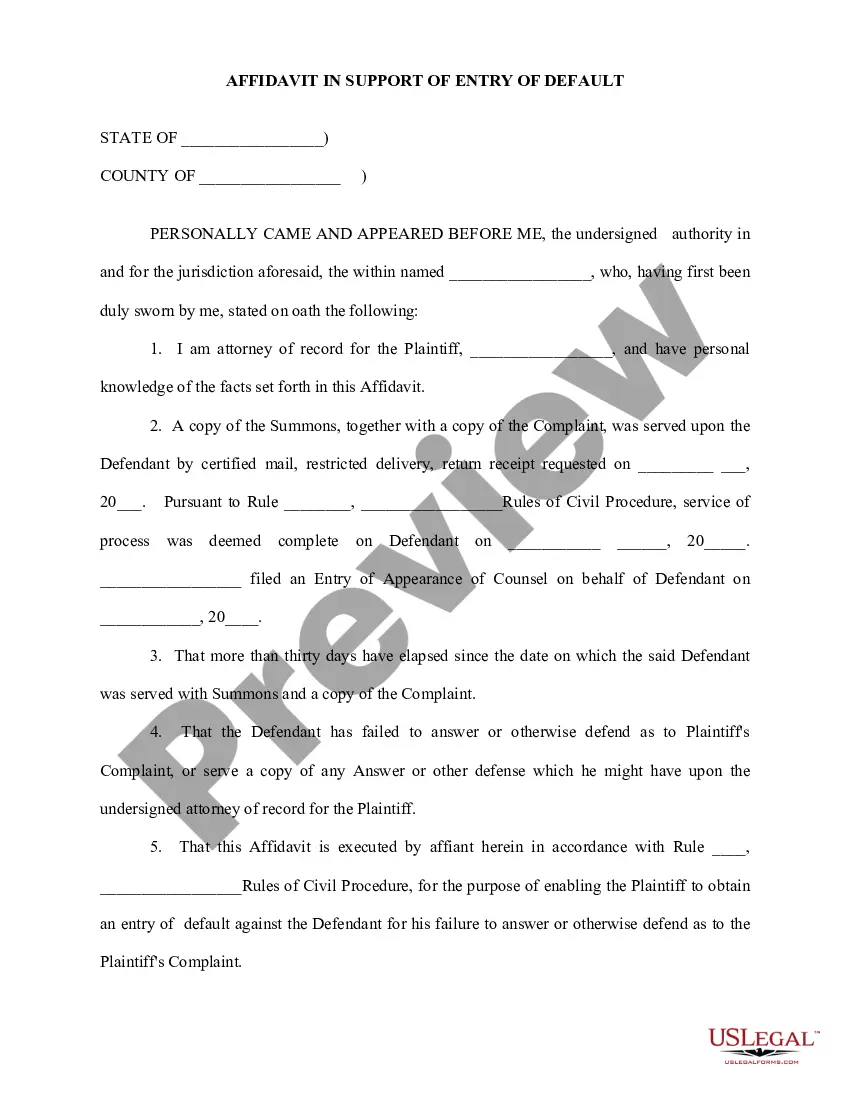
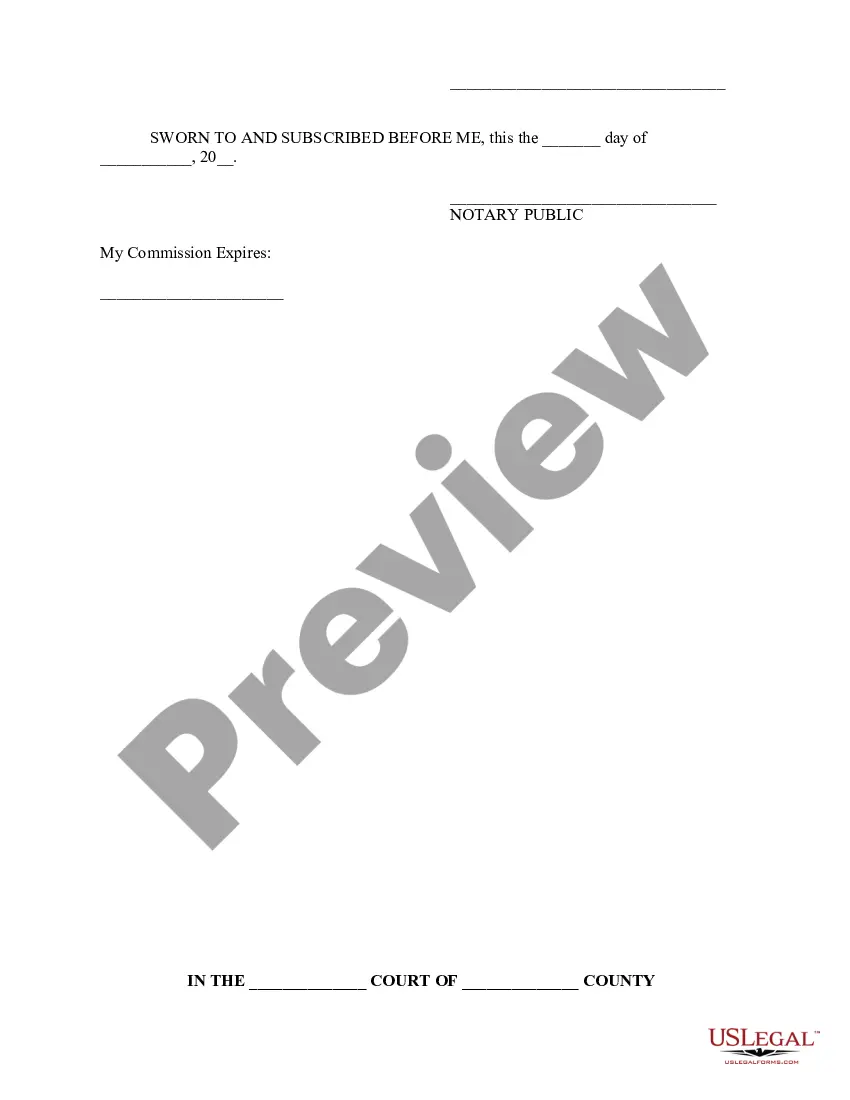
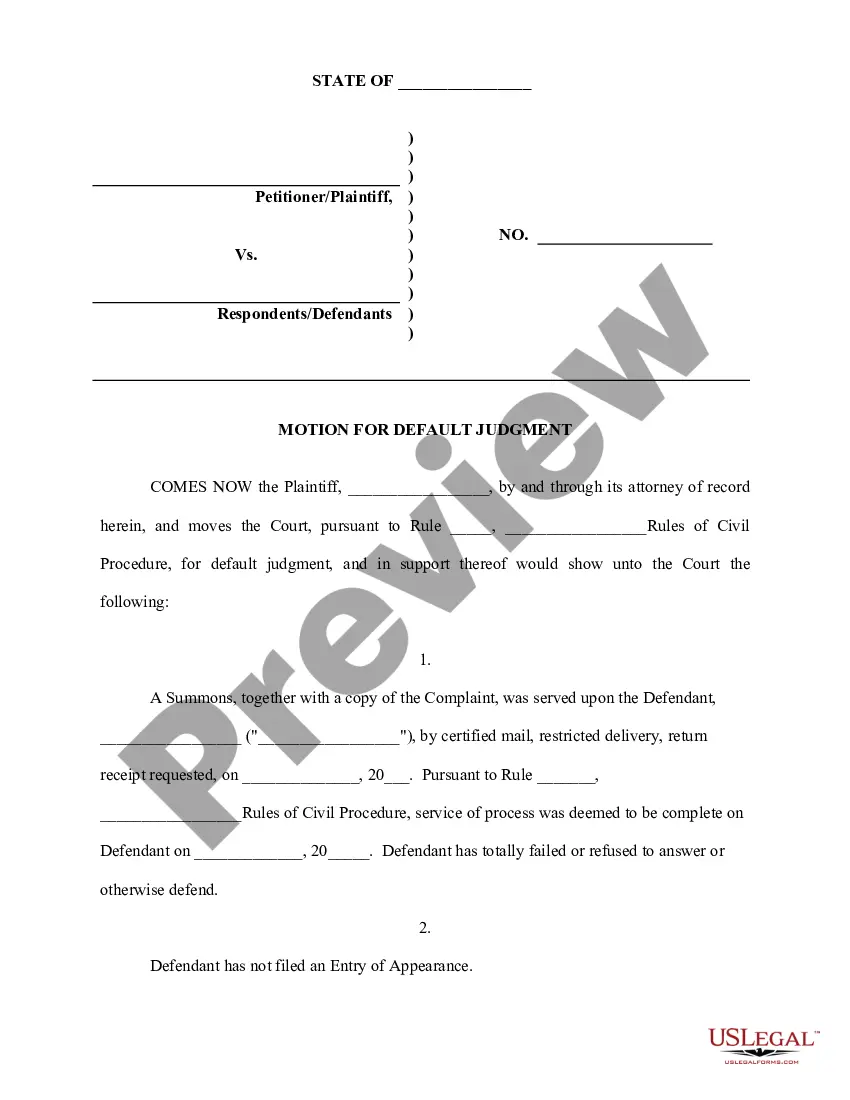
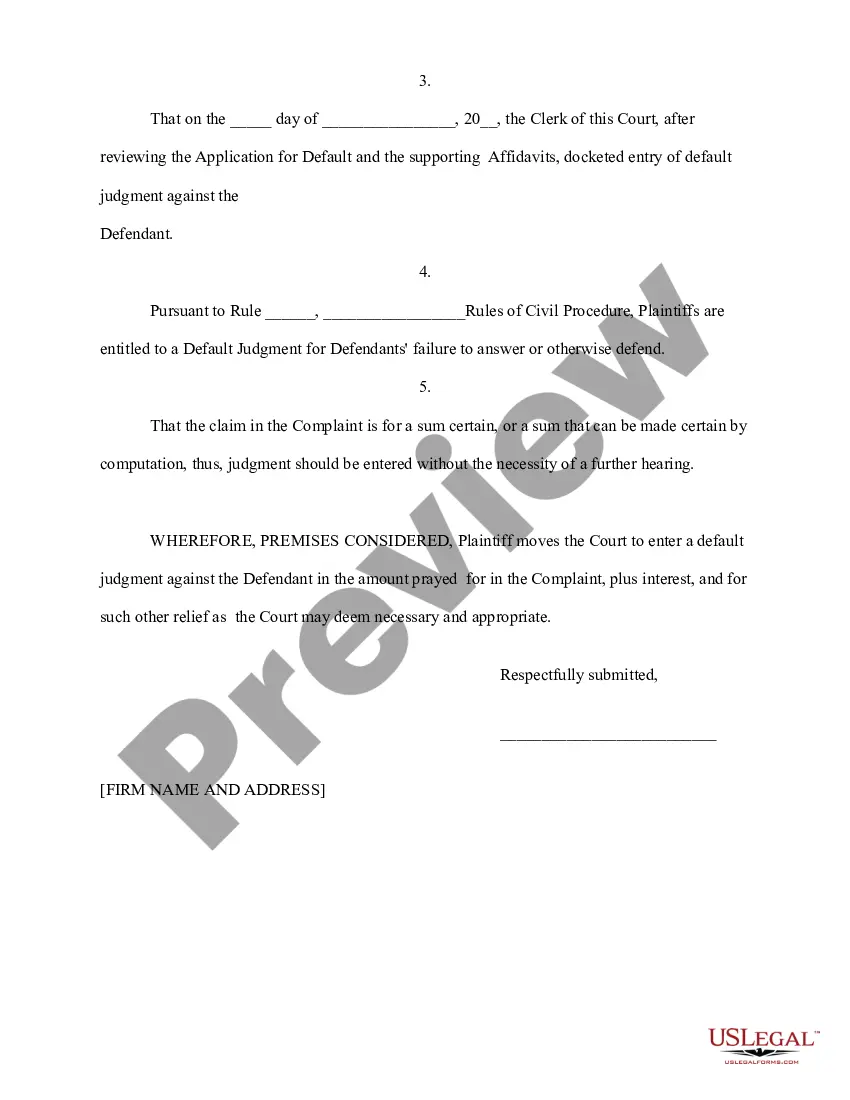
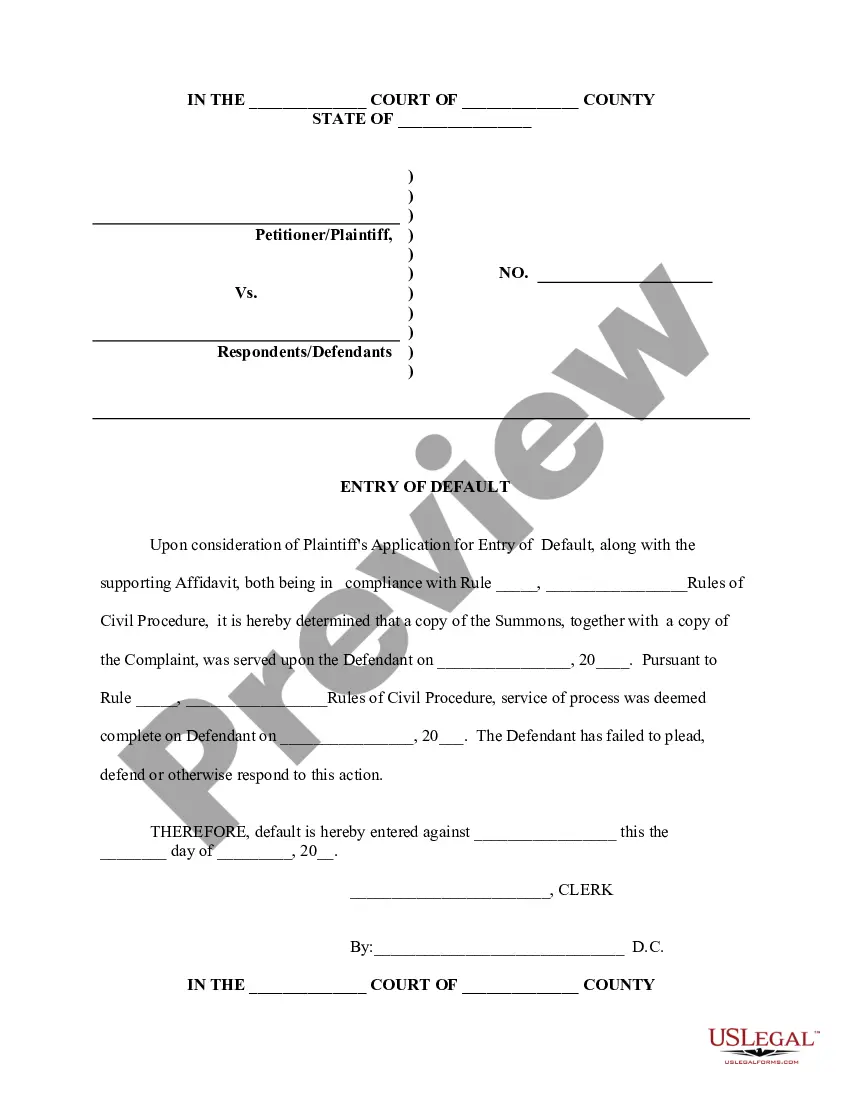
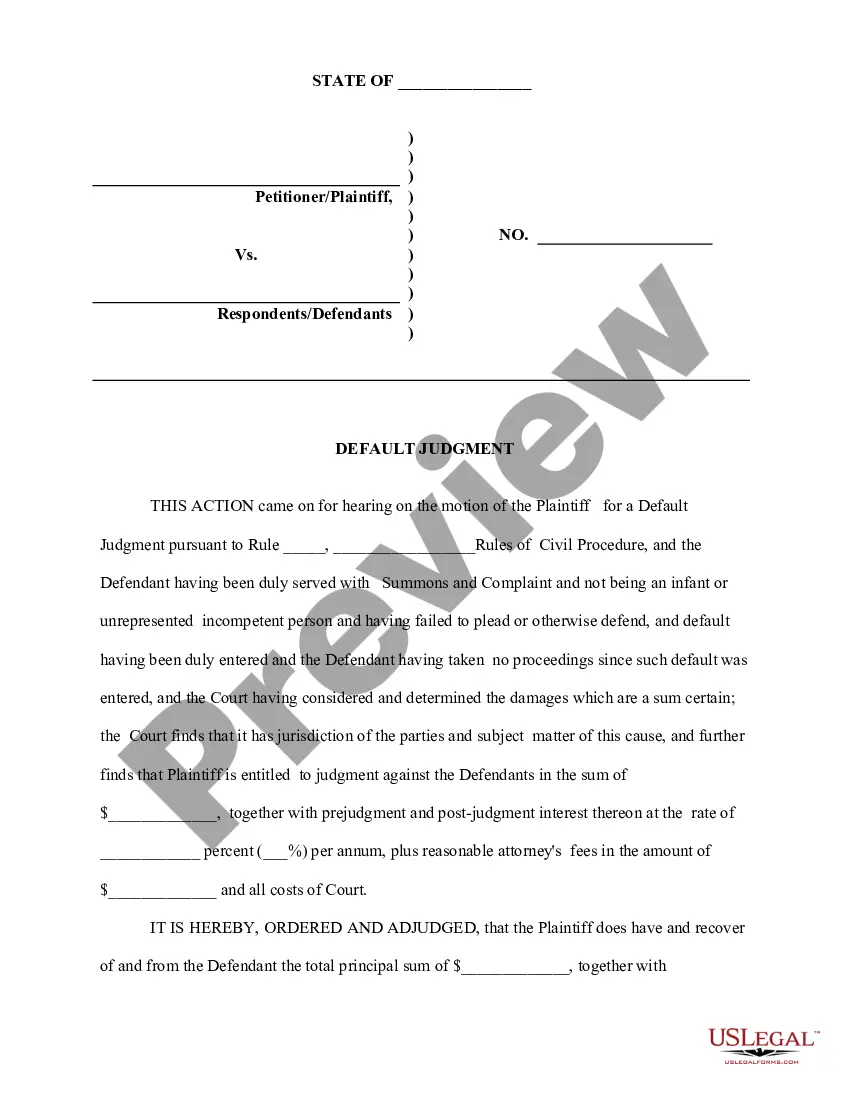
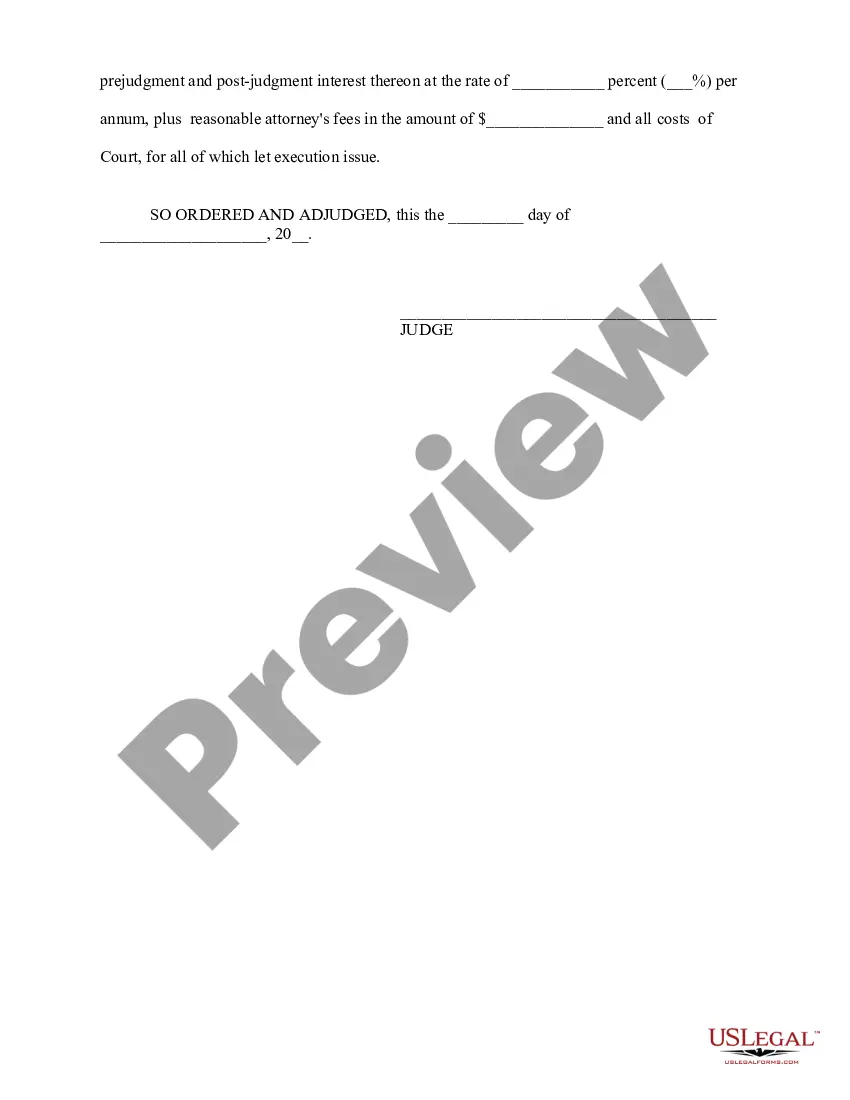
Entry Default Judgment With Motion
Description
Get your form ready online
Our built-in tools help you complete, sign, share, and store your documents in one place.
Make edits, fill in missing information, and update formatting in US Legal Forms—just like you would in MS Word.
Download a copy, print it, send it by email, or mail it via USPS—whatever works best for your next step.
Sign and collect signatures with our SignNow integration. Send to multiple recipients, set reminders, and more. Go Premium to unlock E-Sign.
If this form requires notarization, complete it online through a secure video call—no need to meet a notary in person or wait for an appointment.
We protect your documents and personal data by following strict security and privacy standards.

Make edits, fill in missing information, and update formatting in US Legal Forms—just like you would in MS Word.

Download a copy, print it, send it by email, or mail it via USPS—whatever works best for your next step.

Sign and collect signatures with our SignNow integration. Send to multiple recipients, set reminders, and more. Go Premium to unlock E-Sign.

If this form requires notarization, complete it online through a secure video call—no need to meet a notary in person or wait for an appointment.

We protect your documents and personal data by following strict security and privacy standards.
Looking for another form?
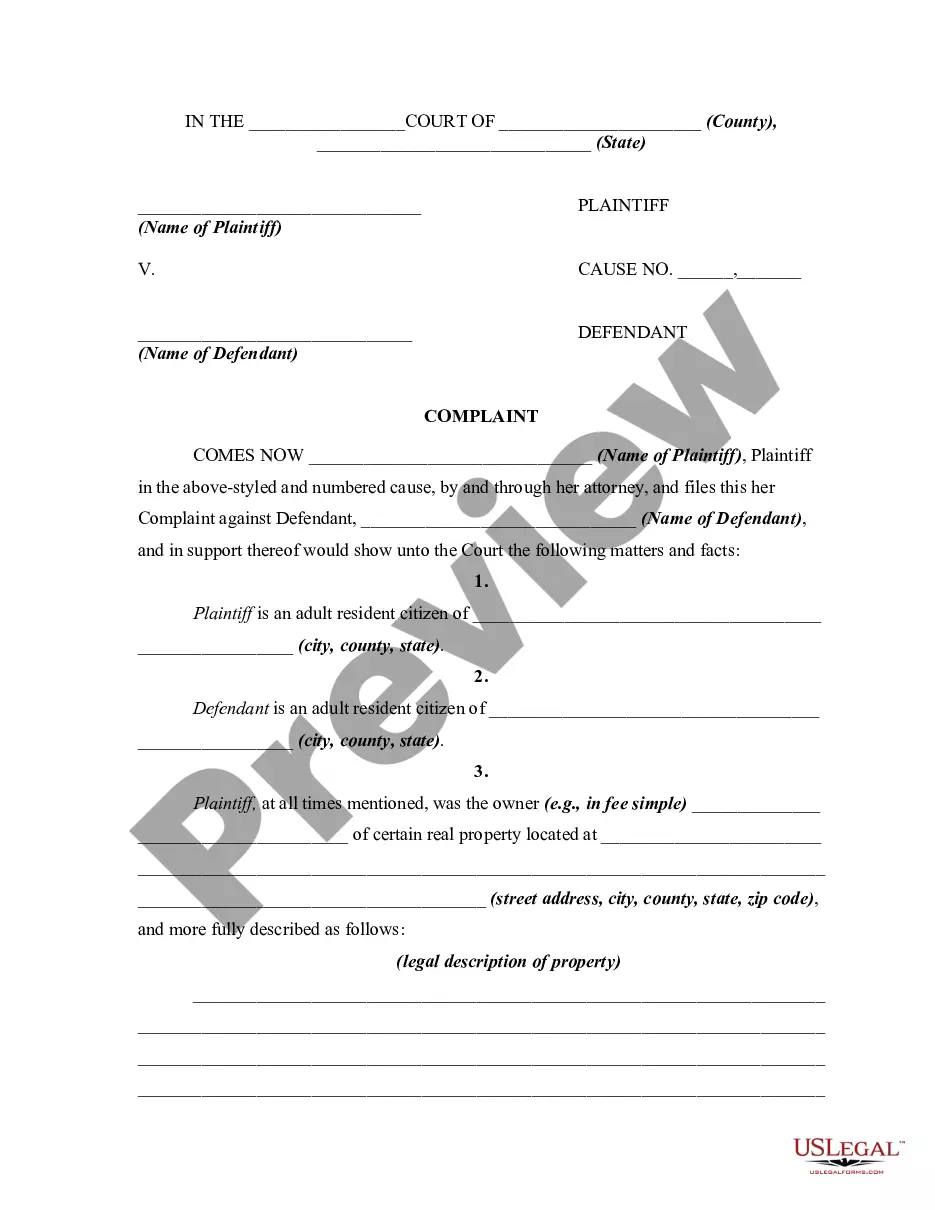
How to fill out Application For Entry Of Default - Affidavit - Motion - Entry Of Default - Default Judgment?
The Entry Default Judgment With Motion displayed on this site is a reusable official template prepared by skilled attorneys in accordance with federal and local laws.
For over 25 years, US Legal Forms has supplied individuals, businesses, and lawyers with more than 85,000 validated, state-specific documents for any commercial and personal situation.
Choose the format you prefer for your Entry Default Judgment With Motion (PDF, DOCX, RTF) and download the document to your device.
- Search for the document you require and assess it.
- Browse the sample you looked for and view it or check the form description to confirm it meets your requirements. If it doesn’t, use the search function to find the suitable one. Click Buy Now when you locate the template you need.
- Register and Log In.
- Select the pricing plan that fits your needs and create an account. Use PayPal or a debit/credit card to make a swift payment. If you already possess an account, Log In and check your subscription to proceed.
- Download the editable template.
Form popularity
FAQ
An example of a default judgment occurs when a landlord sues a tenant for unpaid rent, and the tenant fails to respond to the complaint. In this case, the landlord may file a motion for entry default judgment with motion, requesting the court grant them the unpaid rent without further hearings. Default judgments provide a remedy when one party does not engage in the legal process. To learn more about default judgment scenarios, you can explore the informative resources on the US Legal Forms platform.
A motion for default judgment is a legal request to finalize a judgment in favor of one party due to the other party's failure to respond or appear in court. This process concludes without a full trial and is often utilized in straightforward cases. Filing an entry default judgment with motion signifies that the court can move forward with the decision based on the available evidence. For assistance in navigating this, US Legal Forms offers helpful resources.
The rule 55 B 1 motion for entry of default judgment allows a party to seek a judgment when the opposing party has failed to respond in a timely manner. This motion acts as a formal request to the court to recognize that the other party is absent from the proceedings. It is essential to follow the correct procedures to ensure that the entry default judgment with motion is valid. For guidance on this process, consider using the resources available on the US Legal Forms platform.
A motion to set aside may be brought to set aside a judgment based upon: (1) Lack of jurisdiction over the person or the subject matter; (2) Fraud, accident, or mistake or the acts of the adverse party unmixed with the negligence or fault of the movant; or (3) A nonamendable defect which appears upon the face of the ...
You file a motion by completing the form and filing it with the same court that signed the default entry or default judgment. There is a $20 motion fee for filing a motion to set aside default.
A motion for judgment as a matter of law asks the court to enter a judgment based on the conclusion that no reasonable jury could reach a different conclusion. The motion is made before the case is submitted to the jury but after a party has been fully heard on the issue.
You can ask to cancel, or ?set aside? a default judgment. You have to have a good reason for not responding in 30 days. If the judgment is canceled, you'll get a chance to answer.
Entry of judgment is a final recording of the decision and opinion, if the court made one.