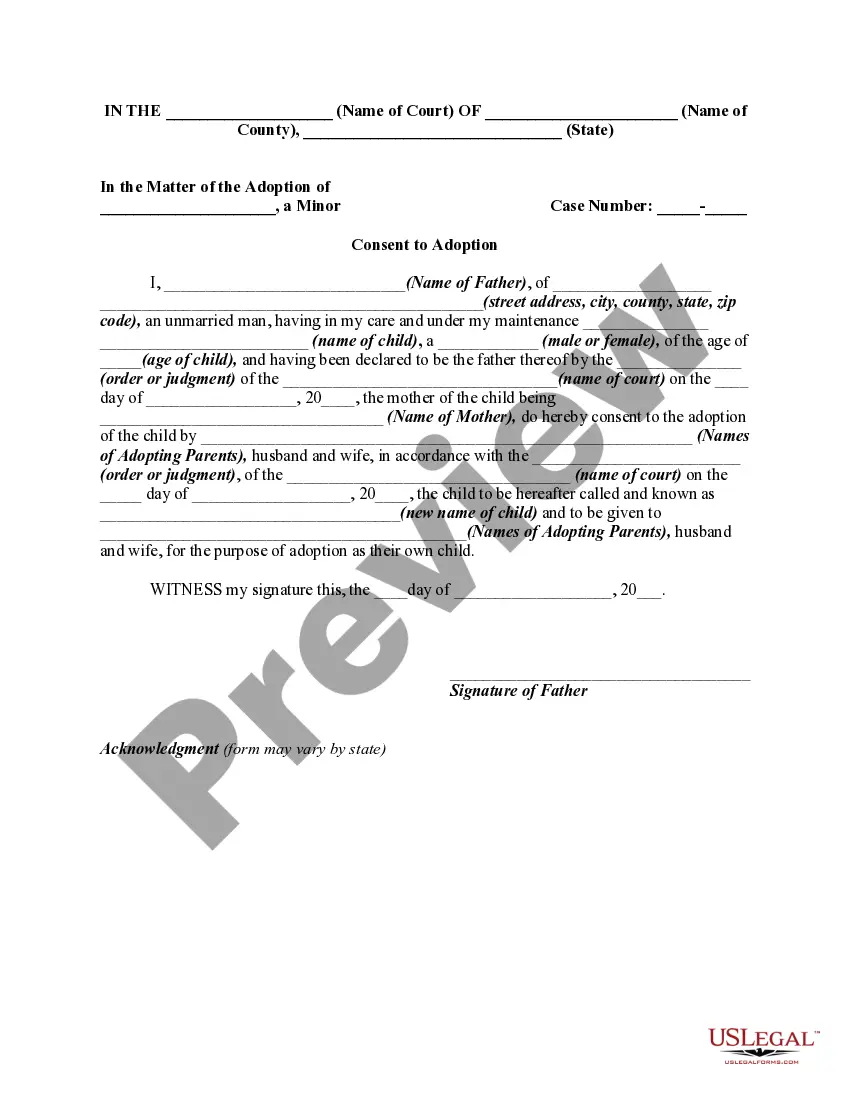
Adopting Adoption Father With Dementia
Description

Get your form ready online
Our built-in tools help you complete, sign, share, and store your documents in one place.
Make edits, fill in missing information, and update formatting in US Legal Forms—just like you would in MS Word.
Download a copy, print it, send it by email, or mail it via USPS—whatever works best for your next step.
Sign and collect signatures with our SignNow integration. Send to multiple recipients, set reminders, and more. Go Premium to unlock E-Sign.
If this form requires notarization, complete it online through a secure video call—no need to meet a notary in person or wait for an appointment.
We protect your documents and personal data by following strict security and privacy standards.

Make edits, fill in missing information, and update formatting in US Legal Forms—just like you would in MS Word.

Download a copy, print it, send it by email, or mail it via USPS—whatever works best for your next step.

Sign and collect signatures with our SignNow integration. Send to multiple recipients, set reminders, and more. Go Premium to unlock E-Sign.

If this form requires notarization, complete it online through a secure video call—no need to meet a notary in person or wait for an appointment.

We protect your documents and personal data by following strict security and privacy standards.
Looking for another form?


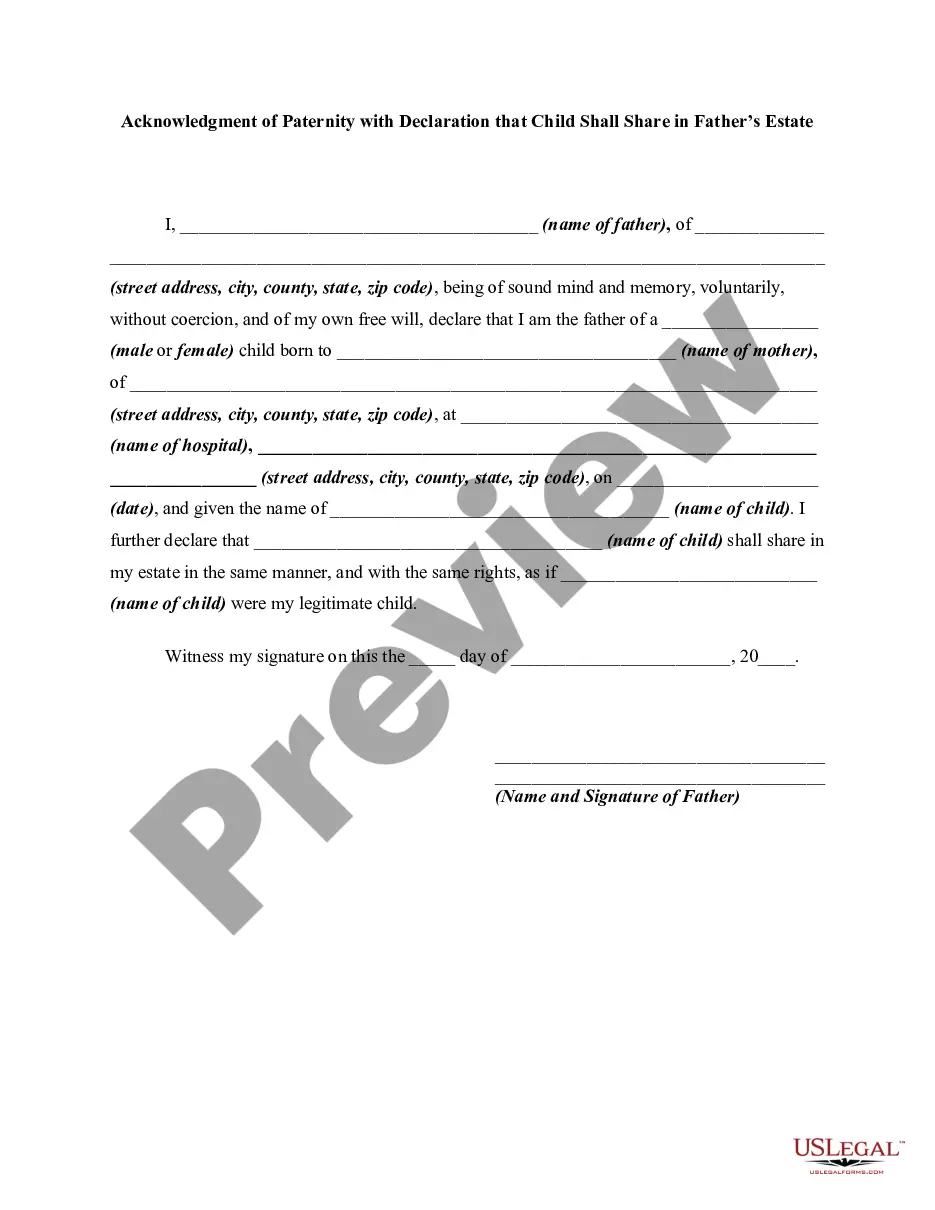

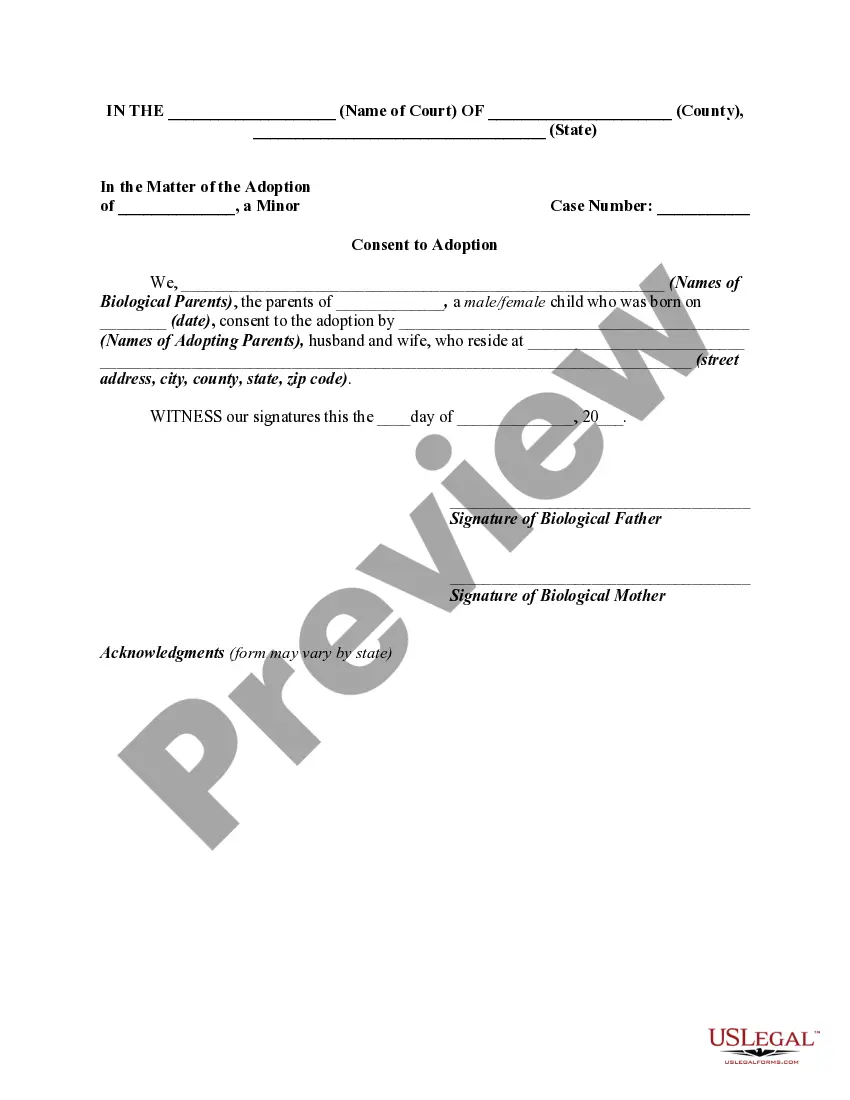
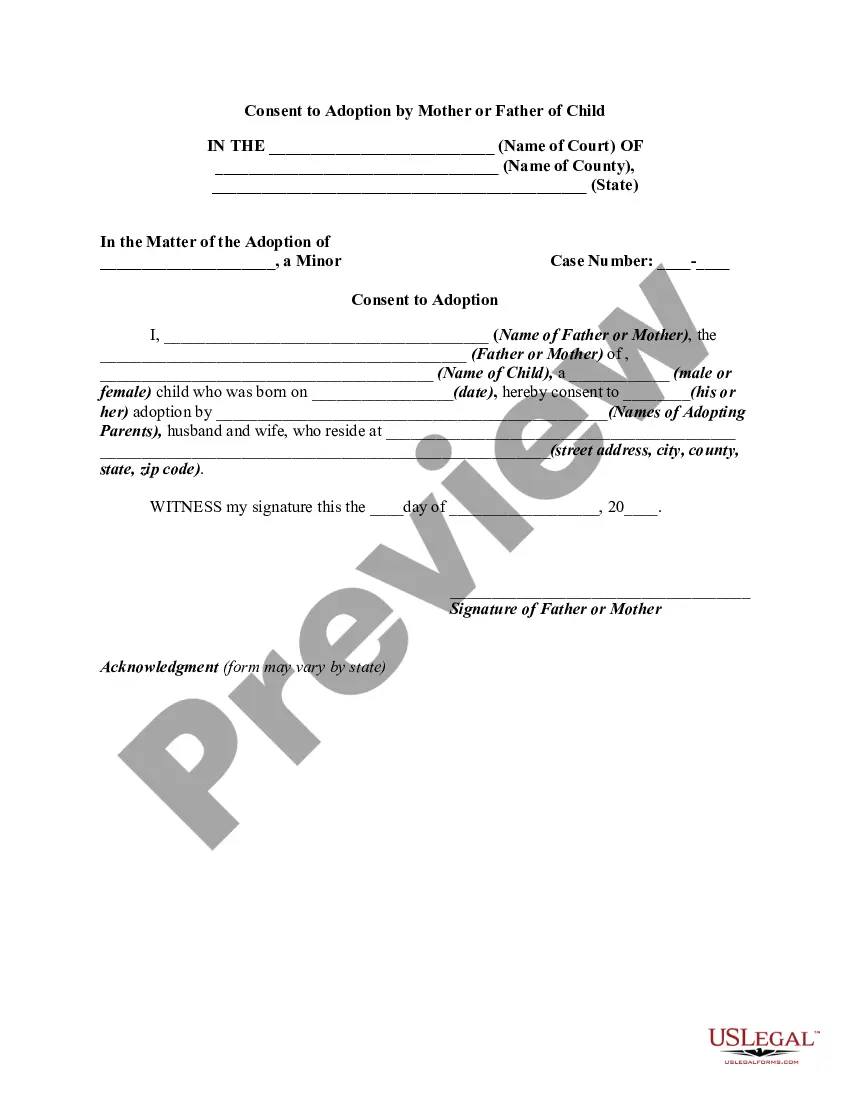
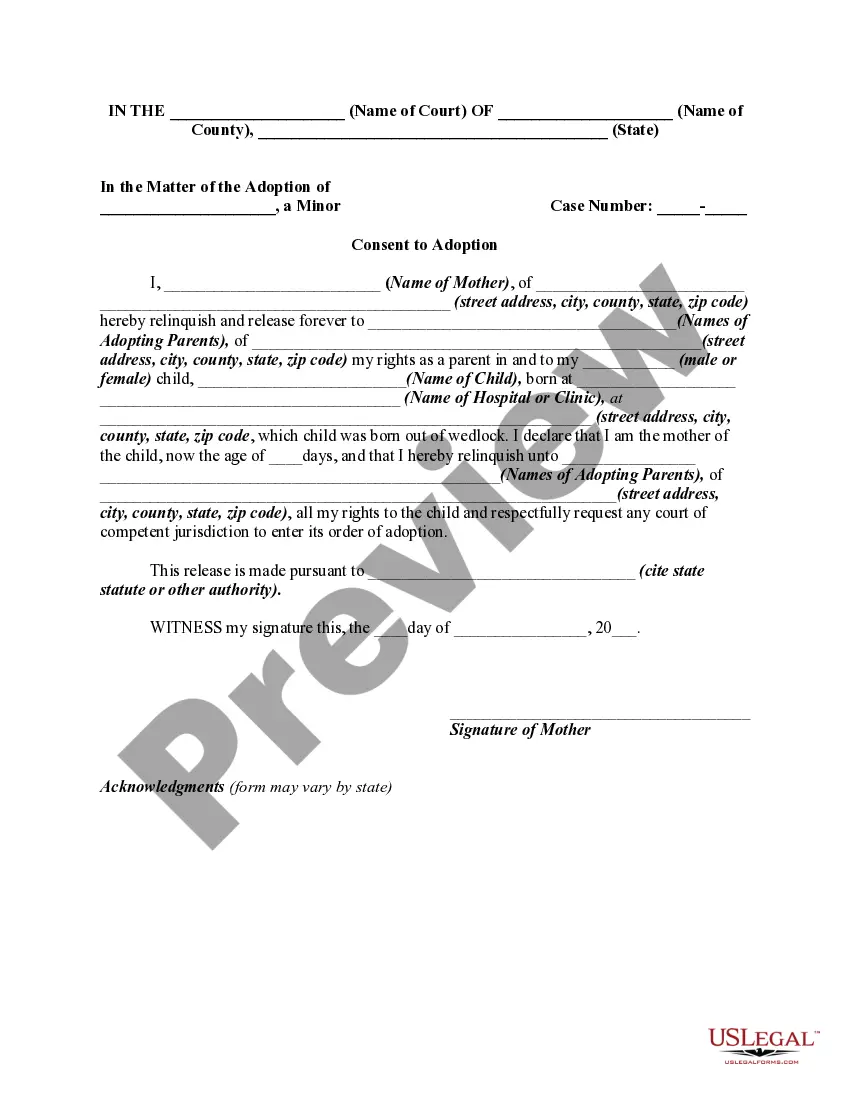
How to fill out Consent To Adoption By Unmarried Father Of Child?
Regardless of whether it is for corporate needs or personal issues, everyone must handle legal matters at some point in their lives.
Completing legal documentation necessitates meticulous care, starting with selecting the correct form template.
Once downloaded, you can fill out the form using editing software or print it and complete it manually. With an extensive US Legal Forms catalog available, you do not need to waste time searching for the correct template online. Employ the library’s easy navigation to find the appropriate template for any circumstance.
- Obtain the template you require by utilizing the search box or catalog navigation.
- Review the form’s details to ensure it aligns with your situation, state, and locality.
- Click on the form’s preview to view it.
- If it is the incorrect form, return to the search feature to find the Adopting Adoption Father With Dementia example you need.
- Download the file if it satisfies your criteria.
- If you have a US Legal Forms account, click Log in to retrieve previously saved templates in My documents.
- If you do not possess an account yet, you can acquire the form by clicking Buy now.
- Choose the suitable pricing option.
- Complete the profile registration form.
- Select your payment method: you can utilize a credit card or PayPal account.
- Choose the document format you wish and download the Adopting Adoption Father With Dementia.
Form popularity
FAQ
A person who adopts a child has all of the legal rights and responsibilities of a natural parent, and that new parent-child relationship is permanent. If you want to adopt a stepchild who is 18 or over, you can do so through the adult adoption process.
The family-based petition process provides a third avenue through which an adopted individual is considered the child (or son or daughter) of their adopting parent(s) for immigration purposes.
Capacity evaluation for a patient with dementia is used to determine whether the patient is capable of giving informed consent, participate in research, manage their finances, live independently, make a will, and have ability to drive. Patients with dementia cannot be assumed to have impaired capacity.
In reality, when someone is diagnosed with Alzheimer's disease or dementia, they are not immediately considered incapacitated or of unsound mind. A legal determination of whether someone is incapacitated needs to be made by a court. There is no presumption or immediate trigger based solely on a medical diagnosis.
The person living with dementia maintains the right to make his or her own decisions as long as he or she has legal capacity. Power of attorney does not give the agent the authority to override the principal's decision-making until the person with dementia no longer has legal capacity.