State Guardian Litem For Disabled Adults
Description

Get your form ready online
Our built-in tools help you complete, sign, share, and store your documents in one place.
Make edits, fill in missing information, and update formatting in US Legal Forms—just like you would in MS Word.
Download a copy, print it, send it by email, or mail it via USPS—whatever works best for your next step.
Sign and collect signatures with our SignNow integration. Send to multiple recipients, set reminders, and more. Go Premium to unlock E-Sign.
If this form requires notarization, complete it online through a secure video call—no need to meet a notary in person or wait for an appointment.
We protect your documents and personal data by following strict security and privacy standards.

Make edits, fill in missing information, and update formatting in US Legal Forms—just like you would in MS Word.

Download a copy, print it, send it by email, or mail it via USPS—whatever works best for your next step.

Sign and collect signatures with our SignNow integration. Send to multiple recipients, set reminders, and more. Go Premium to unlock E-Sign.

If this form requires notarization, complete it online through a secure video call—no need to meet a notary in person or wait for an appointment.

We protect your documents and personal data by following strict security and privacy standards.
Looking for another form?
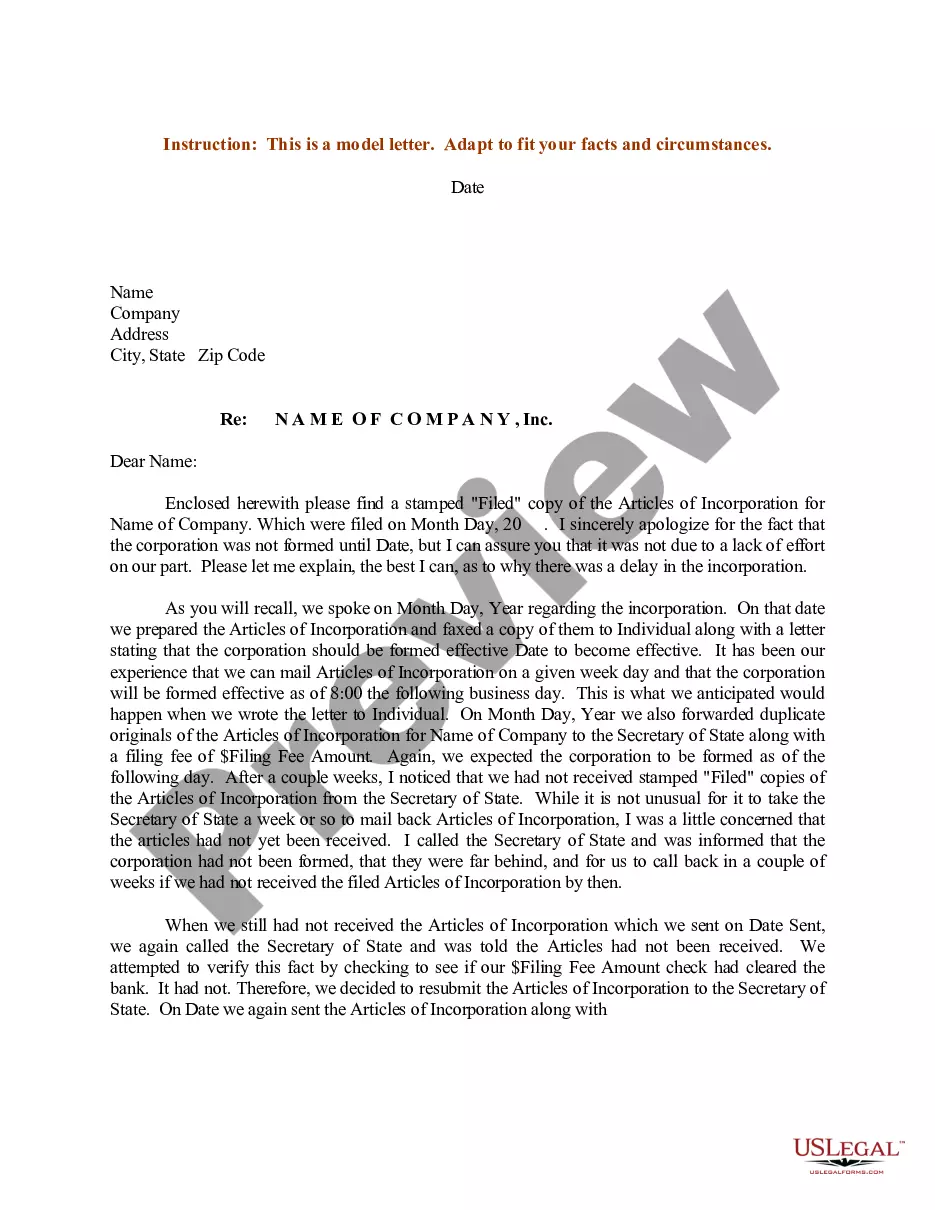








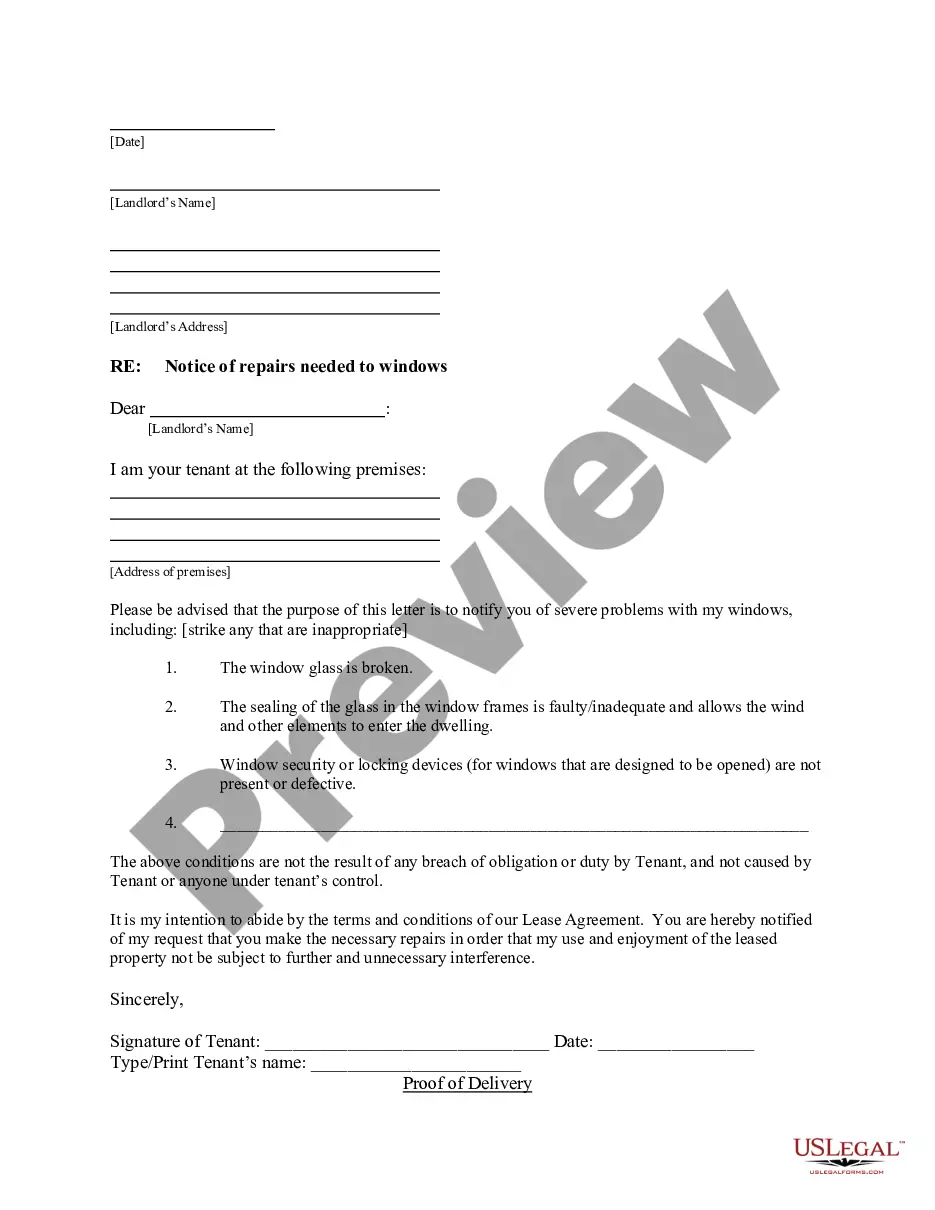
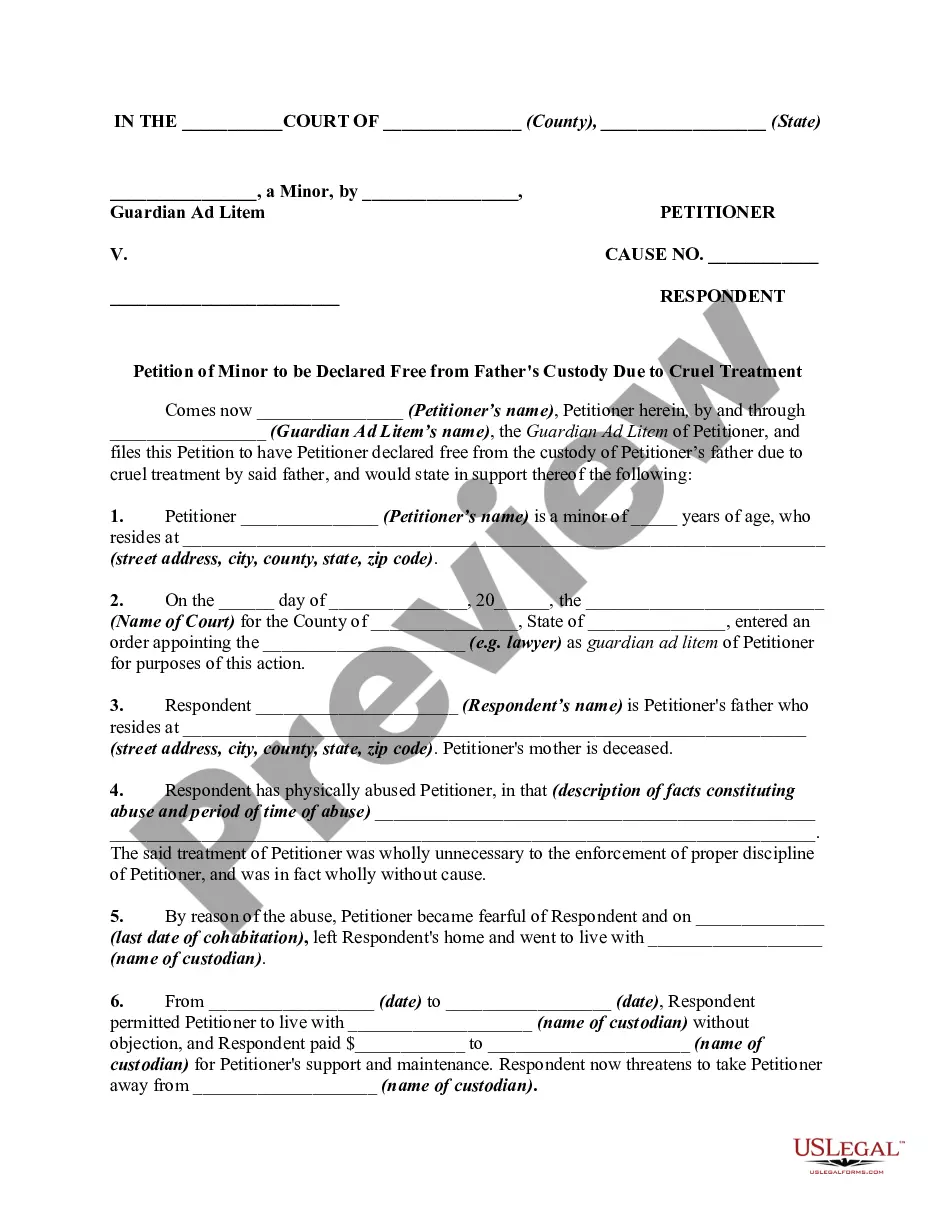
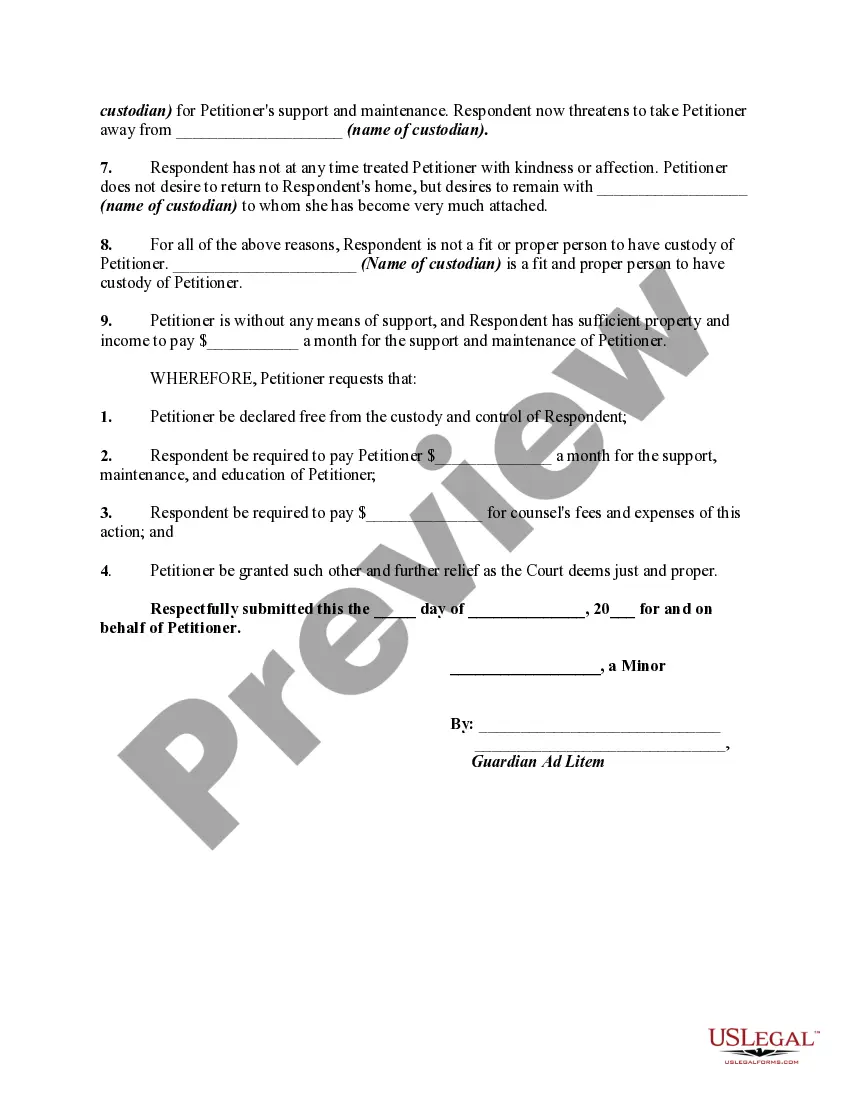
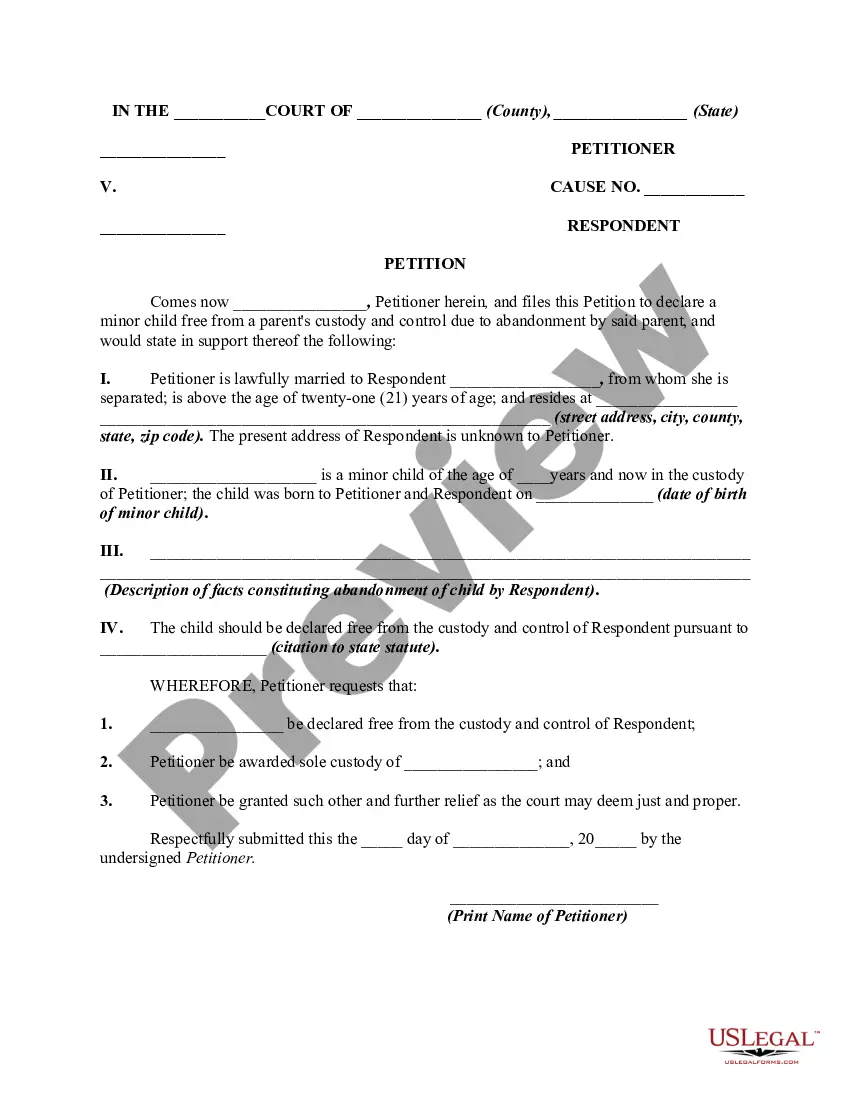
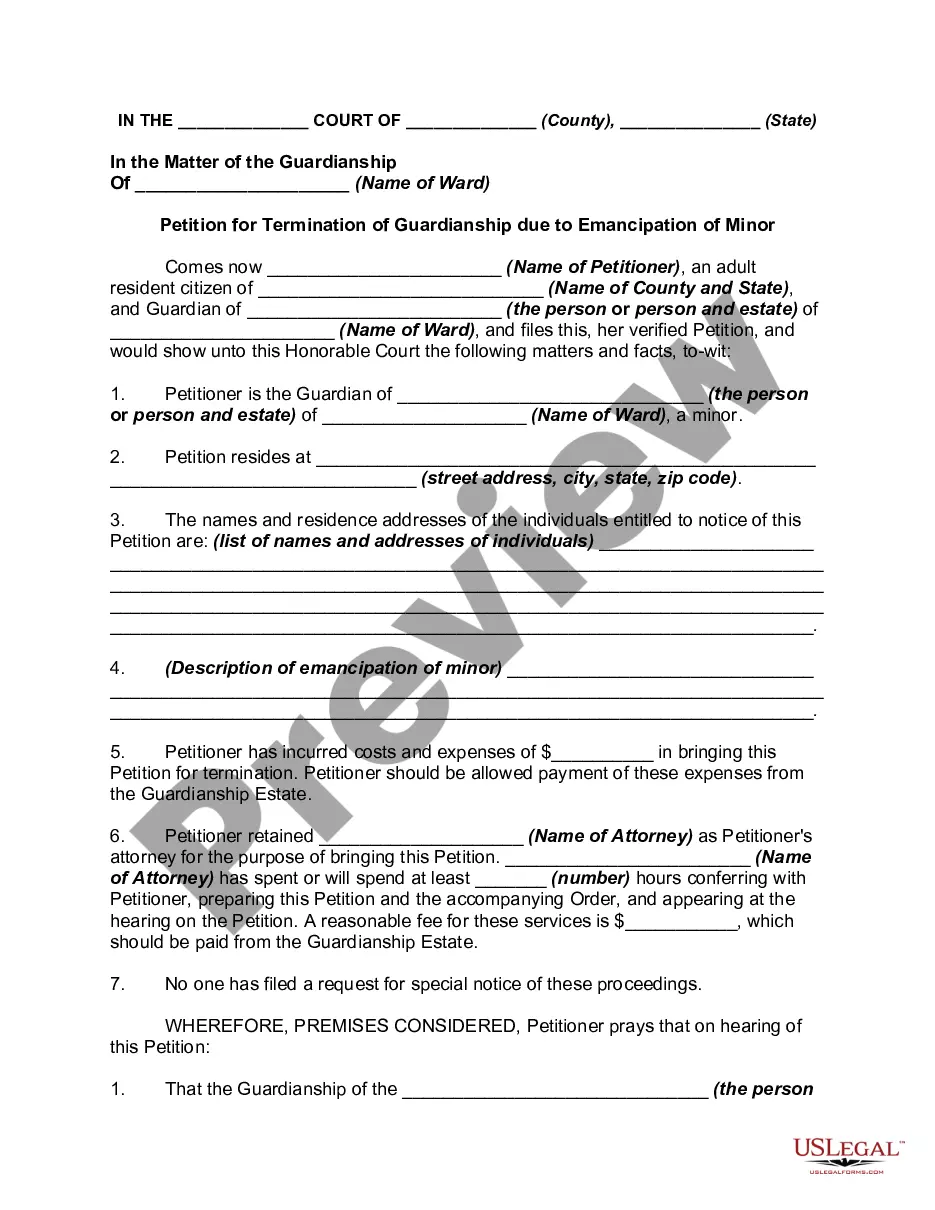
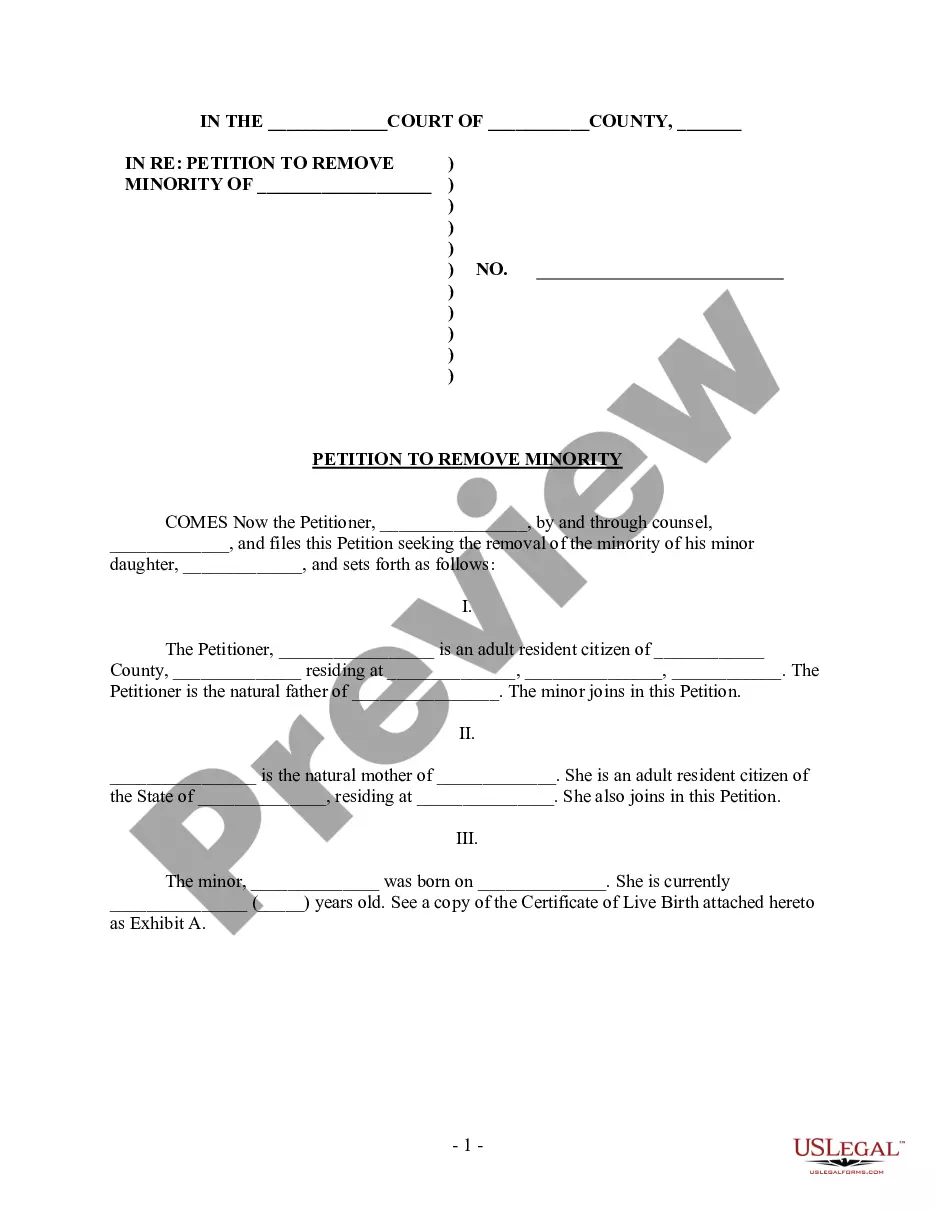
How to fill out Petition Of Minor By Guardian Ad Litem To Be Declared Free From Father's Custody Due To Cruel Treatment - Release Of Parental Rights?
Whether for commercial reasons or for personal matters, everyone must confront legal circumstances at some point in their life.
Completing legal documents requires meticulous attention, beginning with selecting the suitable form template.
Select the file format you prefer and download the State Guardian Litem For Disabled Adults. Once saved, you can complete the form using editing software or print it out and finish it manually. With a comprehensive US Legal Forms catalog available, you do not need to waste time searching for the correct sample online. Utilize the library's user-friendly navigation to discover the right template for any circumstance.
- For instance, if you select an incorrect version of the State Guardian Litem For Disabled Adults, it will be declined once you submit it.
- Thus, it is essential to have a reliable source of legal documents like US Legal Forms.
- If you need to acquire a State Guardian Litem For Disabled Adults template, follow these straightforward steps.
- Locate the sample you require using the search bar or catalog navigation.
- Review the form's description to confirm it suits your case, state, and locality.
- Select the form's preview to examine it.
- If it is the wrong form, return to the search feature to find the State Guardian Litem For Disabled Adults sample you need.
- Obtain the file when it corresponds to your specifications.
- If you have a US Legal Forms account, simply click Log in to access previously stored files in My documents.
- If you do not yet have an account, you can download the form by clicking Buy now.
- Select the appropriate pricing option.
- Fill out the account registration form.
- Choose your payment method: you can use a credit card or PayPal account.
Form popularity
FAQ
The Adult Public Guardianship program exists to safeguard the welfare of persons with disabilities. Public guardianship is a legal procedure in which the court determines if a person's ability to make health and safety decisions for themselves is significantly impaired by disease, accident or disability.
Disability refers mainly to a functional limitation in ordinary activity; incapacity for work concerns people who are unable to work because of a medical condition. Although the terms overlap, they are conceptually distinct. People can be disabled without being unable to work, and unable to work without being disabled.
Guardian of a person is the individual that is required to make healthcare, living and education decisions for the minor child. These may include providing food, clothing, housing and daily activities, such as taking a child to school or taking them to healthcare appointments.
A guardian is appointed for an adult if the court finds by clear, cogent and convincing evidence that a person alleged to be incompetent lacks sufficient capacity to manage his or her own affairs or to make or communicate important decisions about the person's self, family, or property.
In a guardianship for disabled adults in Illinois, a court formally adjudicates an individual mentally incompetent and appoints a legal guardian to be responsible for the personal and/or financial decisions of the mentally disabled individual.