Guardian Custody Litem For Seniors
Description
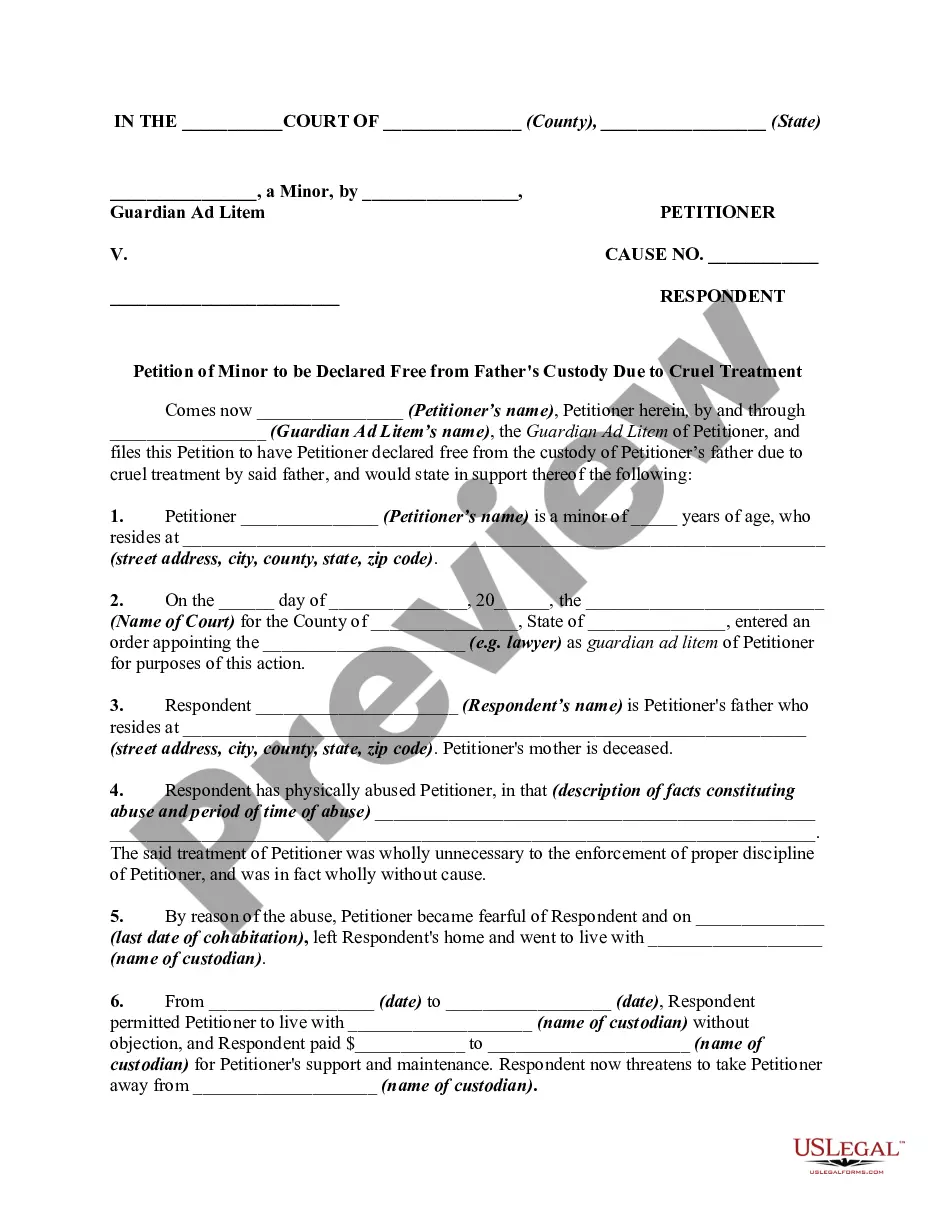
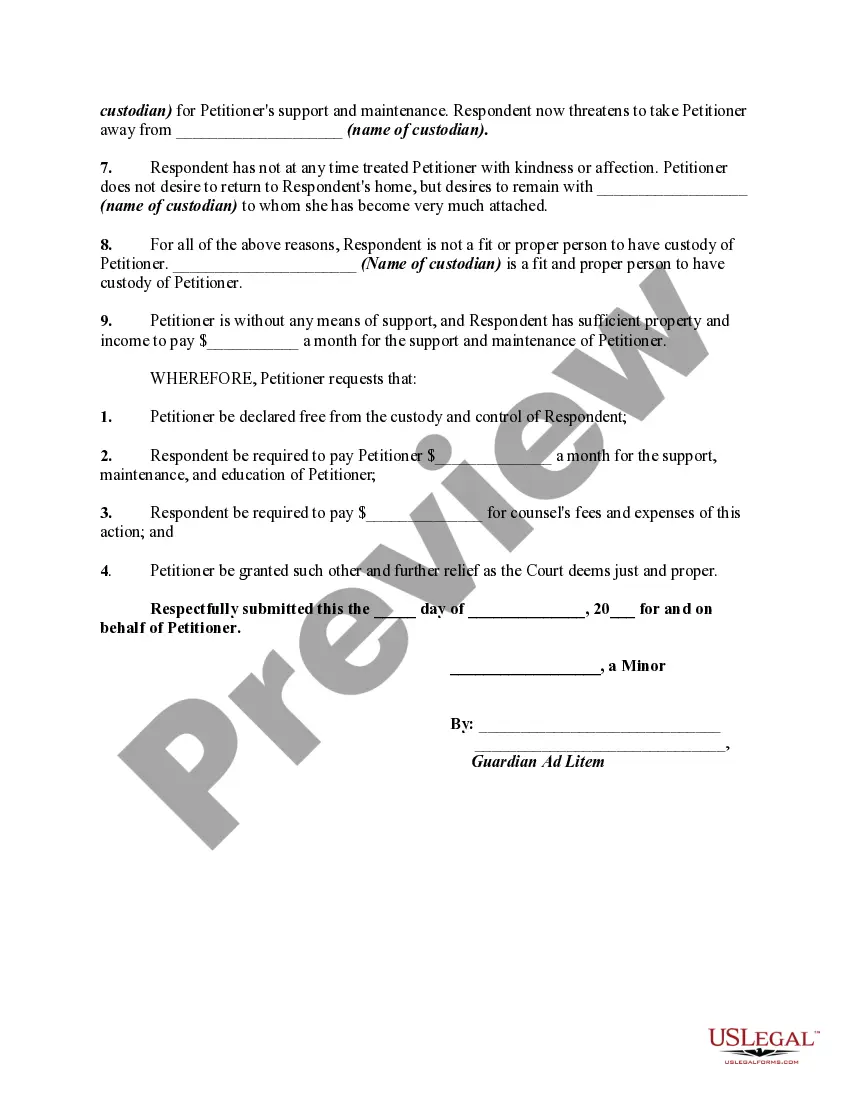
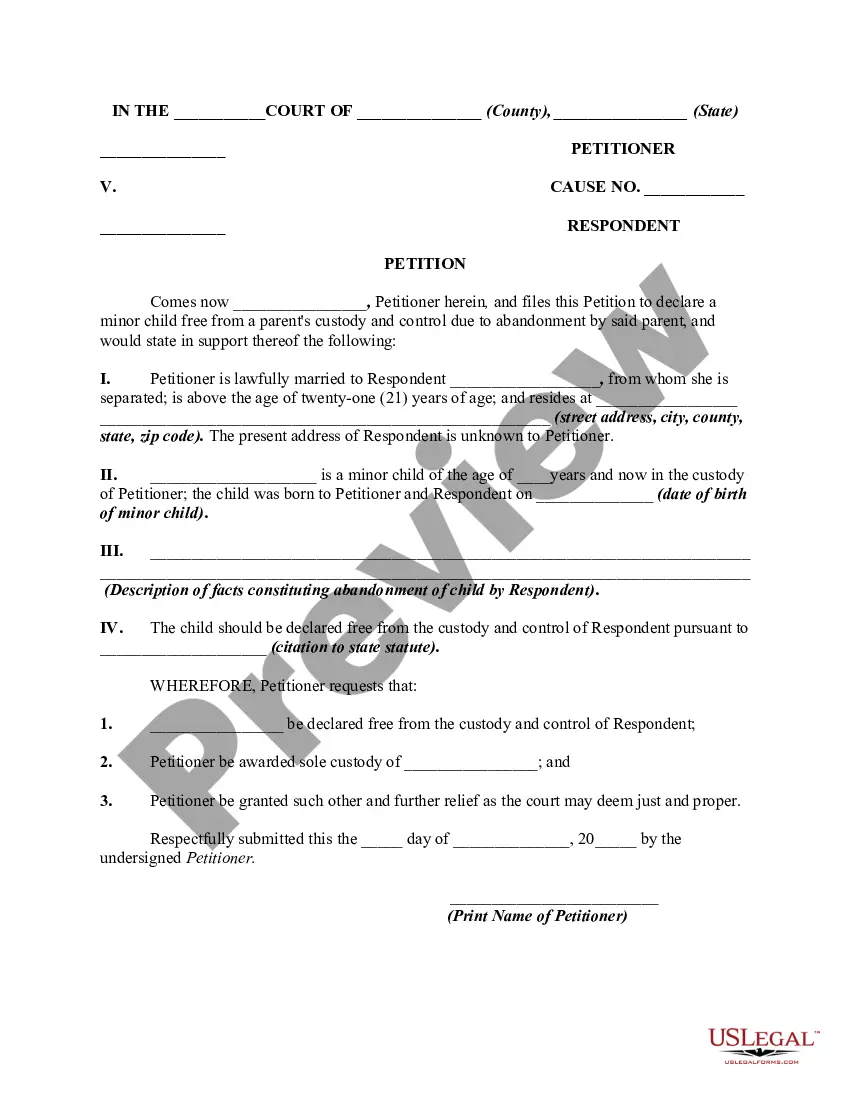
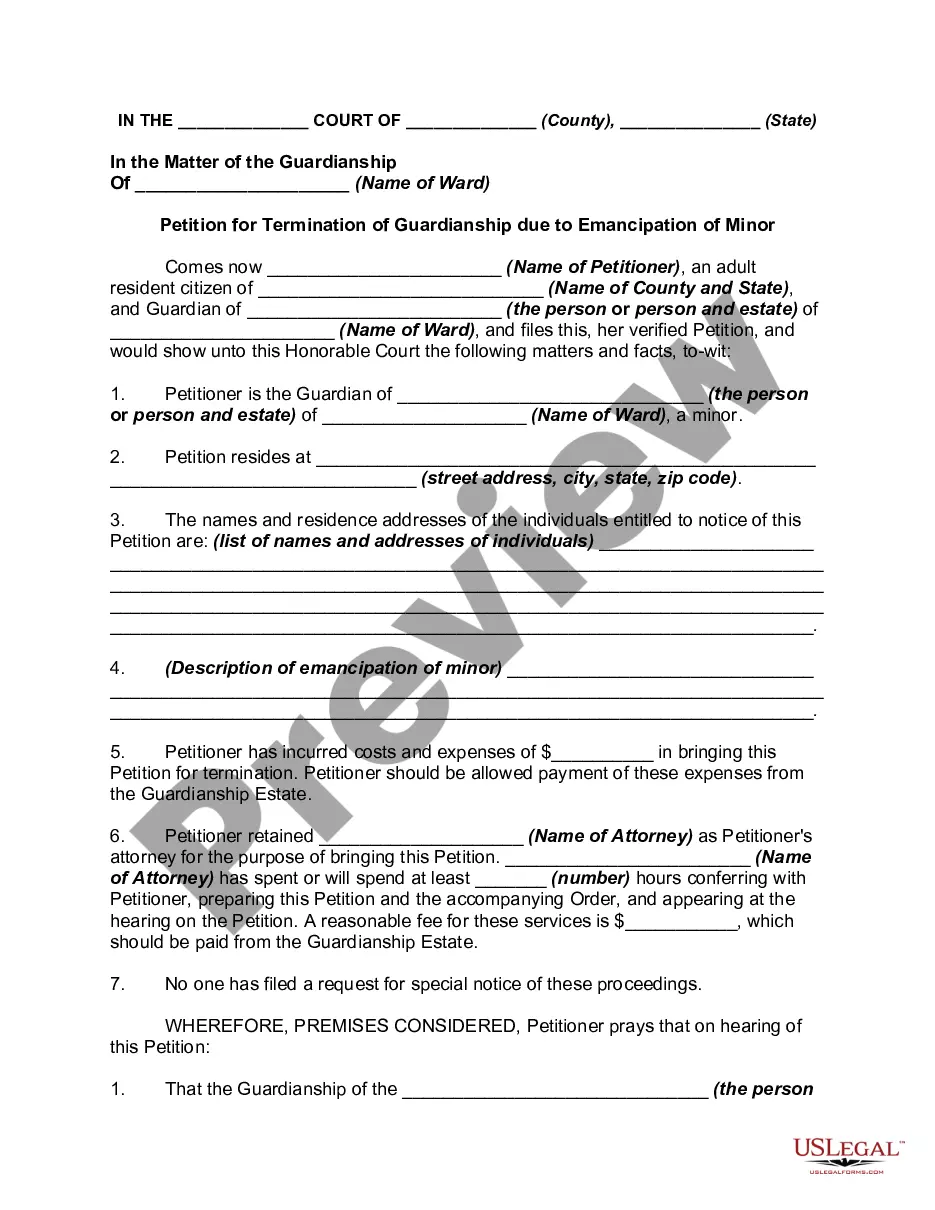
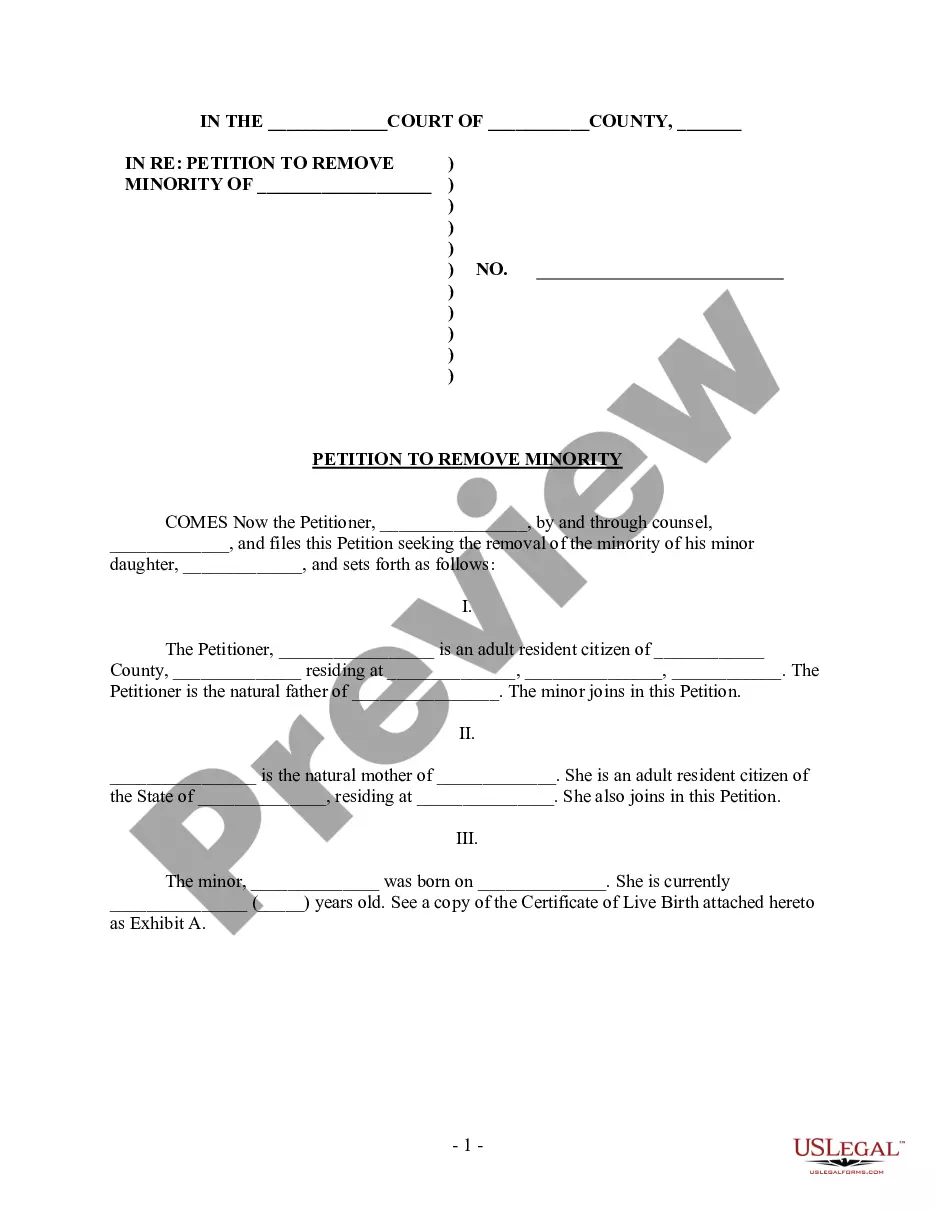

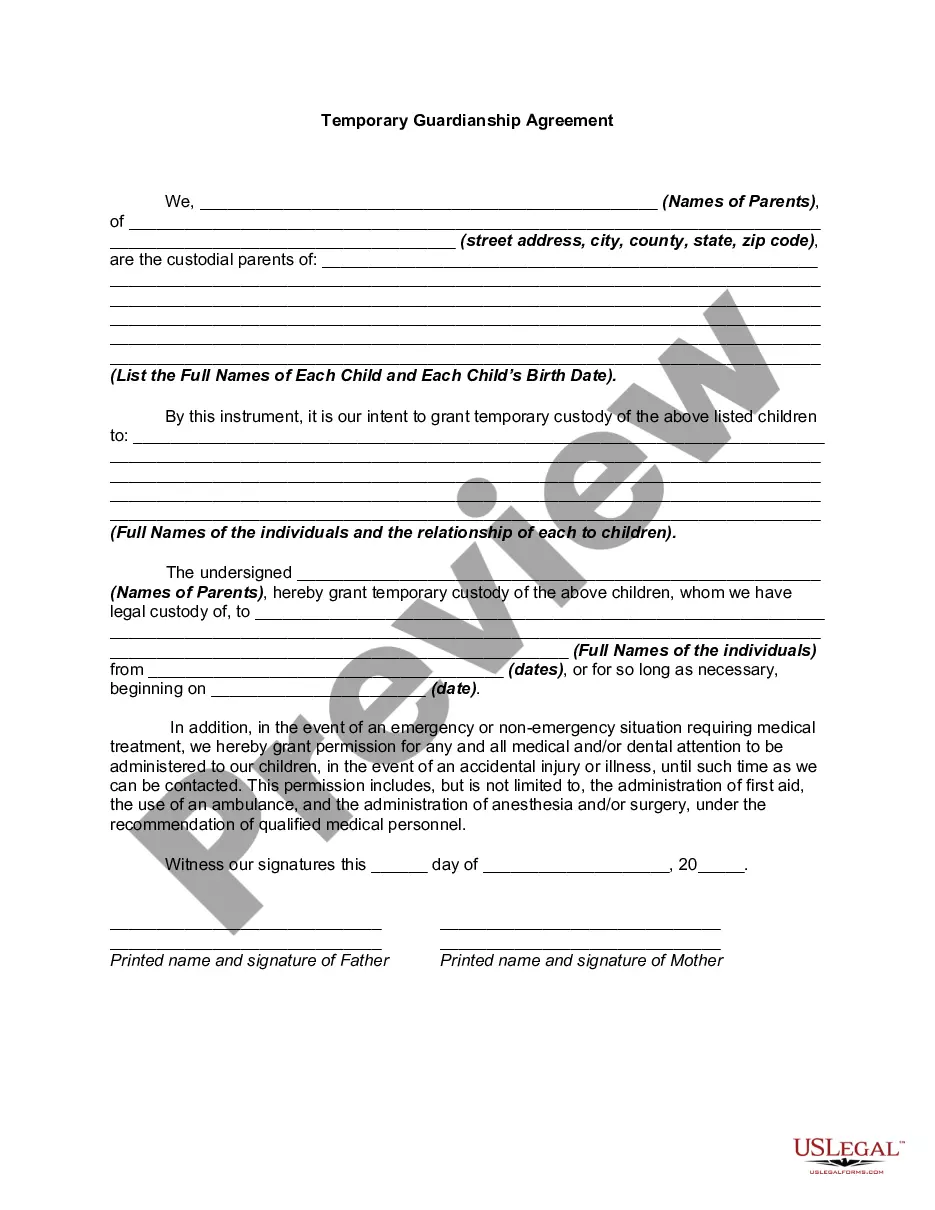
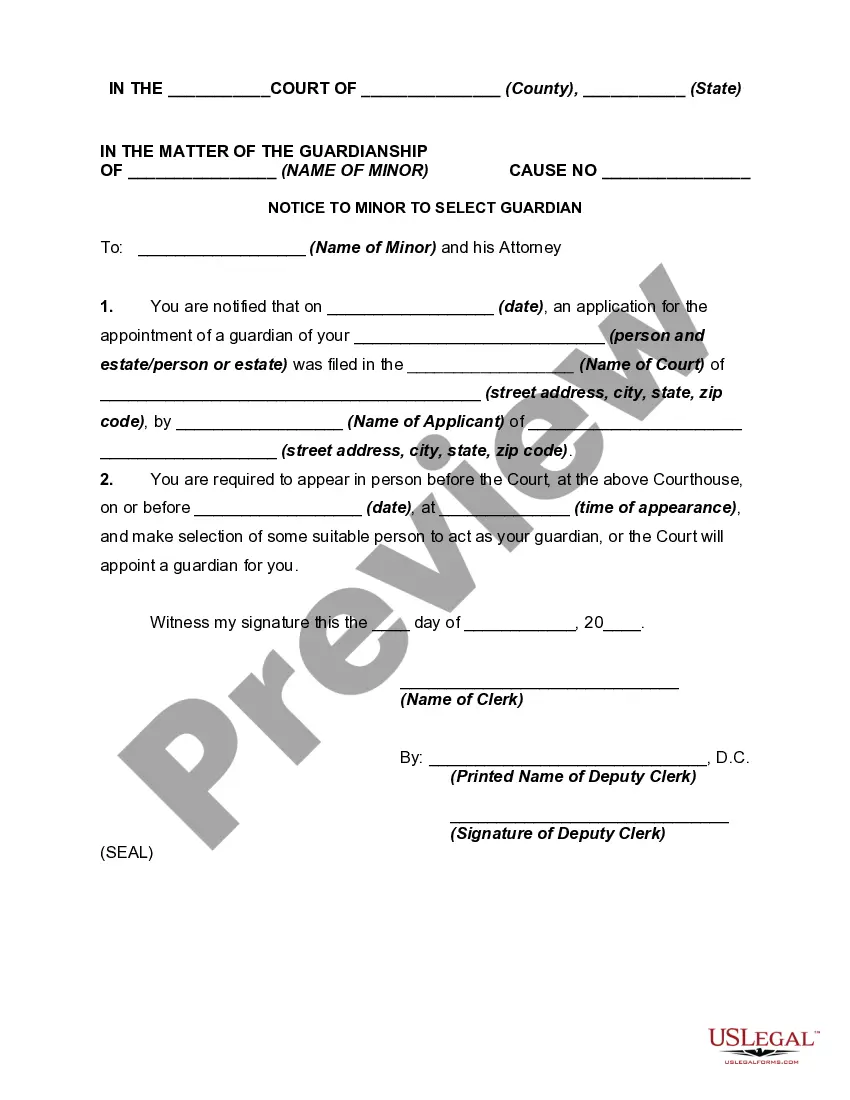
How to fill out Petition Of Minor By Guardian Ad Litem To Be Declared Free From Father's Custody Due To Cruel Treatment - Release Of Parental Rights?
It’s no secret that you can’t become a law professional immediately, nor can you grasp how to quickly draft Guardian Custody Litem For Seniors without having a specialized background. Creating legal forms is a time-consuming process requiring a certain training and skills. So why not leave the creation of the Guardian Custody Litem For Seniors to the professionals?
With US Legal Forms, one of the most comprehensive legal document libraries, you can find anything from court documents to templates for in-office communication. We know how important compliance and adherence to federal and state laws are. That’s why, on our website, all templates are location specific and up to date.
Here’s how you can get started with our website and get the form you require in mere minutes:
- Discover the document you need by using the search bar at the top of the page.
- Preview it (if this option available) and check the supporting description to determine whether Guardian Custody Litem For Seniors is what you’re looking for.
- Start your search over if you need a different template.
- Register for a free account and choose a subscription plan to buy the form.
- Choose Buy now. As soon as the payment is complete, you can get the Guardian Custody Litem For Seniors, complete it, print it, and send or send it by post to the necessary individuals or entities.
You can re-access your documents from the My Forms tab at any time. If you’re an existing customer, you can simply log in, and find and download the template from the same tab.
Regardless of the purpose of your documents-be it financial and legal, or personal-our website has you covered. Try US Legal Forms now!
Form popularity
FAQ
For those seeking guardianship of a parent with dementia, this is how to apply for guardianship: File legal documents for guardianship with a court. Tell your parent and other family members that you applied for guardianship. Submit a physicians statement. Pass the court's procedures/assessments. Be awarded guardianship.
Guardianship Filing an application with a court. Having a hearing before a judge. Having a judge appoint a guardian, if one is needed.
A legal guardian's duties vary depending on the authority conferred by the court in appointing the guardian. For example, the court may appoint a guardian solely to manage the elderly person's financial matters or appoint a guardian to look after the elderly person's healthcare decisions.
The National Trust Act, therefore, enables a person with above disabilities to have a guardian representing her/him throughout their lives. As per the Act, a parent can get legal guardianship of their son or daughter with disability and represent them even after they are 18 years of age.
In Texas, the process to appoint a guardian includes: Filing an application with a court. Having a hearing before a judge. Having a judge appoint a guardian, if one is needed.