Child Petition For Father
Description
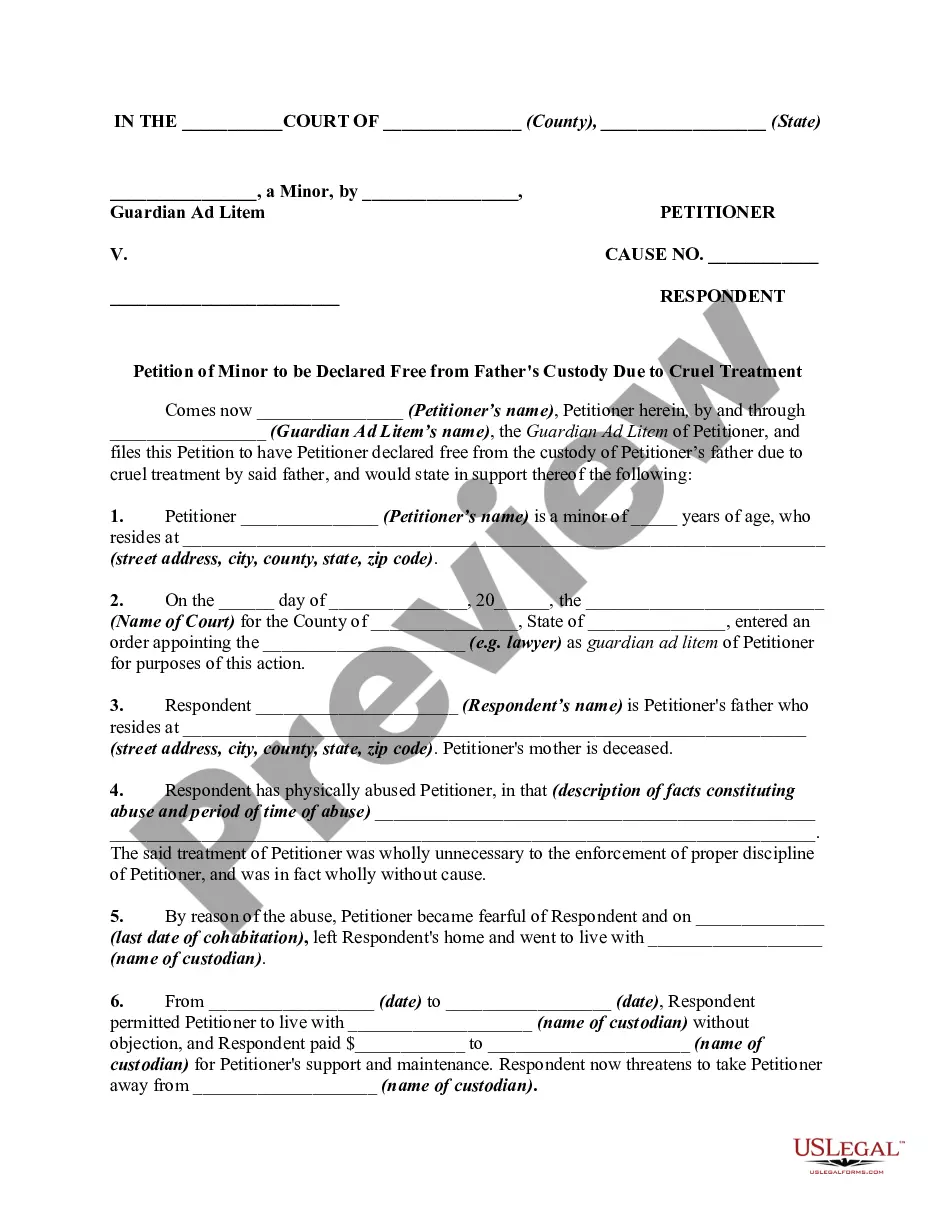
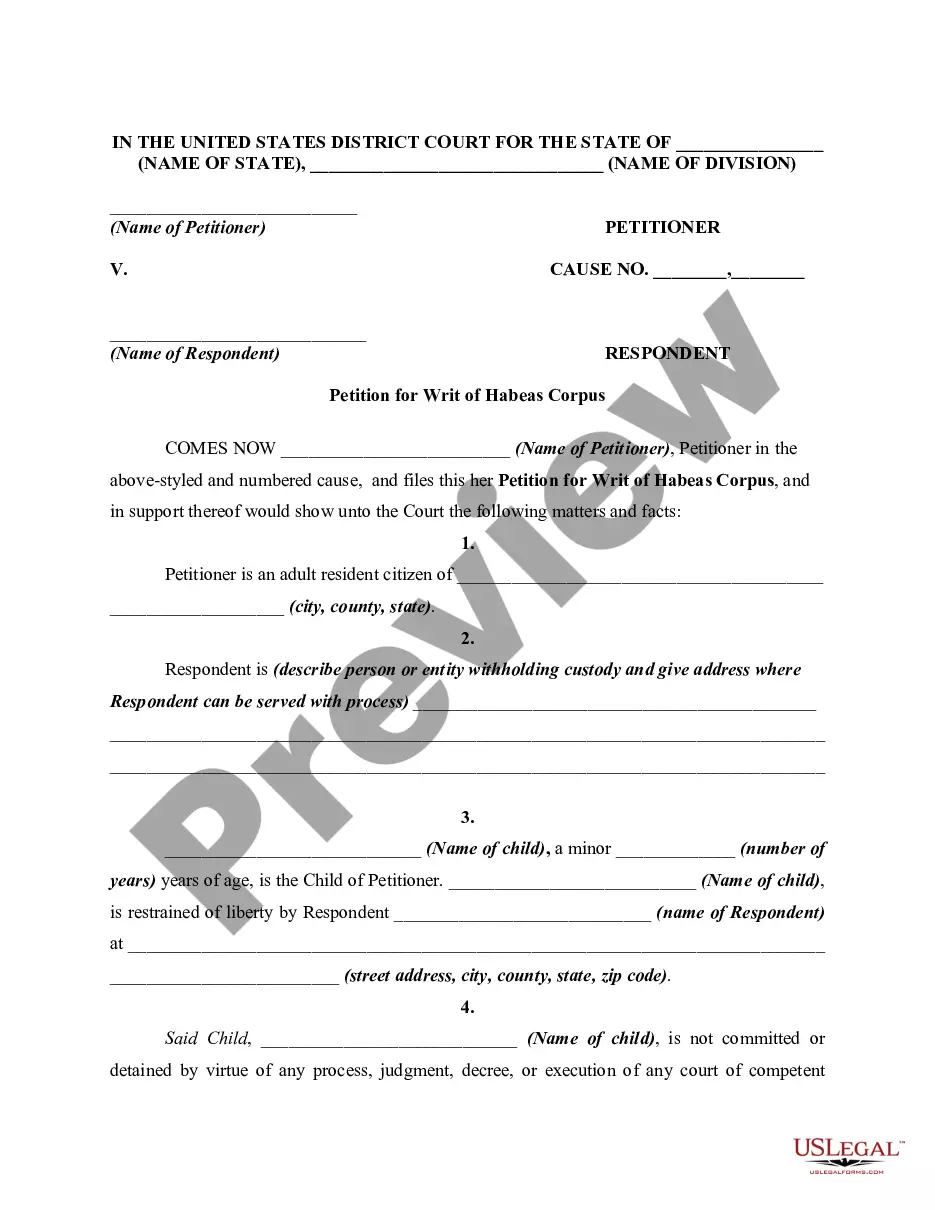
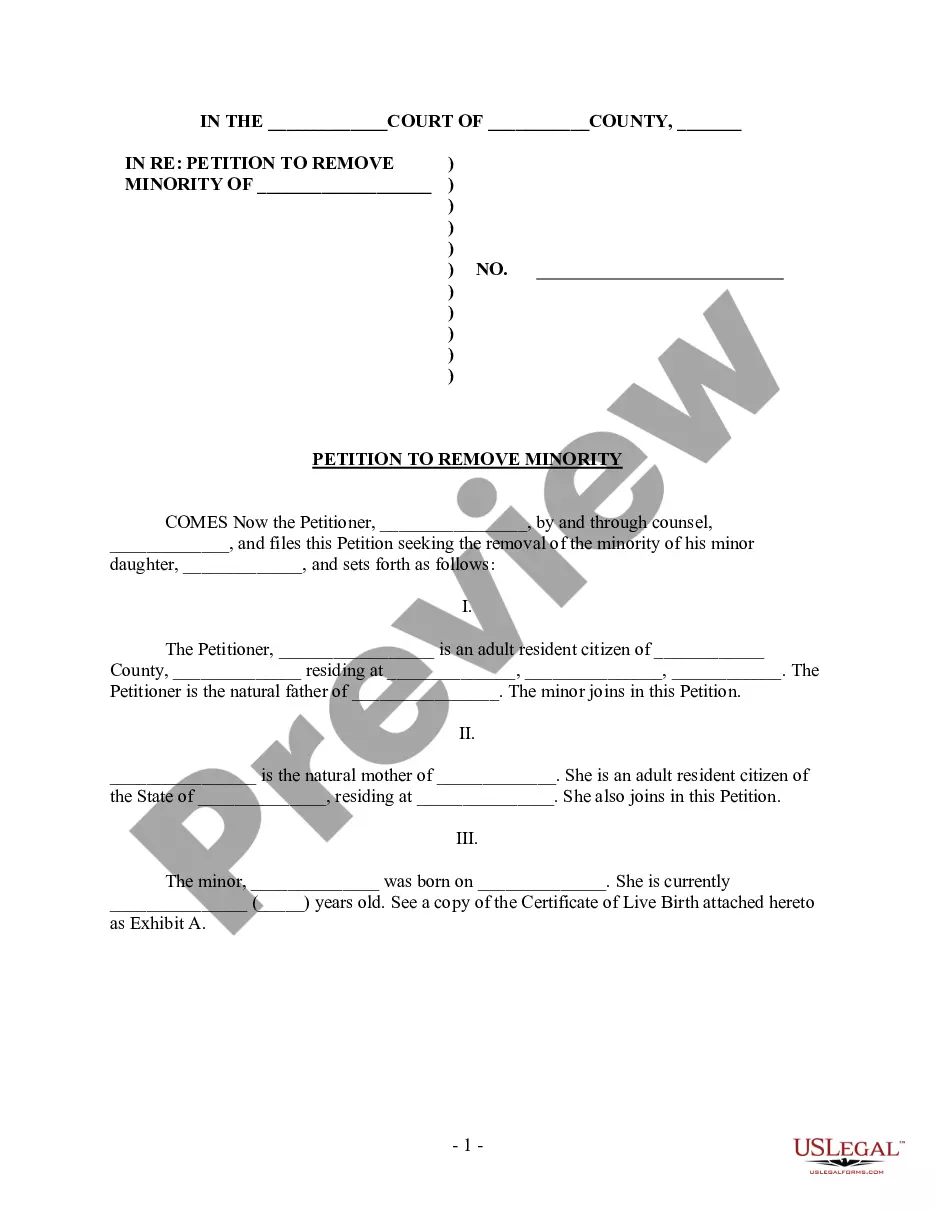





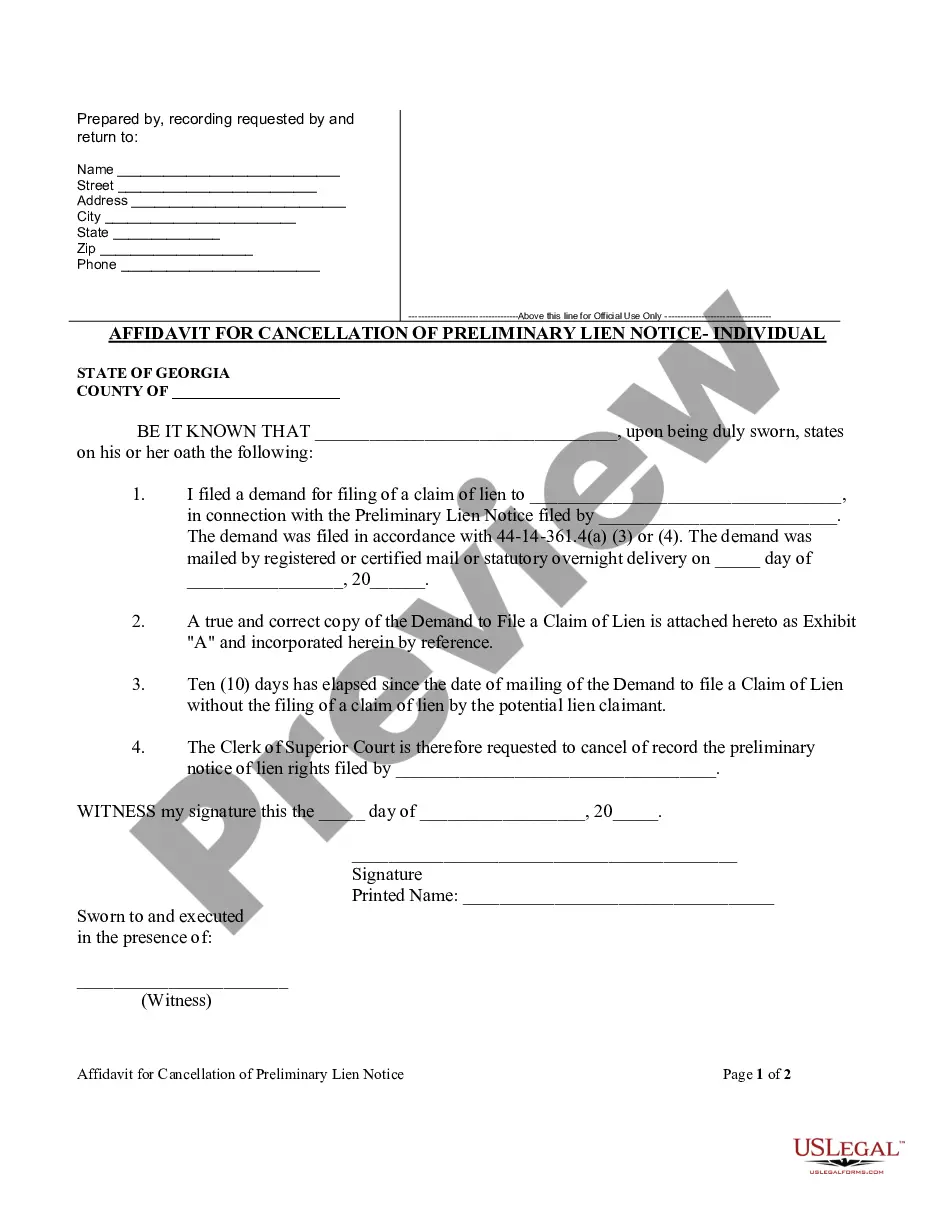


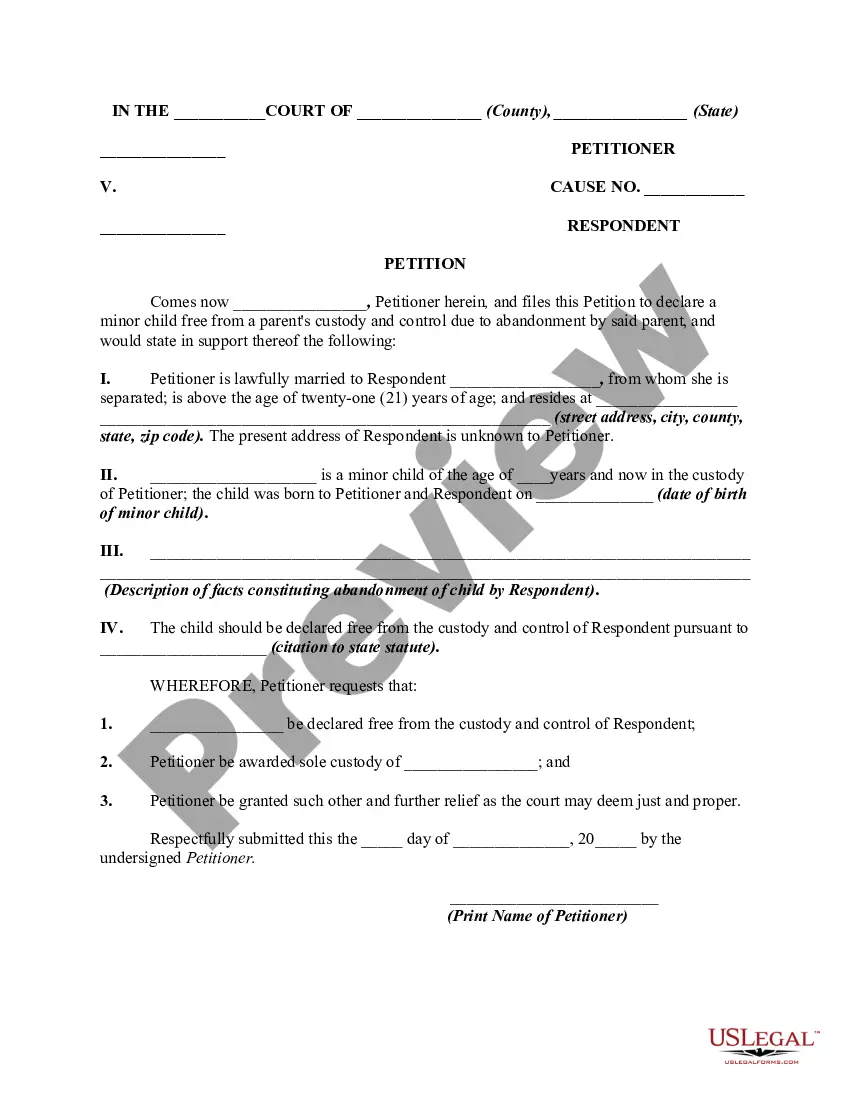
How to fill out Petition To Declare Child Free From Parent's Custody And Control For Abandonment - Release Of Parental Rights?
Identifying a preferred source to obtain the latest and pertinent legal documents is a significant part of dealing with bureaucracy.
Finding the correct legal paperwork necessitates precision and meticulousness, which is why it’s essential to obtain samples of the Child Petition For Father solely from reliable sources, such as US Legal Forms. An incorrect template will squander your time and prolong the situation you are facing. By using US Legal Forms, you have minimal concerns to address.
Once you have the form on your device, you can edit it using the editor or print it and fill it out manually. Eliminate the hassle associated with your legal documentation. Discover the extensive US Legal Forms catalog where you can locate legal templates, assess their relevance to your situation, and download them instantly.
- Utilize the library navigation or search bar to find your template.
- Examine the form’s description to verify if it meets the requirements of your state and county.
- Check the form preview, if provided, to ensure the form is indeed what you are seeking.
- Return to the search to find the appropriate template if the Child Petition For Father does not align with your needs.
- If you are confident about the form’s relevance, download it.
- If you are a registered user, click Log in to authenticate and access your chosen templates in My documents.
- If you have not created an account yet, click Buy now to purchase the template.
- Select the pricing plan that best fits your requirements.
- Continue to the registration to complete your purchase.
- Finalize your purchase by choosing a payment method (credit card or PayPal).
- Select the file format for downloading the Child Petition For Father.
Form popularity
FAQ
The I-130 and I-130A forms play different roles in the child petition for father process. The I-130 is the main petition that establishes the relationship between you and your child, allowing your child to apply for a visa or green card. On the other hand, the I-130A is a supplemental form used specifically when your spouse is the petitioner, requesting additional information regarding their relationship with you. Understanding this distinction can streamline your application and facilitate a smoother process.
The 90-day rule refers to a presumption of intent to immigrate when an individual applies for a visa or alters their status. For parents filing a child petition for father, this rule does not typically apply in the same way. However, maintaining transparency about your intentions when applying for a visa is critical. USLegalForms can help clarify how this rule impacts your situation.
If a child turns 21 while the I-130 petition is pending, they still retain the ability to continue the process, but the case may change to the process for adult children. This shift can alter the processing times and options available. It is beneficial to understand these implications when considering a child petition for father. To stay informed about the changes, consulting resources like USLegalForms can be invaluable.
A copy of the child's birth certificate showing the child's name. A statement showing the dates and places your child has lived with you, and proof that your child has lived with you and has been in your legal custody for at least two years.
There is a filing fee of $535 for each Form I-130 an immigrant wishes to file. This filing fee cannot be waived.
You must complete a paper version of Form I-130 (PDF, 689.95 KB) and follow the instructions for filing the Form I-130 by mail (paper). You may pay the fee with a money order, personal check, cashier's check or pay by credit card using Form G-1450, Authorization for Credit Card Transactions.
The time it takes to process Form I-130 for a U.S. citizen's parent is between 12 and 16 months ? the same time frame as for other immediate relatives. Lawful permanent residents cannot file I-130 for their parents.
For parents of U.S. citizens, the process usually takes 10-13 months. There is no limit on the number of green cards issued in this category. Therefore, you can generally get a green card based on your parent relationship within one year.