Questions For Cross Examination In Criminal Cases
Description
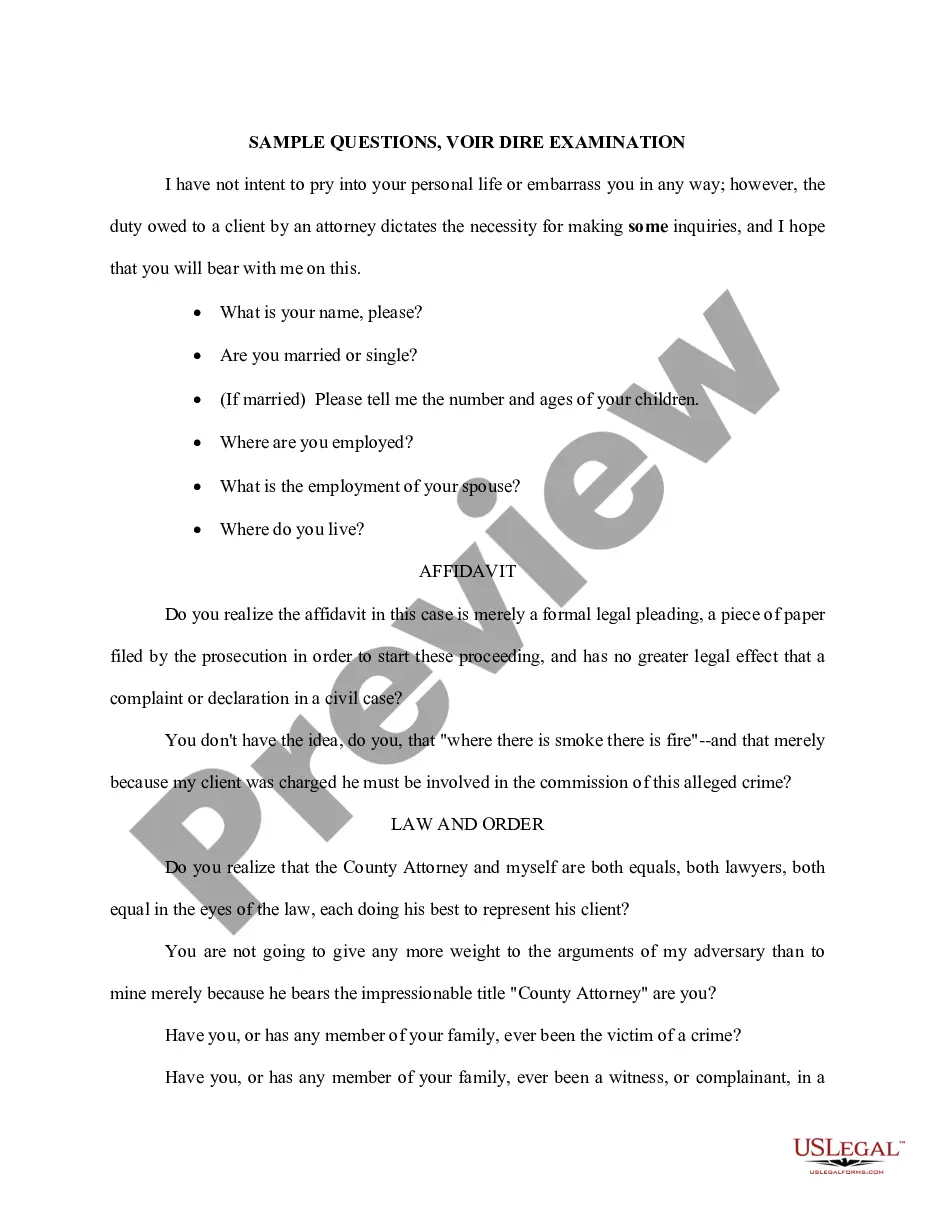
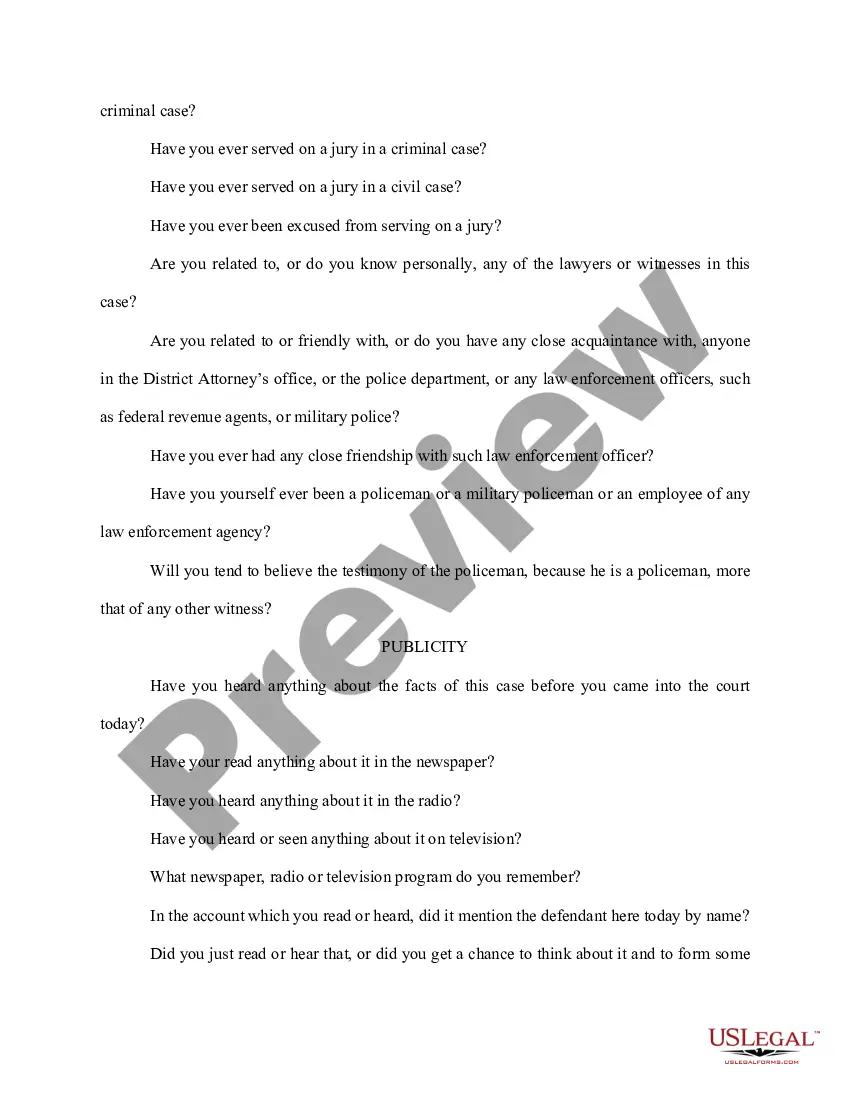
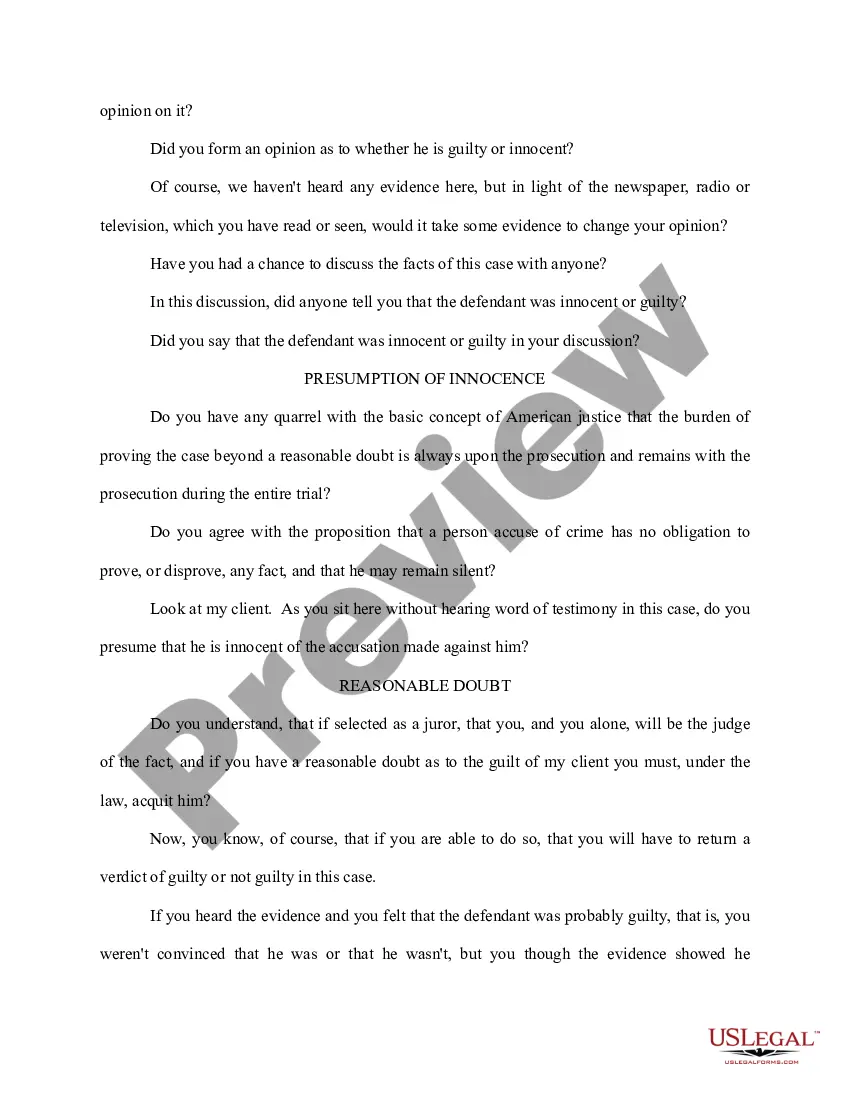
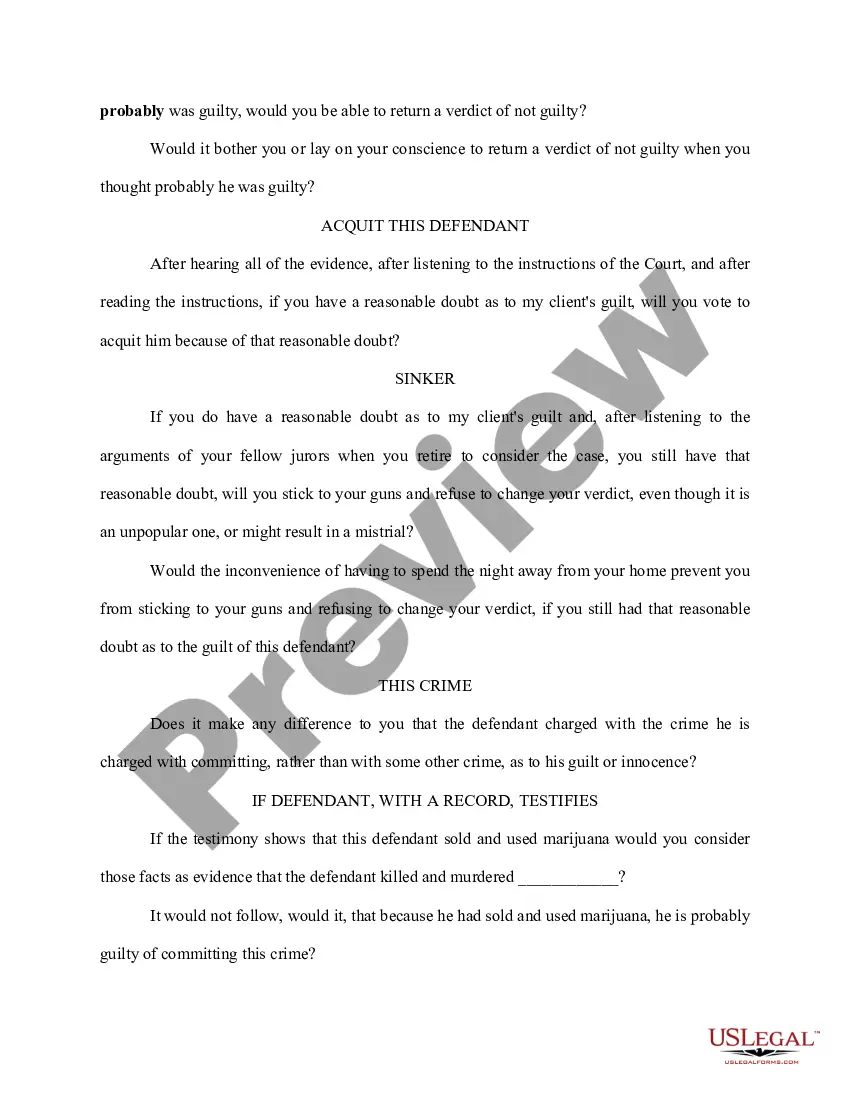
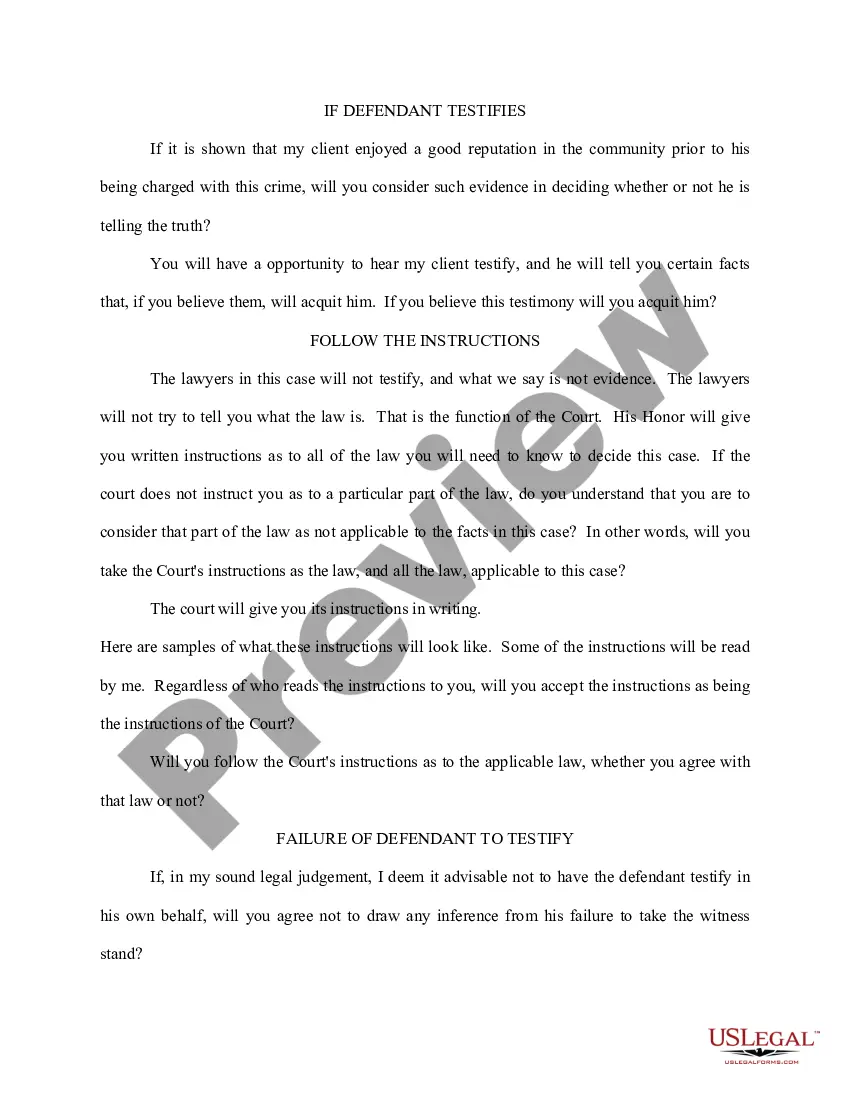
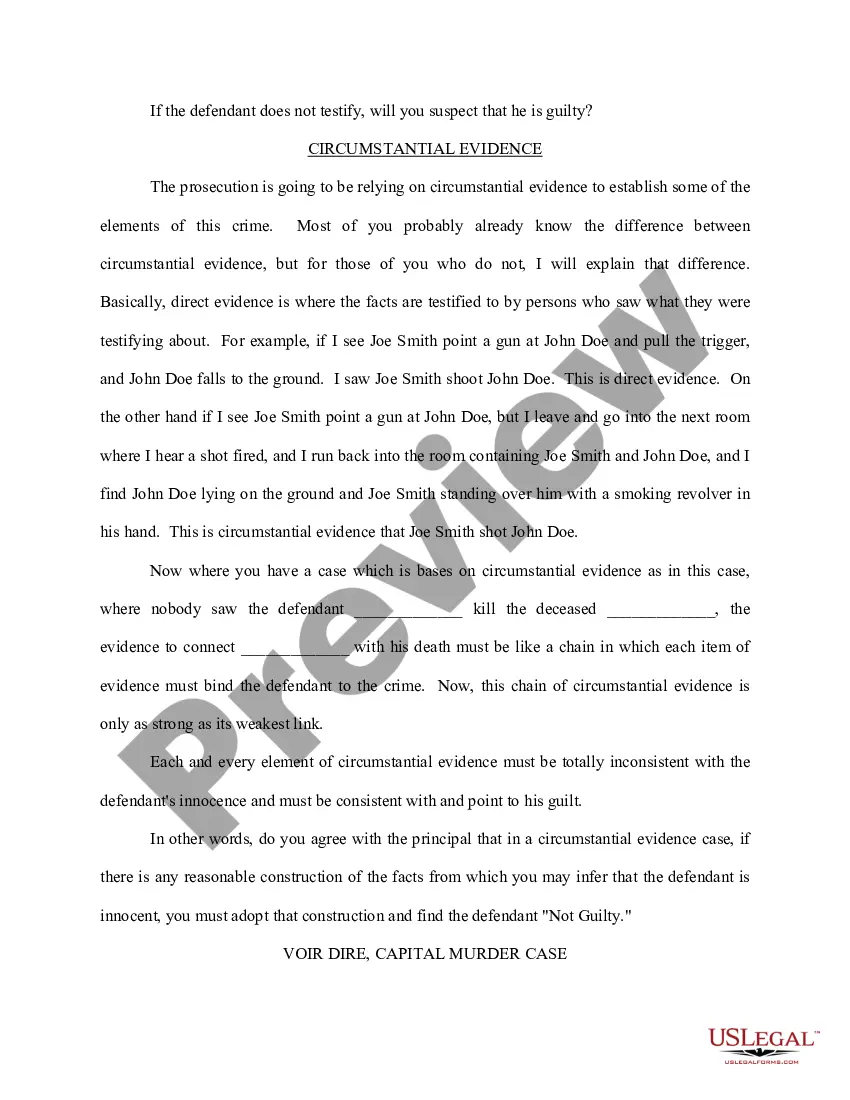
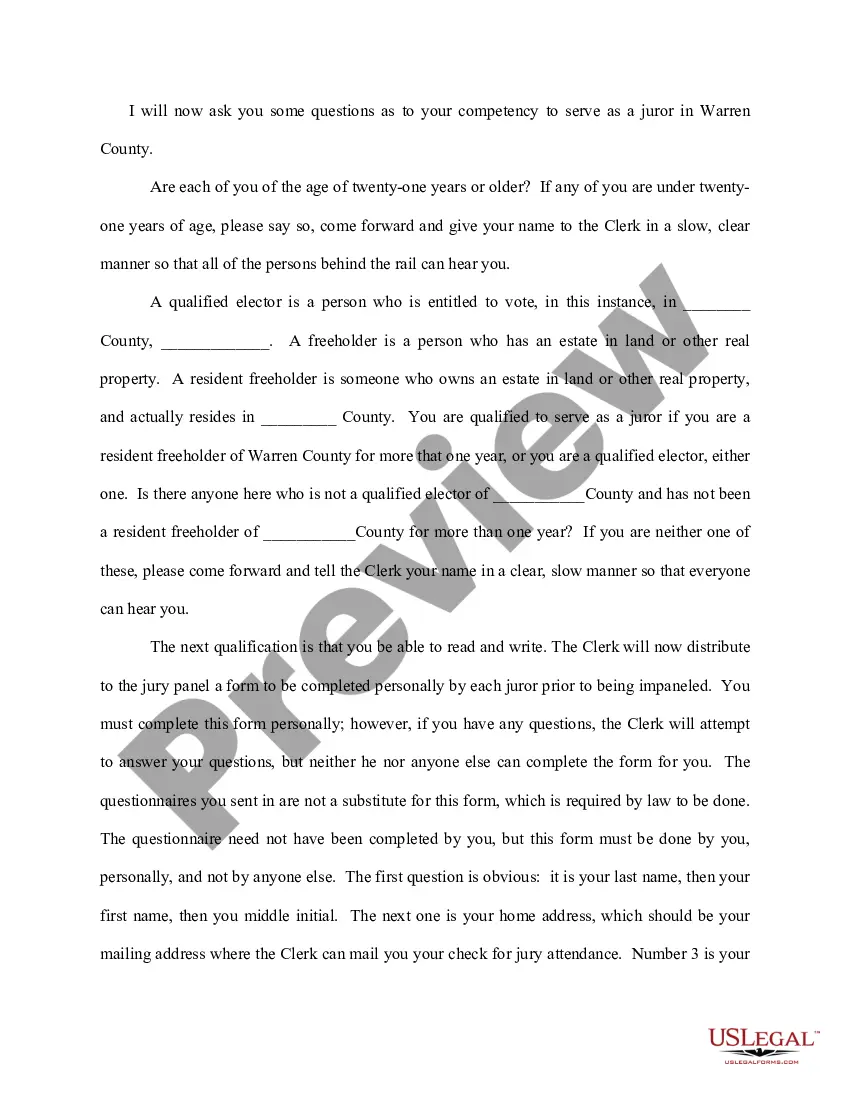
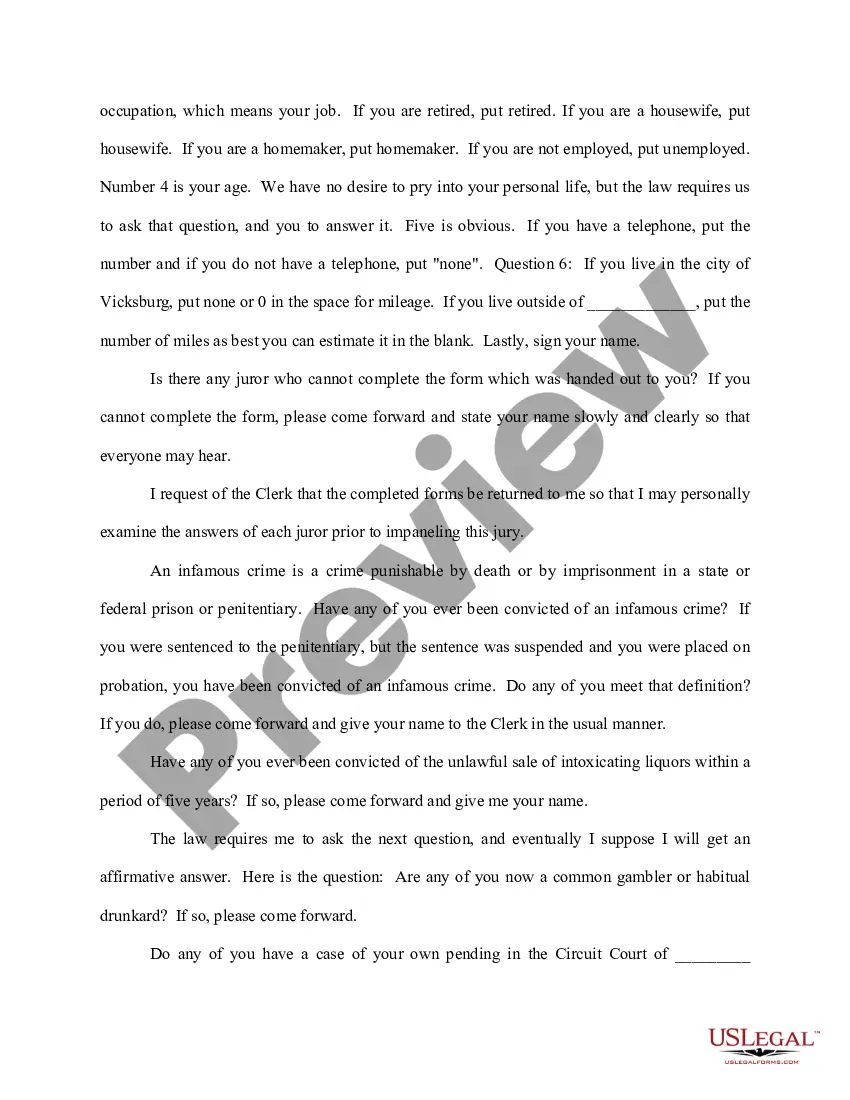
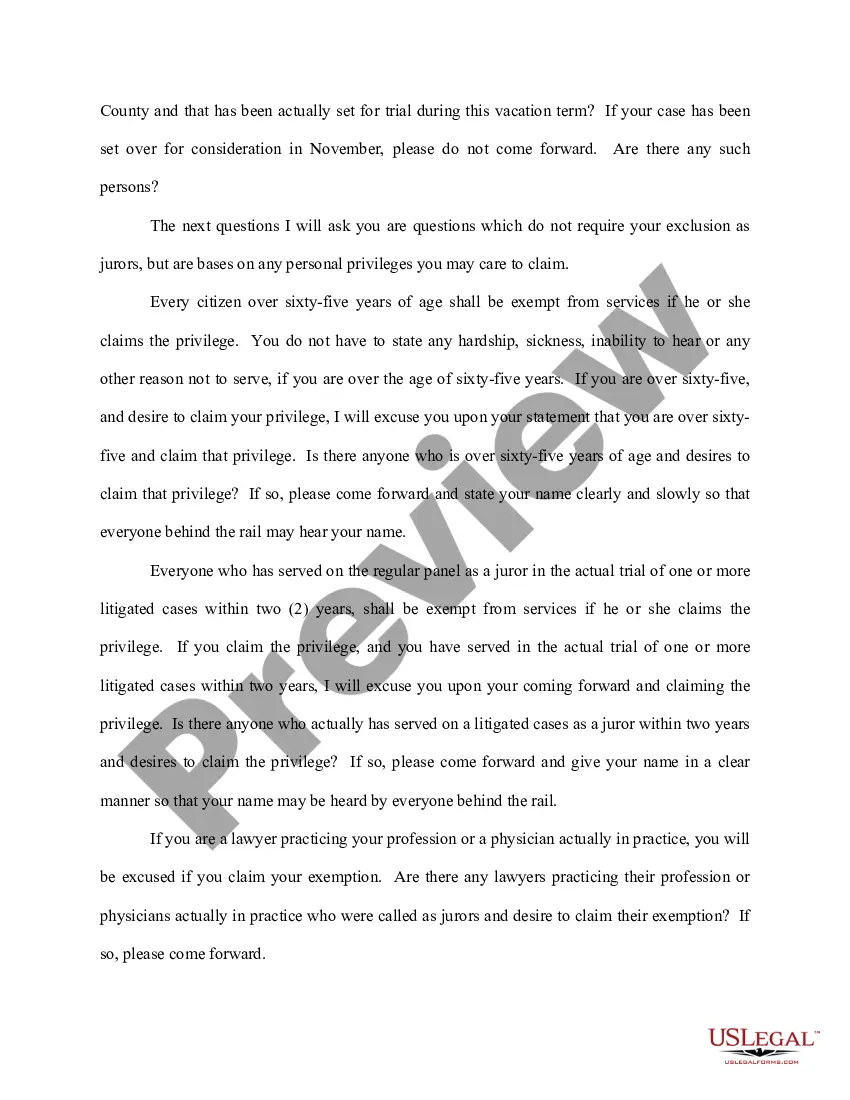
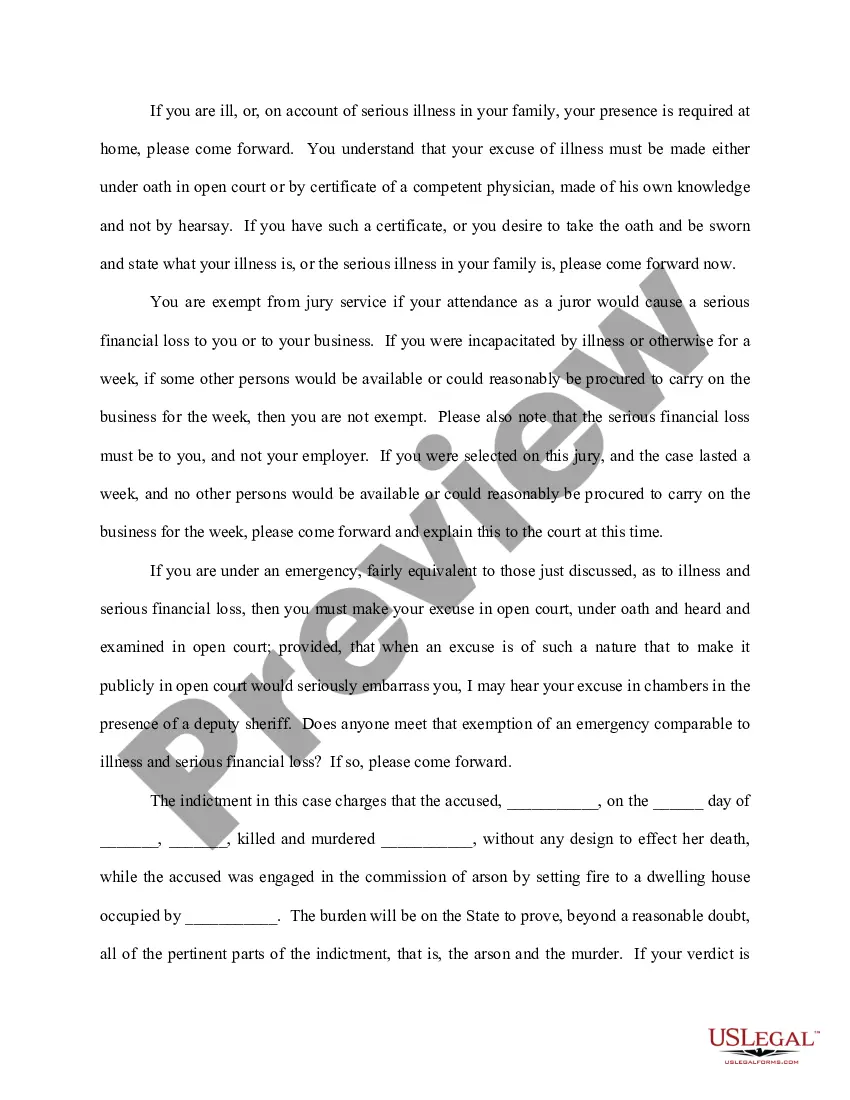

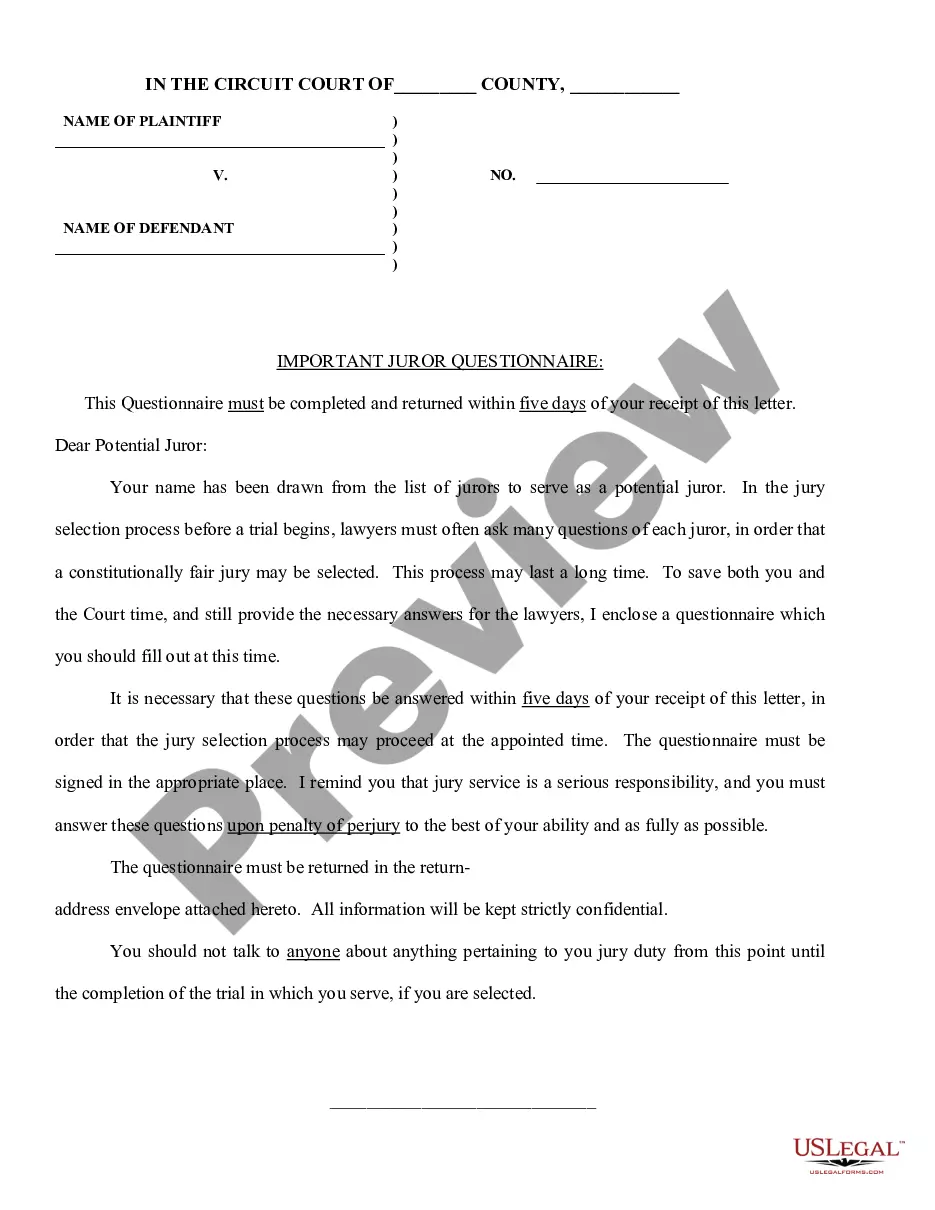
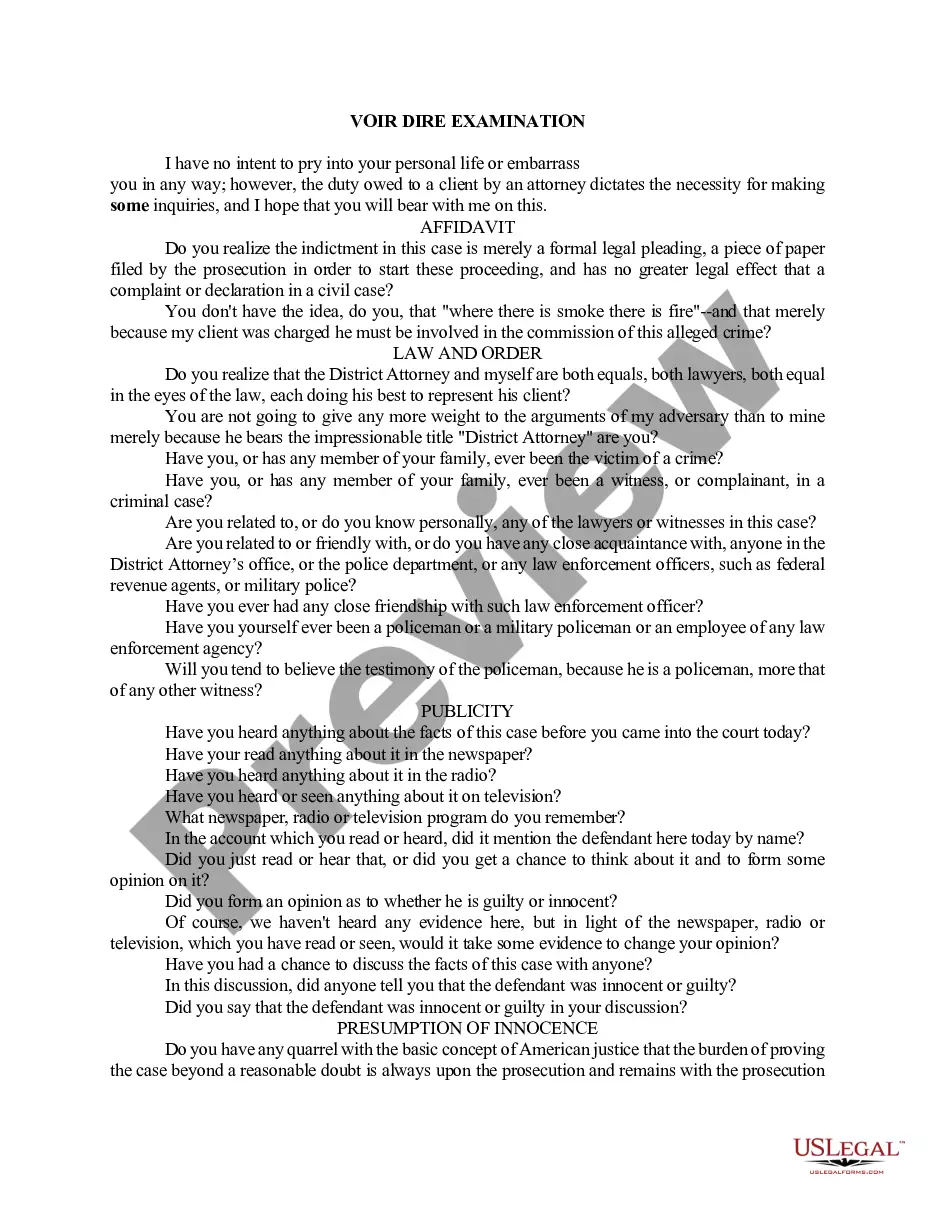
How to fill out Sample Questions, Voir Dire Examination?
Locating a reliable source for the latest and pertinent legal templates is a significant part of navigating bureaucracy.
Selecting the appropriate legal documents requires precision and meticulousness, which is why it's crucial to obtain examples of Questions For Cross Examination In Criminal Cases solely from credible sources, such as US Legal Forms.
Eliminate the stress that comes with your legal documentation. Explore the vast US Legal Forms collection where you can find legal templates, assess their relevance to your situation, and download them instantly.
- An incorrect template will squander your time and delay the issue you are facing.
- With US Legal Forms, you have minimal concerns.
- You can access and review all the details regarding the document’s application and relevance to your situation and in your state or area.
- Follow these steps to complete your Questions For Cross Examination In Criminal Cases.
- Use the catalog navigation or search bar to find your template.
- Open the form’s details to verify if it meets the requirements of your state and county.
- View the form preview, if available, to confirm the template is the one you are seeking.
- Return to the search to locate the correct template if the Questions For Cross Examination In Criminal Cases does not align with your needs.
- If you are confident about the form’s relevance, download it.
- As an authorized user, click Log in to verify and access your chosen templates in My documents.
- If you haven't created an account yet, click Buy now to purchase the form.
- Select the pricing plan that meets your requirements.
- Proceed to register to finalize your purchase.
- Complete your purchase by choosing a payment method (credit card or PayPal).
- Choose the file format for downloading Questions For Cross Examination In Criminal Cases.
- Once you have the form on your device, you can edit it with the editor or print it and complete it manually.
Form popularity
FAQ
If a question can be fairly answered ?yes? or ?no?, do it. Don't try to talk yourself out of a yes or no question, it makes you look bad. On cross-examination, you will be asked mostly closed questions that have a yes or no answer. If you made a mistake.
Use only leading questions Questions suggesting a subject is not a leading question. Leading questions are only allowed in cross-examination because its object is to elucidate the truth. The general rule is to compel the witness to say yes or no after every question.
In cross-examination, you need to: Ask questions, rather than making statements. Keep your questions short and to the point. Try and ask questions that have a 'yes or no' answer. ... You must put your version of events to the prosecution witnesses. Make sure you don't argue with or insult the witness.
Each question you ask during your cross-examination should be a leading question, such as ?It was raining that evening, correct?? Leading questions nudge witnesses in the direction you want them to go while also limiting their ability to explain their answers. Each question you ask should focus on one fact.
Examples of questions that are permissible in cross examination include: How many drinks did you have that night? What time did you go home? What time did you go to bed? Was the defendant still at the bar when you left?