Difference Between Distress Warrant And Distraint Warrant
Description
Get your form ready online
Our built-in tools help you complete, sign, share, and store your documents in one place.
Make edits, fill in missing information, and update formatting in US Legal Forms—just like you would in MS Word.
Download a copy, print it, send it by email, or mail it via USPS—whatever works best for your next step.
Sign and collect signatures with our SignNow integration. Send to multiple recipients, set reminders, and more. Go Premium to unlock E-Sign.
If this form requires notarization, complete it online through a secure video call—no need to meet a notary in person or wait for an appointment.
We protect your documents and personal data by following strict security and privacy standards.

Make edits, fill in missing information, and update formatting in US Legal Forms—just like you would in MS Word.

Download a copy, print it, send it by email, or mail it via USPS—whatever works best for your next step.

Sign and collect signatures with our SignNow integration. Send to multiple recipients, set reminders, and more. Go Premium to unlock E-Sign.

If this form requires notarization, complete it online through a secure video call—no need to meet a notary in person or wait for an appointment.

We protect your documents and personal data by following strict security and privacy standards.
Looking for another form?

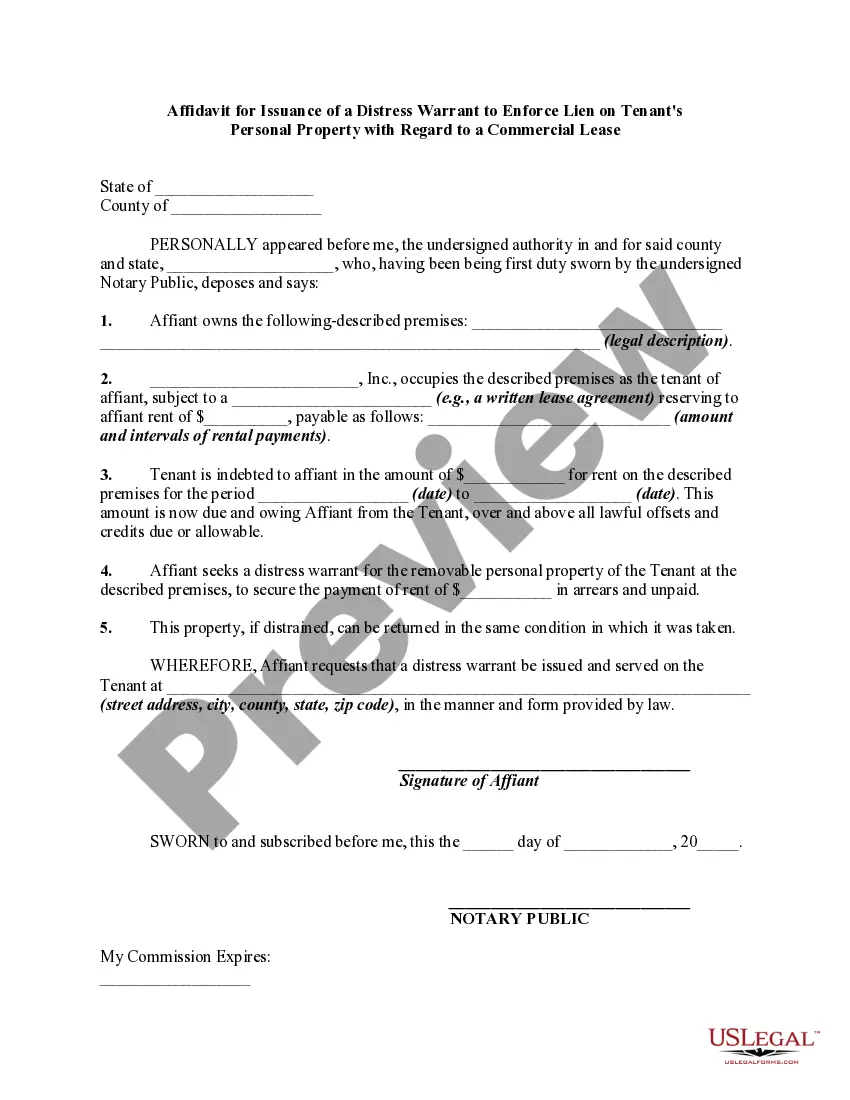
How to fill out Warrant For Distraint Of Tenant's Personality To Secure Payment Of Rent?
Legal document management can be perplexing, even for the most experienced professionals.
When you seek to understand the Difference Between Distress Warrant And Distraint Warrant and lack the time to search for the appropriate, updated version, the process can become overwhelming.
US Legal Forms accommodates all your requirements, whether personal or business-related, in a single place.
Utilize advanced tools to complete and manage your Difference Between Distress Warrant And Distraint Warrant.
Here are the steps to follow after accessing the form you need: Verify it is the right document by previewing it and reviewing its details.
- Gain entry to a knowledge base of articles, guides, and resources pertinent to your situation and needs.
- Conserve time and effort in finding the documents required, and utilize US Legal Forms’ sophisticated search and Review tool to locate the Difference Between Distress Warrant And Distraint Warrant and obtain it.
- If you possess a subscription, Log In to your US Legal Forms account, search for the form, and download it.
- Visit the My documents tab to examine saved documents and organize your folders as needed.
- If this is your first experience with US Legal Forms, create an account to enjoy unlimited access to all the features of the library.
- A comprehensive online form repository can be transformative for anyone aiming to handle these matters effectively.
- US Legal Forms is a leader in online legal documents, providing over 85,000 state-specific legal forms available at any time.
- With US Legal Forms, it is feasible to access legal and corporate documents specific to your state or county.
Form popularity
FAQ
A distraint warrant is a specific legal order that allows for the seizure of a debtor's property to satisfy a debt. It is often issued by a court or tax authority and is rooted in the concept of distraint. Understanding the difference between distress warrant and distraint warrant is key, as the latter specifically pertains to the enforcement of debt collection through property seizure. Knowledge of this process can help debtors navigate their financial responsibilities more effectively.
Yes, a distraint order can be challenged in court. Debtors may contest the validity of the order or the amount owed, often leading to a hearing. Understanding the difference between distress warrant and distraint warrant can empower you to take the necessary actions to protect your rights. Legal support from platforms like USLegalForms can help you build a strong case if you decide to challenge a distraint order.
Distraint is still utilized in various legal contexts today, particularly in landlord-tenant disputes and tax collection. However, its use has diminished due to alternative debt recovery methods. Being aware of the difference between distress warrant and distraint warrant can help you navigate these contemporary issues more effectively. If you face a distraint situation, USLegalForms provides valuable resources to assist you.
Yes, distraint typically involves personal property that a debtor owns. This can include items like vehicles, furniture, or other valuable assets. When discussing the difference between distress warrant and distraint warrant, it's essential to note that distraint focuses on personal property rather than real estate. Understanding this distinction can inform your decisions if you find yourself in a financial bind.
Distraint refers to the act of seizing a debtor's property to satisfy an unpaid obligation. Examples include a landlord seizing a tenant's property for unpaid rent, or a tax authority taking assets for unpaid taxes. Recognizing the difference between distress warrant and distraint warrant can help you understand the legal implications of these actions. It is advisable to consult legal resources to understand how these situations may unfold.
When considering the difference between distress warrant and distraint warrant, it's important to explore alternatives to distraint. Some options include negotiation for payment plans, mediation, and utilizing legal assistance for debt resolution. These methods can often address the underlying issues without resorting to seizure of property. Platforms like USLegalForms offer tools and resources to help you explore these alternatives effectively.
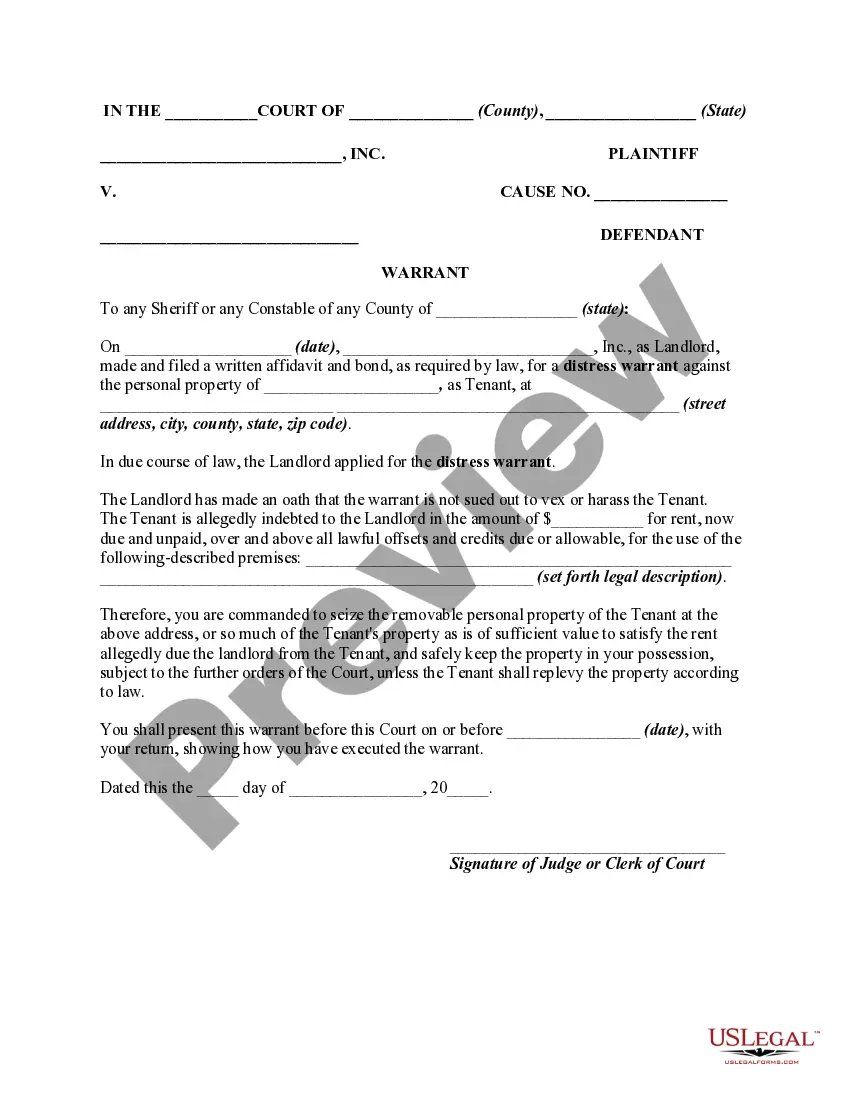
A distress warrant is a legal document that authorizes a creditor to seize a debtor's property to satisfy an outstanding debt. It serves as a formal notice that allows the creditor to take possession of the debtor's assets if the debt remains unpaid. Knowing the meaning of a distress warrant helps individuals navigate financial obligations and potential legal actions. For comprehensive legal forms and resources, US Legal Forms can provide valuable assistance.
The difference between distress warrant and distraint warrant lies in their legal implications and applications. Distress refers to the act of seizing someone's property to obtain payment for a debt, while distraint is a legal process that allows a landlord or creditor to take possession of a tenant's or debtor's property. Understanding these distinctions is crucial, especially for landlords and creditors. For more detailed insights on legal terminology, consider exploring US Legal Forms.