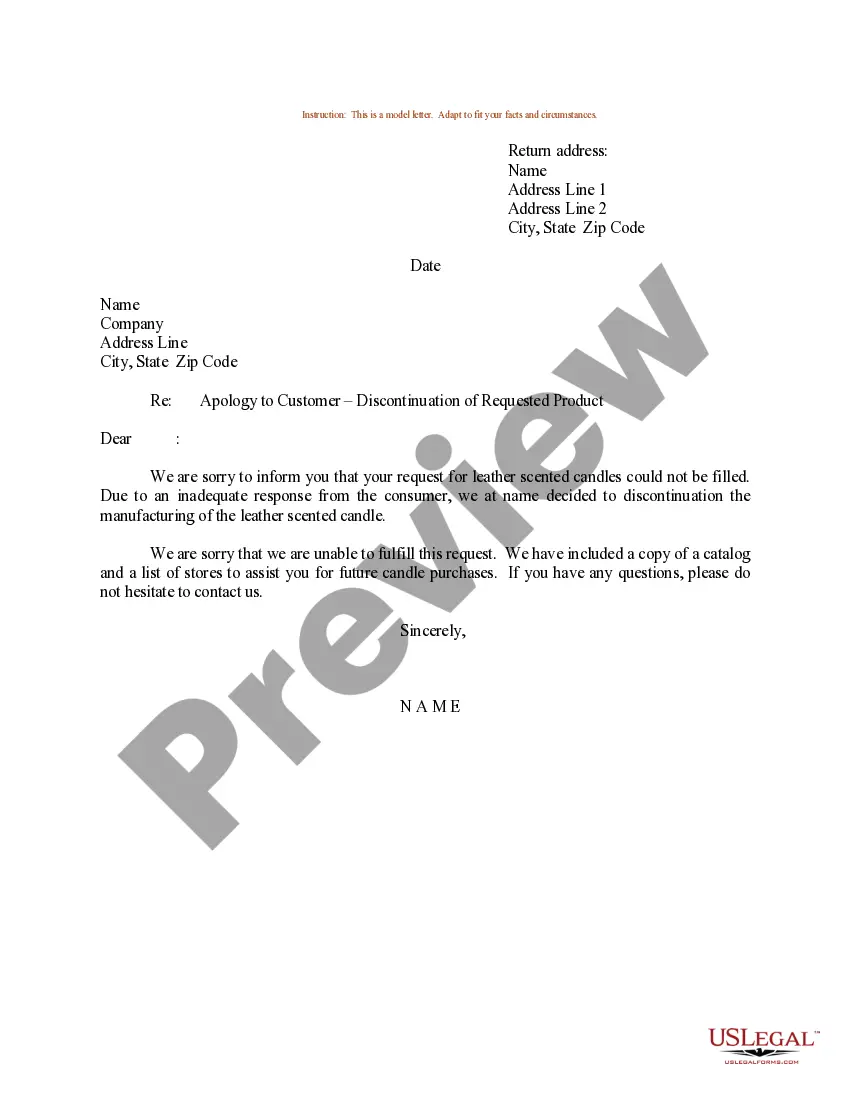
Apology Letter With Reason
Description
Get your form ready online
Our built-in tools help you complete, sign, share, and store your documents in one place.
Make edits, fill in missing information, and update formatting in US Legal Forms—just like you would in MS Word.
Download a copy, print it, send it by email, or mail it via USPS—whatever works best for your next step.
Sign and collect signatures with our SignNow integration. Send to multiple recipients, set reminders, and more. Go Premium to unlock E-Sign.
If this form requires notarization, complete it online through a secure video call—no need to meet a notary in person or wait for an appointment.
We protect your documents and personal data by following strict security and privacy standards.

Make edits, fill in missing information, and update formatting in US Legal Forms—just like you would in MS Word.

Download a copy, print it, send it by email, or mail it via USPS—whatever works best for your next step.

Sign and collect signatures with our SignNow integration. Send to multiple recipients, set reminders, and more. Go Premium to unlock E-Sign.

If this form requires notarization, complete it online through a secure video call—no need to meet a notary in person or wait for an appointment.

We protect your documents and personal data by following strict security and privacy standards.
Looking for another form?
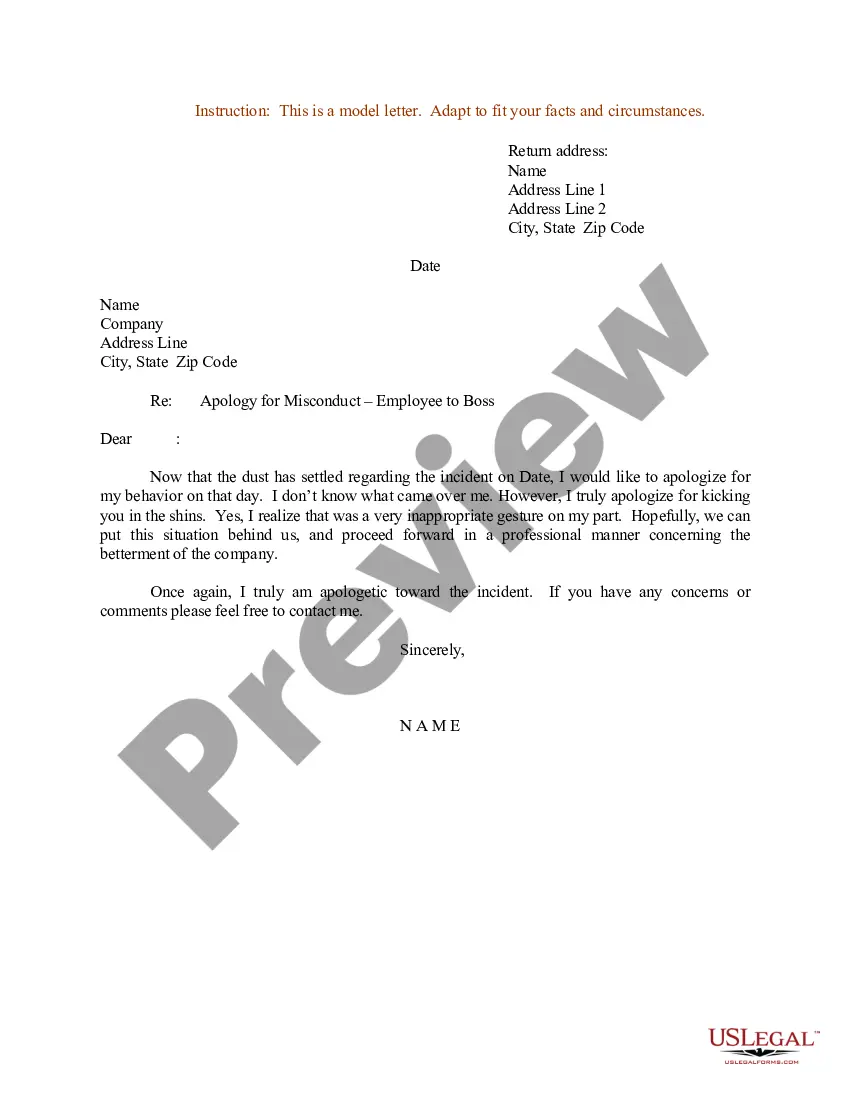
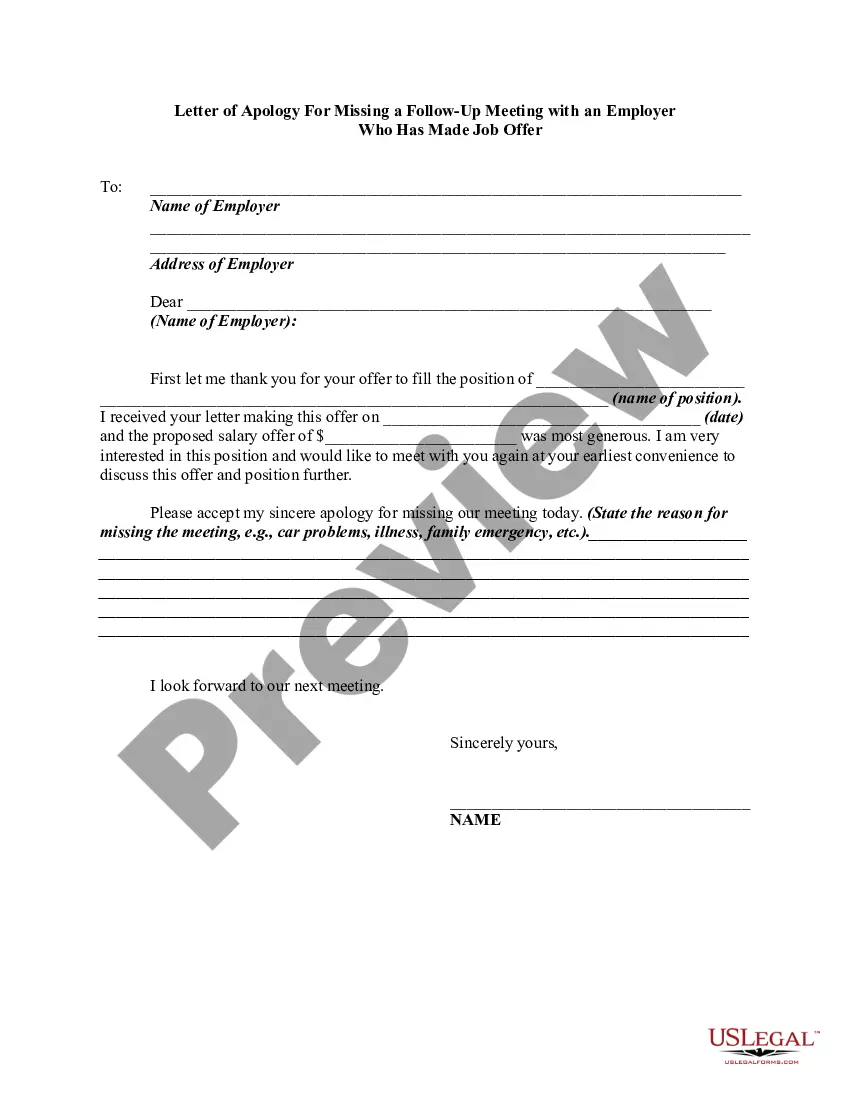

How to fill out Sample Letter For Apology To Customer?
- Log into your US Legal Forms account if you're a returning user. Click the Download button to save your desired template. Ensure your subscription is active or renew it if needed.
- For first-time users, start by previewing the form and its description. Confirm that it fits your specific needs and complies with local jurisdiction requirements.
- If necessary, use the Search tab to find an alternative template that meets your criteria.
- Select the document by clicking the 'Buy Now' button and choose your preferred subscription plan. Register an account to access the full library of forms.
- Proceed to payment by entering your credit card information or using your PayPal account for your subscription.
- Finally, download your completed form and save it to your device. You can also revisit it anytime through the 'My Forms' section in your profile.
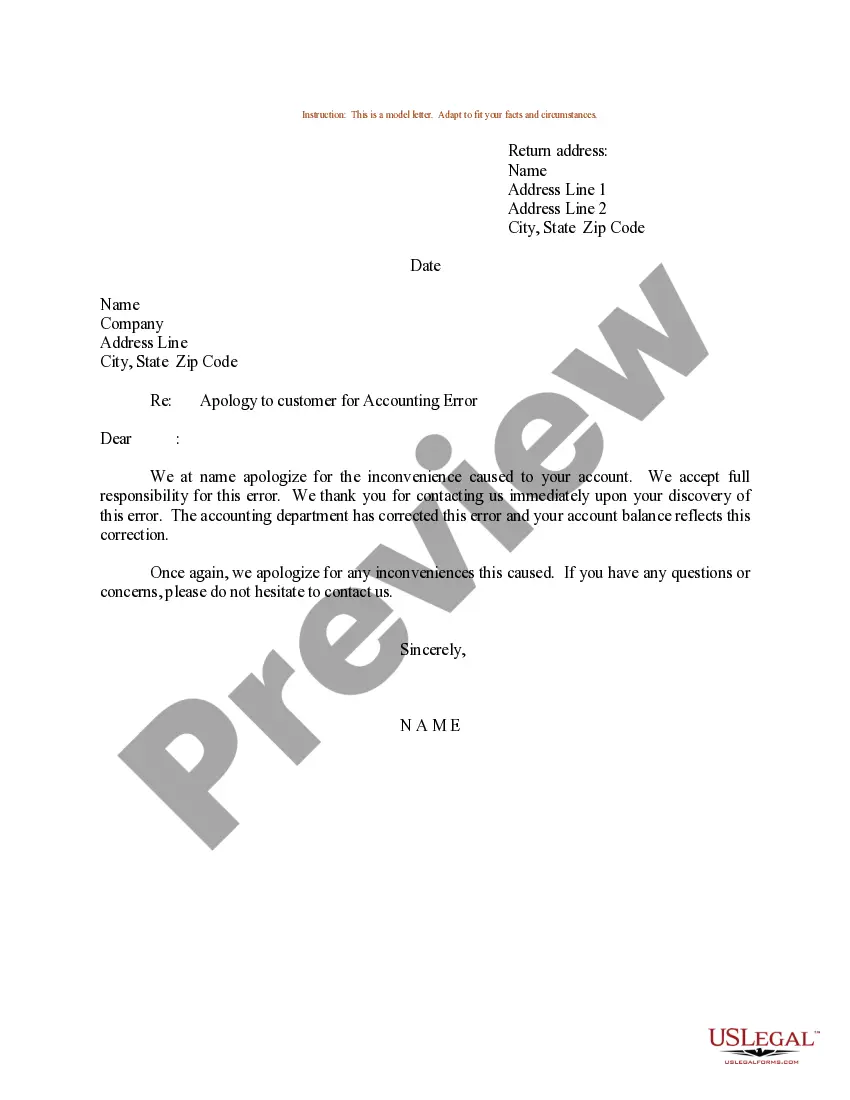
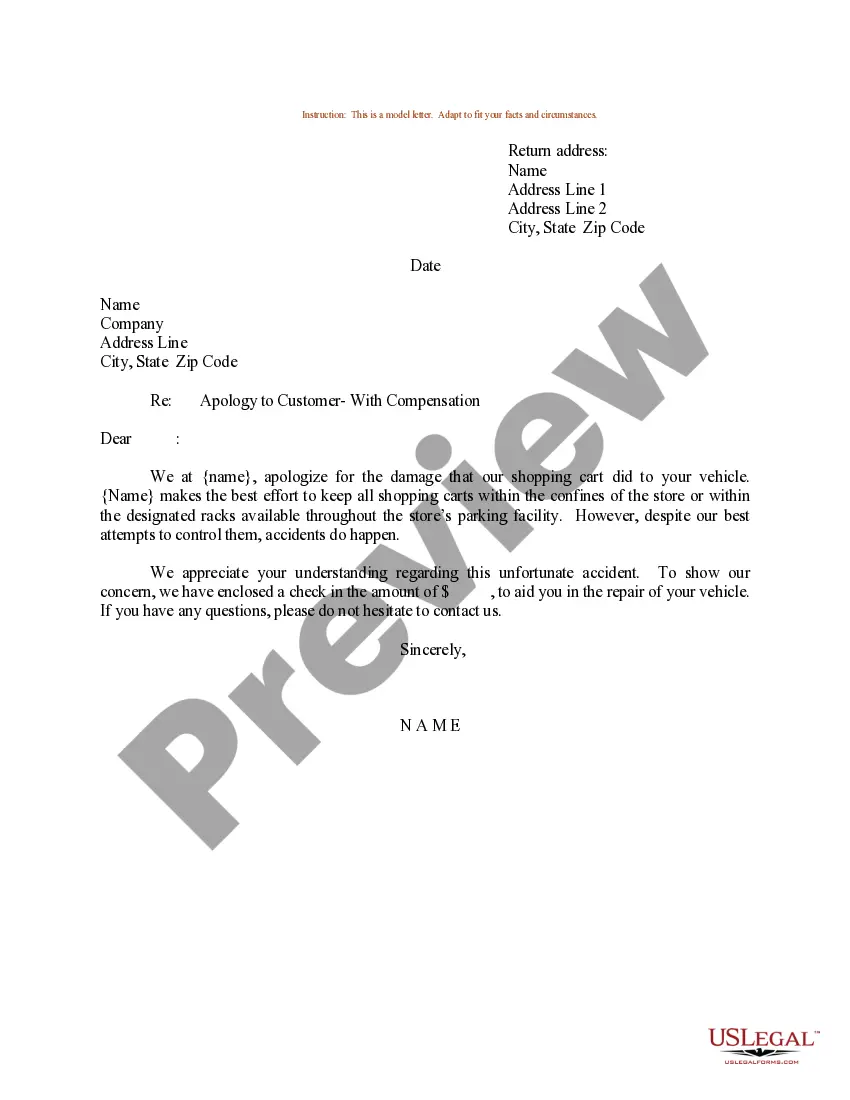
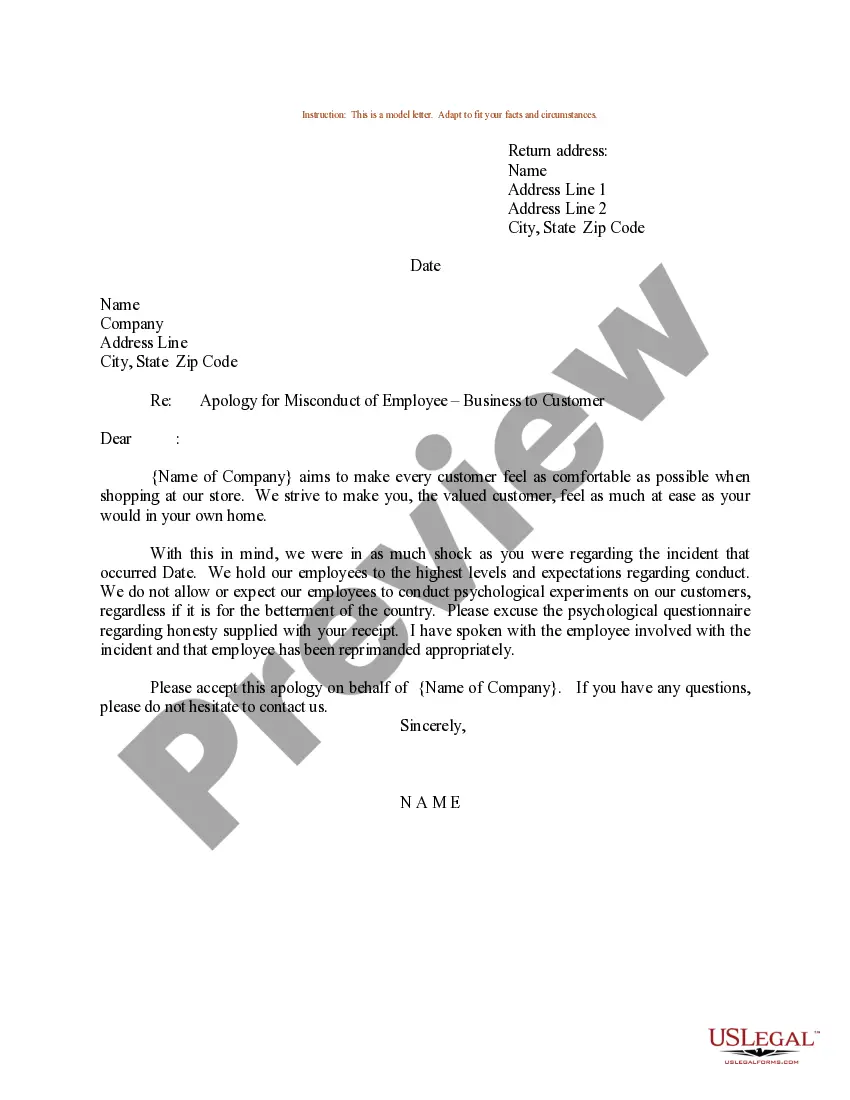
In conclusion, US Legal Forms provides an efficient solution for crafting an apology letter with reason. With over 85,000 editable templates and access to legal experts, you can ensure your document is both comprehensive and precise.
Start your journey to effective communication today by exploring the wide array of templates available at US Legal Forms!
Form popularity
FAQ
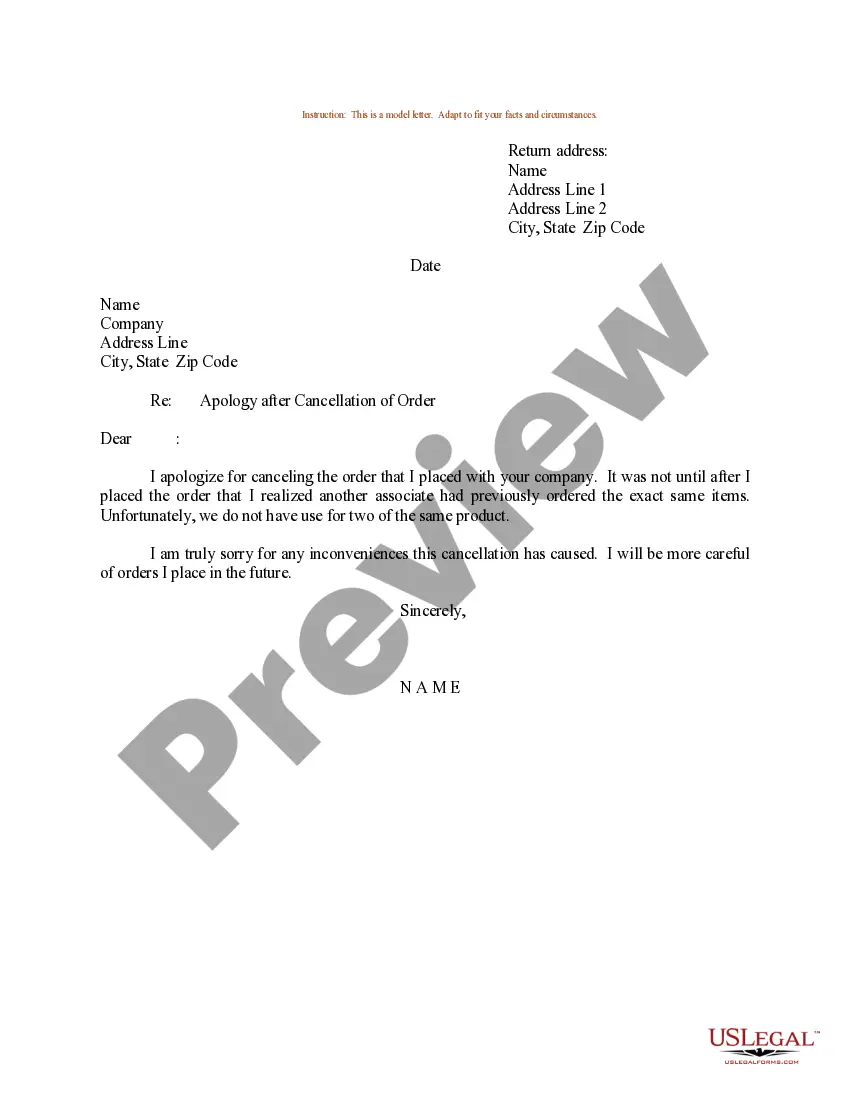
To apologize to someone you hurt deeply, compose a message that emphasizes empathy and remorse. Acknowledge their pain and clearly state your regret for your actions. Adding an apology letter with reason is beneficial as it provides context, showing that you understand the impact of your behavior. Such a thoughtful approach can promote healing and potentially restore trust.
When apologizing professionally, maintain a tone that reflects respect and formality. Start with a clear acknowledgment of the mistake, and follow up with your apology. Be concise and include an apology letter with reason to provide context for your actions. This approach demonstrates accountability and helps in maintaining professional relationships.
A strong apology letter requires clarity and sincerity. Begin by taking responsibility for your actions, then explain how they affected the other person. Make sure to express your regret and include an apology letter with reason, outlining lessons learned and proposing steps to prevent a similar situation in the future. This shows you care about the relationship.
To write a deep apology letter, start by clearly stating what you are apologizing for. This will help the reader understand the context of your feelings. Use a sincere tone and express your feelings honestly, explaining why your actions or words hurt them. Don't forget to include an apology letter with reason, as providing your rationale can help the reader see your perspective.
To politely ask for an apology, approach the conversation with sensitivity. You might say, 'I would appreciate it if you could acknowledge the situation with an apology, as it would help both of us.' This approach, along with an apology letter with reason, encourages a thoughtful response.
To ask for an apology in a letter, express your feelings and the importance of receiving an apology. You can write, 'I feel hurt by what happened, and I would appreciate an apology to help me heal.' By using an apology letter with reason, you demonstrate your openness to communication and resolution.
When asking for an apology letter, be direct yet considerate. You might say, 'I value our relationship, and I believe a written apology could help foster understanding.' Framing your request within the context of an apology letter with reason will strengthen your appeal.
To write a good apology letter for disrespectful behavior, start by admitting your mistake and taking responsibility. For example, state, 'I recognize that my comments were hurtful, and I apologize for any pain I caused.' Using an apology letter with reason will help convey your intent to learn and grow from the experience.
To seek an apology, calmly communicate your feelings to the person involved. You could say, 'I believe clarity can help us both feel better; I would appreciate an apology for what was said.' This approach, combined with an apology letter with reason, encourages open dialogue and reconciliation.
When apologizing to someone you hurt deeply, focus on acknowledging their feelings and the specific impact of your actions. Start by writing, 'I deeply regret my actions and understand how they affected you.' An apology letter with reason can help demonstrate your empathy and commitment to making things right.