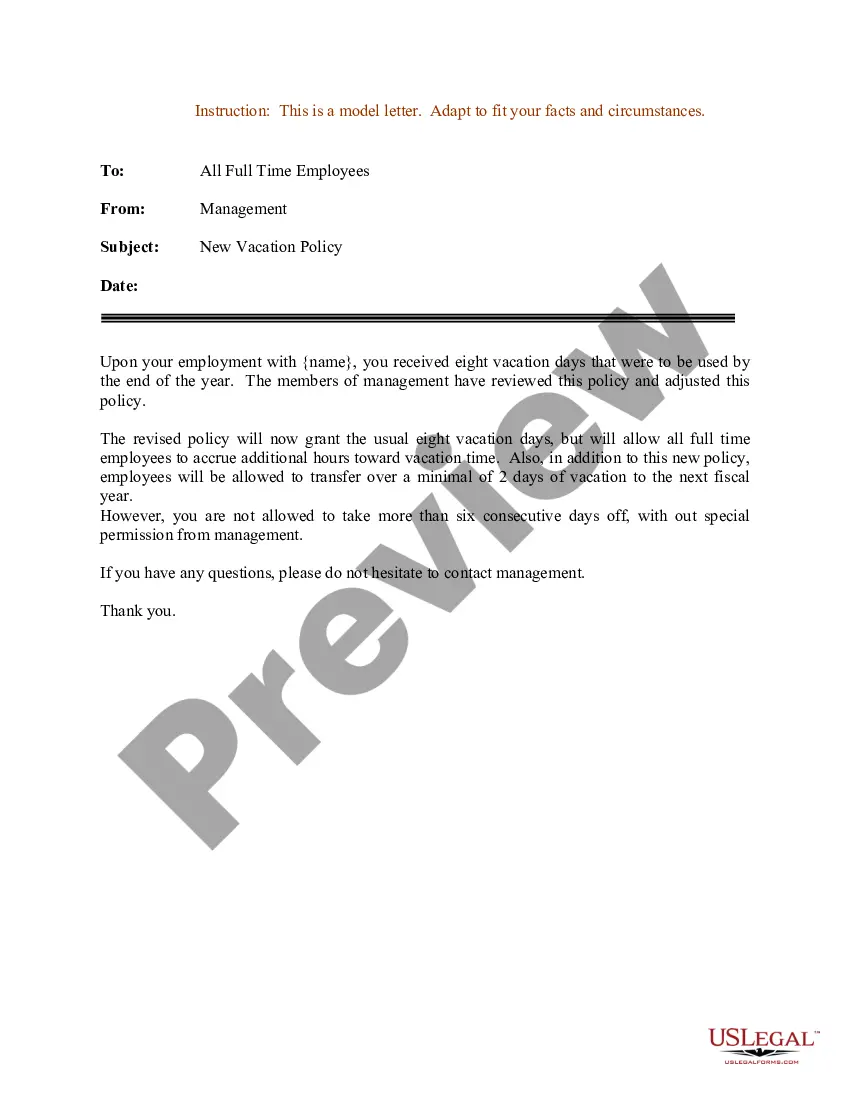
Vacation Policy Time For Employees
Description
Get your form ready online
Our built-in tools help you complete, sign, share, and store your documents in one place.
Make edits, fill in missing information, and update formatting in US Legal Forms—just like you would in MS Word.
Download a copy, print it, send it by email, or mail it via USPS—whatever works best for your next step.
Sign and collect signatures with our SignNow integration. Send to multiple recipients, set reminders, and more. Go Premium to unlock E-Sign.
If this form requires notarization, complete it online through a secure video call—no need to meet a notary in person or wait for an appointment.
We protect your documents and personal data by following strict security and privacy standards.

Make edits, fill in missing information, and update formatting in US Legal Forms—just like you would in MS Word.

Download a copy, print it, send it by email, or mail it via USPS—whatever works best for your next step.

Sign and collect signatures with our SignNow integration. Send to multiple recipients, set reminders, and more. Go Premium to unlock E-Sign.

If this form requires notarization, complete it online through a secure video call—no need to meet a notary in person or wait for an appointment.

We protect your documents and personal data by following strict security and privacy standards.
Looking for another form?

How to fill out Sample Letter For New Vacation Policy?
It’s widely known that you cannot become a legal expert instantly, nor can you quickly learn how to prepare Vacation Policy Time For Employees without a specialized background.
Drafting legal documents is a lengthy process that necessitates specific education and skills. So why not entrust the preparation of the Vacation Policy Time For Employees to the experts.
With US Legal Forms, one of the most extensive legal template libraries, you can access everything from court documents to templates for internal corporate communication.
If you need any other template, start your search again.
Establish a free account and choose a subscription option to buy the form. Click Buy now. Once the payment is processed, you can download the Vacation Policy Time For Employees, complete it, print it, and send or mail it to the relevant individuals or organizations.
- We understand how important compliance and adherence to federal and state laws and regulations are.
- That’s why, on our website, all forms are location specific and current.
- Here’s how you can begin with our platform and obtain the document you need in just minutes.
- Find the document you require by using the search bar at the top of the page.
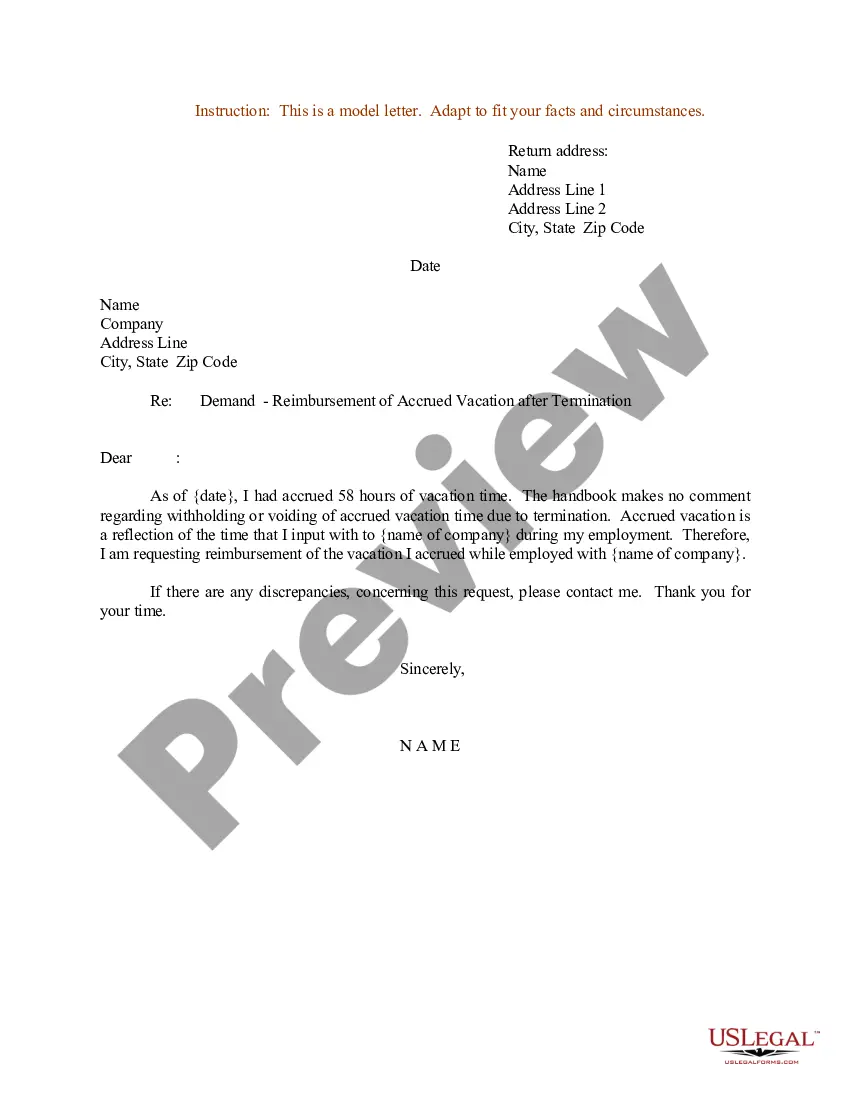
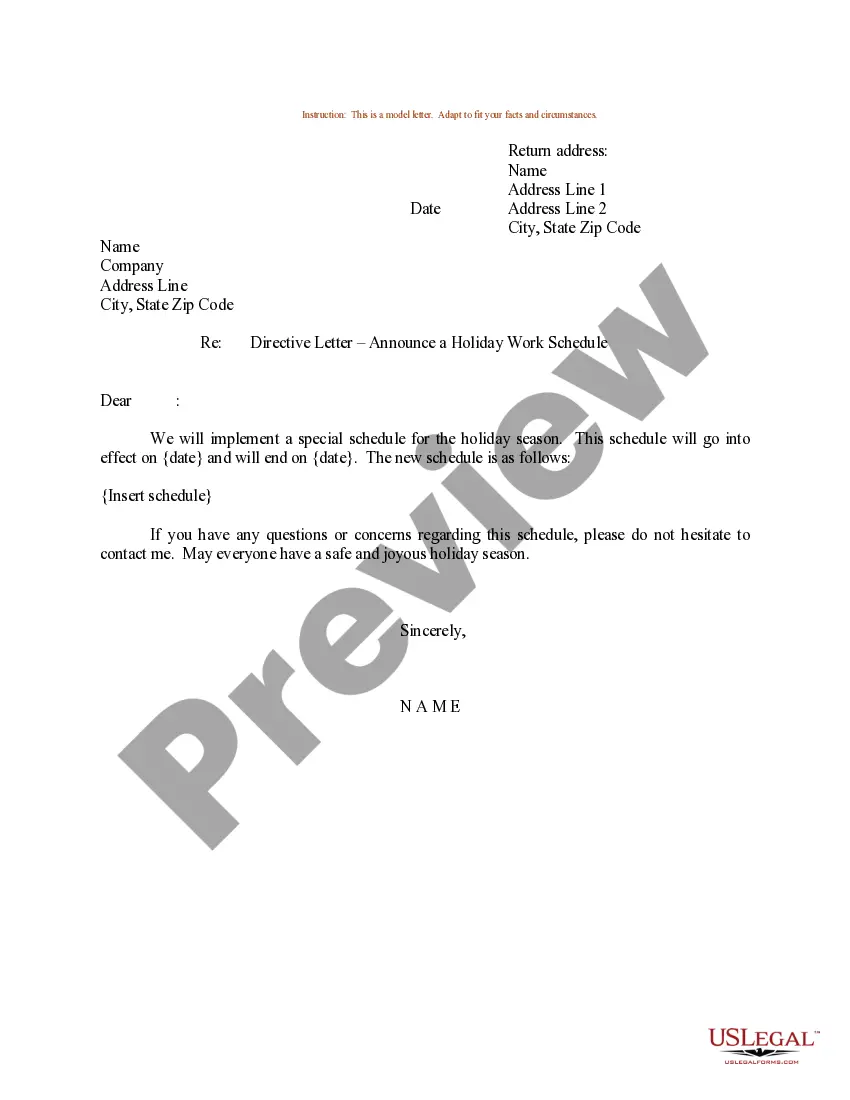
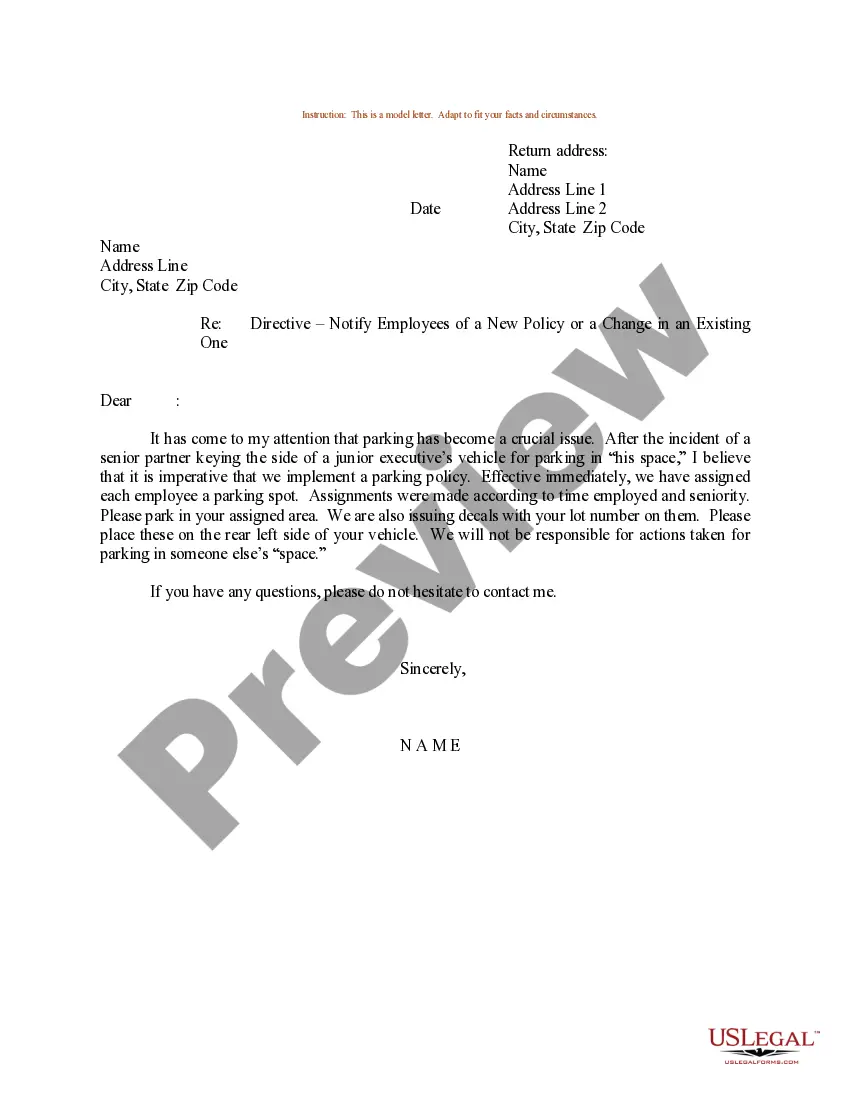
- Preview it (if this option is available) and read the accompanying description to see if Vacation Policy Time For Employees is what you’re seeking.
Form popularity
FAQ
Imagine your employees work 40-hour weeks, or 2,080 hours a year, and you offer 2 weeks of vacation, or 80 hours. To find the hourly accrual rate, calculate: 80 hours / 2,080 hours = 0.038 hours of vacation earned per hour worked. This is your accrued vacation rate.
Accrued time off is PTO that workers earn over time. It's different from lump-sum PTO, for instance, wherein a worker receives all their PTO at once. With accrued time off, workers earn PTO hours each week, pay period, or month. Generally, companies cap the number of PTO hours a worker can accrue in a year.
Imagine your employees work 40-hour weeks, or 2,080 hours a year, and you offer 2 weeks of vacation, or 80 hours. To find the hourly accrual rate, calculate: 80 hours / 2,080 hours = 0.038 hours of vacation earned per hour worked. This is your accrued vacation rate.
Outline what happens with vacation time if employees don't use it by the end of the year. You might let staff members roll over some or all of their vacation time to the next year. Detail your decision in the policy so employees can plan for using their time off before they lose it.
For example, if an employee can accrue four hours of paid time off for every 40 hours worked, this equals one day off every two weeks. Some employers also allow their employees to take PTO in advance without accrued days if they agree to halt the accrued days until the used PTO is replaced.