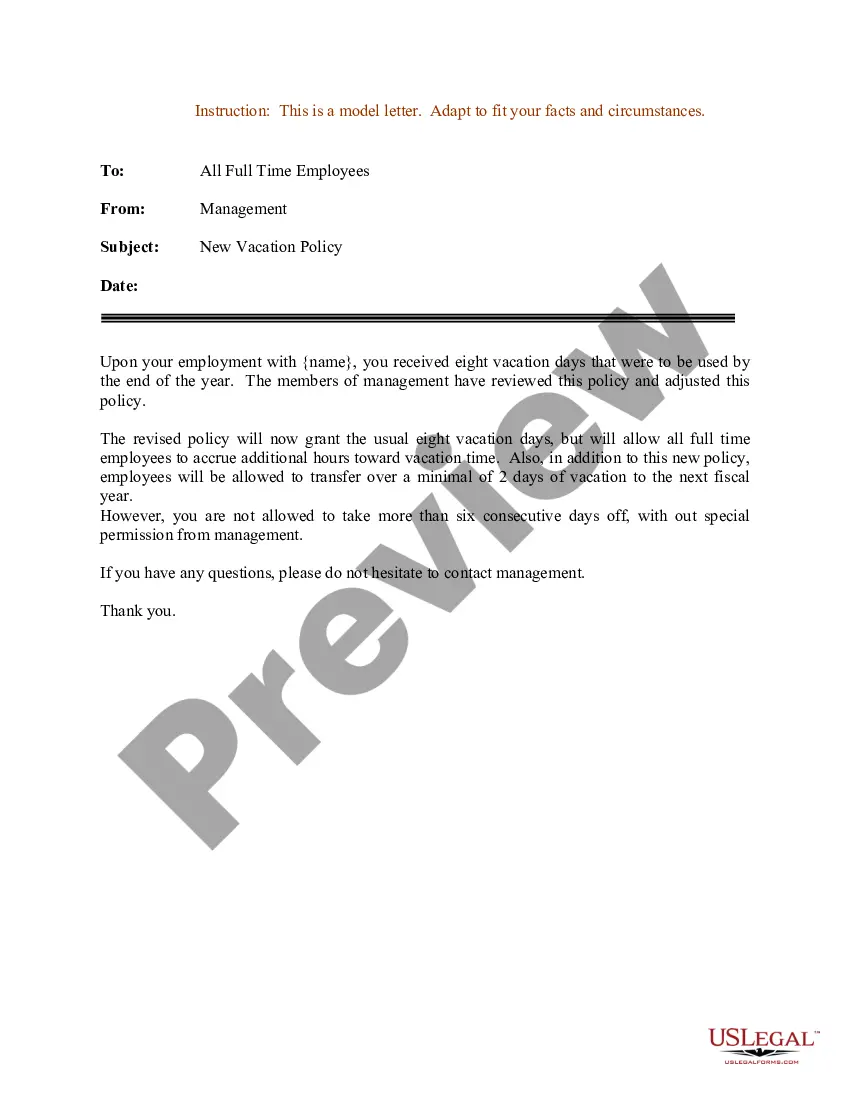
Vacation Policy Employees With India
Description
Get your form ready online
Our built-in tools help you complete, sign, share, and store your documents in one place.
Make edits, fill in missing information, and update formatting in US Legal Forms—just like you would in MS Word.
Download a copy, print it, send it by email, or mail it via USPS—whatever works best for your next step.
Sign and collect signatures with our SignNow integration. Send to multiple recipients, set reminders, and more. Go Premium to unlock E-Sign.
If this form requires notarization, complete it online through a secure video call—no need to meet a notary in person or wait for an appointment.
We protect your documents and personal data by following strict security and privacy standards.

Make edits, fill in missing information, and update formatting in US Legal Forms—just like you would in MS Word.

Download a copy, print it, send it by email, or mail it via USPS—whatever works best for your next step.

Sign and collect signatures with our SignNow integration. Send to multiple recipients, set reminders, and more. Go Premium to unlock E-Sign.

If this form requires notarization, complete it online through a secure video call—no need to meet a notary in person or wait for an appointment.

We protect your documents and personal data by following strict security and privacy standards.
Looking for another form?








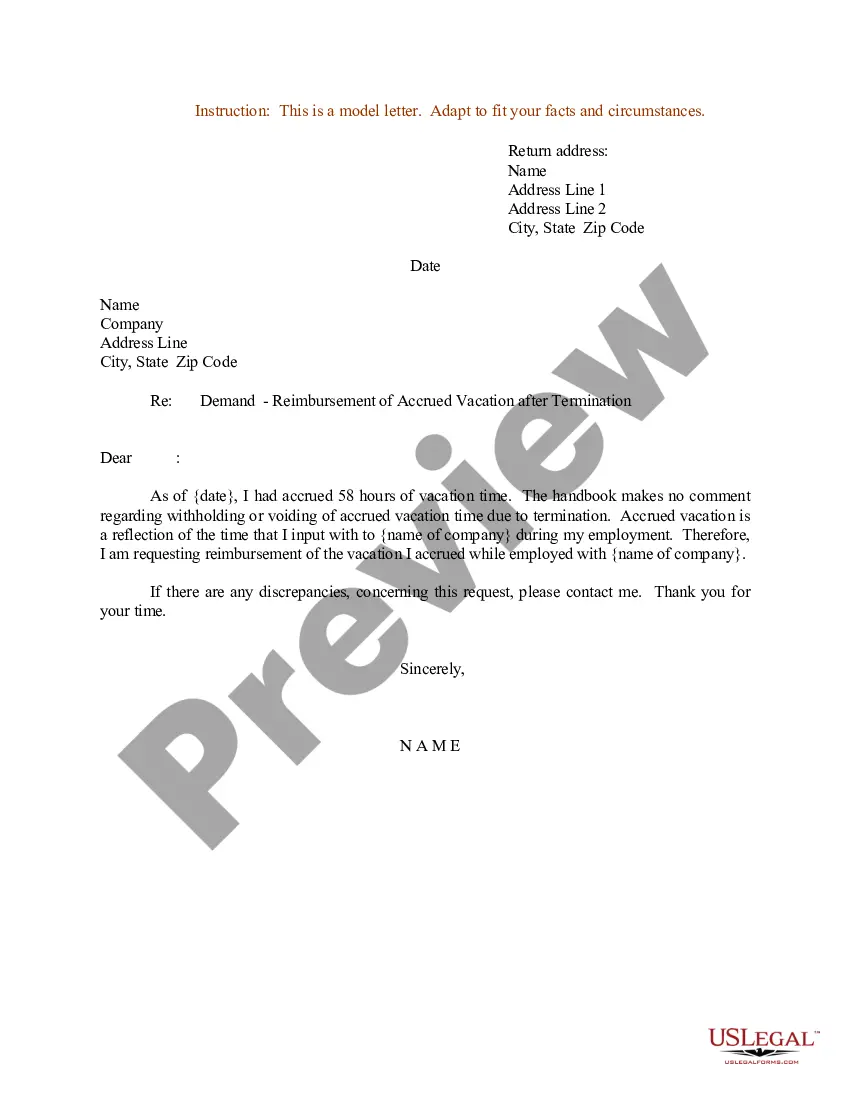
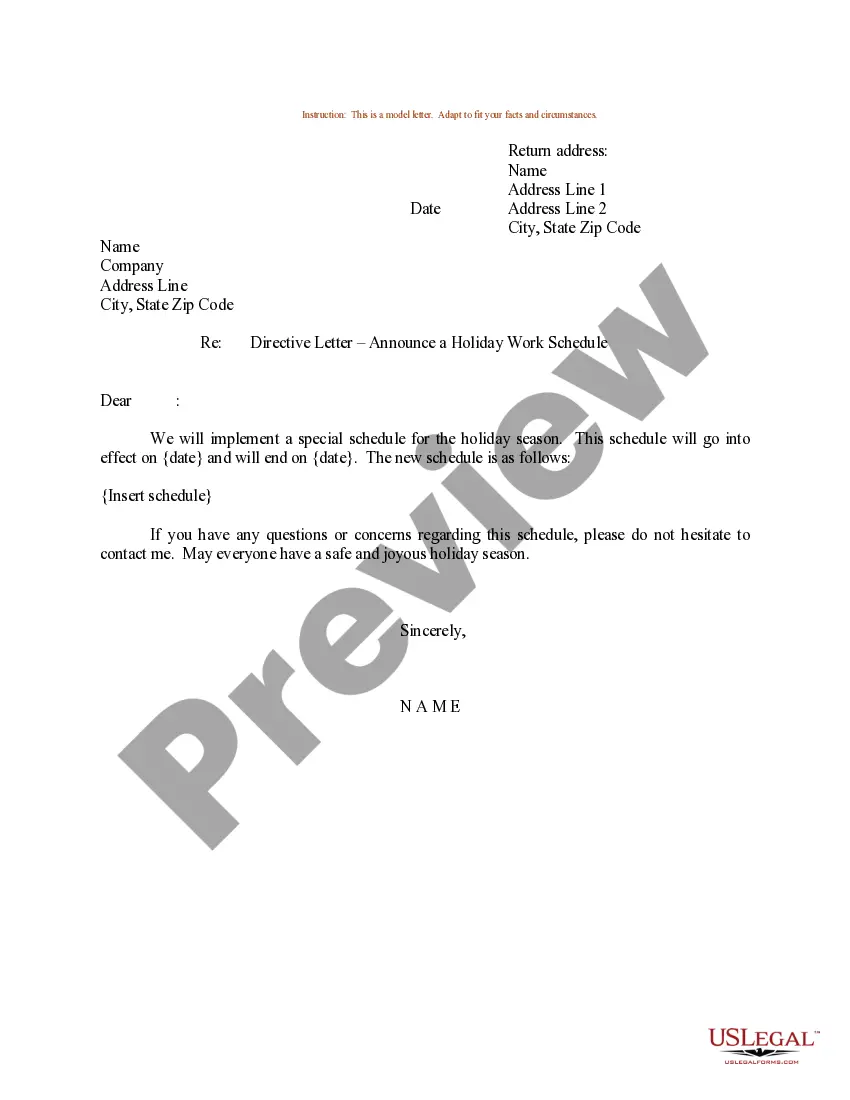
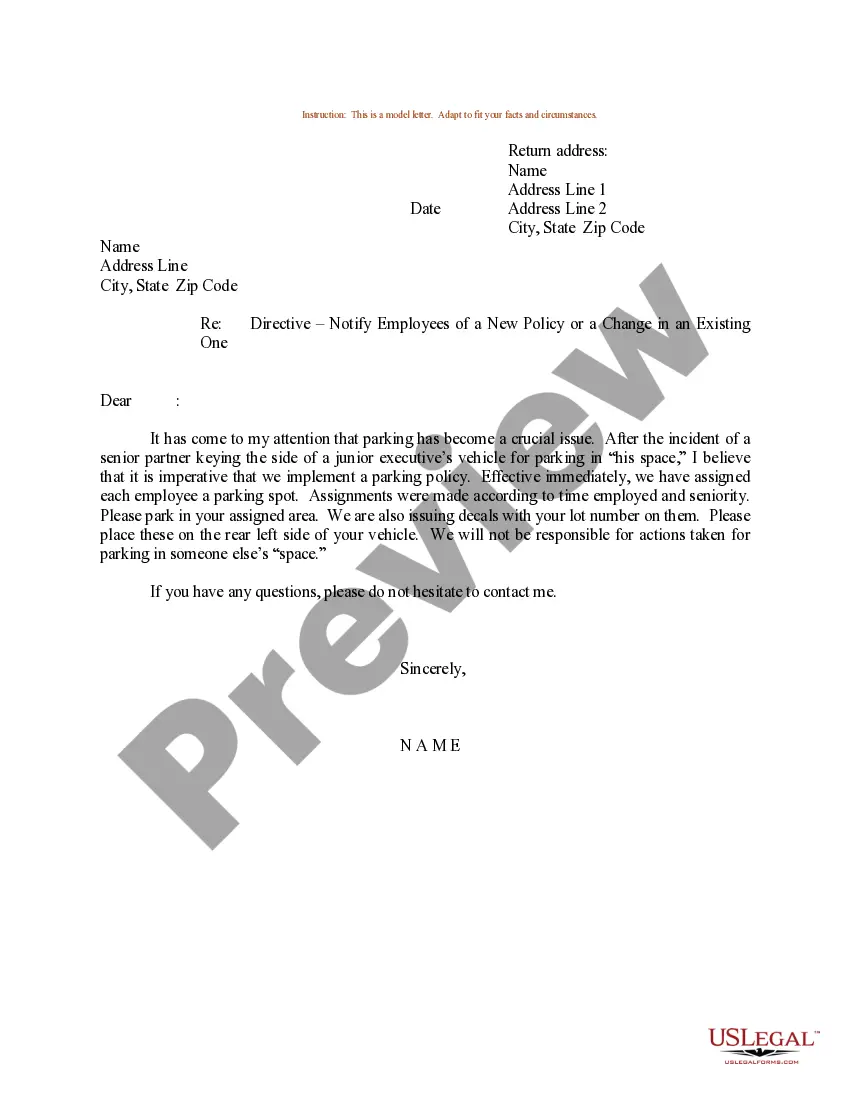
How to fill out Sample Letter For New Vacation Policy?
It’s clear that you can’t transform into a legal authority instantaneously, nor can you master the swift creation of Vacation Policy Employees With India without possessing a distinct skill set.
Drafting legal documents is an extensive process that demands particular education and expertise. So why not entrust the development of the Vacation Policy Employees With India to the professionals.
With US Legal Forms, one of the most extensive collections of legal documents, you can obtain everything from court paperwork to templates for internal corporate communication. We understand how essential compliance and conformity to federal and local statutes and regulations are. That’s why, on our site, every template is location-specific and current.
You can revisit your documents from the My documents section anytime. If you’re an existing client, you can simply Log In, and find and download the template from the same section.
Regardless of the reason for your forms—be it financial and legal or personal—our website has you covered. Experience US Legal Forms today!
- Locate the document you require by utilizing the search bar at the top of the page.
- Examine it (if this option is available) and review the accompanying description to determine if Vacation Policy Employees With India matches what you’re looking for.
- Restart your search if you need an alternative form.
- Create a complimentary account and choose a subscription plan to purchase the document.
- Click Buy now. After the transaction is completed, you can obtain the Vacation Policy Employees With India, fill it out, print it, and send or deliver it to the specified individuals or entities.
Form popularity
FAQ
Laying off employees in India requires adherence to specific legal procedures to ensure compliance with labor laws. Employers must provide valid reasons for the layoff, followed by notice periods or compensation as stipulated in the employment contract. Understanding the implications of vacation policy employees with India is critical during this process to avoid legal complications. Platforms like US Legal Forms can assist employers in drafting the necessary notices and agreements to ensure a smooth and legal transition.
Employees are entitled to 1.25 days of vacation per month, but these values can vary from state to state. The maximum of earned leave that can be accrued and carried over depends on the state in which the company is. In some states it can go from 30 to up to 45 or 60 days.
Casual Leave (CL) Currently, a Central Government employee is offered 8 days CL in a calendar year. The number can go up to 20 days for defence personnel, 30 days for Defence Personnel Below Officer Rank (PBOR) and 10 days for industrial workers. Railways staff are granted CL between 11 to 13 days in a calendar year.
Key Ingredients of a Good Leave Policy Leave accrual process. Certain mandatory provisions (especially for privilege/earned leave in terms of the minimum number of leaves that can be availed in a year) Accumulation limits for each type of leave. Encashment criteria, including applicable income tax.
Providing earned leaves is mandatory as per labour laws, though the quantum of such leaves vary state by state. The leave entitlement is calculated based on a certain number of days worked (e.g., 20 workdays). Days worked shall not include holidays, weekends, or days when the employee does not work.
Adult employees earn one day off per every 20-day period, while young personnel (under the age of 15) acquire an additional five days, affording them one leisure day from each 15-day stint.