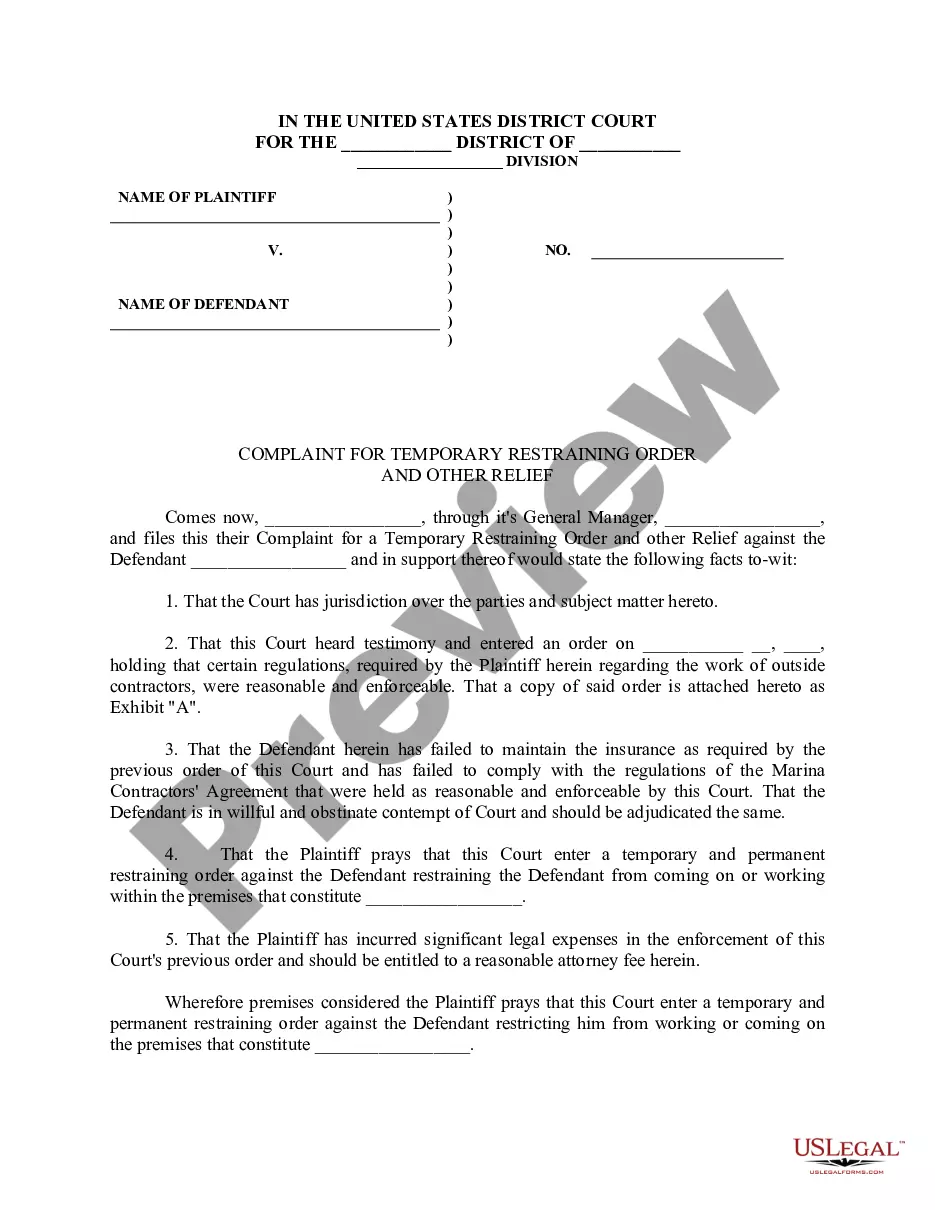
Home Inspection Checklist For Condo
Description
Get your form ready online
Our built-in tools help you complete, sign, share, and store your documents in one place.
Make edits, fill in missing information, and update formatting in US Legal Forms—just like you would in MS Word.
Download a copy, print it, send it by email, or mail it via USPS—whatever works best for your next step.
Sign and collect signatures with our SignNow integration. Send to multiple recipients, set reminders, and more. Go Premium to unlock E-Sign.
If this form requires notarization, complete it online through a secure video call—no need to meet a notary in person or wait for an appointment.
We protect your documents and personal data by following strict security and privacy standards.

Make edits, fill in missing information, and update formatting in US Legal Forms—just like you would in MS Word.

Download a copy, print it, send it by email, or mail it via USPS—whatever works best for your next step.

Sign and collect signatures with our SignNow integration. Send to multiple recipients, set reminders, and more. Go Premium to unlock E-Sign.

If this form requires notarization, complete it online through a secure video call—no need to meet a notary in person or wait for an appointment.

We protect your documents and personal data by following strict security and privacy standards.
Looking for another form?

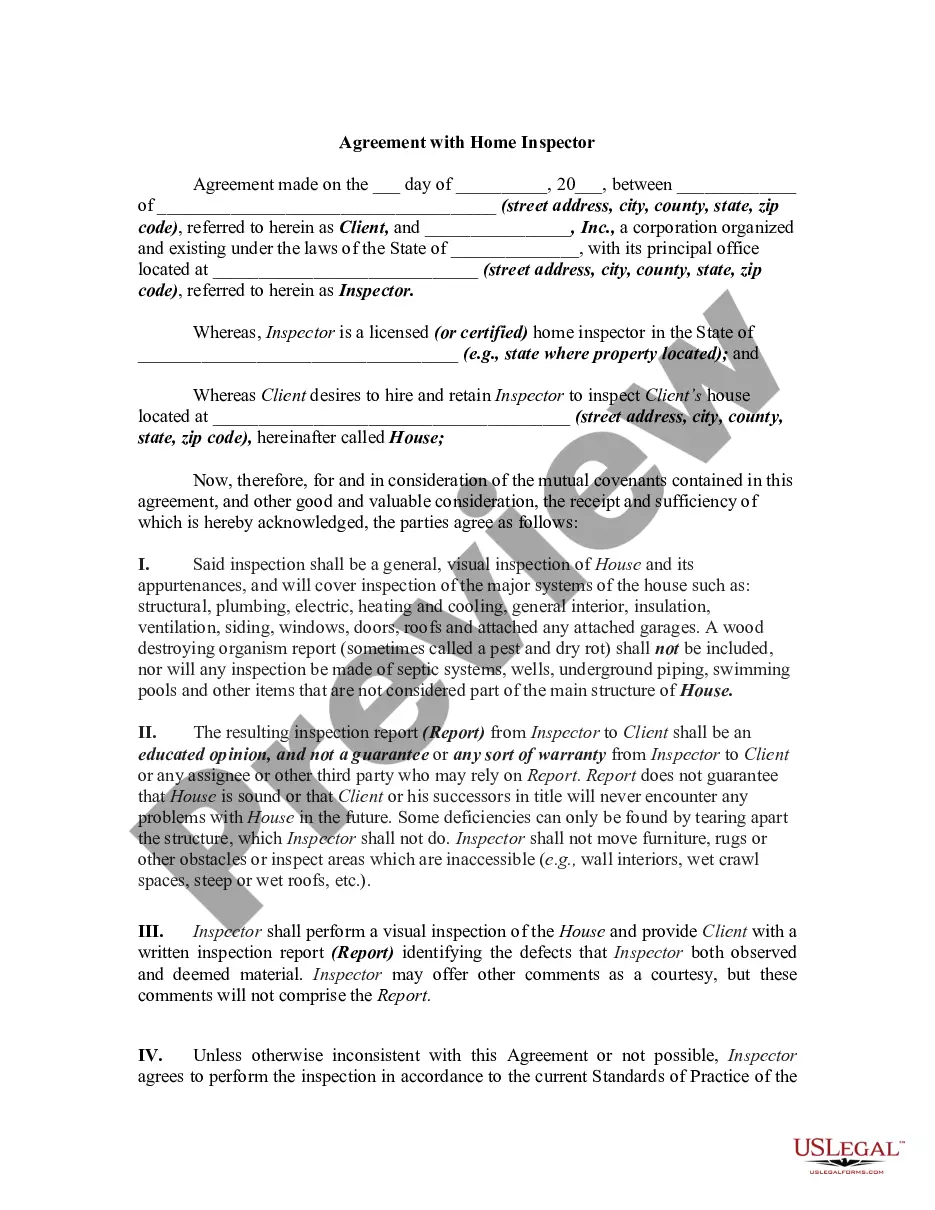
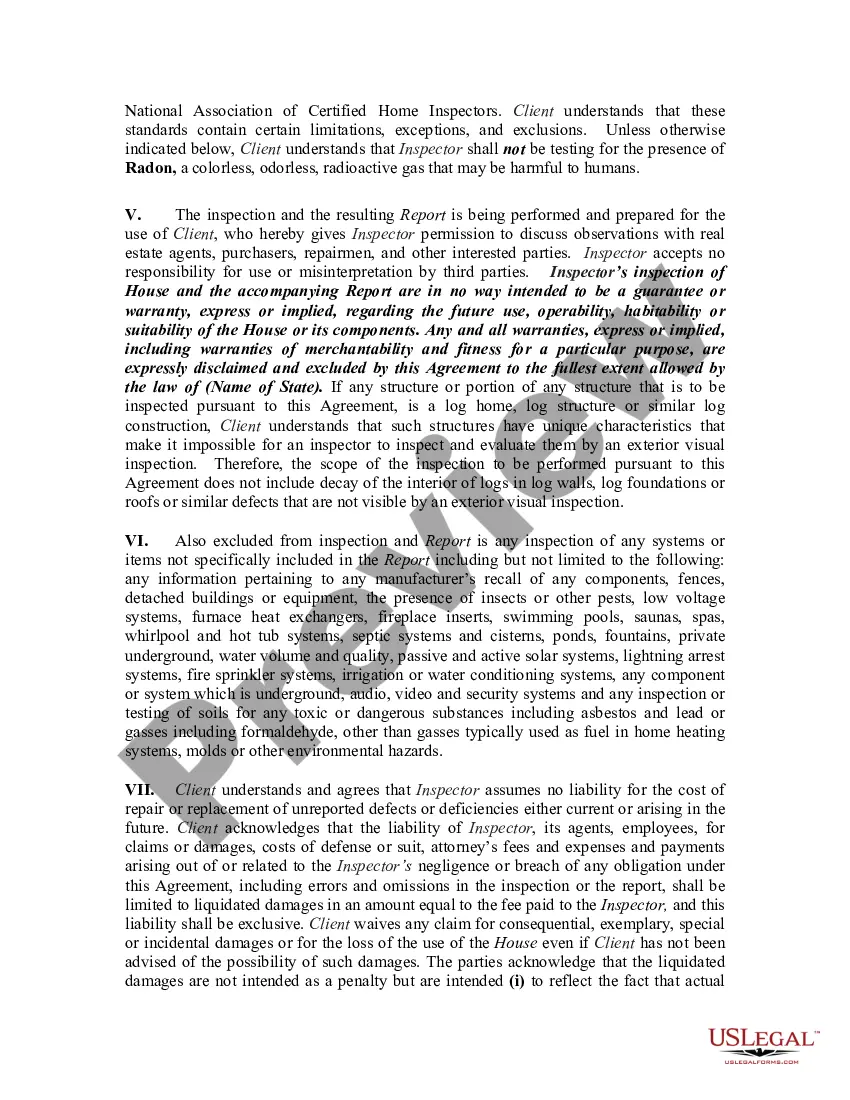
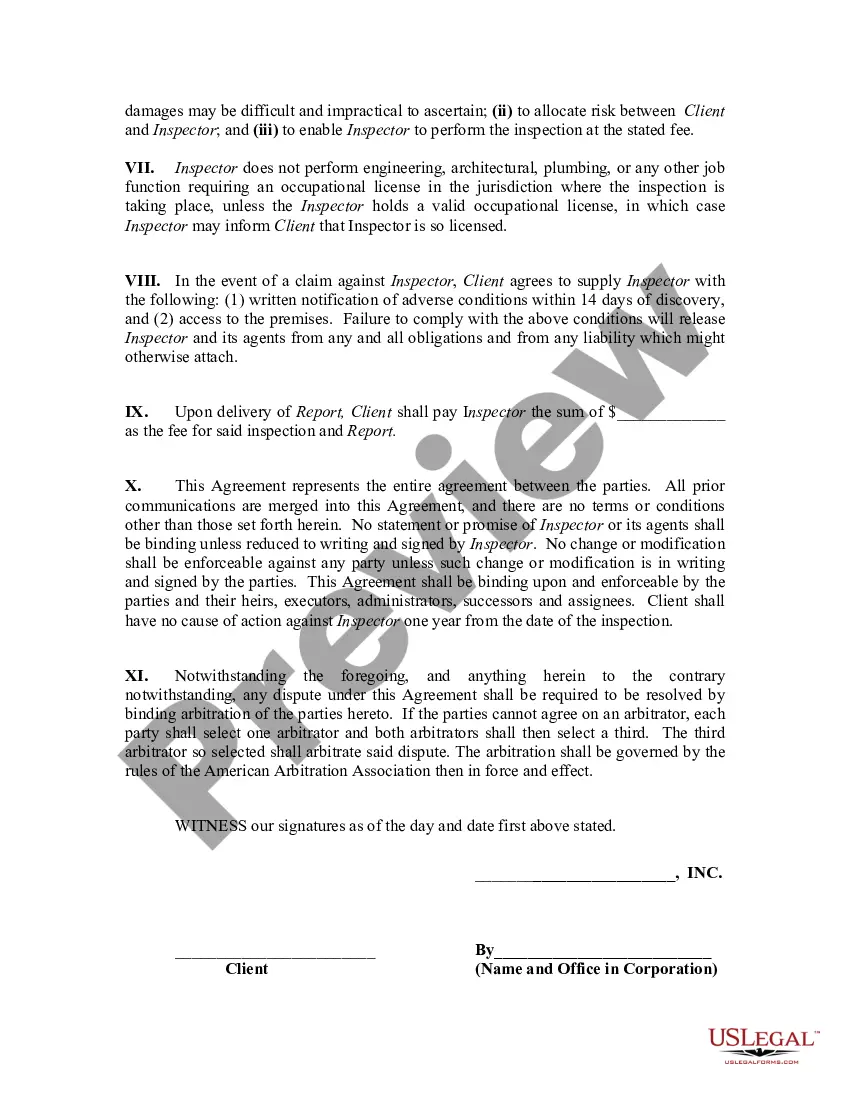
How to fill out Agreement With Home Inspector?
Individuals often link legal documentation with something complex that only an expert can handle.
In a way, that's accurate, as creating a Home Inspection Checklist For Condo requires a deep comprehension of subject standards, including state and local laws.
Nonetheless, with US Legal Forms, everything has turned more user-friendly: pre-prepared legal documents for any personal and business situation tailored to state regulations are compiled in a single online directory and are now accessible to all.
Print your document or upload it to an online editor for quicker completion. All templates in our catalog are reusable: once bought, they remain saved in your account. You can access them anytime needed via the My documents tab. Experience all advantages of using the US Legal Forms platform. Subscribe today!
- Review the content of the page thoroughly to confirm it meets your needs.
- Examine the form description or check it through the Preview option.
- Find another template using the Search field in the header if the previous one does not fit you.
- Click Buy Now when you discover the appropriate Home Inspection Checklist For Condo.
- Select a pricing plan that aligns with your needs and financial considerations.
- Create an account or Log In to proceed to the payment section.
- Purchase your subscription using PayPal or your credit card.
- Choose the file format and click Download.
Form popularity
FAQ
Typically, a home inspection for a condo takes about two to four hours. The exact time depends on the size of the condo and the complexity of the systems being inspected. By using a home inspection checklist for condo, inspectors can efficiently evaluate all vital areas, ensuring nothing is overlooked. This thorough process ultimately provides you with a comprehensive understanding of the property.
To ensure thoroughness during your condo inspection, consider these five key questions. First, ask, "Are there any visible signs of water damage?" Next, inquire, "How old are the major appliances and systems?" Also, check for any past pest problems by asking, "Has the condo had any pest incidents?" Don't overlook inquiring about the community rules, such as, "What restrictions apply to condo owners?" Finally, ask about maintenance practices with, "How is the building's maintenance handled?" These questions can enhance your home inspection checklist for condo.
When buying a condo, several inspections may be needed to ensure the property is in good condition. These typically include a general home inspection, focusing on the unit's systems, and a separate inspection for the building's common areas and facilities. Additionally, you may consider specialized inspections, such as pest inspection or radon testing, depending on your location. A solid home inspection checklist for condo can guide you through identifying these essential inspections.
During a condo inspection, you should follow your home inspection checklist for condo carefully. Start by evaluating common areas, such as hallways and laundry facilities, to identify any maintenance issues. Next, examine your unit thoroughly, checking for signs of water damage, mold, and structural integrity. Be sure to ask the inspector about any concerns you notice, as their expertise can help you understand the property better.
Creating an inspection checklist starts with identifying key areas to assess, such as plumbing, electrical, and structural components. You can research common concerns specific to condos to ensure you don’t miss anything crucial. Using a home inspection checklist for a condo can streamline this process and provide you with peace of mind during your property evaluation.
The riskiest part of a home inspection often involves assessing hidden systems that may not be easily accessible, such as plumbing and electrical lines. For condos, overlooked issues in shared spaces could lead to shared liability costs. Using a detailed home inspection checklist for a condo ensures you cover these risky areas thoroughly.
Home inspectors examine various aspects of a condo during an inspection. They typically check the building’s structure, electrical systems, plumbing, and common areas. It’s crucial to utilize a comprehensive home inspection checklist for a condo so you can keep track of important findings and address any potential issues.
A red flag on a house signals a potential issue that requires further investigation. In the context of a condo, red flags can include problems with the electrical systems, plumbing, or the structural integrity of the building. Incorporating these red flags into your home inspection checklist for a condo helps you make informed decisions before purchasing.
Condos should ideally be inspected every few years or after significant renovations. Regular inspections allow you to identify and address maintenance issues before they escalate. Leveraging a home inspection checklist for condos can help ensure that your unit remains in good condition and enhances your living experience.
Waiving an inspection on a condo is generally not recommended, especially if you are unfamiliar with the property. An inspection can highlight maintenance concerns that you may not see during the buying process. Using a home inspection checklist for condos can empower you with the knowledge to make the right choice.