Abandoned Property Storage Without Permission
Description
Get your form ready online
Our built-in tools help you complete, sign, share, and store your documents in one place.
Make edits, fill in missing information, and update formatting in US Legal Forms—just like you would in MS Word.
Download a copy, print it, send it by email, or mail it via USPS—whatever works best for your next step.
Sign and collect signatures with our SignNow integration. Send to multiple recipients, set reminders, and more. Go Premium to unlock E-Sign.
If this form requires notarization, complete it online through a secure video call—no need to meet a notary in person or wait for an appointment.
We protect your documents and personal data by following strict security and privacy standards.

Make edits, fill in missing information, and update formatting in US Legal Forms—just like you would in MS Word.

Download a copy, print it, send it by email, or mail it via USPS—whatever works best for your next step.

Sign and collect signatures with our SignNow integration. Send to multiple recipients, set reminders, and more. Go Premium to unlock E-Sign.

If this form requires notarization, complete it online through a secure video call—no need to meet a notary in person or wait for an appointment.

We protect your documents and personal data by following strict security and privacy standards.
Looking for another form?





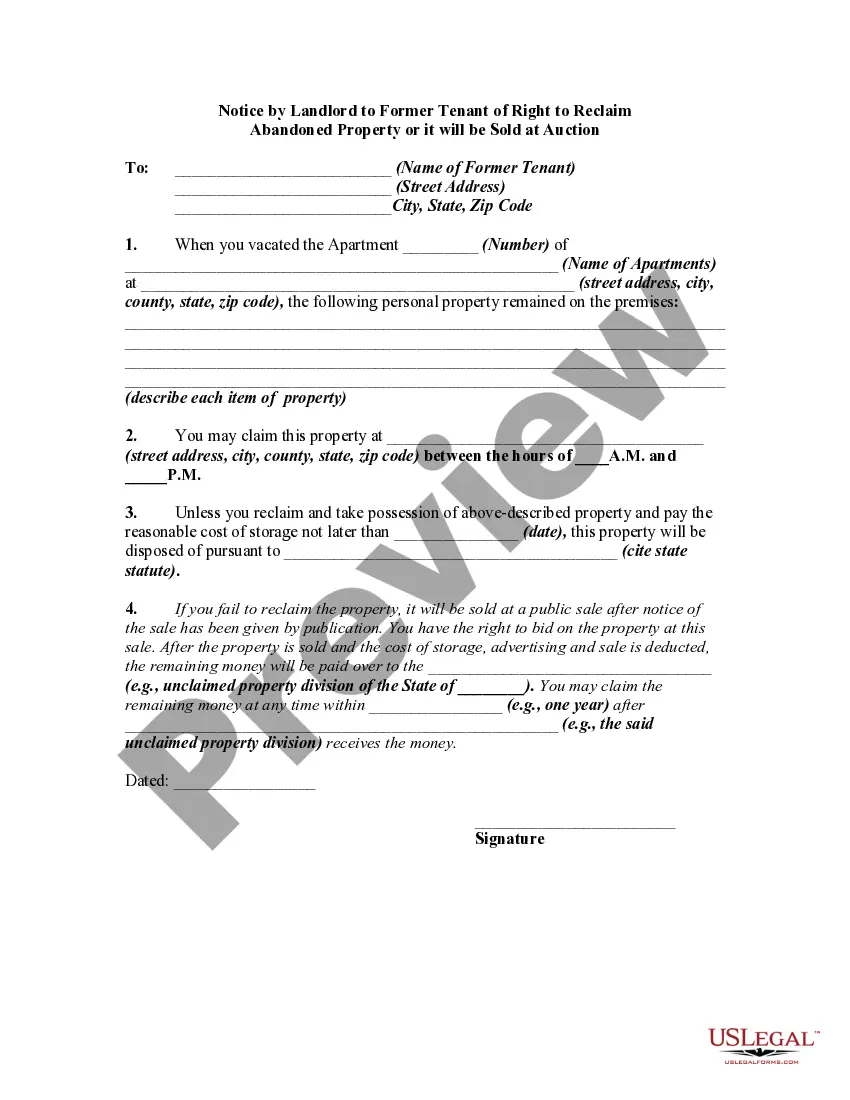
How to fill out Notice By Landlord To Former Tenant Of Right To Reclaim Abandoned Property Or It Will Be Sold At Auction - Abandonment?
Locating a reliable source for the latest and most suitable legal templates constitutes half the challenge of navigating bureaucracy.
Selecting the correct legal documents demands precision and meticulousness, which is why it's crucial to obtain samples of Abandoned Property Storage Without Permission solely from trustworthy platforms, like US Legal Forms.
Eliminate the complications associated with your legal paperwork. Explore the extensive US Legal Forms catalog to locate legal templates, assess their suitability for your situation, and download them instantly.
- Utilize the catalog navigation or search bar to discover your template.
- Examine the form’s details to confirm if it aligns with your state and locality's requirements.
- Check the form preview, if accessible, to make certain it is indeed the document you seek.
- Go back to the search to locate the appropriate template if the Abandoned Property Storage Without Permission does not meet your needs.
- If you are confident about the document’s pertinence, proceed to download it.
- If you are a registered customer, click Log in to verify and access your selected forms in My documents.
- If you don't have an account yet, click Buy now to acquire the template.
- Choose the pricing option that best fits your requirements.
- Continue to the registration process to complete your purchase.
- Finalize your transaction by selecting a payment method (credit card or PayPal).
- Select the document format for downloading Abandoned Property Storage Without Permission.
- Once you have the form downloaded to your device, you can modify it with an editor or print it out and fill it in by hand.
Form popularity
FAQ
In Georgia, property is generally considered abandoned if the owner has not been present or has not interacted with the property for a period of at least one year. This timeframe can vary depending on the specific circumstances surrounding the property. If you find yourself dealing with abandoned property storage without permission, it's crucial to understand both state laws and your rights. Using platforms like USLegalForms can help you navigate the legal processes related to abandoned property.
In Colorado, the statute related to abandoned property outlines the legal guidelines when dealing with possessions left behind. Generally, property becomes abandoned when the owner intentionally relinquishes their rights without transferring them to someone else. As for abandoned property storage without permission, this refers to situations where items have been stored without authorization. It is essential to understand these laws to protect your rights and responsibilities regarding abandoned property.
In Alabama, property is typically considered abandoned after a specific period of inactivity. If the owner does not reclaim the property within a reasonable timeframe, it may be classified as abandoned. Abandoned property storage without permission can have legal implications for both the property owner and anyone who might possess the property. It is crucial to understand local laws to ensure compliance and avoid potential disputes.
In California, abandonment varies by context but generally involves a tenant leaving personal property without intent to return. For storage units, if a renter stops paying and does not communicate for a specified time, the unit is considered abandoned property storage without permission. Legal processes must be followed to reclaim the belongings. For clarity, consider using resources like USLegalForms to explore specific abandonment laws.
While policies differ, most storage facilities allow a grace period of about 10 to 30 days after the due date before taking action. If payments are not made, facilities may classify the unit as abandoned property storage without permission. This often leads to late fees and potential auctions of the items inside. Maintaining timely payments is vital to protect your belongings.
Typically, if a storage unit remains unpaid for a period of 60 to 90 days, it might be classified as abandoned. During this time, storage facilities will usually reach out to the owner regarding overdue payments. If the tenant does not respond or claim their unit, the facility can consider the property abandoned. Adhering to payment schedules can help avoid such situations.
In most cases, if a tenant is absent for 30 days without notice or payment, the rental unit may be deemed abandoned. This can apply to various rental agreements, including those for storage units, under abandonment property storage without permission. Different states may have distinct rules, so checking local laws is essential. Regular communication with your landlord can help prevent misunderstandings.
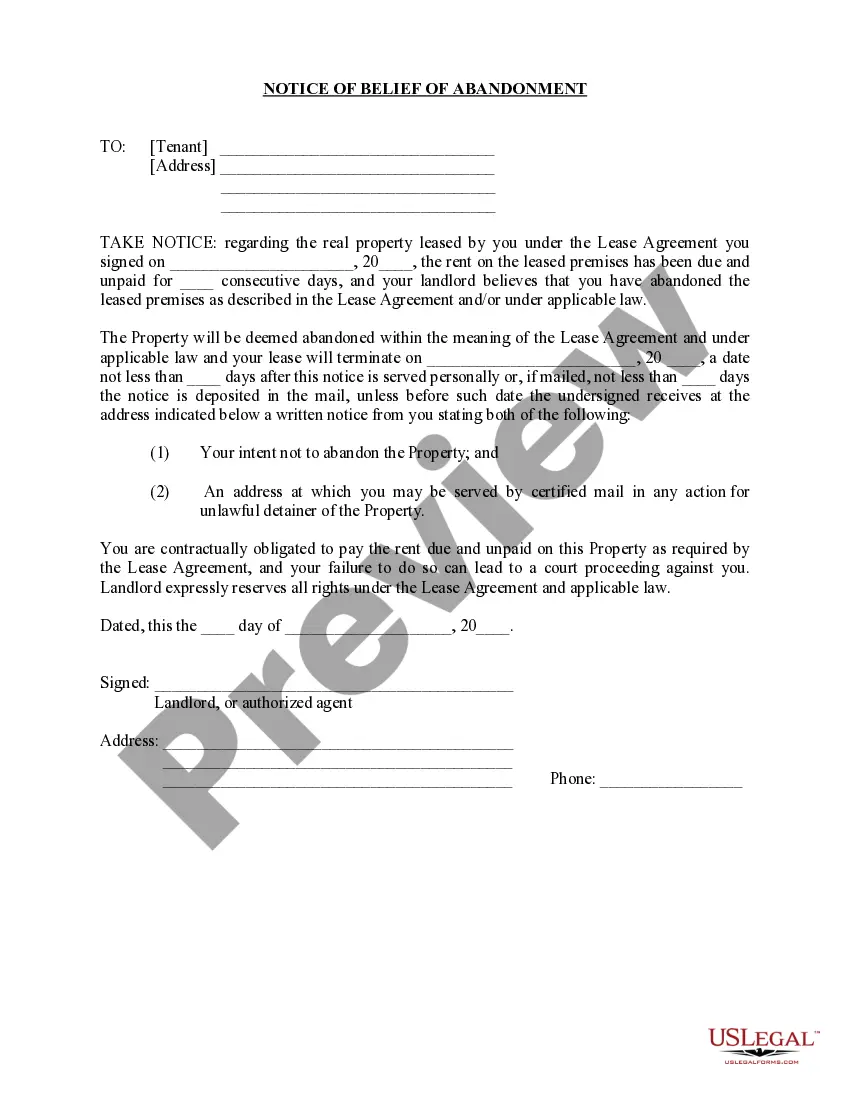
Storage units often become abandoned when tenants fail to make payments on time and do not respond to communications from the storage facility. This can lead to a situation where the facility considers the unit abandoned property storage without permission. The owner may eventually sell the items inside to recover unpaid fees, after following specific legal procedures. Staying in touch with your storage provider can prevent unintentional abandonment.
In New Jersey, the statute regarding abandoned property storage without permission can be complex. Generally, if personal property is left behind for a specific period, the owner may lose rights to it. The exact timeframe varies with different types of property, but typically, personal items not claimed within six months may be considered abandoned. Consulting legal resources can help clarify your rights in these situations.