Confidential Information Form 11.2
Description
Get your form ready online
Our built-in tools help you complete, sign, share, and store your documents in one place.
Make edits, fill in missing information, and update formatting in US Legal Forms—just like you would in MS Word.
Download a copy, print it, send it by email, or mail it via USPS—whatever works best for your next step.
Sign and collect signatures with our SignNow integration. Send to multiple recipients, set reminders, and more. Go Premium to unlock E-Sign.
If this form requires notarization, complete it online through a secure video call—no need to meet a notary in person or wait for an appointment.
We protect your documents and personal data by following strict security and privacy standards.

Make edits, fill in missing information, and update formatting in US Legal Forms—just like you would in MS Word.

Download a copy, print it, send it by email, or mail it via USPS—whatever works best for your next step.

Sign and collect signatures with our SignNow integration. Send to multiple recipients, set reminders, and more. Go Premium to unlock E-Sign.

If this form requires notarization, complete it online through a secure video call—no need to meet a notary in person or wait for an appointment.

We protect your documents and personal data by following strict security and privacy standards.
Looking for another form?









How to fill out USLegal Practical Guide To Confidential Information, Trade Secrets And NonDisclosure Agreements?
Whether for commercial objectives or for personal matters, everyone must confront legal issues at some moment in their life.
Filling out legal documents necessitates meticulous attention, beginning with selecting the proper form example.
Once it is downloaded, you can fill out the form using editing software or print it and complete it manually.
- For instance, if you choose an incorrect variant of the Confidential Information Form 11.2, it will be declined upon submission.
- Thus, it is vital to obtain a trustworthy source of legal documents such as US Legal Forms.
- If you need to retrieve a Confidential Information Form 11.2 example, adhere to these straightforward steps.
- Acquire the template you require using the search bar or catalog navigation.
- Review the form’s details to confirm it aligns with your case, state, and county.
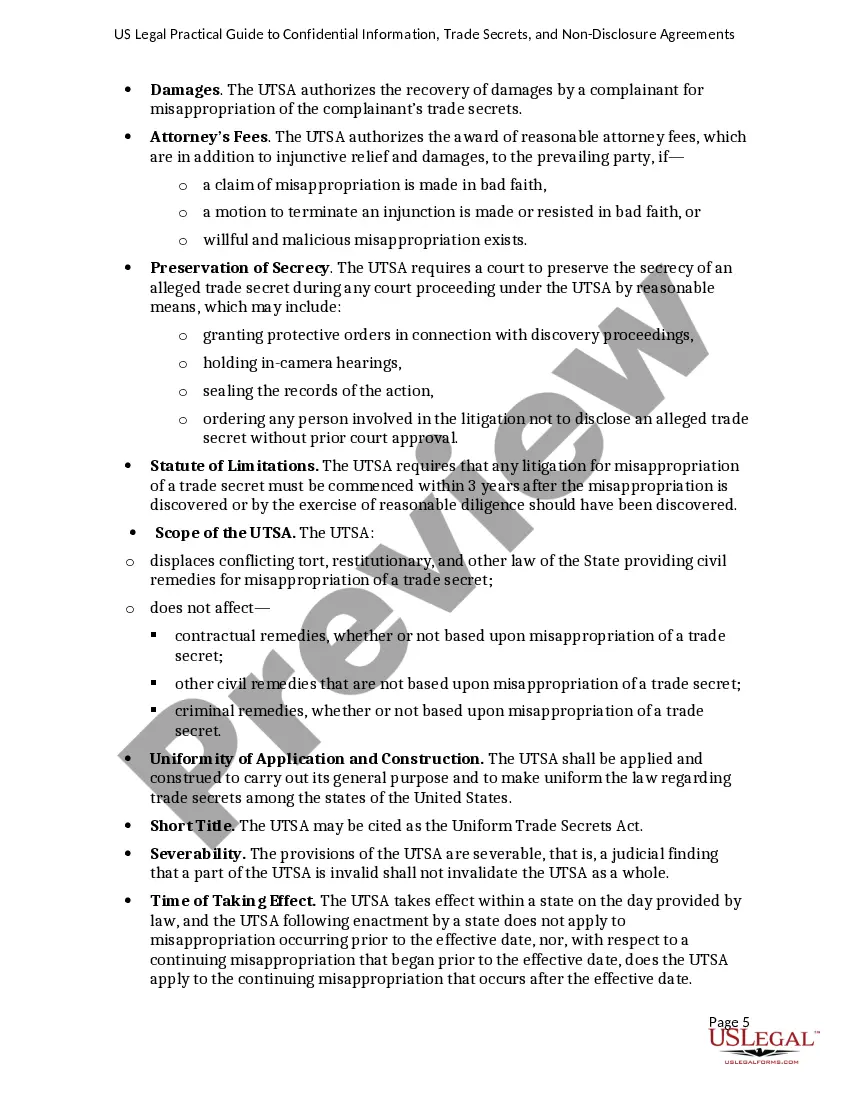
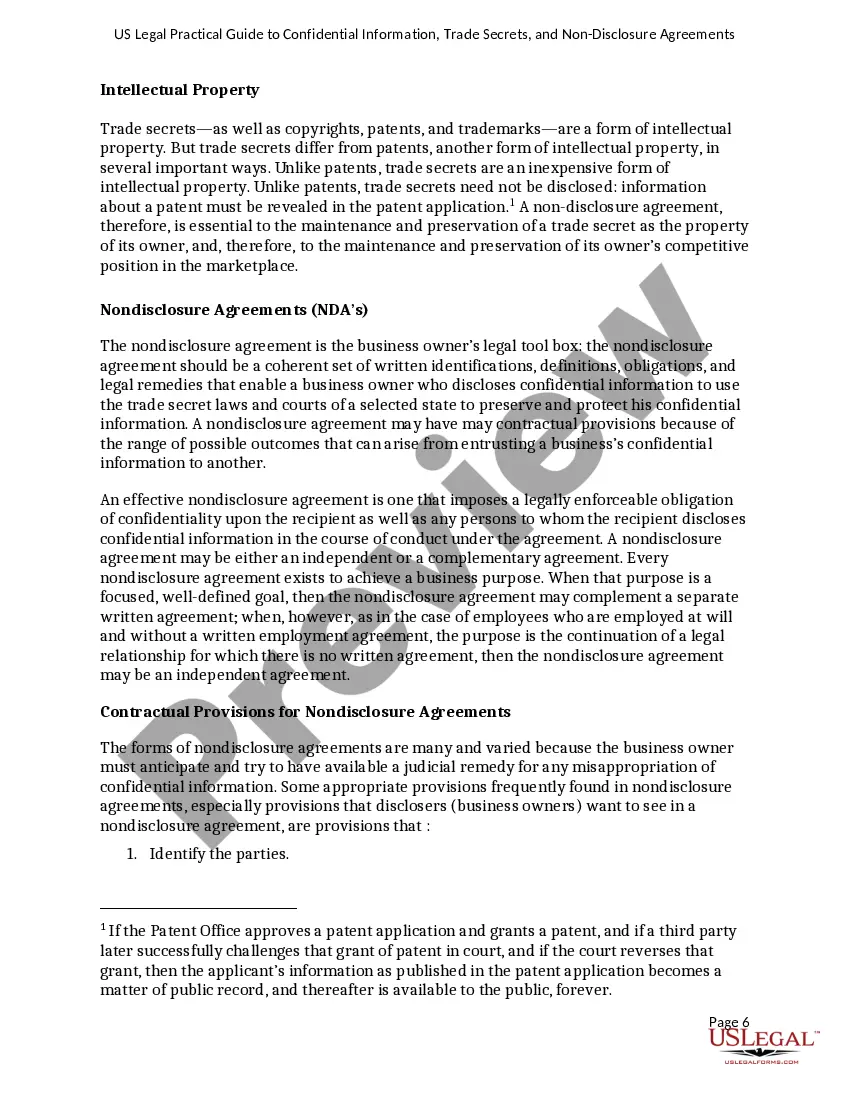
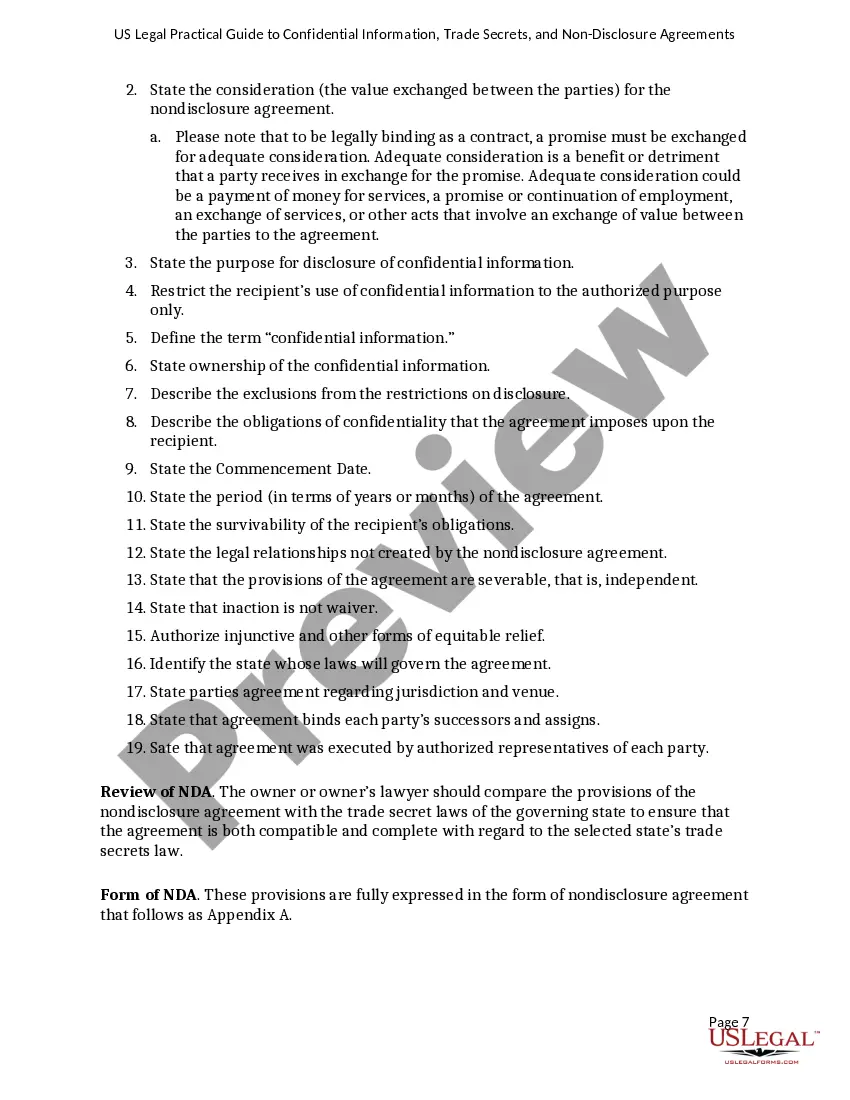
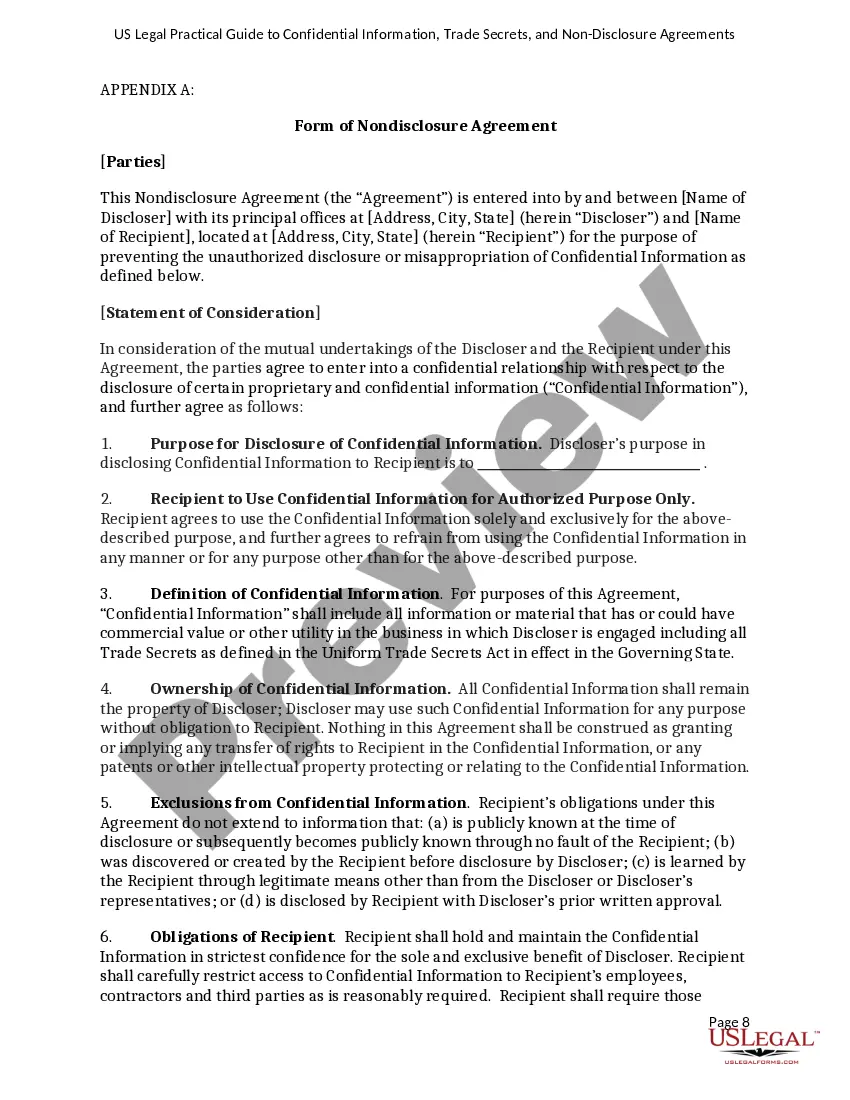
- Click on the form’s preview to examine it.
- If it is the incorrect form, return to the search tool to locate the Confidential Information Form 11.2 sample you need.
- Obtain the template once it fits your requirements.
- If you already possess a US Legal Forms account, simply click Log in to access previously stored documents in My documents.
- If you do not already have an account, you can acquire the form by clicking Buy now.
- Choose the suitable pricing option.
- Complete the account registration form.
- Select your payment method: use a credit card or PayPal account.
- Choose the file format you prefer and download the Confidential Information Form 11.2.
Form popularity
FAQ
A confidential information sheet is a crucial document used to collect and protect sensitive data. Specifically, the confidential information form 11.2 ensures that personal information remains secure while facilitating necessary information sharing. By using this form, users can maintain confidentiality and ensure compliance with legal standards. It simplifies the process of handling confidential details in various settings, including contracts and agreements.
Rule 11.06 in Minnesota pertains to the verification of filings, requiring that documents submitted to the court be signed and verified as accurate. This rule aims to uphold the integrity of legal documents. When preparing your filings, you should consider using the Confidential information form 11.2 to keep confidential details secure.
Rule 69 in Minnesota outlines the procedures for executing judgments, explaining how to enforce decisions made in court. It provides guidance on asset seizure and other enforcement methods. To ensure that any sensitive information related to these processes remains protected, you might want to utilize the Confidential information form 11.2.
Looking up public records in Minnesota can be done through various state and county databases. You can access information online or visit local offices for in-person inquiries. When handling sensitive information found in these records, considering a protection method like the Confidential information form 11.2 can be beneficial to maintain privacy.
Rule 21 in Minnesota allows for the dismissal of cases if a party fails to appear in court. It serves as a measure to encourage accountability and efficiency in the judicial system. When dealing with such matters, utilizing the Confidential information form 11.2 can help keep party identifiers confidential, reducing risks associated with disclosure.
Rule 5 in Minnesota governs the service of court documents, detailing how parties must give notice of court filings. It emphasizes proper delivery methods to ensure that all involved parties receive necessary information. When filling out documents, using the Confidential information form 11.2 can help protect sensitive data related to these processes.
Restricted identifiers in Minnesota include sensitive personal information that, when disclosed, can impact an individual's privacy. This can include social security numbers, financial account numbers, and other confidential details. By using the Confidential information form 11.2, you can safeguard these identifiers while ensuring compliance with state regulations.
The rules of practice 11.01 in Minnesota pertain to confidentiality in legal proceedings. This includes guidelines on how sensitive information should be handled. If you're dealing with matters that involve confidential information, using a Confidential Information Form 11.2 can help protect your details in compliance with these rules. Familiarizing yourself with these guidelines can aid in ensuring your legal protection.
A restraining order can indeed go on your record in Minnesota, particularly if it is finalized. This may affect your background checks in future legal matters. If you seek to have it removed, filing a motion with the court, accompanied by documentation like a Confidential Information Form 11.2, is a necessary step. Understanding how this impacts your record is crucial for future considerations.
Yes, restraining orders are generally considered public records in Minnesota. This means that individuals can access and review them through the appropriate legal channels. However, some sensitive information may be redacted. For detailed inquiries, you might find the Confidential Information Form 11.2 useful to protect personal details while accessing public records.