Custody With A Narcissist
Description
Get your form ready online
Our built-in tools help you complete, sign, share, and store your documents in one place.
Make edits, fill in missing information, and update formatting in US Legal Forms—just like you would in MS Word.
Download a copy, print it, send it by email, or mail it via USPS—whatever works best for your next step.
Sign and collect signatures with our SignNow integration. Send to multiple recipients, set reminders, and more. Go Premium to unlock E-Sign.
If this form requires notarization, complete it online through a secure video call—no need to meet a notary in person or wait for an appointment.
We protect your documents and personal data by following strict security and privacy standards.

Make edits, fill in missing information, and update formatting in US Legal Forms—just like you would in MS Word.

Download a copy, print it, send it by email, or mail it via USPS—whatever works best for your next step.

Sign and collect signatures with our SignNow integration. Send to multiple recipients, set reminders, and more. Go Premium to unlock E-Sign.

If this form requires notarization, complete it online through a secure video call—no need to meet a notary in person or wait for an appointment.

We protect your documents and personal data by following strict security and privacy standards.
Looking for another form?









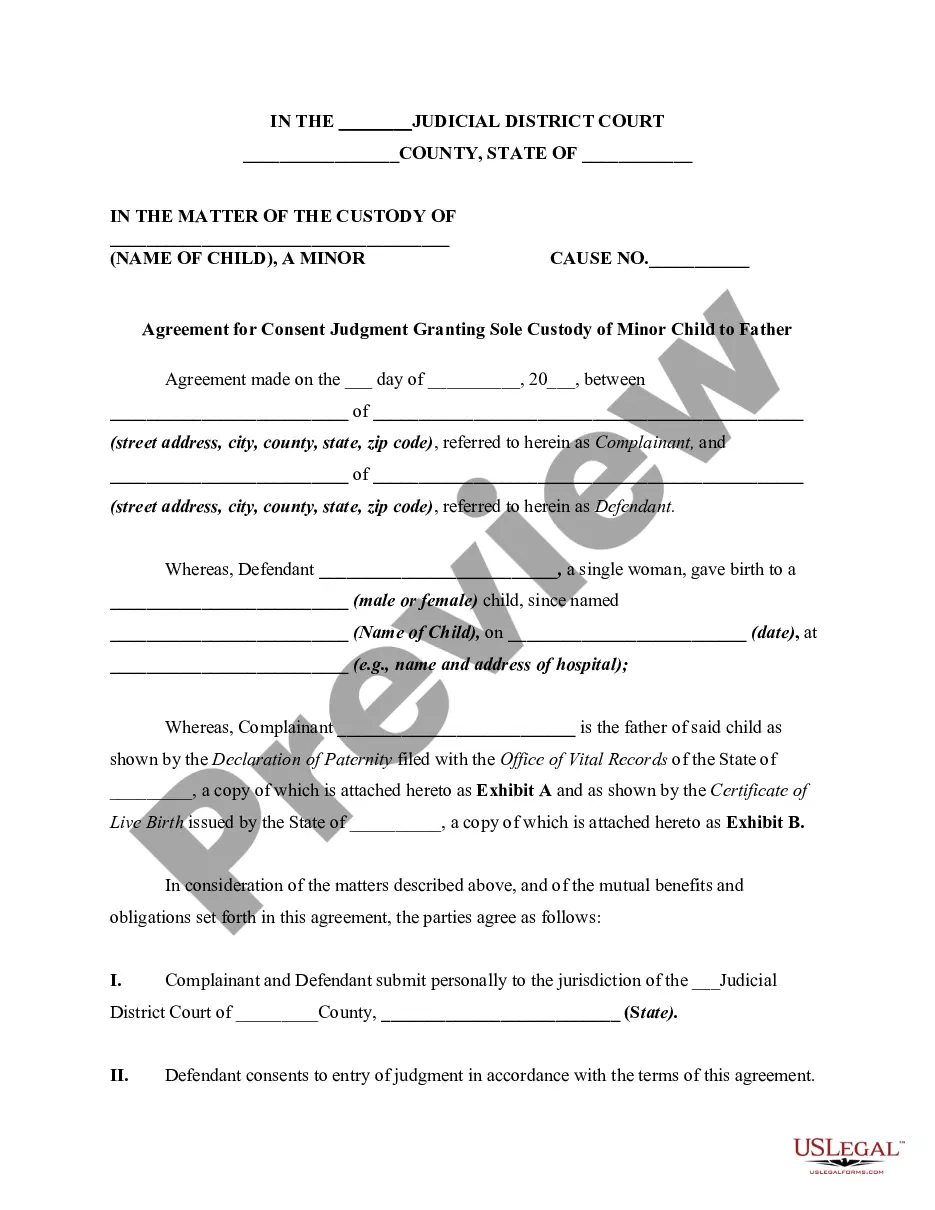
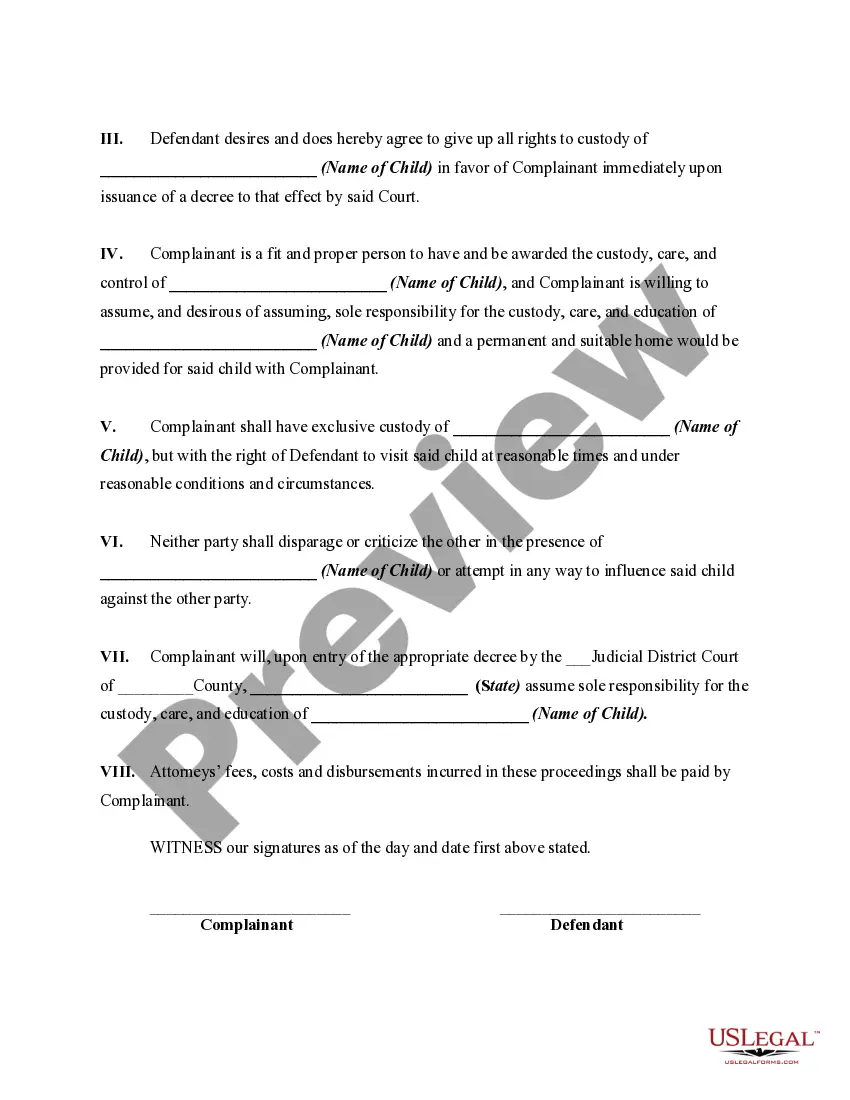
How to fill out Agreement For Consent Judgment Granting Sole Custody Of Minor Child To Father?
- If you're a returning user, log in to your account. Ensure your subscription is active, then find and download the necessary form by clicking the Download button.
- For first-time users, start by browsing our extensive library. Check the Preview mode and form description to ensure you select the correct document that meets your needs and adheres to local jurisdiction requirements.
- If you find any discrepancies, utilize the Search tab above to locate the right template. Once you verify its suitability, proceed to the next step.
- Purchase the document by clicking on the Buy Now button. Select your preferred subscription plan, and you'll need to create an account to access the legal forms.
- Complete the payment process by providing your credit card information or using your PayPal account.
- Finally, download your chosen form to your device. You can access it anytime through the My documents section in your profile.
Once you have your forms, you can confidently move forward with your custody case, ensuring that you have the necessary legal support in the face of challenges.
Empower yourself with the right tools. Explore US Legal Forms today and take control of your legal journey!
Form popularity
FAQ
Co-parenting with a narcissist is about protecting yourself while prioritizing your child's best interests. Establish boundaries to limit emotional manipulation, and utilize written communication for custody with a narcissist situations. If tensions escalate, consider mediation or seeking legal advice to navigate your rights effectively. Above all, remain focused on your child's well-being.
Leaving a narcissist when you live together can be challenging, but it's crucial for your well-being. First, create a plan that includes understanding your legal rights regarding custody with a narcissist. Ensure you have a safe place to go, and gather important documents in advance. Reach out to supportive friends or professionals who can assist you through this difficult transition.
Narcissistic abuse includes manipulation, emotional degradation, and gaslighting that undermines your self-worth. If your partner exhibits controlling behaviors or wildly swings between affection and neglect, these are signs of narcissistic abuse. Understanding these patterns is crucial, especially when navigating custody with a narcissist. Seeking guidance or utilizing resources such as USLegalForms can offer support in addressing these challenges.
After breaking up with a narcissist, avoid engaging in arguments, seeking closure through conversation, or sharing personal vulnerabilities. It's also important not to expect them to change or take responsibility for their actions. Staying connected with family and friends will help maintain your support system. Lastly, do not isolate yourself; focus on healing and nurturing your well-being.
Yes, you can sue a narcissist for emotional distress if you can prove their actions caused you harm. Courts recognize emotional distress as a valid claim, especially in custody situations involving children. Documenting any emotional abuse or manipulative behavior helps build your case. Consulting with a legal expert on custody with a narcissist will provide guidance on how to proceed.
When dealing with custody with a narcissist, a structured arrangement often works best. You should prioritize clear communication and document all interactions to avoid misunderstandings. Ideally, consider a schedule that minimizes direct contact but still allows for consistent involvement in your child's life. Using third-party tools or professionals can help maintain a healthy environment for everyone involved.
Detaching from a narcissist involves creating physical and emotional distance. Recognize manipulative tactics and avoid engagement in emotional disputes. Set boundaries that protect your well-being and consider professional guidance if necessary. When especially dealing with the repercussions of custody with a narcissist, find comprehensive legal support to ensure a healthy transition.
Ending a relationship with a narcissist requires a clear strategy and emotional readiness. Focus on establishing firm boundaries and seek support from trusted friends or professionals. Prepare for potential manipulative behavior as you clarify your decision, but stay resolute in your commitment to move on. If you face custody considerations related to a narcissistic partner, consulting resources available on uslegalforms can help you navigate the legal complexities.
Judges evaluate custody cases based on the child’s best interests. While having a narcissistic personality can raise concerns about parenting abilities, the legal decision relies on documented behavior rather than labels. If the narcissist demonstrates stability, responsibility, and a nurturing environment, they may still receive custody. Therefore, it's crucial to present concrete evidence of parenting capabilities when navigating custody with a narcissist.
Negotiating custody with a narcissist requires preparation and a calm demeanor. Start by clearly outlining your desired outcomes based on your child's best interests. Use factual evidence to support your position, and be prepared for emotional manipulation. It's highly beneficial to seek legal advice to ensure your rights are protected throughout this process.