Custody For Children
Description

Get your form ready online
Our built-in tools help you complete, sign, share, and store your documents in one place.
Make edits, fill in missing information, and update formatting in US Legal Forms—just like you would in MS Word.
Download a copy, print it, send it by email, or mail it via USPS—whatever works best for your next step.
Sign and collect signatures with our SignNow integration. Send to multiple recipients, set reminders, and more. Go Premium to unlock E-Sign.
If this form requires notarization, complete it online through a secure video call—no need to meet a notary in person or wait for an appointment.
We protect your documents and personal data by following strict security and privacy standards.

Make edits, fill in missing information, and update formatting in US Legal Forms—just like you would in MS Word.

Download a copy, print it, send it by email, or mail it via USPS—whatever works best for your next step.

Sign and collect signatures with our SignNow integration. Send to multiple recipients, set reminders, and more. Go Premium to unlock E-Sign.

If this form requires notarization, complete it online through a secure video call—no need to meet a notary in person or wait for an appointment.

We protect your documents and personal data by following strict security and privacy standards.
Looking for another form?



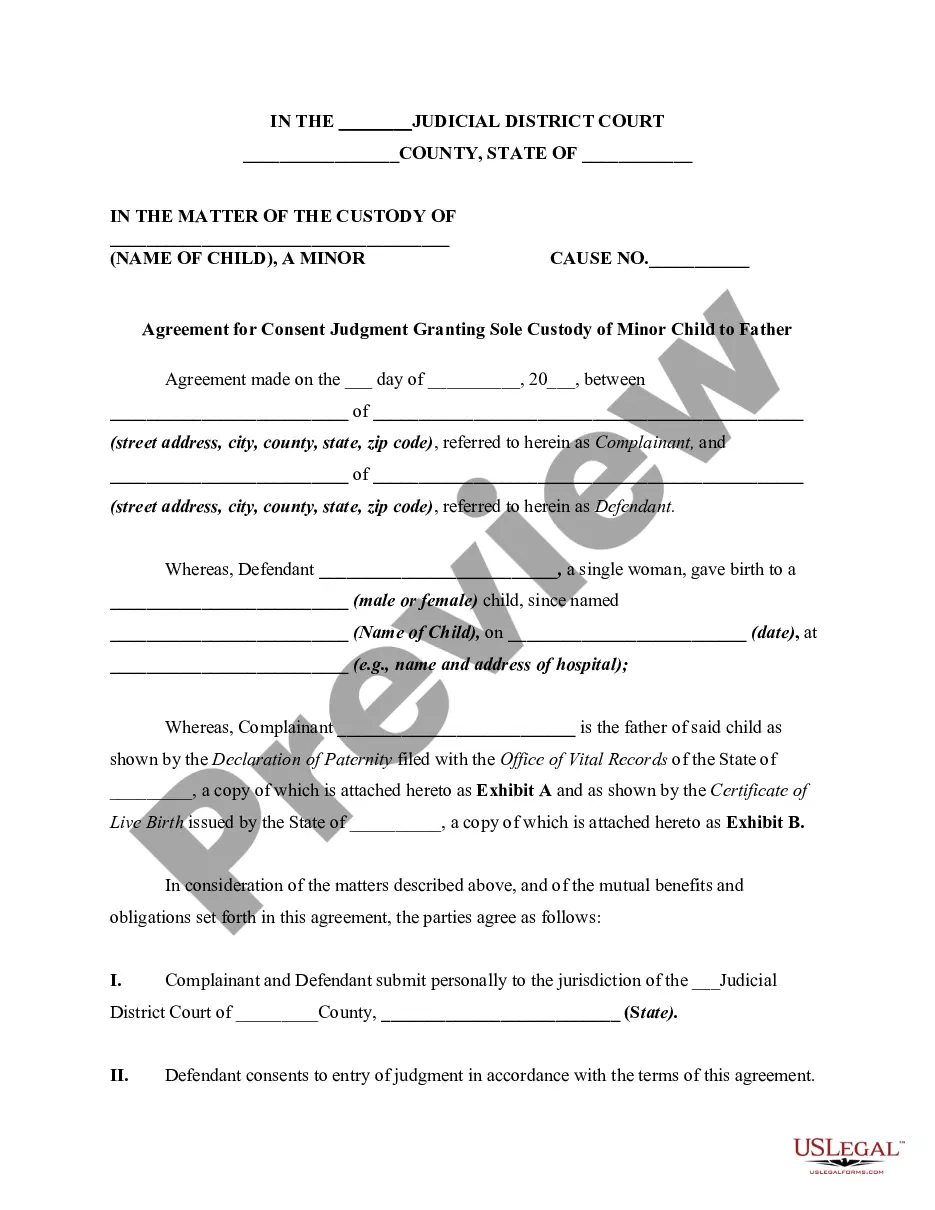
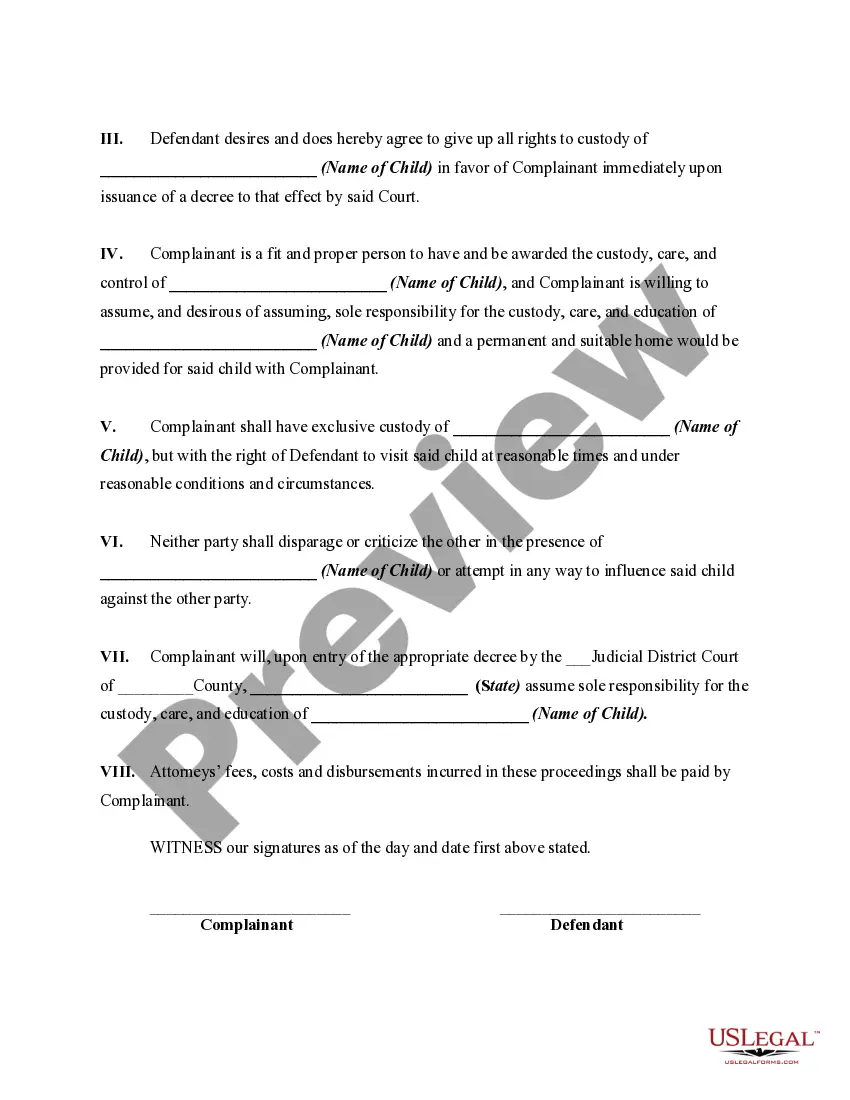
How to fill out Agreement For Consent Judgment Granting Sole Custody Of Minor Child To Father?
- If you're an existing user, log in to your account and navigate to the download section to acquire your necessary forms. Verify that your subscription is active; if not, please renew it based on your chosen payment plan.
- For first-time users, start by browsing the extensive online library to find the appropriate custody form that fits your jurisdictional requirements.
- Use the Preview mode to review the selected form, ensuring it aligns with your specific needs.
- If adjustments are needed, utilize the search feature to find additional templates that may be better suited for your situation.
- Once you’ve identified the correct document, click on the Buy Now button and select the subscription plan that meets your requirements. You'll need to create an account to access the library.
- Proceed by entering your payment details, either via credit card or PayPal, to finalize your subscription.
- After your purchase, download the form to your device, ensuring you can complete it at your convenience. You can also find it later in your profile under the My Forms section.
By utilizing US Legal Forms, you can confidently navigate the custody for children process with access to a robust collection of templates and expert support. Each step is designed to streamline your experience, ensuring you achieve efficient and accurate legal documentation.
Ready to get started? Visit US Legal Forms today and empower yourself with the legal tools you need.
Form popularity
FAQ
In Kentucky, the requirements for custody for children can vary, but a few key factors generally apply. Courts typically examine the child's best interests, including the emotional and physical well-being of the child. Parents must provide evidence of their parenting capabilities and establish a stable environment. It's essential to familiarize yourself with local laws, and USLegalForms can help you navigate the necessary documentation.
Yes, you can give up custody for children without going to court, but it is not always advisable. It's crucial to ensure that you document any agreements clearly and seek legal guidance. Without court approval, the other parent may not have a legal obligation to honor your decision. Always consider how this might affect your rights and responsibilities moving forward.
Child custody in Montana can be established through mutual agreements between parents or by court determination. Parents can pursue legal custody, which involves decision-making authority, and physical custody, where the child resides. Utilizing resources like USLegalForms can streamline the process and provide valuable tools for making informed decisions in custody for children.
Montana determines child custody through an evaluation of what arrangement serves the child's best interests. Factors include the child's emotional ties with each parent, the parents' willingness to support the child's relationship with the other parent, and the child's adjustment to home and community. A solid understanding of these criteria will aid parents seeking custody for children in Montana.
In Mississippi, several factors contribute to child custody decisions, including the child's age, physical and emotional needs, and each parent's ability to provide a stable environment. Courts also consider the relationship between the child and each parent, as well as any history of domestic violence. Understanding these factors can significantly help you navigate custody for children effectively.
One major mistake in a custody battle is failing to prioritize the child's best interests. When parents focus on winning rather than what is best for their children, they can make decisions that harm family dynamics. It's crucial to approach custody for children with empathy, cooperation, and a focus on their emotional well-being.
Avoid making negative comments about the other parent during a custody battle. Saying things like 'Your other parent is unfit' can escalate tensions and hurt your case. Instead, focus on your child’s needs and the positive aspects of your parenting. Remember, when you approach discussions with grace and purpose, you reflect the best intentions for custody for children.
If someone is going through a custody battle, providing emotional support is essential. You can say, 'I’m here for you, and I understand this is a challenging time.' Encourage them to focus on what is best for the child, emphasizing the importance of maintaining a loving and stable environment. Remind them that seeking professional legal advice can help them navigate the complexities of custody for children.
In a custody battle, behaviors that show neglect or instability can negatively impact your case. Examples include excessive arguing in front of the child or poor living conditions. Courts focus on what is best for the child, so maintaining a respectful attitude and stable environment is crucial when discussing custody for children. Showing a commitment to co-parenting positively can enhance your position.
Joint custody can sometimes lead to challenges, particularly if parents struggle to communicate effectively or cooperate regarding parenting decisions. Conflicts can arise over scheduling, and this can create stress for the child. It's essential to aim for a collaborative approach in joint custody arrangements, and resources from US Legal Forms can help you establish clear terms and avoid misunderstandings.